
 AI
AI
 AI
AI
 AI
AI
Ingredients
Method
-
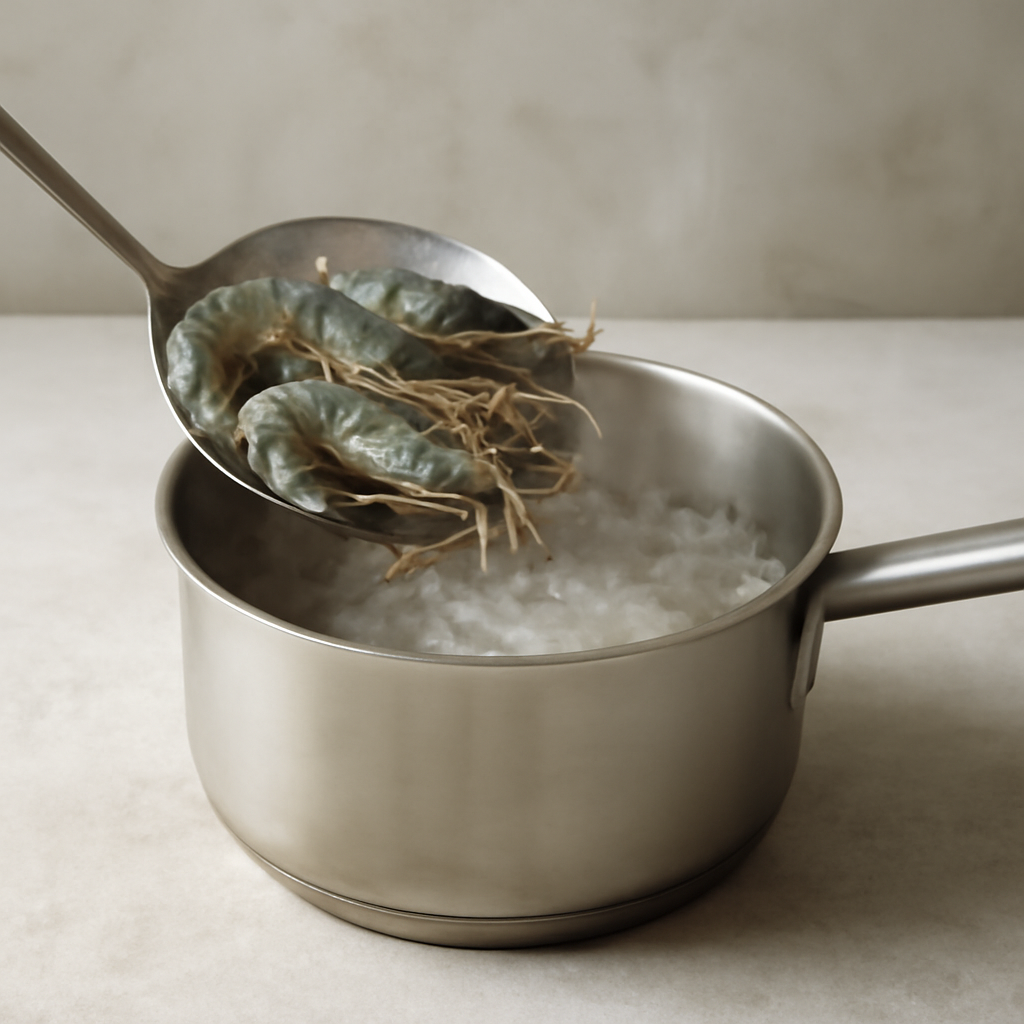
Bring the cold water to a rolling boil in a medium saucepan. Add the 15g of sea salt , the water should taste noticeably salty, like a light sea brine. Lower the raw Dublin Bay prawns in with a slotted spoon, working in batches if necessary so the water temperature does not drop too sharply.
-
Cook the prawns for exactly 3 minutes from the moment the water returns to the boil. They are done when the shells have turned a uniform coral-orange and the tails have curled. Do not go beyond 3 minutes or the flesh will tighten and lose its slight sweetness.
-
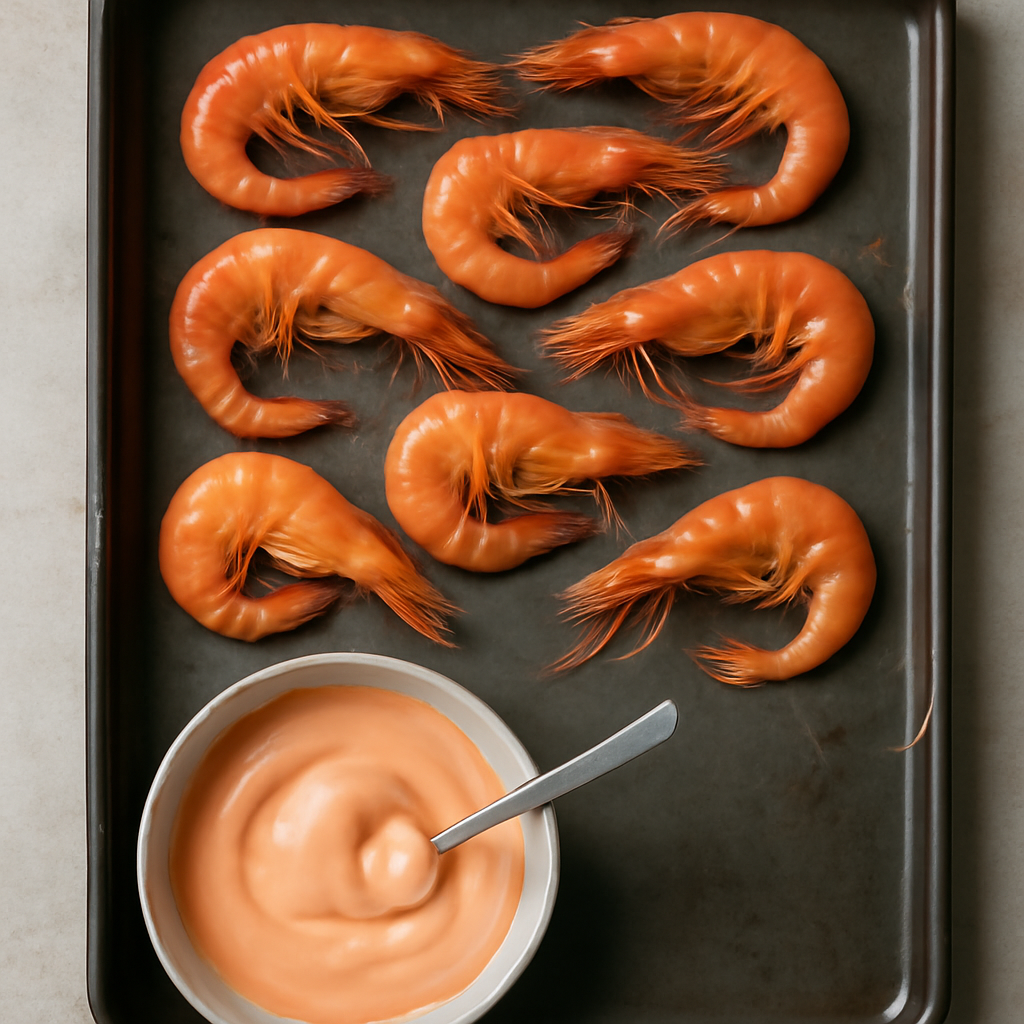
Lift the prawns out immediately and spread them in a single layer on a cold baking tray. Do not run them under cold water; simply letting them cool at room temperature for 8 to 10 minutes keeps the flavour in the shell where it belongs. Once cool enough to handle, twist off the heads, peel away the shells, and use a small knife to split the back of each tail and remove the dark intestinal thread.
-
While the prawns are cooling, make the Marie Rose sauce. Combine the mayonnaise, ketchup, Worcestershire sauce, Tabasco, lemon juice, and creamed horseradish in a small bowl. Stir until smooth and uniform in colour , it should be a pale coral with no streaks. Season with the salt and white pepper, taste, and adjust. If it needs more heat, add another small dash of Tabasco. If it tastes flat, add a few more drops of lemon juice. Cover and refrigerate until needed.
-
Separate the little gem leaves. Select the cup-shaped inner leaves for the base of each glass or bowl; they will hold the sauce and prawns neatly. Shred the flatter outer leaves finely and use those as the bed at the bottom of the serving vessel.
-
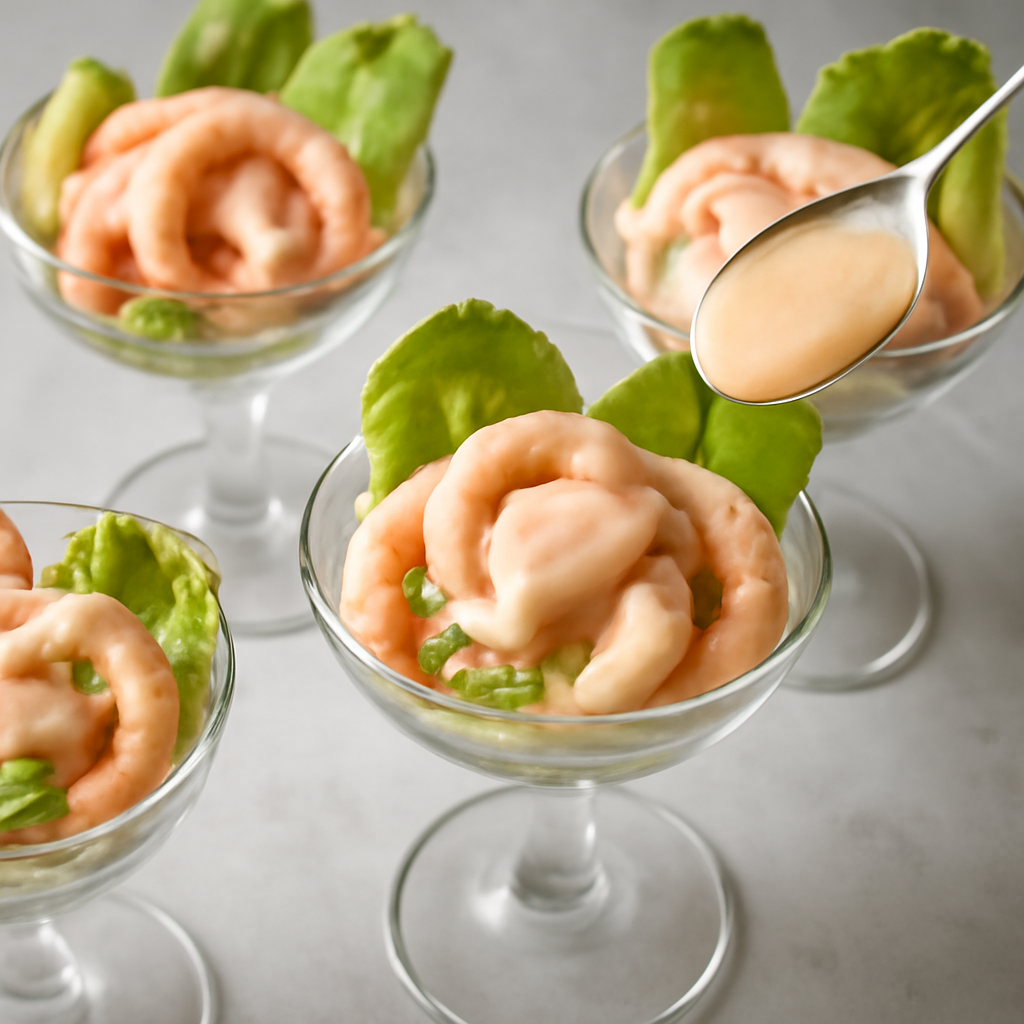
To assemble, place a layer of shredded little gem in the base of four chilled cocktail glasses or shallow bowls. Arrange the whole cup leaves around the inside edge of each glass so they stand upright. Spoon a generous tablespoon of Marie Rose sauce over the shredded lettuce.
-
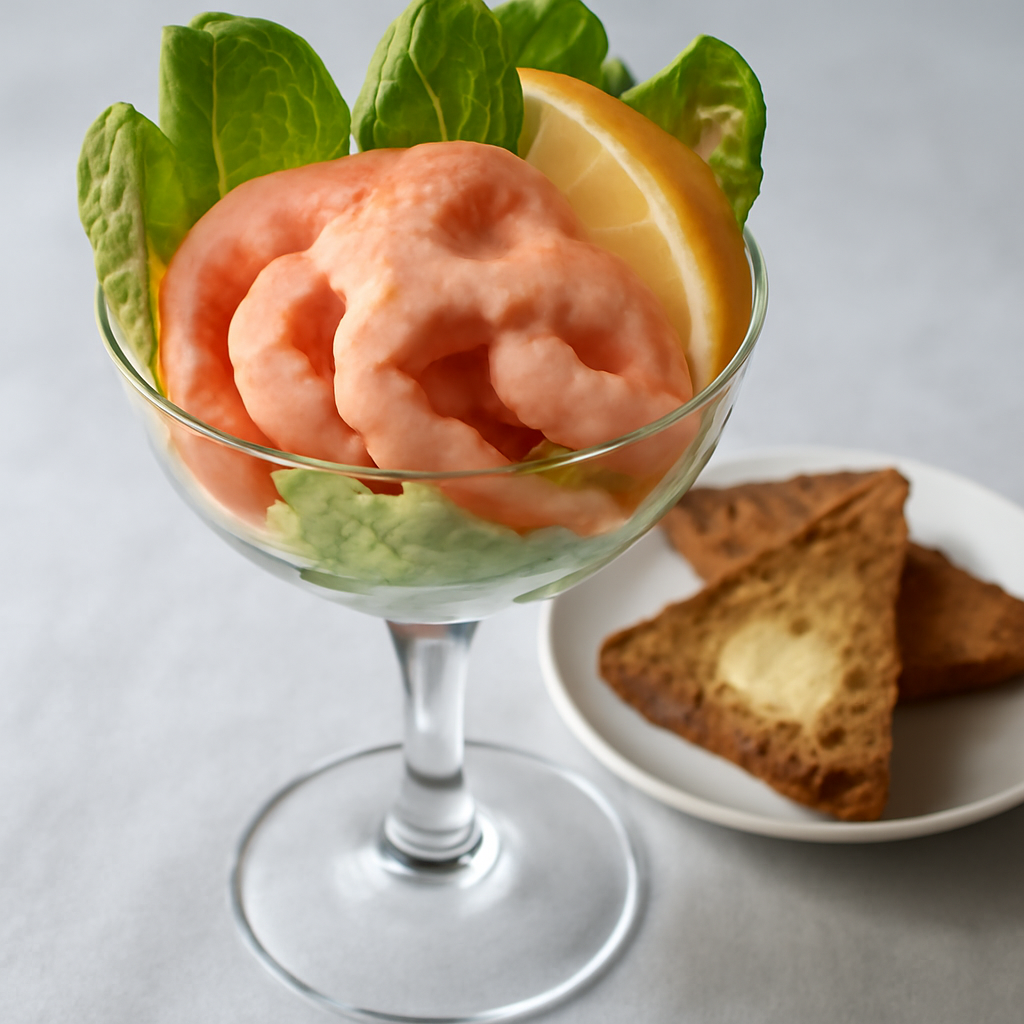
Divide the peeled prawns between the four glasses, arranging them so they drape over the lettuce leaves at the rim. Spoon another small amount of sauce across the prawns. Dust very lightly with the sweet paprika , a small pinch is enough; you want a faint blush of colour, not a coating.
-
Butter the soda bread slices thinly and cut each into two triangles. Serve the glasses immediately with the bread and a wedge of lemon on the side.
Irish Context
Dublin Bay prawns, known in Irish as cloichean, are Nephrops norvegicus , the same species sold across Europe as langoustines or scampi. The name comes from the fact that trawlers working out of Dublin Bay historically brought them ashore in large numbers, though the best Irish catches today tend to come from further north and west, particularly off the coasts of Kerry, Galway, and Donegal.
They are one of Ireland's most commercially significant seafood exports, which makes it something of an irony that they remain underused in domestic cooking compared to how they are treated in France or Spain. At their freshest, the raw tails have a faint sweetness that is unlike any frozen prawn, and that quality is what makes this starter worth the effort of sourcing them properly.
Tips
If you can only get cooked Dublin Bay prawns, skip the poaching step entirely and go straight to peeling. Do not attempt to re-cook them or the flesh will turn rubbery.
Taste one before assembling , if they are already quite salty, reduce or omit the salt in the sauce. The Marie Rose sauce can be made up to 24 hours ahead and kept covered in the refrigerator.
The flavour actually settles and sharpens slightly after a few hours, which is no bad thing. Chilling the glasses in the freezer for 15 minutes before assembling keeps everything cooler at the table, which matters with shellfish.
If the prawns are particularly large, halve them lengthways after peeling. This makes them easier to eat without losing their appearance in the glass.
Horseradish is the detail most people skip , do not skip it. It cuts through the mayonnaise in a way that makes the sauce taste considered rather than thrown together.

Author Commentary