
 AI
AI
 AI
AI
 AI
AI
Ingredients
Method
-
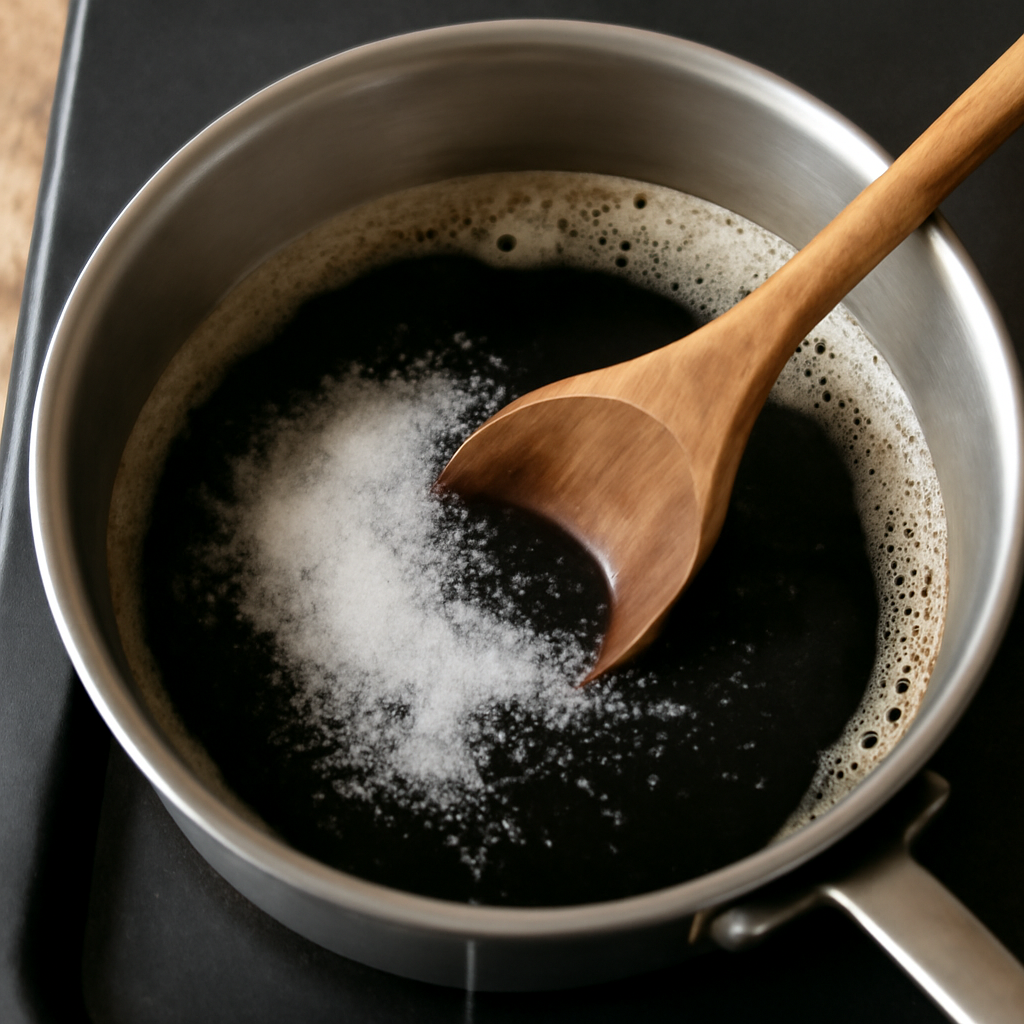
Pour the stout and caster sugar into a small saucepan. Set over a medium heat and stir until the sugar dissolves, about 2 minutes. Do not let it boil hard at this stage or you will lose the stout's bitter edge before the sugar has time to balance it.
-
Once the sugar has dissolved, raise the heat slightly and bring the liquid to a gentle simmer. Cook uncovered for 14 to 16 minutes, stirring occasionally, until the mixture reduces by roughly half and coats the back of a spoon with a thin, dark glaze. It will smell roasted and slightly sharp, not sweet. Remove from the heat and leave to cool to room temperature. The syrup will thicken a little further as it cools.
-
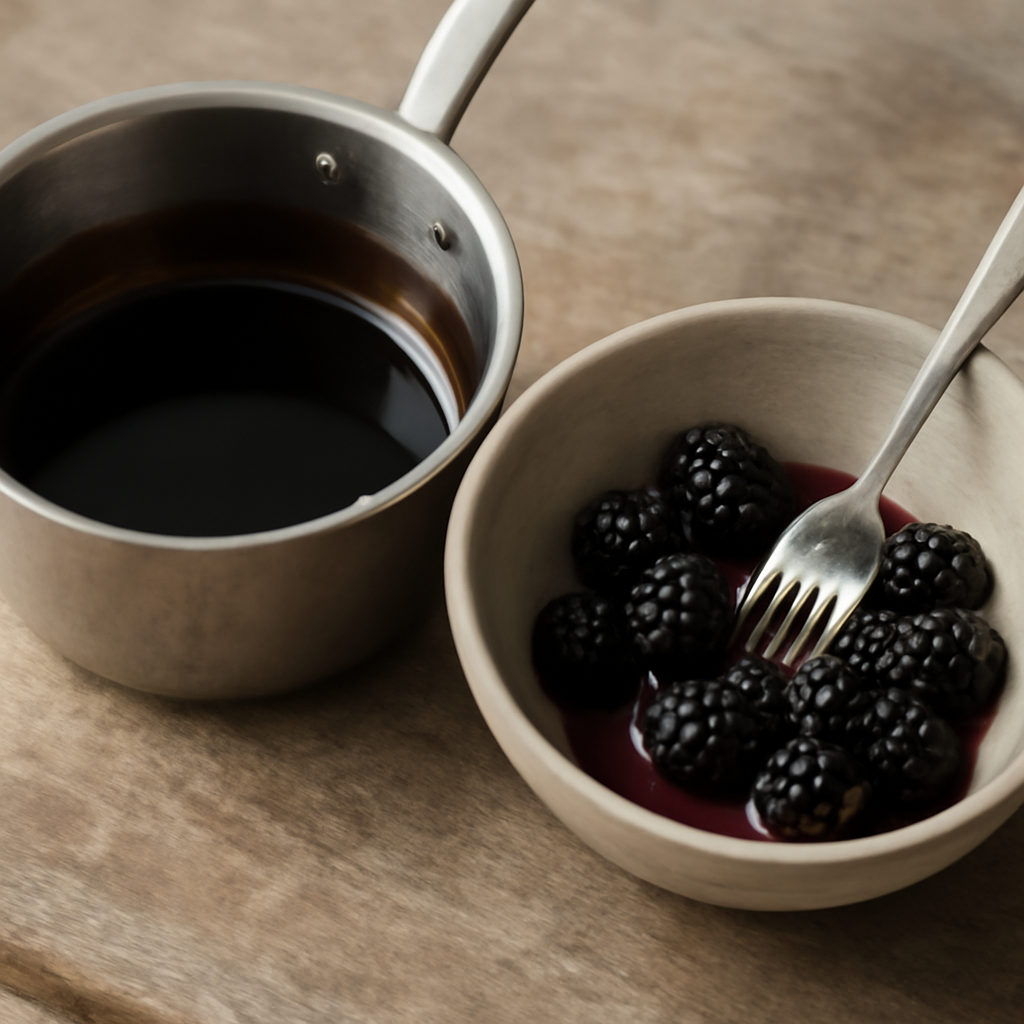
While the syrup cools, place 150g of the blackberries in a small bowl. Use a fork or the back of a spoon to crush them firmly until most of the juice has run out. Do not blend them; you want texture and some seed resistance in the final drink, not a smooth puree.
-
Pass the crushed blackberries through a fine-mesh sieve into a jug, pressing the pulp to extract as much juice as possible. You should get roughly 60 to 70ml of juice. Discard the pulp.
-
Add the lemon juice and blackcurrant cordial to the blackberry juice and stir to combine. Taste it at this point. It should be tart and a little sharp with a dark, jammy undertone. If it tastes flat, add 5ml more lemon juice.
-
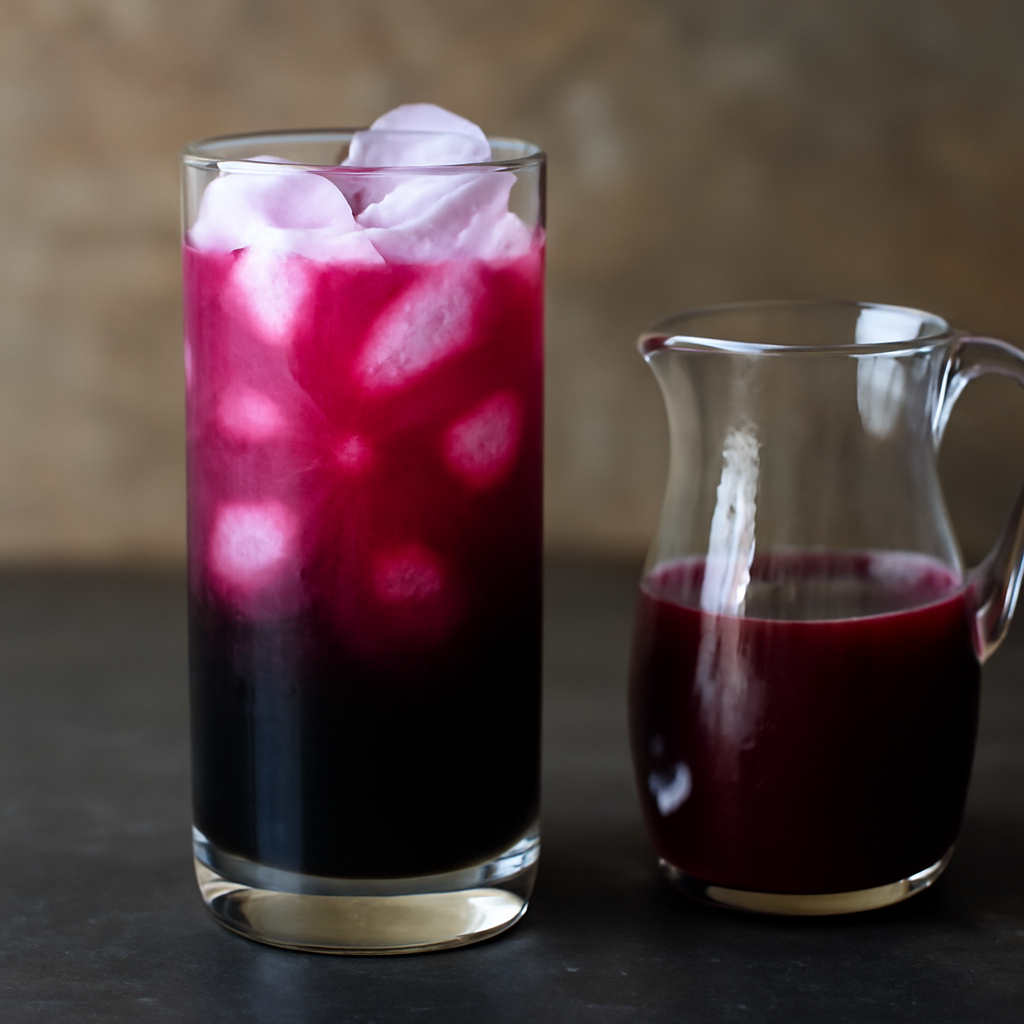
To build each drink, fill two tall glasses with ice. Add 2 tablespoons (approximately 30ml) of the cooled stout syrup to each glass, then pour over half the blackberry mixture. Stir briefly, just 4 or 5 turns, so the layers begin to combine but are not fully homogenised.
-
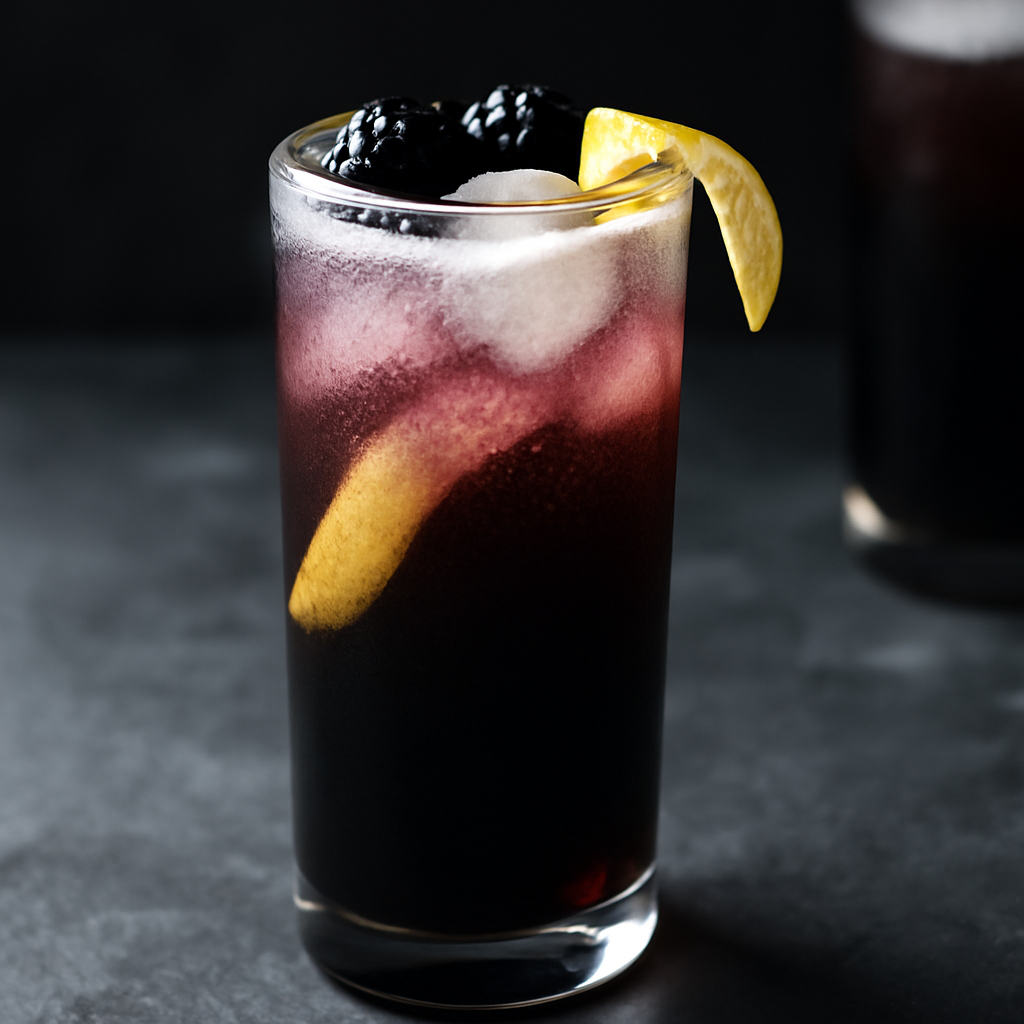
Top each glass with 75ml of chilled sparkling water, pouring it slowly down the side of the glass to preserve some separation. Drop 2 fresh blackberries into each glass and lay a strip of lemon peel across the rim. Serve immediately.
-
If serving in a coupe as a short drink, reduce the sparkling water to 30ml per glass and skip the extra ice. The drink will be considerably more intense and should be sipped slowly.
Irish Context
Dry stout has a long history in Irish pubs and kitchens as an ingredient rather than just a drink, used in bread, stews, and marinades. This recipe takes the same approach in a different direction, cooking the stout down to concentrate the coffee and dark-grain notes that most people never notice when drinking it straight.
Blackberries grow wild along hedgerows across most of the country and are at their best from late July through September. The two ingredients are not a natural pairing on paper, but the bitterness of the reduced stout and the tartness of the fruit occupy opposite ends of the palate in a way that makes each one more noticeable.
Tips
The stout syrup can be made up to 3 days ahead and stored in a sealed jar in the fridge. It will firm up considerably when cold; take it out 15 minutes before you need it or loosen it with a small splash of warm water.
If your blackberries are very ripe and sweet, increase the lemon juice by 10ml. Under-ripe blackberries, which are more common in Ireland outside August and September, will give a better result here because their natural tartness works with the stout rather than against it.
Do not use a sweet stout or a milk stout for the syrup. The extra residual sugar will make the finished drink cloying.
A straightforward dry stout with a clean, roasted bitterness is what you need. The blackcurrant cordial is a small addition but it rounds out the fruit without making the drink taste of cordial.
Ribena works if that is what you have, though a less sweet concentrate is preferable. If the syrup reduction goes too far and sets solid when cool, warm it gently with a tablespoon of water and stir until it loosens.
It is not ruined.

Author Commentary