
 AI
AI
 AI
AI
 AI
AI
Ingredients
Method
-
Quarter the cabbage lengthways through the core, keeping the core intact so the leaves stay together. Cut each quarter crossways into roughly 5cm pieces. Weigh them if you can , you want to know what you are working with.
-
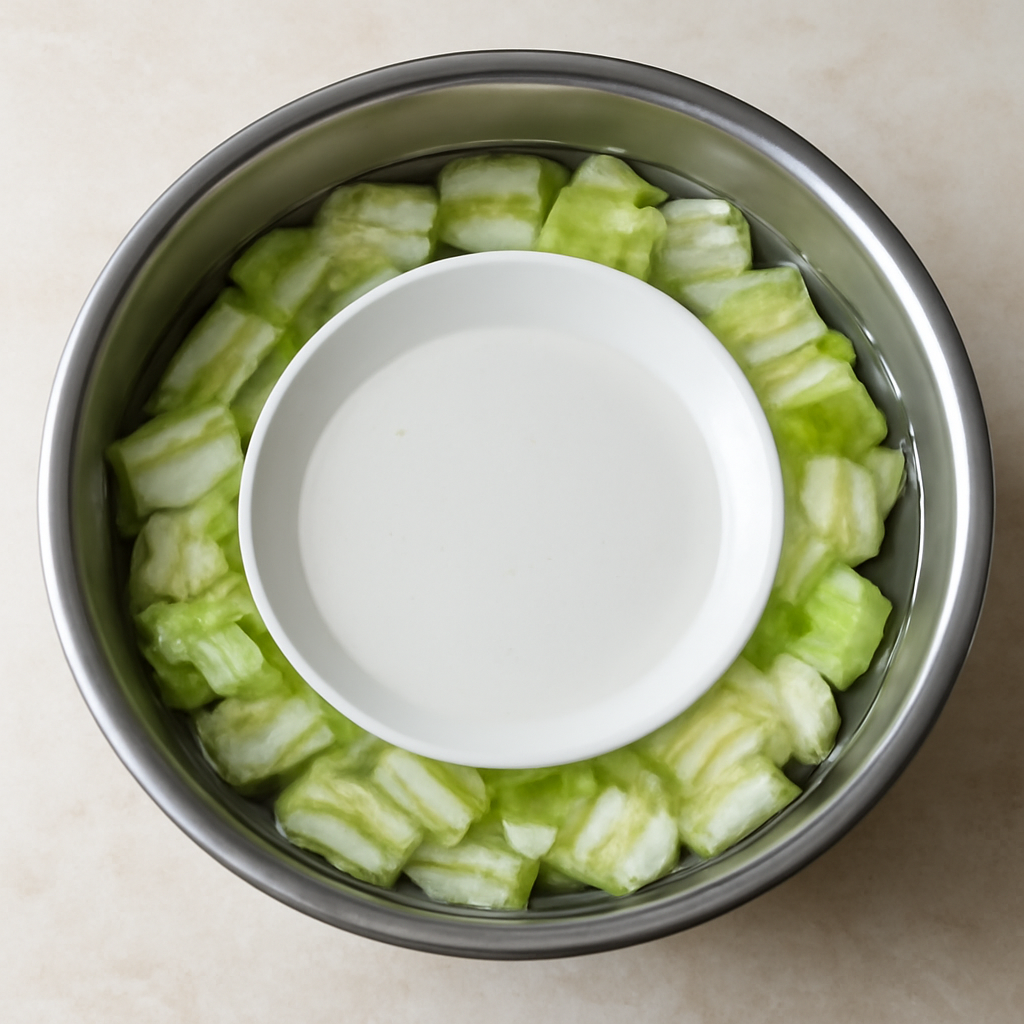
Dissolve the sea salt in 1 litre of cold water in a very large bowl or clean bucket. Submerge the cabbage pieces, weighing them down with a plate if needed. Leave at room temperature for 2 hours, turning everything once at the halfway point. The leaves should wilt considerably and lose their raw stiffness.
-
Drain the cabbage and rinse it three times under cold running water. Taste a piece , it should be pleasantly salty but not overwhelming. If it is too salty, rinse once more. Squeeze handfuls firmly to remove as much water as possible, then spread the pieces on a clean tea towel for 15 minutes.
-
While the cabbage drains, make the paste. Blend the garlic, ginger, fish sauce, soy sauce, and sugar together until smooth. Stir in the gochugaru. The paste should be thick enough to coat a spoon and deeply red. If it smells sharp and a little fermented already from the fish sauce, that is exactly right.
-
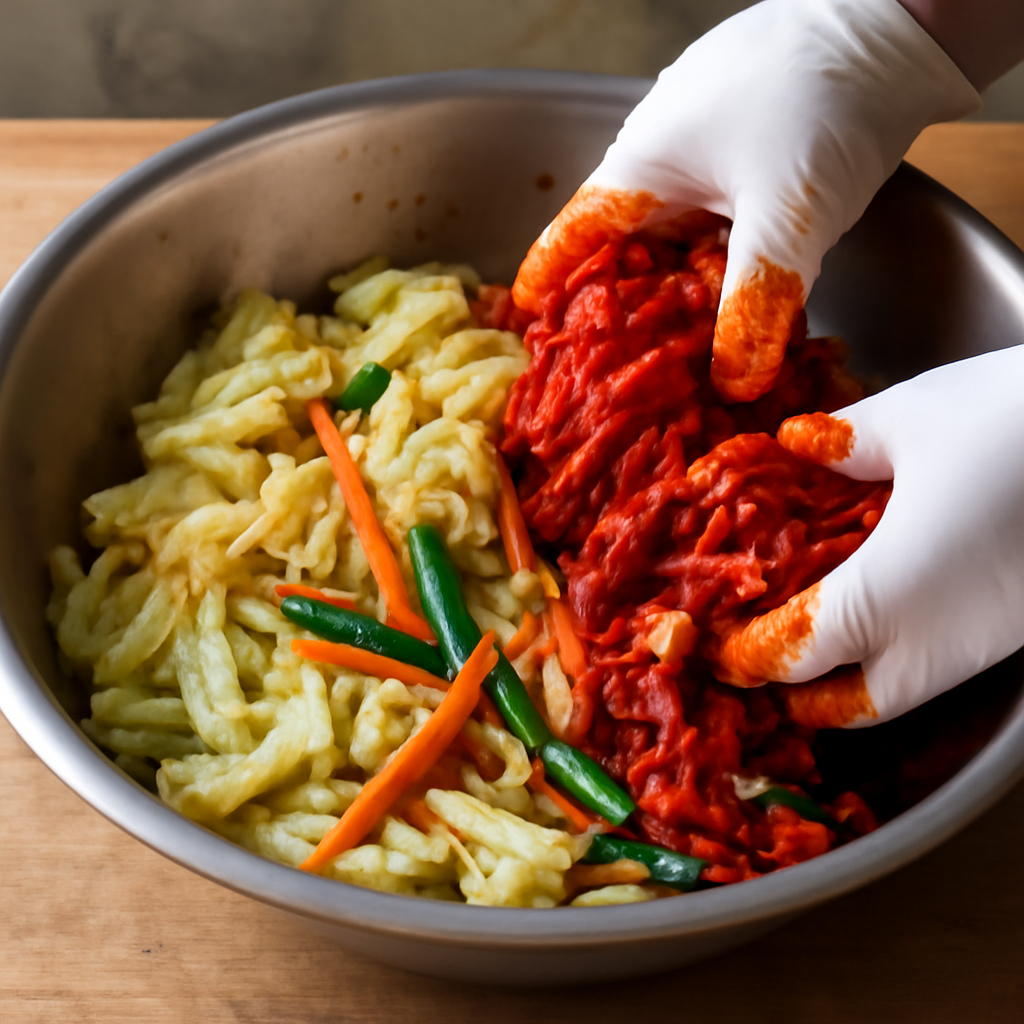
Put the drained cabbage into a large bowl along with the spring onions and carrot. Add the paste in three stages, tossing thoroughly between each addition. Use clean rubber gloves , gochugaru stains everything and the oil in it will irritate your skin if you work bare-handed for long. Every piece of cabbage should be coated in red paste. Sprinkle in the sesame seeds and toss once more.
-
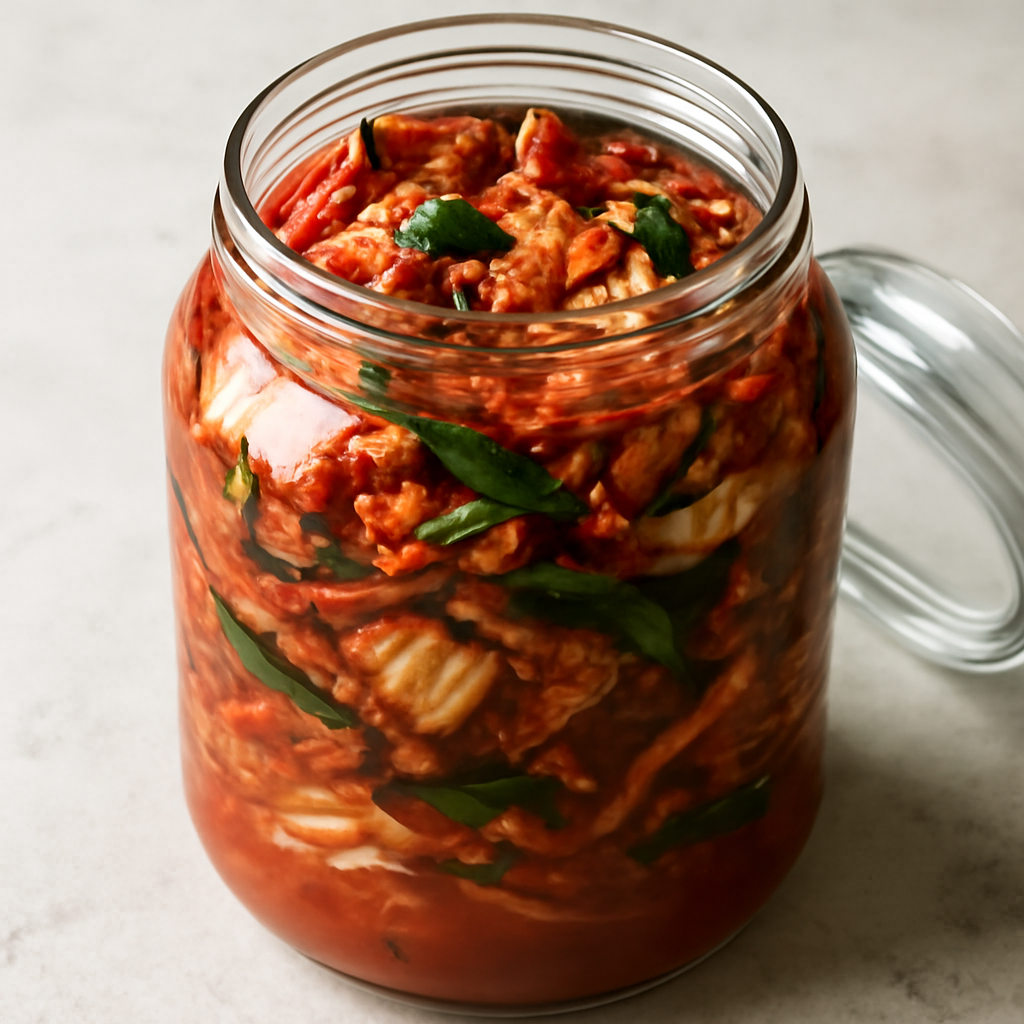
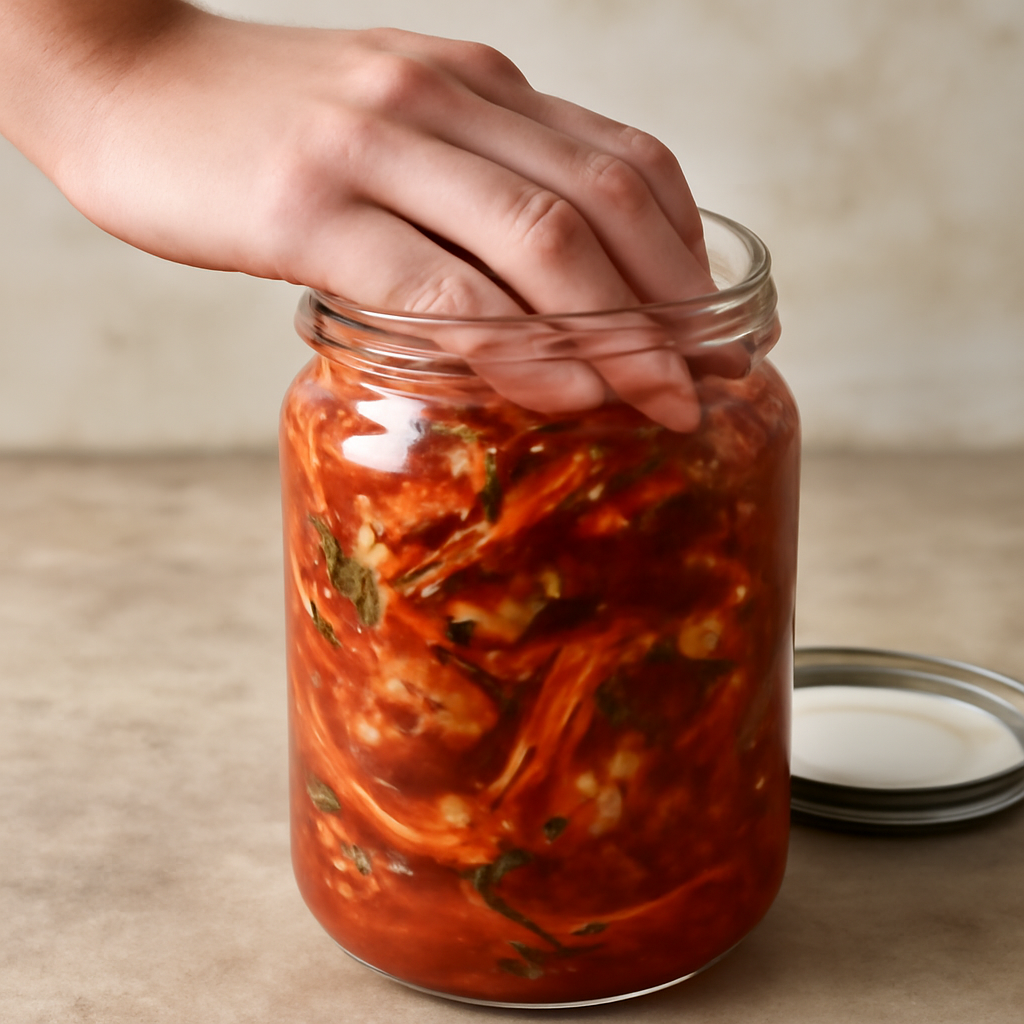
Pack the kimchi tightly into sterilised glass jars, pressing down firmly after each addition so no air pockets remain. Leave 3cm of headspace at the top , the kimchi will expand as it ferments and the brine will rise. Seal loosely with the lid rather than screwing it down tight.
-
Leave the jars at room temperature, between 18 and 22 degrees Celsius, for 24 to 48 hours. You will see small bubbles forming around the edges and the brine will start to look cloudy. Taste it at 24 hours. If it has a faint sour edge and the cabbage has softened slightly, it is ready to move to the fridge. If it still tastes mostly of raw chilli paste, give it another 12 hours.
-
Transfer to the fridge. The fermentation slows down dramatically but continues. At 5 days it has a mild sourness and a clean crunch. At 2 weeks the sourness deepens and the brine becomes more complex. At 4 to 6 weeks the kimchi is fully mature , the cabbage is softer, the flavour is rounded and pungent, and it is good enough to eat straight from the jar with a spoon. Press the kimchi down into the brine each time you open the jar.
Irish Context
Korean grocery shops have become a fixture in Irish cities over the past decade, and gochugaru is now reliably available without ordering online. Most Asian supermarkets stock it alongside doenjang and gochujang.
Napa cabbage appears in many of the larger SuperValu and Dunnes stores, and Chinese supermarkets carry it year-round. Fish sauce is the only ingredient that some people substitute , Worcestershire sauce is sometimes suggested for a vegan version, though the fermentation proceeds differently and the result is not the same thing.
Tips
Non-iodised salt is not optional. Iodised table salt inhibits the lactobacillus bacteria responsible for fermentation.
Use flaked sea salt or a coarse Korean sea salt if you can find it. Gochugaru is not interchangeable with ordinary chilli flakes or gochujang paste.
The flakes have a specific texture, colour, and moderate heat that define the finished kimchi. Korean grocers stock it in Dublin, Cork, and several other cities, and it keeps well in the freezer.
If your kitchen runs cold in winter, the initial room-temperature fermentation may take closer to 72 hours. In a warm kitchen in summer, 24 hours may be enough.
The bubbles and the smell tell you more than any fixed time does. Once the jars are in the fridge, the lids can be screwed on tightly.
Open them carefully , there is often enough built-up carbon dioxide to push brine towards the lid. Overfermented kimchi that has become very sour and soft is not ruined.
It is excellent for kimchi fried rice, kimchi pancakes, or simmered in a broth with tofu and pork belly.

Author Commentary