
 AI
AI
 AI
AI
 AI
AI
Ingredients
Method
-
Set your grill to its highest setting and allow it to heat fully for at least 5 minutes before you start. A grill that is not properly preheated will steam the toast rather than colour it, and the rarebit will turn out pale and soft instead of blistered.
-
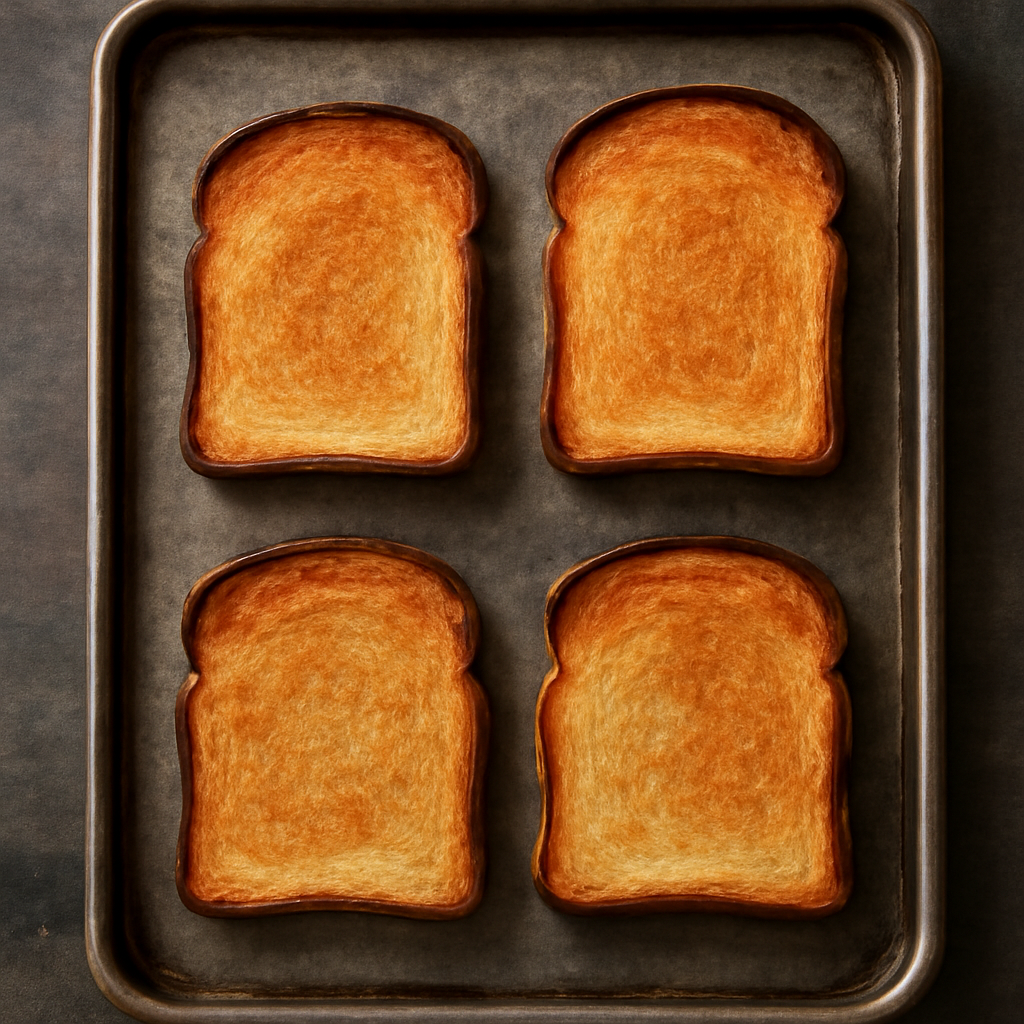
Place the bread slices on a baking tray and toast them under the hot grill for 2 to 3 minutes per side until golden and firm. They need to be properly toasted before the sauce goes on, or the bread will go soggy under the weight of the mixture. Set aside on the tray.
-
Melt the butter in a small, heavy-based saucepan over a medium-low heat. Add the flour and stir constantly with a wooden spoon for about 90 seconds, cooking out the raw flour taste. The roux should smell slightly nutty and pull cleanly away from the base of the pan.
-
Pour in the stout in a slow, steady stream, whisking continuously to prevent lumps. The mixture will seize briefly when the liquid hits the roux; keep whisking and it will smooth out. Add the milk and continue whisking over a medium heat for 2 to 3 minutes until the sauce thickens enough to coat the back of a spoon.
-
Remove the pan from the heat. Add the grated Cheddar in three or four batches, stirring each addition fully into the sauce before adding the next. Adding all the cheese at once risks it clumping or becoming greasy. The finished sauce should be thick, glossy, and smooth, with no visible strings of unmelted cheese.
-
Stir in the Worcestershire sauce, mustard, cayenne, salt, and several grinds of black pepper. Taste it at this point. The sauce should have a clear sharpness from the cheese and mustard, a faint bitterness from the stout, and a low background heat from the cayenne. Adjust seasoning if needed.
-
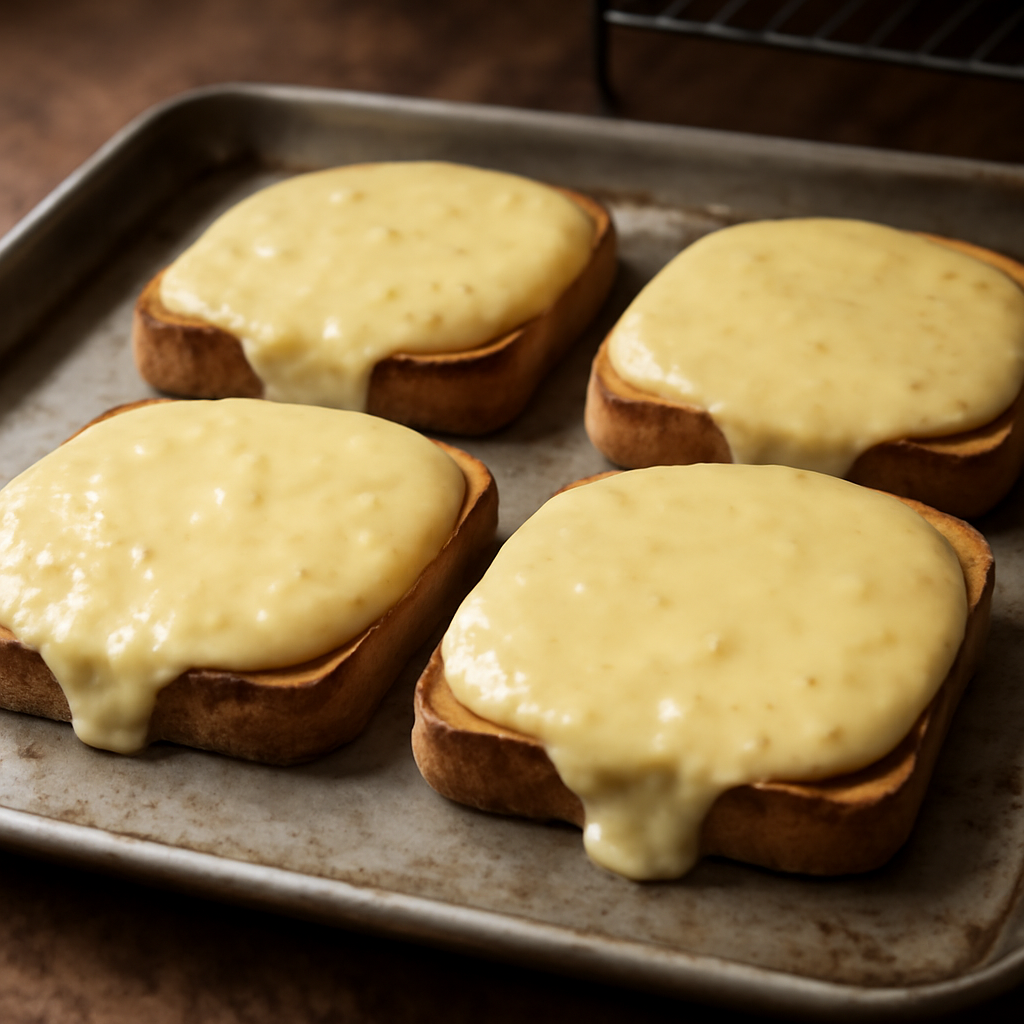
Spoon the sauce generously over the toasted bread, spreading it right to the edges. Leave no bare corners; those will burn while the centre is still warming through. Each slice should carry a layer approximately 1cm thick.
-
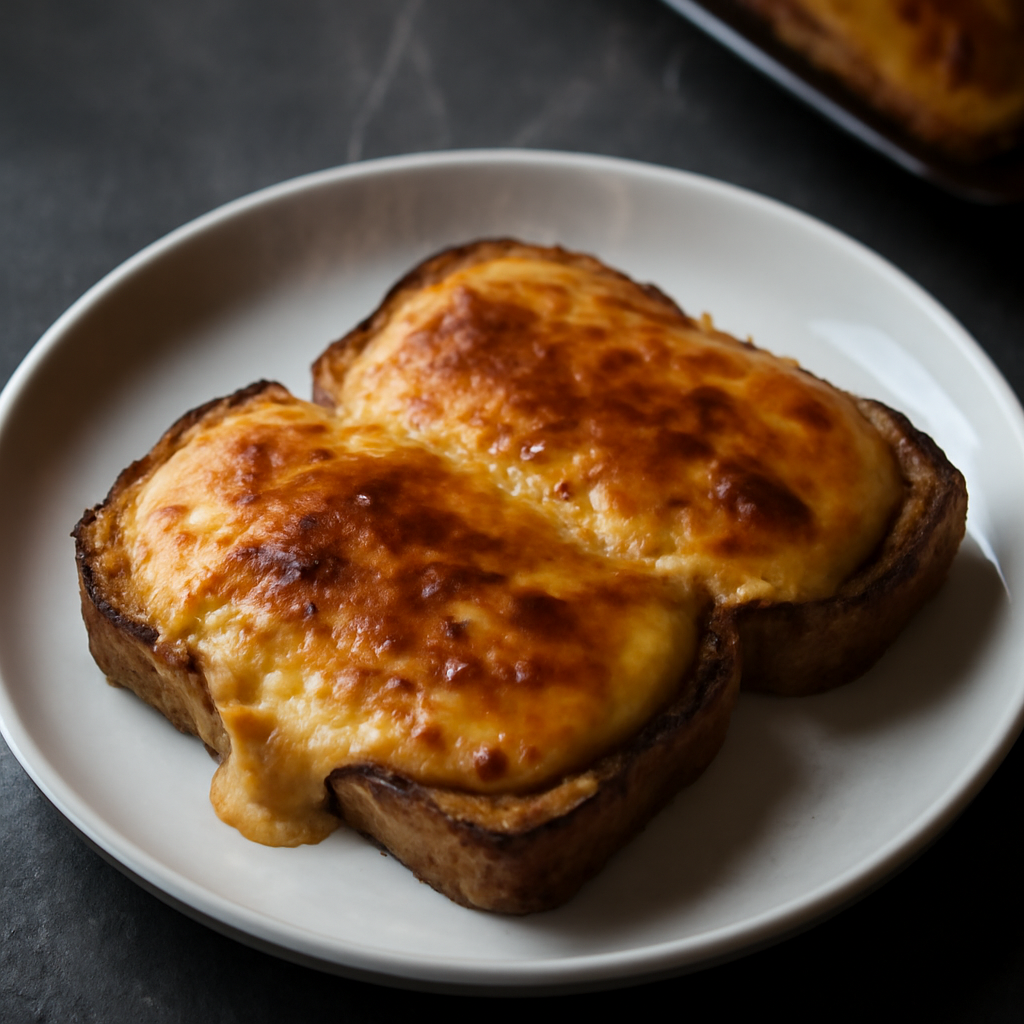
Slide the tray back under the hot grill and cook for 3 to 4 minutes, watching carefully from about the 2-minute mark. The surface should bubble actively, develop dark brown patches, and begin to blister at the edges. Pull it the moment the darkest spots are deep amber. Any further and the sauce separates and turns oily.
-
Leave the rarebit to rest on the tray for 1 minute before serving. The sauce continues to set slightly as it cools, and cutting into it straight from the grill will cause it to run off the bread.
Irish Context
Rarebit made its way into Irish kitchens through the same practical circumstances that shaped much of the country's everyday cooking: sharp, aged Cheddar was available, bread was always on hand, and the grill was already lit. Irish Cheddar, produced in counties Tipperary, Cork, and Kilkenny, has a specific quality that suits this dish well.
It tends to be drier than many continental cheeses and carries a pronounced sharpness that holds its own against the bitterness of stout. Using stout in the sauce rather than ale or wine is a straightforward local adaptation, not a statement about anything.
It adds depth without sweetness and complements the Cheddar without overpowering it. This is the kind of thing that gets made for lunch on a grey Tuesday, not on special occasions.
Tips
Grate the cheese yourself rather than buying pre-grated. Pre-grated Cheddar contains anti-caking agents that prevent it from melting smoothly, and the sauce will be grainy.
If the sauce thickens too much before you can spread it, add a splash more milk and stir it back to a spreadable consistency over a low heat. Do not let it sit off the heat for more than a few minutes or it will form a skin.
Soda bread absorbs moisture faster than sourdough or sliced pan. If you are using soda bread, toast it a little more firmly before adding the sauce.
The cayenne is doing quiet work in the background. Do not omit it, but do not increase it either.
The point is that you should feel a warmth at the back of your throat rather than any identifiable heat on the first bite. Leftover sauce can be stored in a sealed container in the fridge for up to two days.
Reheat it gently in a saucepan with a small splash of milk, stirring constantly. It will not be quite as smooth as fresh, but it is still worth having.

Author Commentary