
 AI
AI
 AI
AI
 AI
AI
Ingredients
Method
-
Mix the fine sea salt, brown sugar, crushed juniper berries, toasted fennel seeds, and lemon zest together in a small bowl until evenly combined.
-
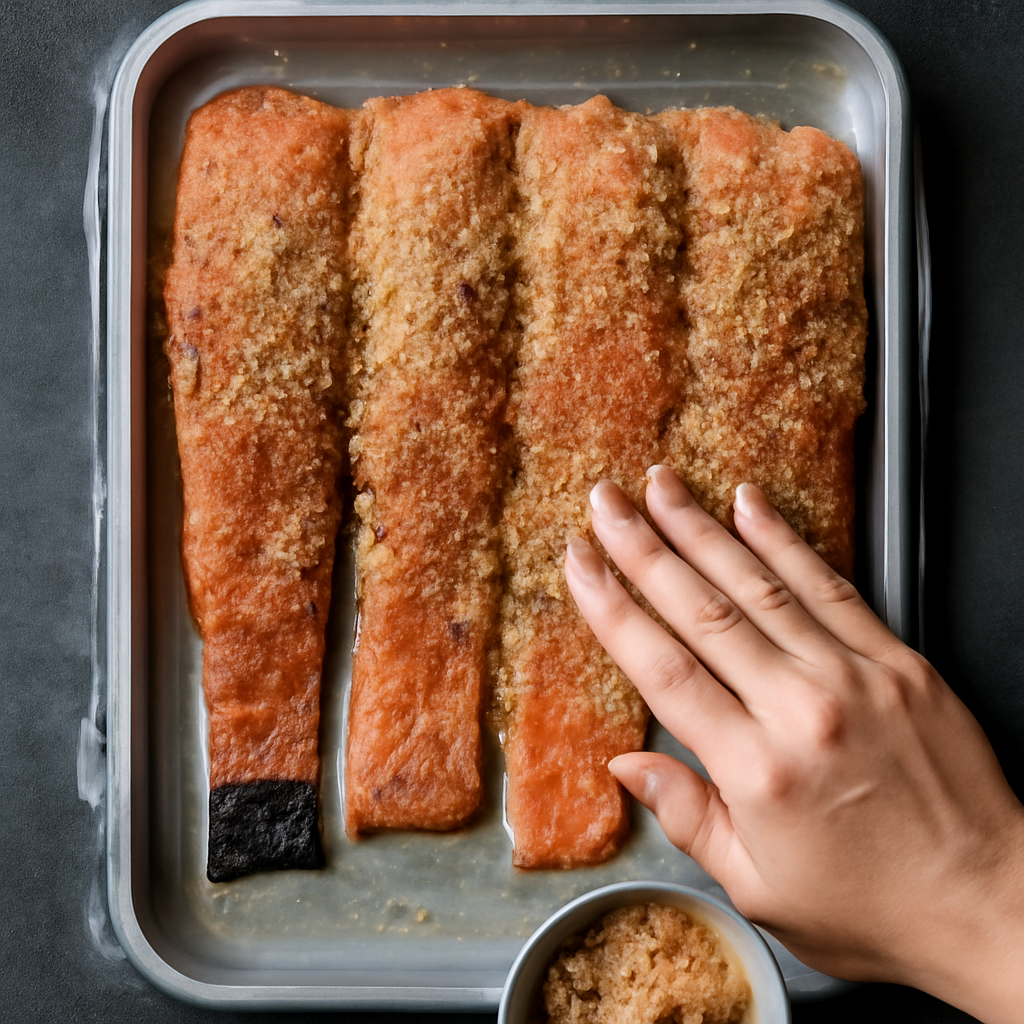
Lay the salmon fillets skin-side down on a tray lined with cling film. Press the cure mixture firmly and evenly over the flesh side of each fillet, covering every part. Drizzle the aquavit directly over the cure. Wrap tightly in the cling film and refrigerate for 25 minutes. No longer: at this thickness, more time will tighten the texture too much and push the flavour of the juniper past the point where it works with the fish.
-
While the salmon cures, stir together the crème fraîche, wholegrain mustard, and lemon juice in a small bowl. Season lightly with black pepper, taste, and adjust. Cover and keep in the fridge until serving.
-
Remove the salmon from the fridge. Unwrap each fillet and rinse the cure off completely under cold running water. Pat very dry with kitchen paper. Any moisture left on the surface will prevent the skin from crisping.
-
Place a heavy-based frying pan, ideally stainless steel or cast iron, over a medium-high heat. Add the rapeseed oil and let it heat until it begins to shimmer, around 2 minutes. The pan needs to be genuinely hot before the fish goes in or the skin will stick.
-
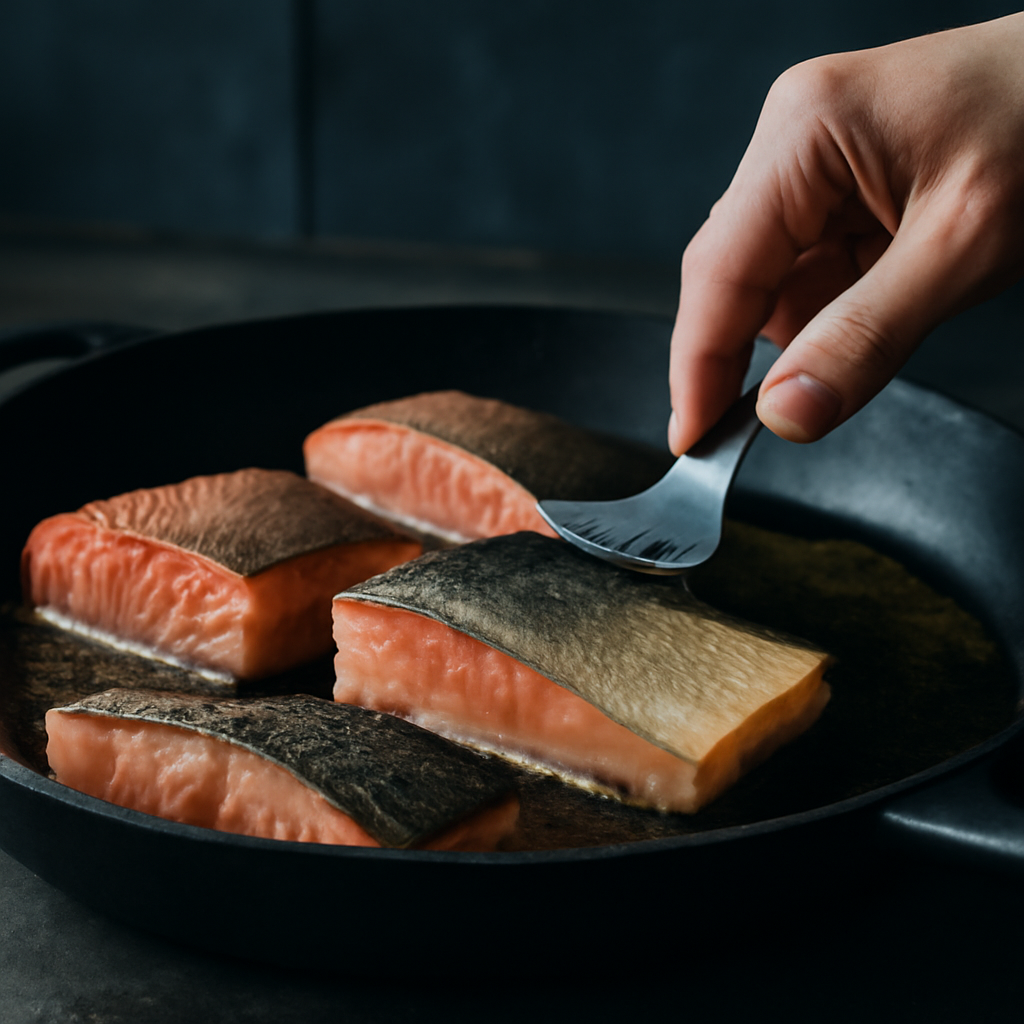
Lay the salmon fillets in the pan skin-side down, pressing each one gently with a fish slice for the first 20 seconds to stop the skin from curling. Cook without moving them for 5 to 6 minutes. The colour will change from translucent pink to opaque from the bottom up; when it has crept about two-thirds of the way up the side of the fillet, flip each piece once.
-
Cook flesh-side down for 90 seconds, then remove the pan from the heat entirely. The residual heat will carry the centre through without drying the flesh. The internal temperature at the thickest point should reach 52 to 55 degrees Celsius for a slightly translucent centre. If you prefer the fish fully cooked through, leave it flesh-side down for 3 minutes before removing the pan from the heat.
-
Transfer the salmon to a warm plate, skin-side up to keep the skin crisp, and rest for 2 minutes. Do not tent with foil or the skin will go soft immediately.
-
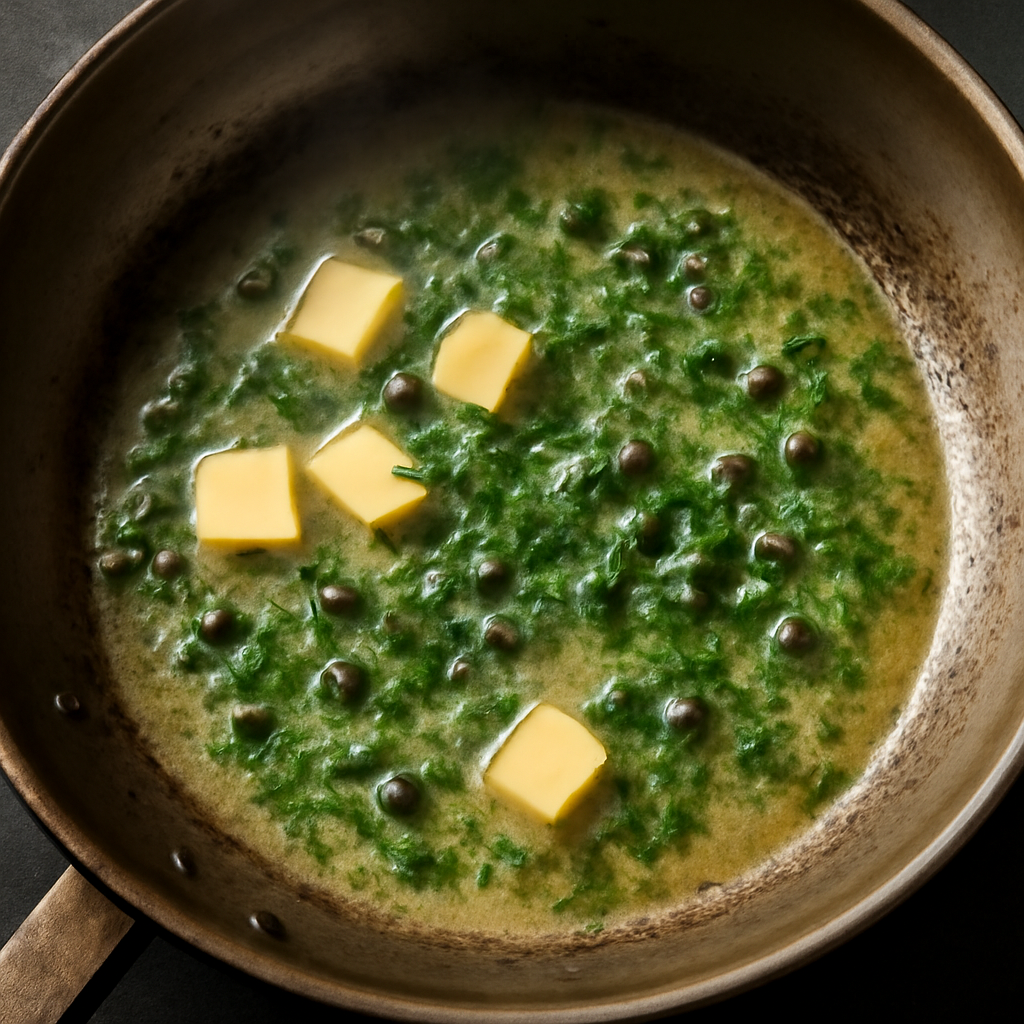
Return the now-empty frying pan to a low heat. Add the cold butter cubes a few at a time, swirling the pan constantly rather than stirring, until the butter is just melted and emulsified into a glossy sauce. It should not foam or brown. Add the baby capers and chopped dill, swirl once more, and take the pan off the heat.
-
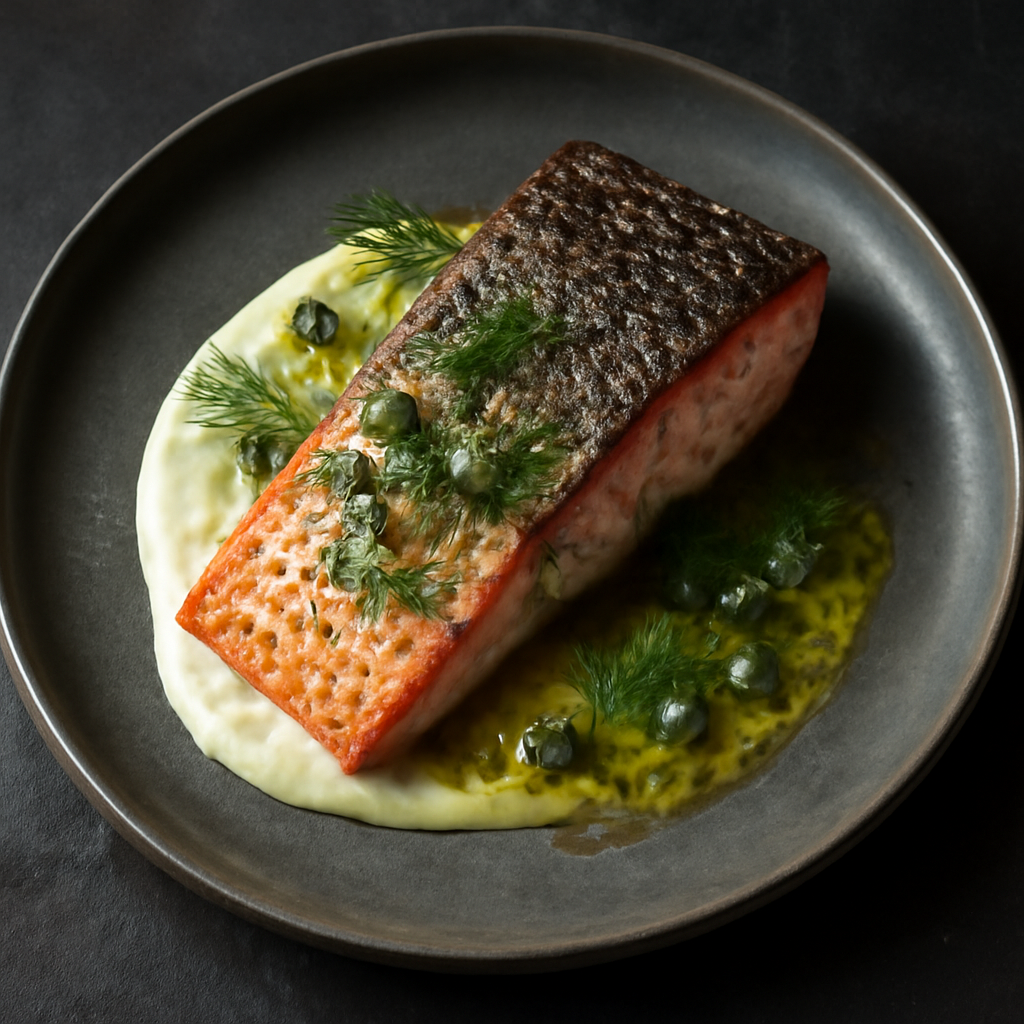
To serve, spoon a generous amount of the mustard crème fraîche onto each plate. Place one salmon fillet skin-side up on the crème fraîche, then spoon the dill and caper butter directly over the flesh. Finish with a pinch of flaky sea salt and a small grind of black pepper.
Irish Context
Wild Atlantic salmon from Irish waters has a shorter season than many people expect, running roughly from late spring through to early autumn depending on the river system. For this recipe, farmed Irish organic salmon is the practical choice for most of the year, and the quality from a number of Irish producers is consistently good enough that the short cure and careful cooking let the fish speak for itself.
The juniper and aquavit point toward northern European preserving traditions without pretending to be a history lesson. The rapeseed oil is Irish; use it here over olive oil because its higher smoke point handles the searing temperature without breaking down.
Tips
The 25-minute cure window matters. Set a timer.
If you go much past 30 minutes the salt starts to draw moisture out visibly and the texture shifts toward something closer to gravlax, which is a different dish. Aquavit is the first choice here because the caraway and anise notes in it echo the fennel seed in the cure.
If you cannot find it, dry gin works because of the juniper already present, but avoid anything heavily citrus-forward as it fights the lemon zest. The crème fraîche mixture can be made up to a day ahead and kept covered in the fridge.
The mustard sharpens slightly overnight, so taste it again before serving and add a small squeeze of lemon if needed. If the butter sauce splits in the pan, it is usually because the heat was too high or the butter was added too fast.
Take the pan completely off the heat, add a teaspoon of cold water, and swirl firmly. It will usually come back together.
Skin that is damp when it goes into the pan will steam rather than sear. If you are not confident the fillets are dry enough, press a sheet of kitchen paper against the skin side and leave it there for a full minute before cooking.

Author Commentary