
 AI
AI
 AI
AI
 AI
AI
Ingredients
Method
-
Warm the milk in a small saucepan over low heat with the bay leaf until it steams but does not simmer. Remove the bay leaf and set the milk aside.
-
Melt the butter in a medium, heavy-based saucepan over medium-low heat. Watch it carefully: you want it melted and just beginning to foam, not browning.
-
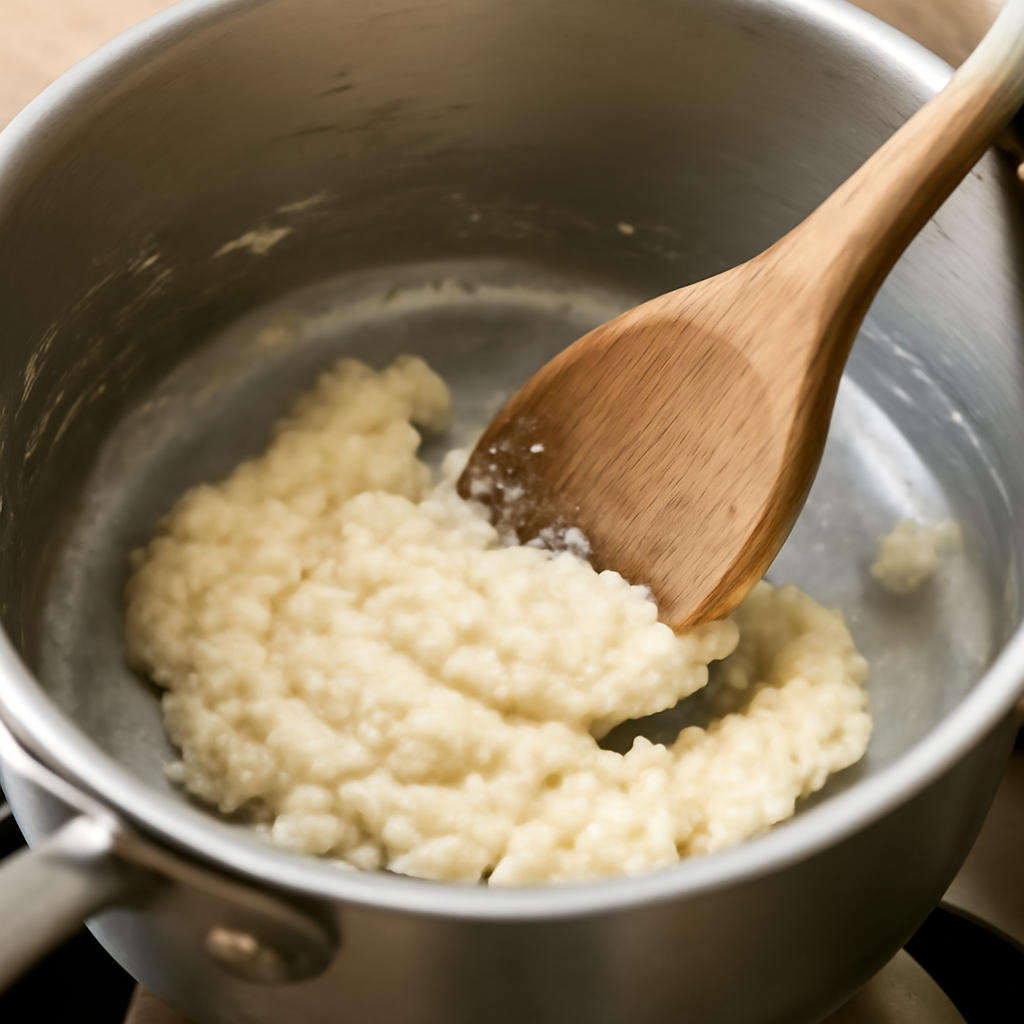
Add the flour all at once and stir immediately with a wooden spoon or a flat-edged spatula. Keep stirring constantly for 2 minutes. The roux should look pale and slightly grainy, smell faintly biscuity, and pull away from the sides of the pan. This step cooks out the raw flour taste; if you cut it short, the sauce will taste chalky.
-
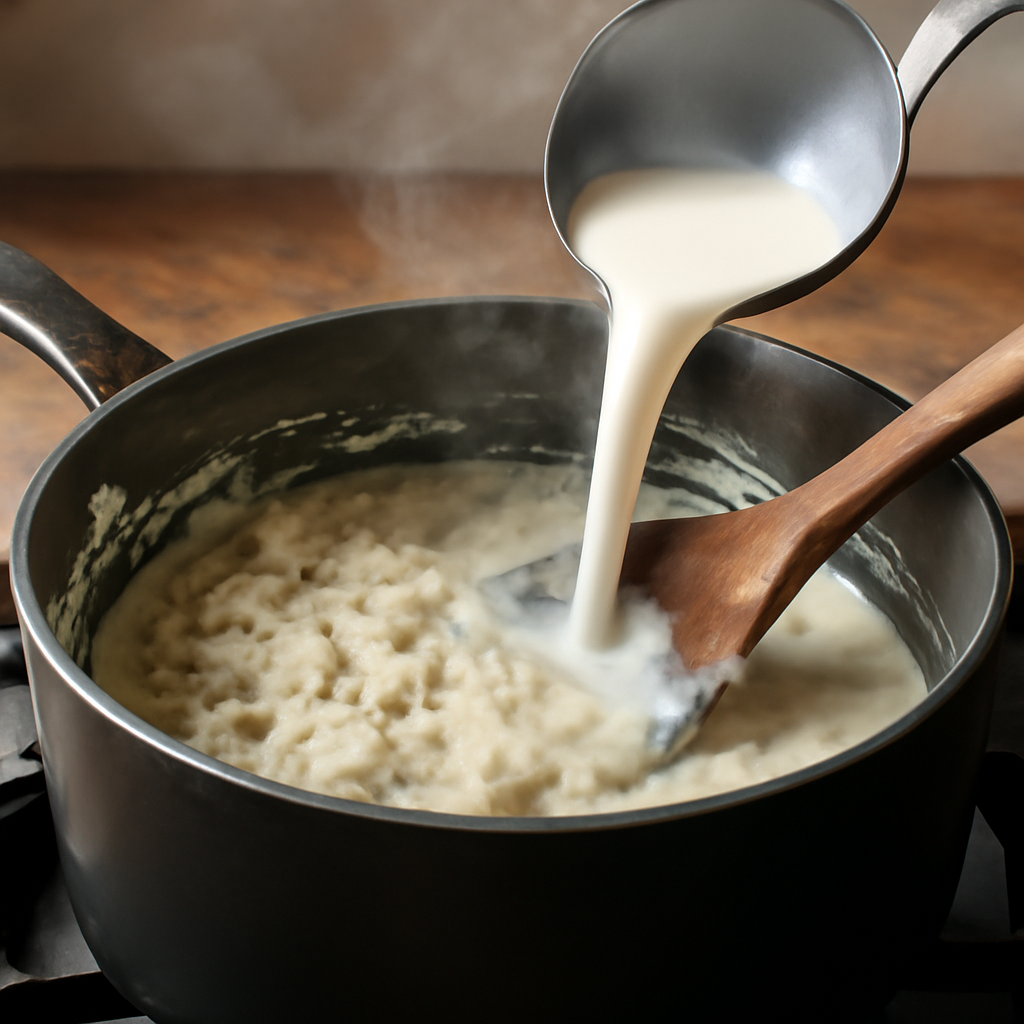
Begin adding the warm milk a ladleful at a time, stirring thoroughly between each addition. Do not rush this. The first few additions will seize into a thick, glossy paste; keep stirring and it will loosen as you add more milk.
-
Once roughly half the milk is incorporated and the sauce is smooth, you can add the remaining milk in a slow, steady pour, stirring continuously.
-
Increase the heat to medium and bring the sauce to a gentle simmer, stirring. Cook for 5 to 6 minutes until the sauce is thick enough to coat the back of a spoon and leaves a clean line when you draw a finger across it.
-
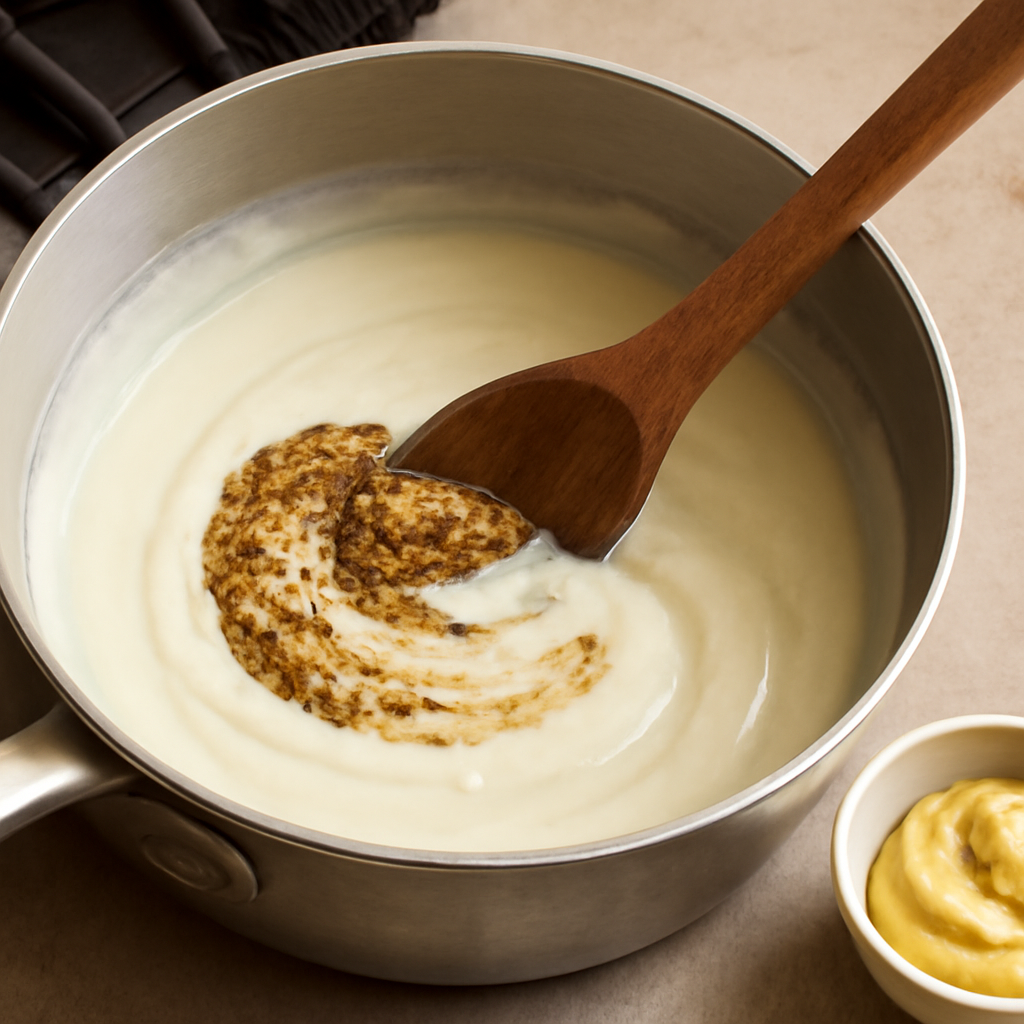
Reduce the heat to low. Stir in the Dijon mustard, the wholegrain mustard, the salt, the white pepper, and the nutmeg. Taste it at this point: the mustard should be clearly present but not aggressive. Adjust with a little more Dijon if you want more heat, or a pinch more salt to bring the other flavours forward.
-
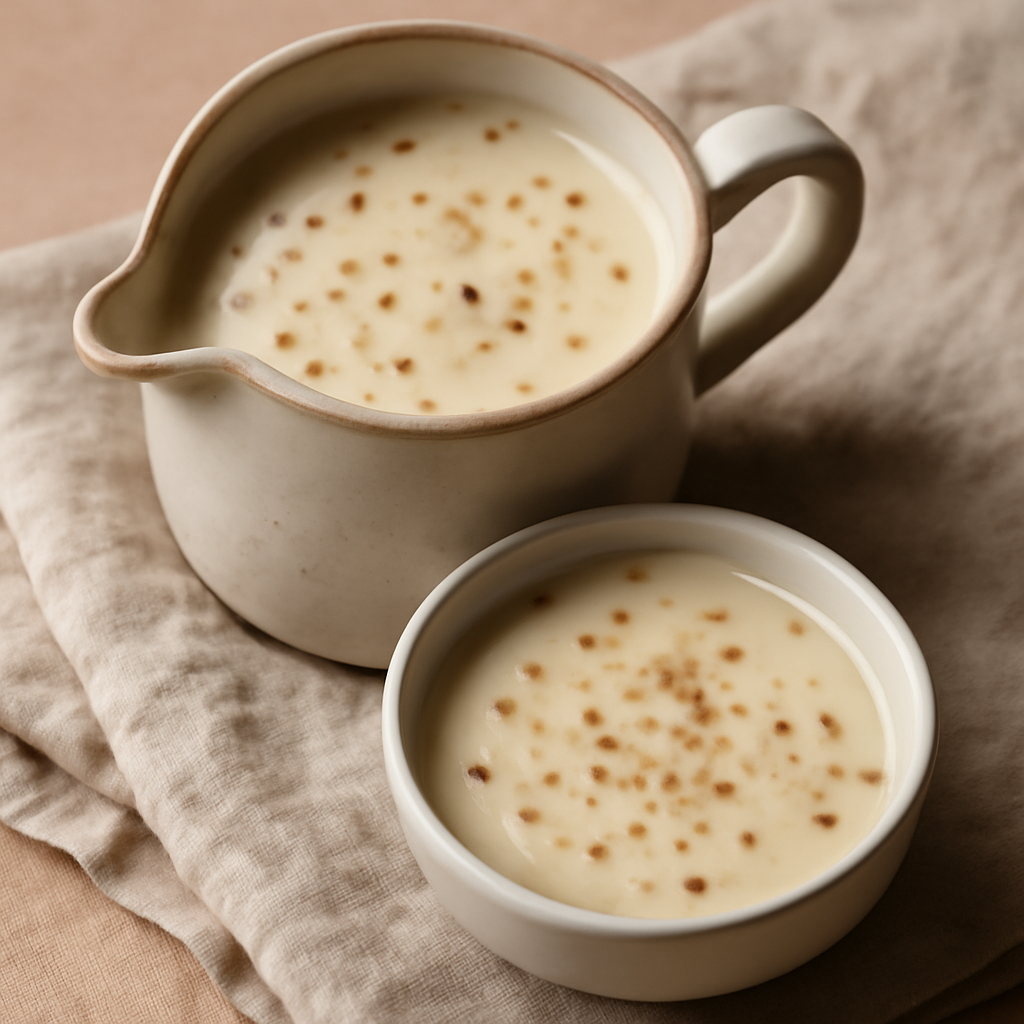
Serve immediately or keep warm over the lowest possible heat with a piece of cling film pressed directly onto the surface of the sauce to prevent a skin forming.
Irish Context
Mustard has been used in Irish kitchens for generations as a condiment alongside bacon joints and boiled ham. Pulling it into a bechamel is a practical step that many Irish home cooks make without ceremony: it turns a plain white sauce into something that can hold its own against the saltiness of cured meat or the blandness of cauliflower.
Wholegrain mustard from small Irish producers is widely available now in supermarkets and farmers markets, and the quality is consistent enough to use in cooking rather than saving it just for the table.
Tips
Cold milk added to a hot roux is what causes lumps. Warm milk is the single most important precaution you can take.
If lumps do appear despite your best efforts, take the pan off the heat and whisk vigorously. A brief blitz with a hand blender will also rescue the sauce without affecting the flavour.
Wholegrain mustard adds visible seeds and a milder, nuttier heat than Dijon alone. Using both gives the sauce two layers of mustard character: the sharpness from the Dijon and the texture from the wholegrain.
If you are making this ahead, reheat it slowly in a saucepan over very low heat with a splash of milk, stirring constantly. It will thicken as it cools and thin back out as it warms.
White pepper rather than black keeps the sauce looking clean and adds a slightly different warmth. If you only have black pepper, it will still work, but the specks will show.
For a thicker sauce suitable for baking, such as in a cauliflower cheese or a lasagne, reduce the milk to 400ml and increase the cook time by 2 minutes.

Author Commentary