
 AI
AI
 AI
AI
 AI
AI
Ingredients
Method
-
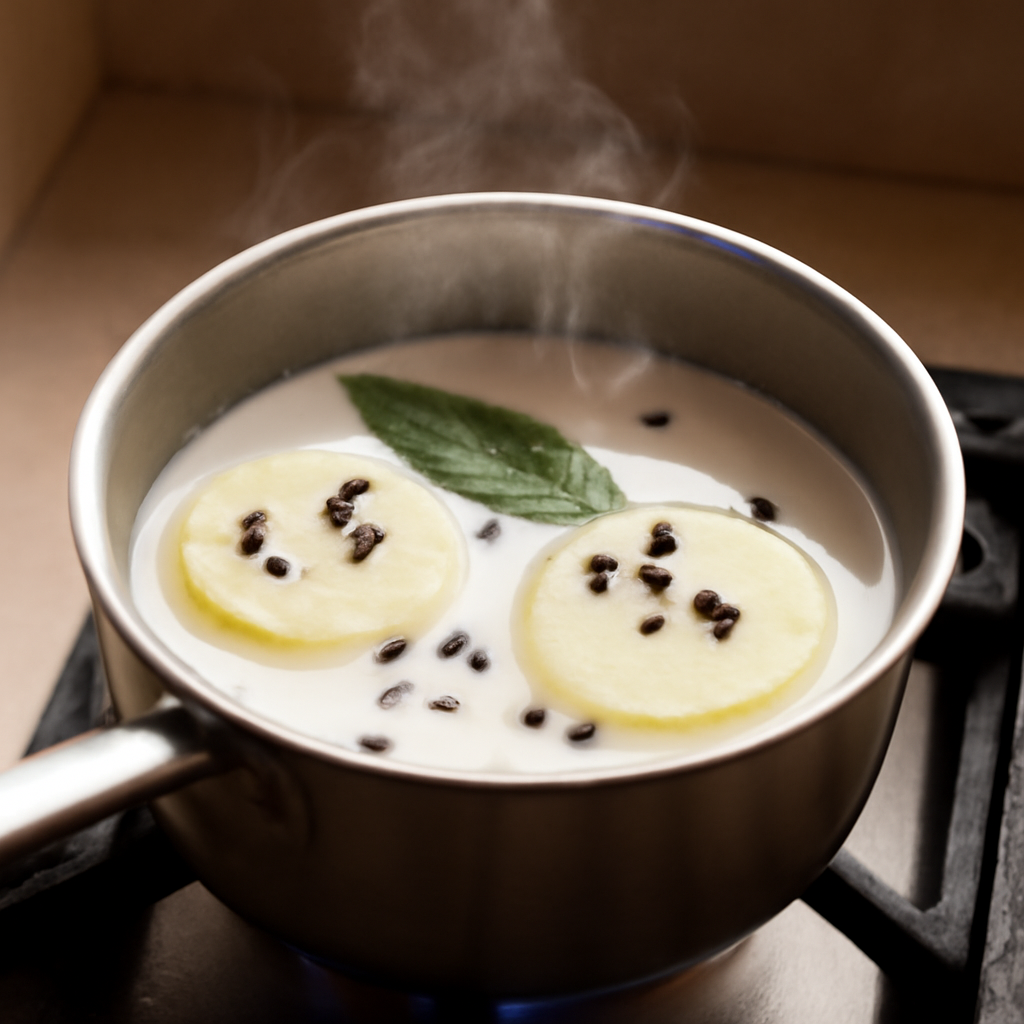
Pour the 500ml of milk into a small saucepan. Press the two cloves into the cut face of the onion halves and drop them into the milk along with the bay leaf and peppercorns. Set the pan over a very low heat and bring the milk slowly to just below a simmer, around 10 to 12 minutes. You are looking for wisps of steam and the occasional bubble at the edge, not a rolling boil. Remove from the heat, cover, and leave to infuse for 10 minutes. This step is not optional if you want a sauce with any depth to it.
-
Strain the infused milk through a fine sieve into a jug and discard the aromatics. Set the jug somewhere warm, beside the hob if possible.
-
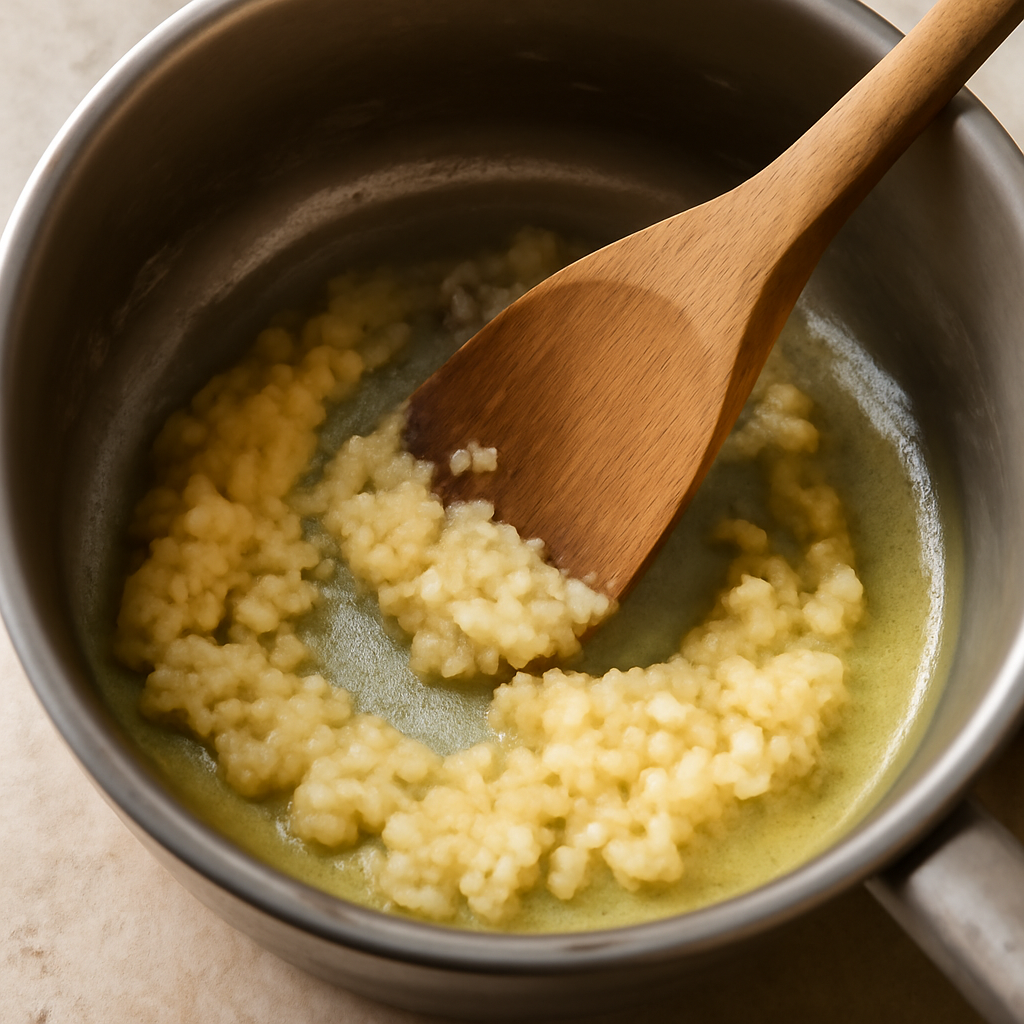
In a heavy-based saucepan, melt the 40g of butter over a medium-low heat. Once it has melted and stopped foaming, add the 40g of plain flour all at once. Stir immediately with a wooden spoon or a flat-edged spatula, working the mixture against the base and sides of the pan. Cook the roux for 2 minutes, stirring continuously. It should smell faintly nutty and look pale blonde, not raw and floury, and not brown. If it starts to colour too quickly, pull the pan off the heat briefly.
-
Begin adding the warm infused milk, a small ladleful at a time, roughly 50ml per addition. Stir each addition vigorously and completely into the roux before adding the next. The first two or three additions will look alarmingly thick and paste-like; this is correct. Keep stirring and the sauce will loosen steadily as more milk is incorporated.
-
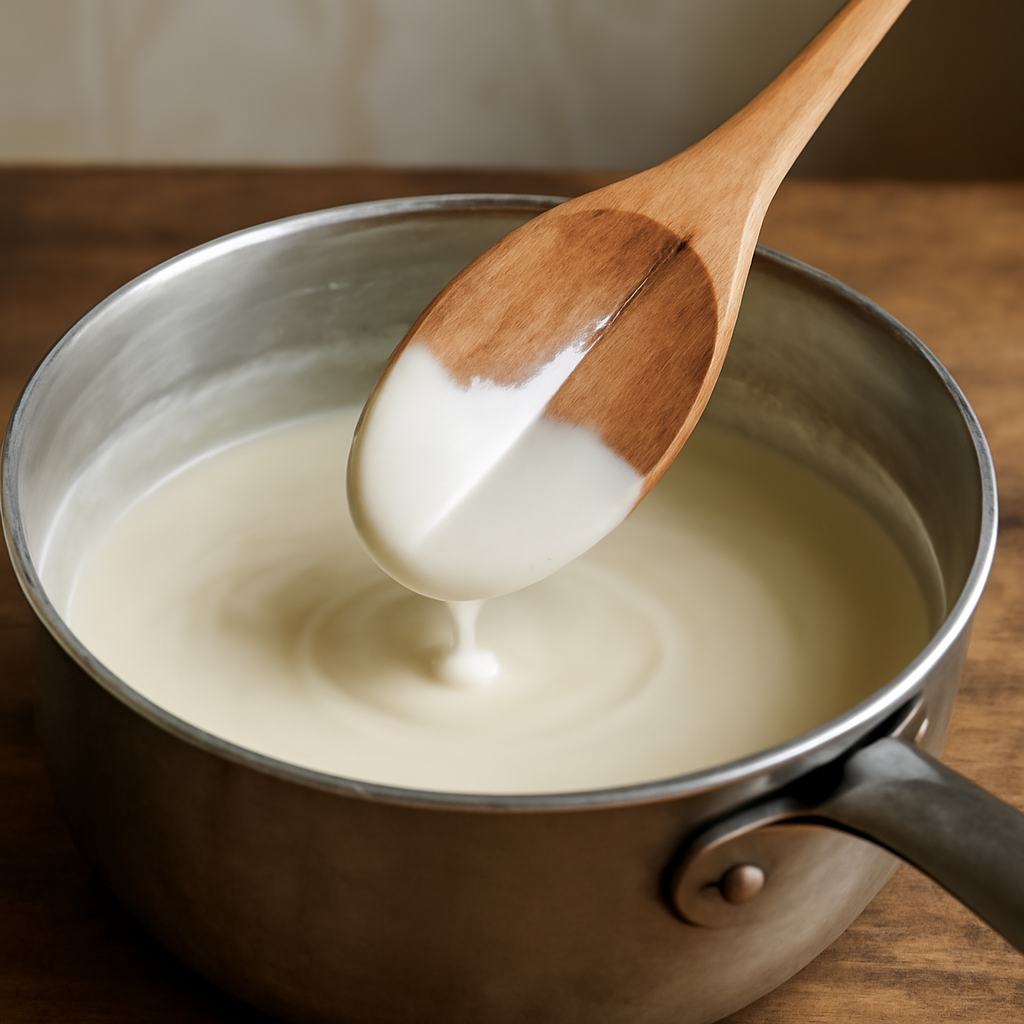
Once you have added roughly half the milk and the sauce is smooth and starting to flow, you can add the remaining milk in a steadier stream, still stirring constantly. Bring the sauce to a gentle simmer over a medium heat, then reduce to low and cook for a further 5 to 7 minutes, stirring frequently. The raw flour taste will cook out and the sauce will thicken to a consistency that coats the back of a spoon and holds a clean line when you draw your finger across it.
-
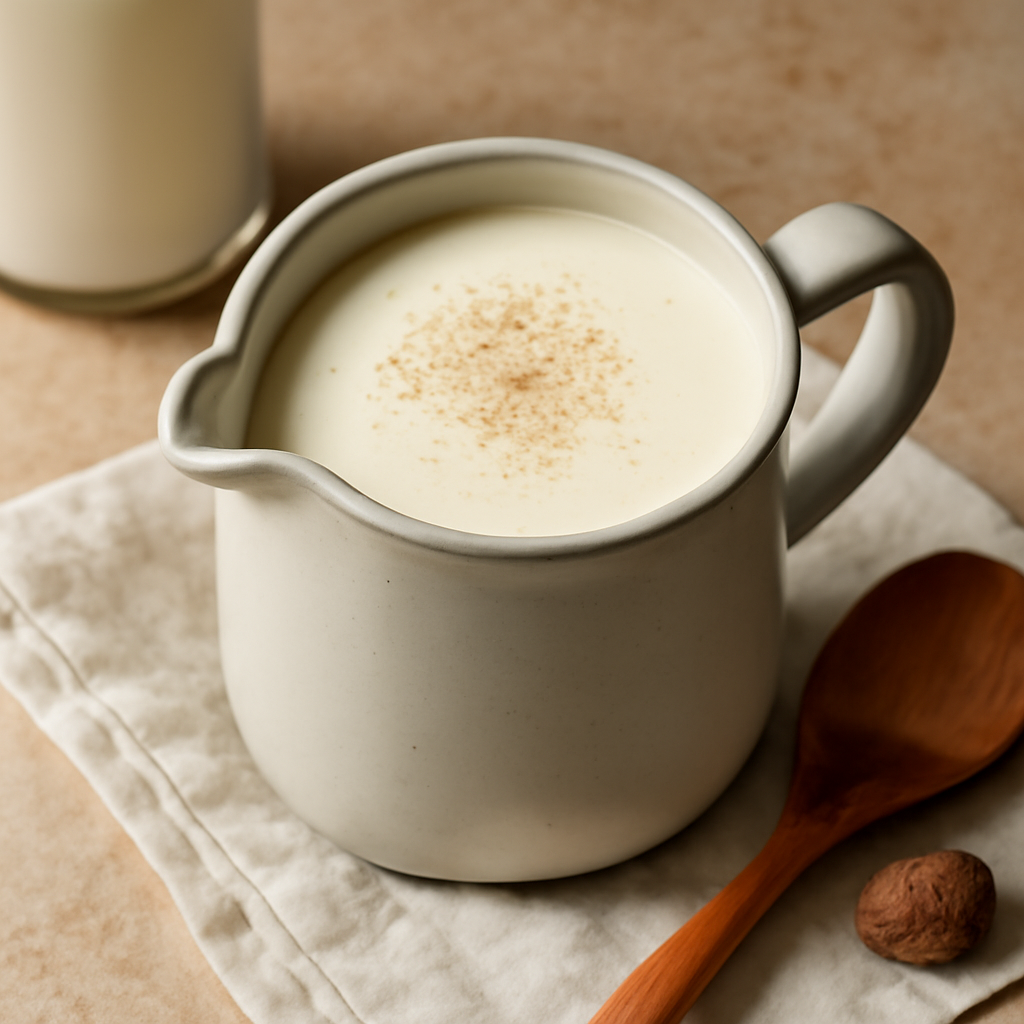
Remove from the heat. Season with salt and a careful pinch of freshly grated nutmeg. Nutmeg is easy to overdo; add it gradually and taste as you go. The sauce should taste of milk first, with the nutmeg sitting quietly in the background.
-
If not using immediately, press a sheet of cling film directly onto the surface of the sauce to prevent a skin forming. It will keep refrigerated for up to 2 days. Reheat gently over a low heat, whisking in a small splash of milk if it has thickened too much on standing.
Irish Context
Bechamel turns up constantly in Irish home cooking, usually under the name white sauce. It is the binding layer in a proper cauliflower cheese, the base of a leek gratin, the sauce that goes over fish pie before the mash.
Many households skip the infusing step and make a plainer version, and it does the job, but taking the extra quarter of an hour to steep the milk in aromatics produces something noticeably better. Irish milk, high in butterfat from grass-fed cattle, makes a noticeably creamier sauce than what you get in drier-climate countries.
It is one of those small advantages that is easy to overlook.
Tips
Warm milk is not a suggestion. Cold milk added to a hot roux is the most reliable route to a lumpy sauce.
If lumps do form despite your best efforts, pass the finished sauce through a fine sieve and whisk it as it heats back up. The ratio here is 40g butter to 40g flour to 500ml milk, producing a medium-bodied sauce.
For a thicker sauce suitable for croquettes or as a base for souffles, use 60g of each and the same quantity of milk. For a thinner pouring sauce, drop both to 25g.
A wooden spoon works, but a flat-edged silicone spatula gives you better contact with the corners of the pan where lumps tend to hide. If the sauce tastes floury after 7 minutes of cooking, give it another 2 to 3 minutes.
The starch needs time to fully gelatinise. To turn this into a cheese sauce, remove the pan from the heat before stirring in the grated cheese.
Adding cheese over direct heat makes the proteins seize and the sauce can turn grainy.

Author Commentary