
 AI
AI
 AI
AI
 AI
AI
Ingredients
Method
-
Set a large, heavy-based saucepan over a medium-low heat. Add the butter and rapeseed oil together. When the butter has melted and stopped foaming, add the diced onion. Cook gently for 8 to 10 minutes, stirring occasionally, until the onion is completely soft and translucent but has taken on no colour at all. If the edges are catching, lower the heat immediately.
-
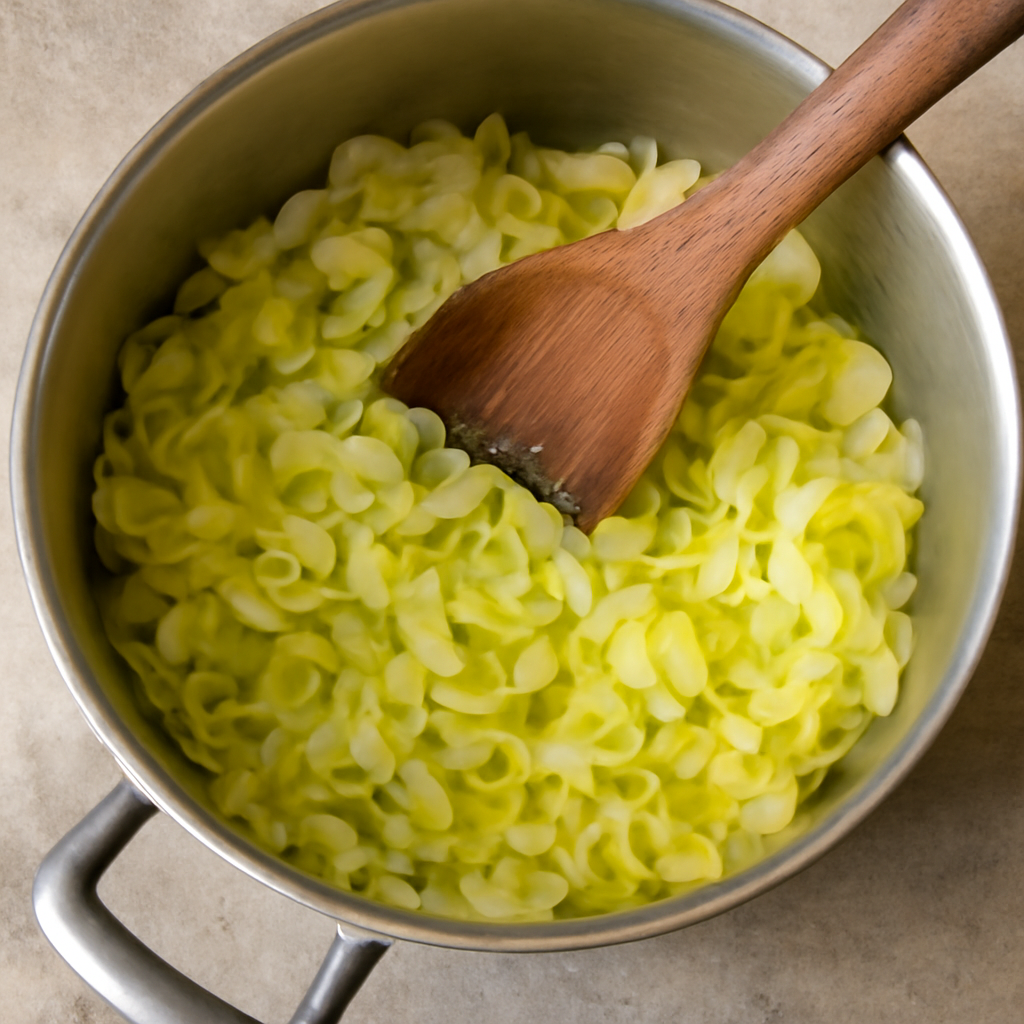
Add the sliced leeks and garlic to the pan. Stir to coat in the butter. Continue cooking on medium-low for another 6 to 8 minutes until the leeks have completely collapsed and feel tender when pressed with the back of the spoon. Resist the urge to rush this stage. Undercooked leek will leave a raw, slightly harsh note in the finished soup.
-
Stir in the mustard powder and white pepper. Cook for 30 seconds, stirring continuously, so the mustard loses its raw edge.
-
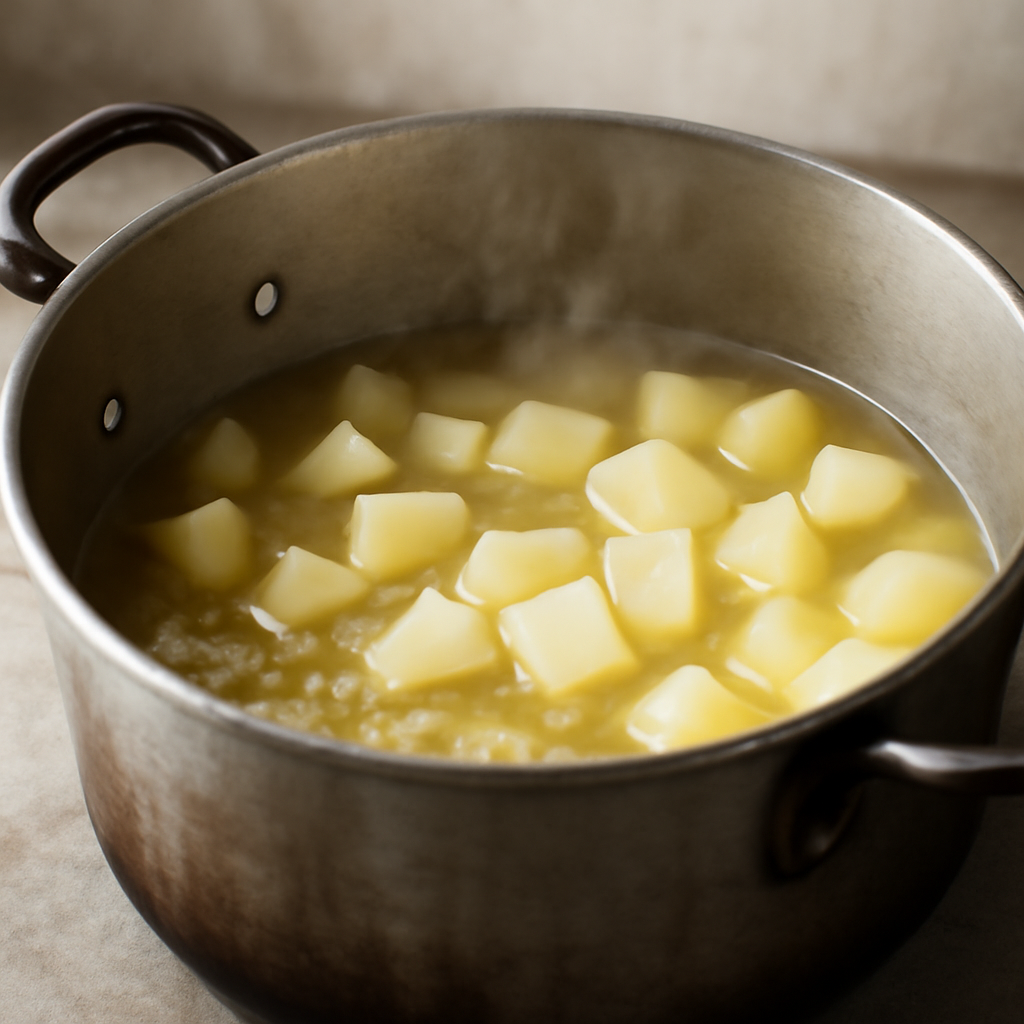
Add the cubed potato and pour over the stock. Increase the heat to bring the liquid to a steady simmer, not a rolling boil. Cook uncovered for 15 to 18 minutes until the potato is completely tender and breaks apart easily when pressed against the side of the pan with a spoon.
-
Remove the pan from the heat. Using a stick blender, blitz the soup until completely smooth. If you want the texture very fine, pass it through a sieve at this point, pressing the solids through with the back of a ladle. This step is optional but it does produce a noticeably cleaner finish.
-
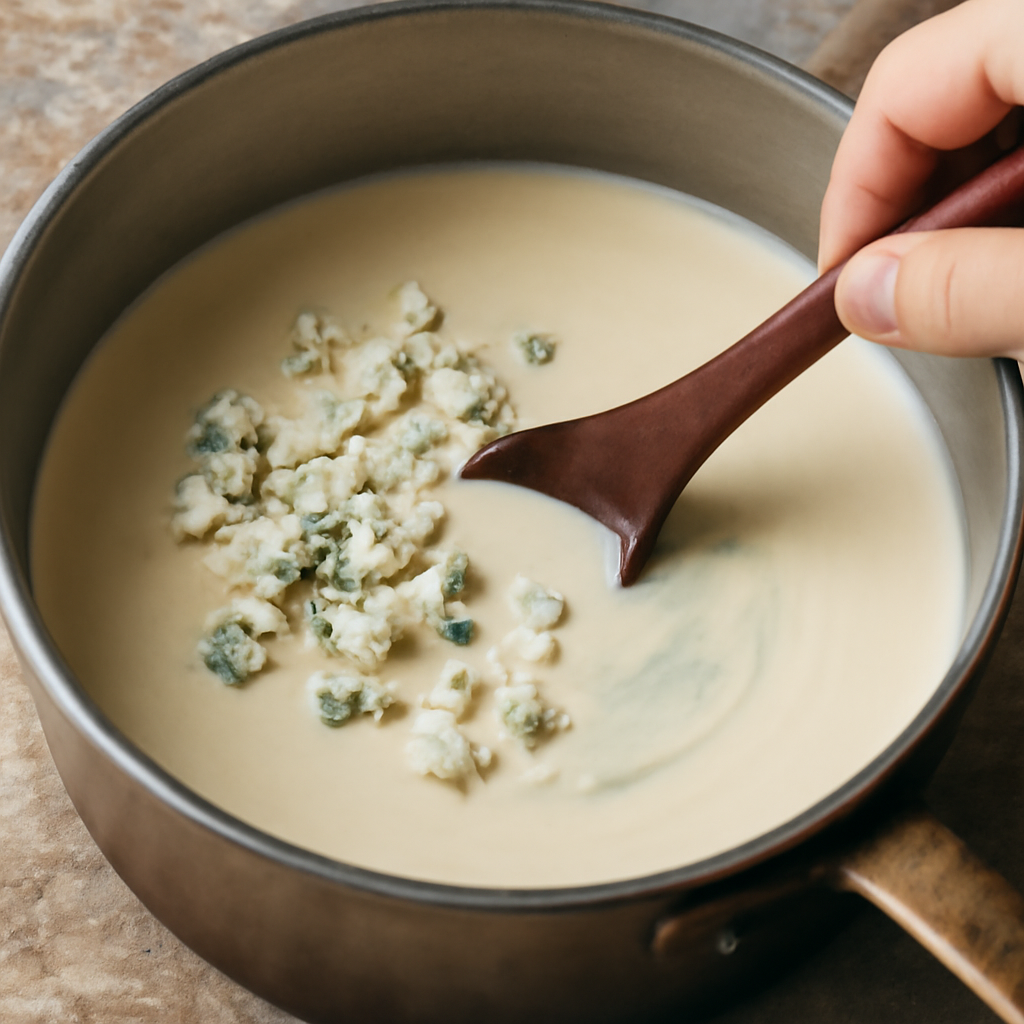
Return the pan to a very low heat. Pour in the double cream and stir to combine. Do not allow the soup to boil again from this point onwards. Add approximately two thirds of the crumbled blue cheese, a small handful at a time, stirring gently after each addition and allowing each portion to melt into the soup before adding the next. The soup will smell strongly of the cheese from this point, which is entirely correct.
-
Taste carefully before adding any salt. Blue cheese is already salty and the stock will have contributed its own salt. Most batches will need little or none. Adjust with white pepper if needed.
-
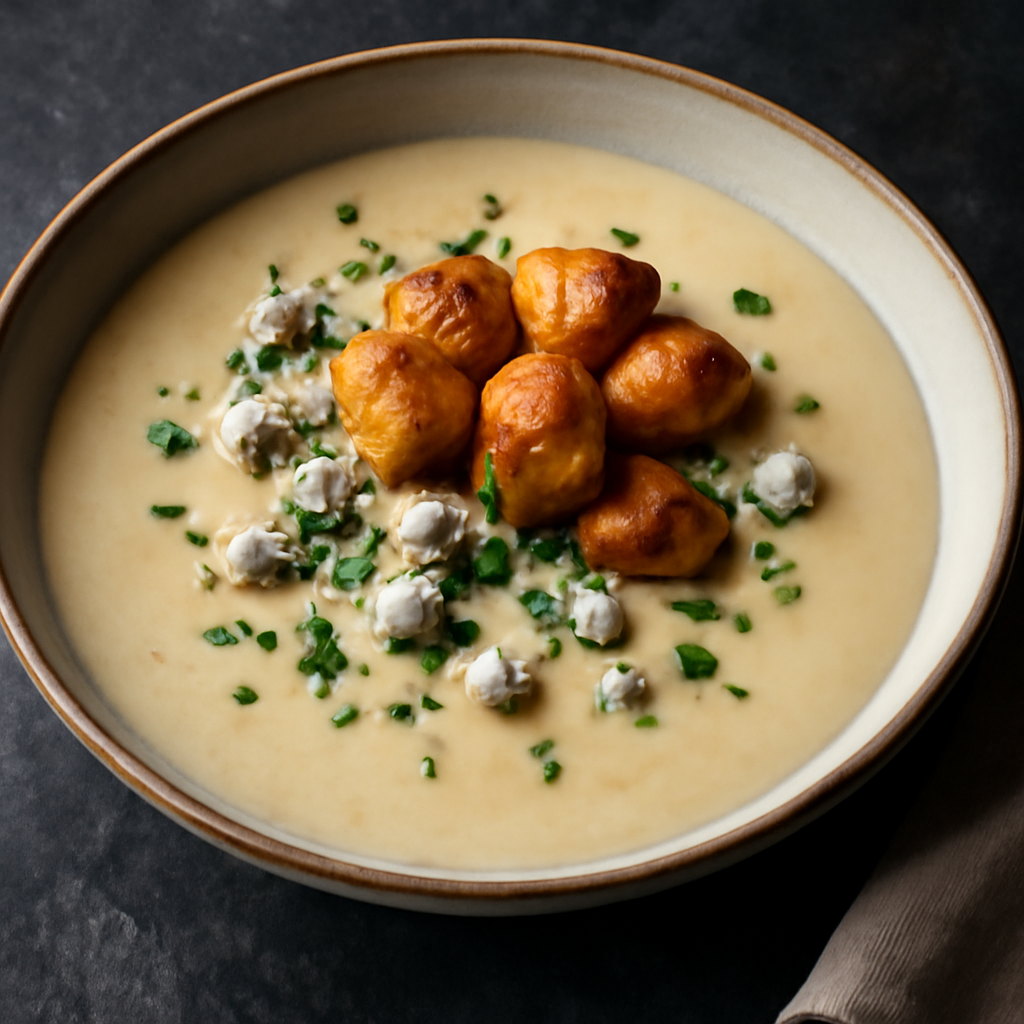
Ladle the soup into warmed bowls. Scatter the remaining crumbled blue cheese over the surface of each portion, so it sits on top rather than melting in. This gives two distinct experiences of the cheese: the background of the soup itself and the sharper, cooler pieces on top. Finish with the snipped chives and a small pile of the buttered sourdough croutons.
Irish Context
Cashel Blue, made in County Tipperary, is one of the most recognised Irish cheeses abroad and has been produced since the 1980s. It is a cow's milk blue with a relatively approachable sharpness, and it behaves well in cooked applications because it melts smoothly without the greasiness that can affect some blues.
Using it in a soup rather than on a cheeseboard is not a particularly common approach in Irish cooking, but the logic is straightforward: the cheese has the structural strength to survive heat and blending without losing its character, and the leek and potato base is already a familiar Irish pairing. This recipe does not attempt to be a traditional dish.
It is simply a way of getting more from an Irish ingredient that most people encounter only on a board with crackers.
Tips
Cashel Blue from Tipperary is the most widely available Irish blue cheese and works very well here. It has enough sharpness to hold its own once blended into the cream and stock base, but it does not overpower everything else.
Wicklow Bán is milder and produces a gentler result. Avoid very young, crumbly blues that have not fully developed their flavour, and avoid anything so pungent it is difficult to eat on its own at room temperature.
The soup will thicken considerably as it sits. If reheating the next day, add a splash of stock or milk to loosen it back to the right consistency before serving.
Reheat on a very low flame, stirring constantly, and do not allow it to boil or the cream may split. If the soup looks slightly grainy after the cheese is added, this usually means the heat was too high.
Lower the temperature and whisk briefly. It should come back together.
A small knob of cold butter whisked in at the end can also help to smooth the texture. The mustard is not detectable as such in the finished soup.
It acts as a bridge between the dairy and the cheese, rounding out the overall flavour without adding anything that reads as mustard on the palate. Do not omit it, but do not increase the quantity either.
Floury potatoes are essential here. A waxy variety will not break down in the same way and the blended base will have an unpleasant gluey texture.

Author Commentary