
 AI
AI
 AI
AI
 AI
AI
Ingredients
Method
-
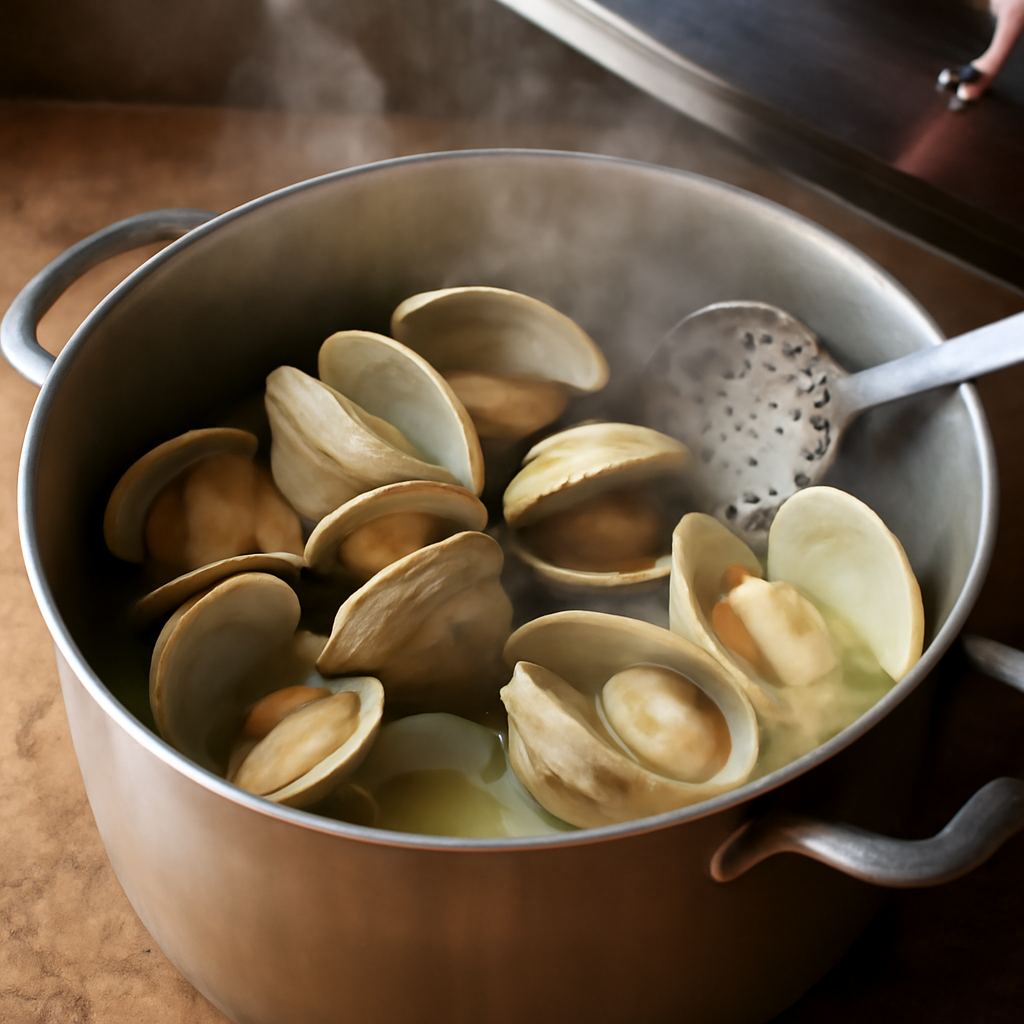
Place the scrubbed clams in a large saucepan with the white wine and 100 ml cold water. Cover tightly and cook over a high heat for 4 to 5 minutes, shaking the pan once halfway through. As soon as the clams open, lift them out with a slotted spoon. Discard any that remain shut. Strain the cooking liquor through a fine sieve lined with a piece of muslin or kitchen paper into a jug, being careful to leave any grit behind. You should have around 400 ml of liquor. Set it aside.
-
Once the clams are cool enough to handle, remove the meat from the shells. Roughly chop the larger clams; leave smaller ones whole. Set aside and keep covered so they do not dry out.
-
In a heavy-based saucepan or wide casserole dish, fry the bacon lardons over a medium heat without any added fat until they are golden and have rendered their own fat, about 5 to 6 minutes. Lift them out with a slotted spoon and set aside on a plate, leaving the fat in the pan.
-
Add the butter to the bacon fat. Once it has melted and the foam has settled, add the diced onion and sliced celery. Cook over a low to medium heat for 8 to 10 minutes until soft and translucent but not browned. Add the garlic and stir for 1 minute.
-
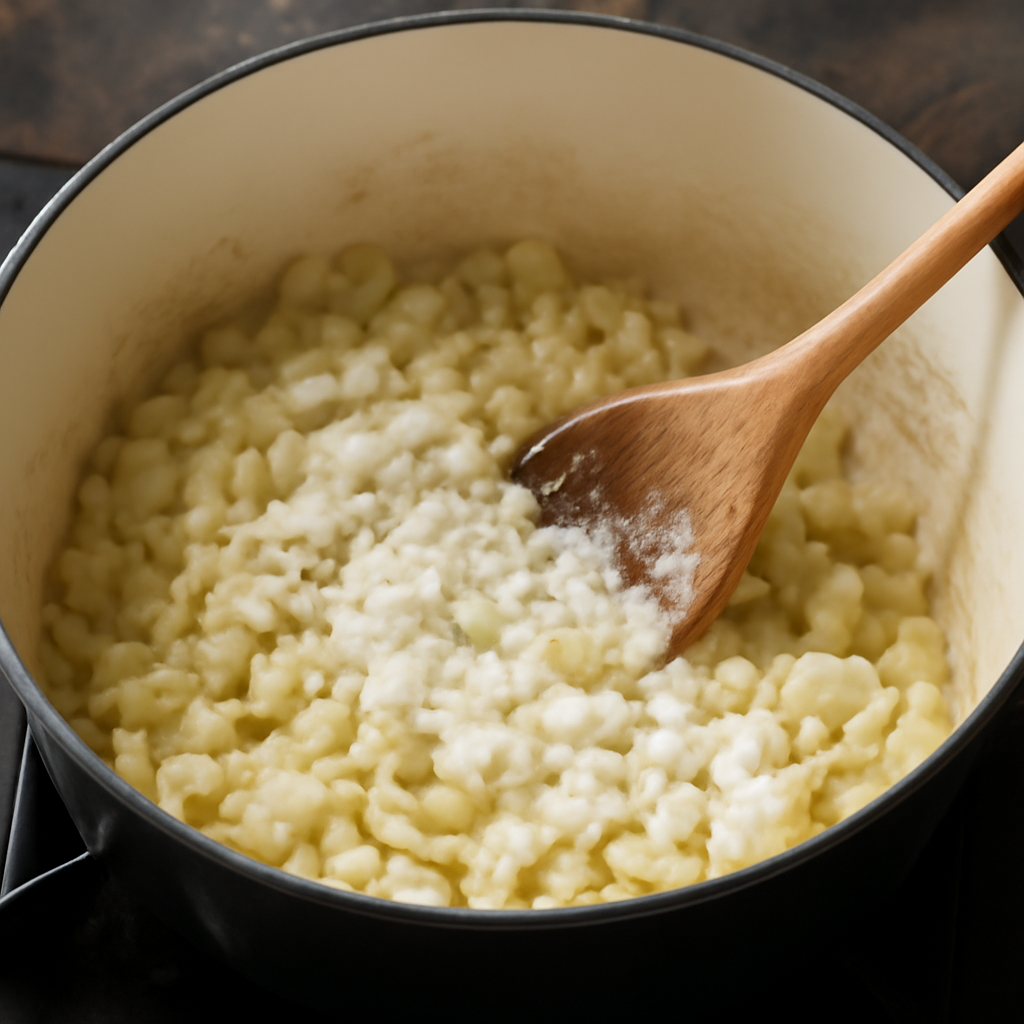
Scatter the flour over the softened vegetables and stir it in well with a wooden spoon. Cook for 2 minutes, stirring constantly, until the flour smells slightly biscuity rather than raw.
-
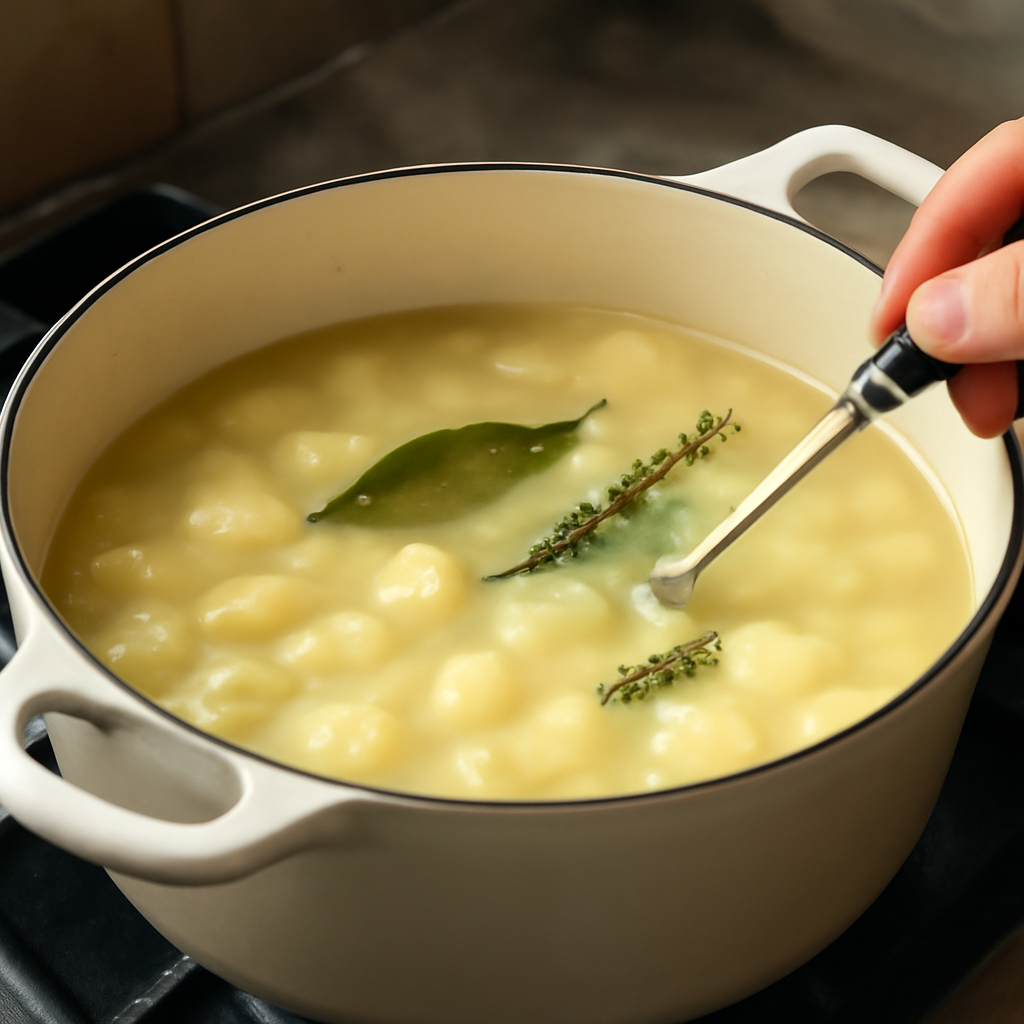
Pour in the reserved clam liquor gradually, stirring continuously to prevent lumps. Follow with the whole milk, again added steadily while stirring. Add the bay leaf and thyme sprigs. Bring the soup to a gentle simmer over a medium heat.
-
Add the cubed potatoes and return to a simmer. Cook for 15 to 18 minutes until the potatoes are just tender when pierced with a knife. They should hold their shape; if they collapse, the chowder will go starchy and heavy.
-
Stir in the double cream and bring the soup back to a gentle simmer. Do not boil at this stage. Taste and season carefully with salt and white pepper. The clam liquor carries salt, so add less than you think you need at first.
-
Return the bacon lardons and the chopped clam meat to the pot. Stir gently and heat through for 2 minutes. The clams are already cooked; any longer and they will turn rubbery.
-
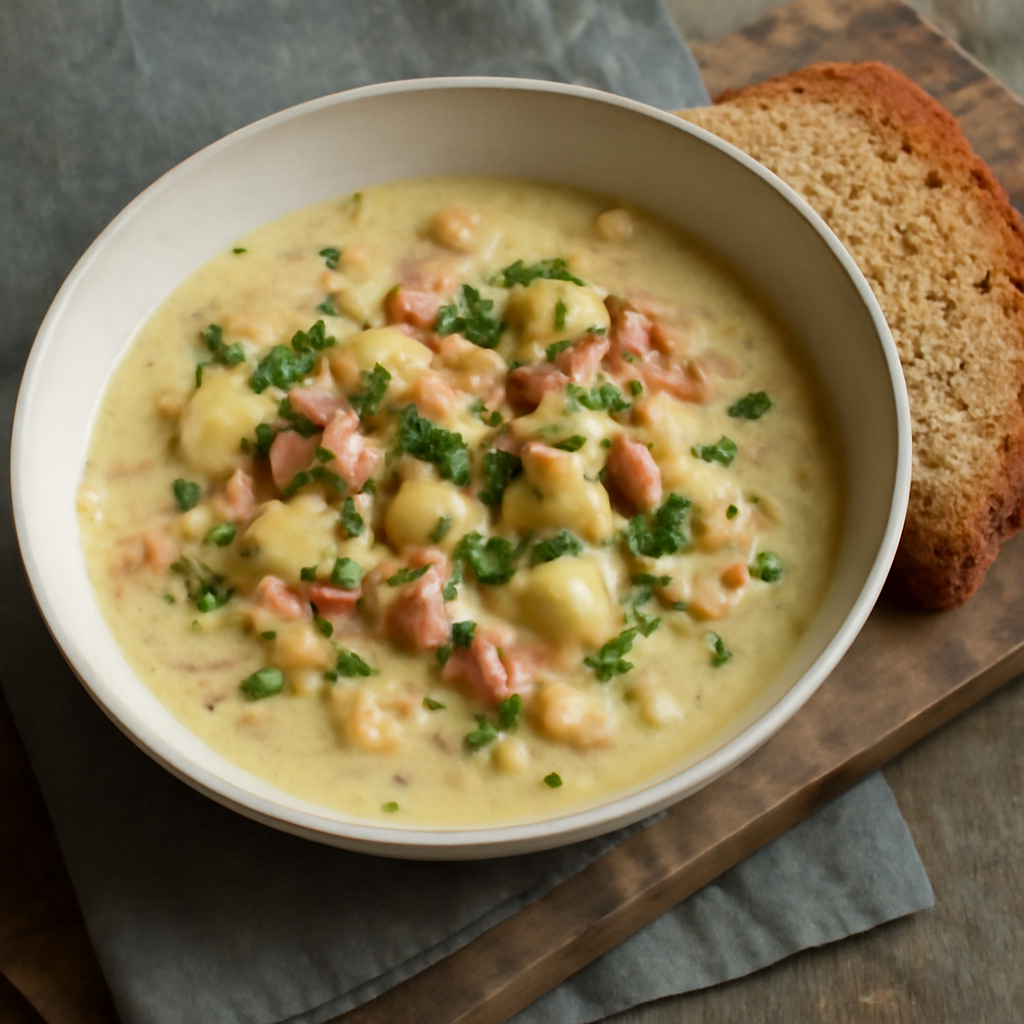
Remove the bay leaf and thyme sprigs. Ladle into warmed bowls, scatter with the chopped parsley, and serve immediately with thick slices of soda bread on the side.
Irish Context
Clams are gathered around the coastlines of Cork, Galway, and Kerry, and in decent weather the supply from small local fishmongers is reliable. The brallion refers to the informal coastal tradition of gathering what the tide leaves, though here it is used loosely as a name rather than a claim about method.
The pairing of smoked bacon with shellfish appears throughout Irish coastal cooking, where the inland cure meets the inshore catch. Soda bread alongside is not ornamental; it is genuinely the right vessel for mopping a bowl that still has cream-gilded broth at the bottom.
Tips
The clam liquor is doing most of the flavour work in this soup. If you rush the straining step and sand gets through, it will grit on every spoonful.
Take the extra minute with the muslin. Floury potatoes are non-negotiable here.
Waxy varieties stay too firm and do not give the soup its slight body. Roosters break down just enough at the edges to thicken things naturally.
If your clam liquor tastes very salty before you even start, reduce the amount you add by about 100 ml and make up the difference with water. Salt levels vary considerably between batches of clams.
White pepper rather than black keeps the appearance clean. A visible fleck of black pepper in a pale chowder looks like something went wrong.
This chowder does not freeze well. The cream separates and the potato turns grainy.
Make it fresh, or refrigerate for up to two days and reheat gently without boiling.

Author Commentary