
 AI
AI
 AI
AI
 AI
AI
 AI
AI
Ingredients
Method
-
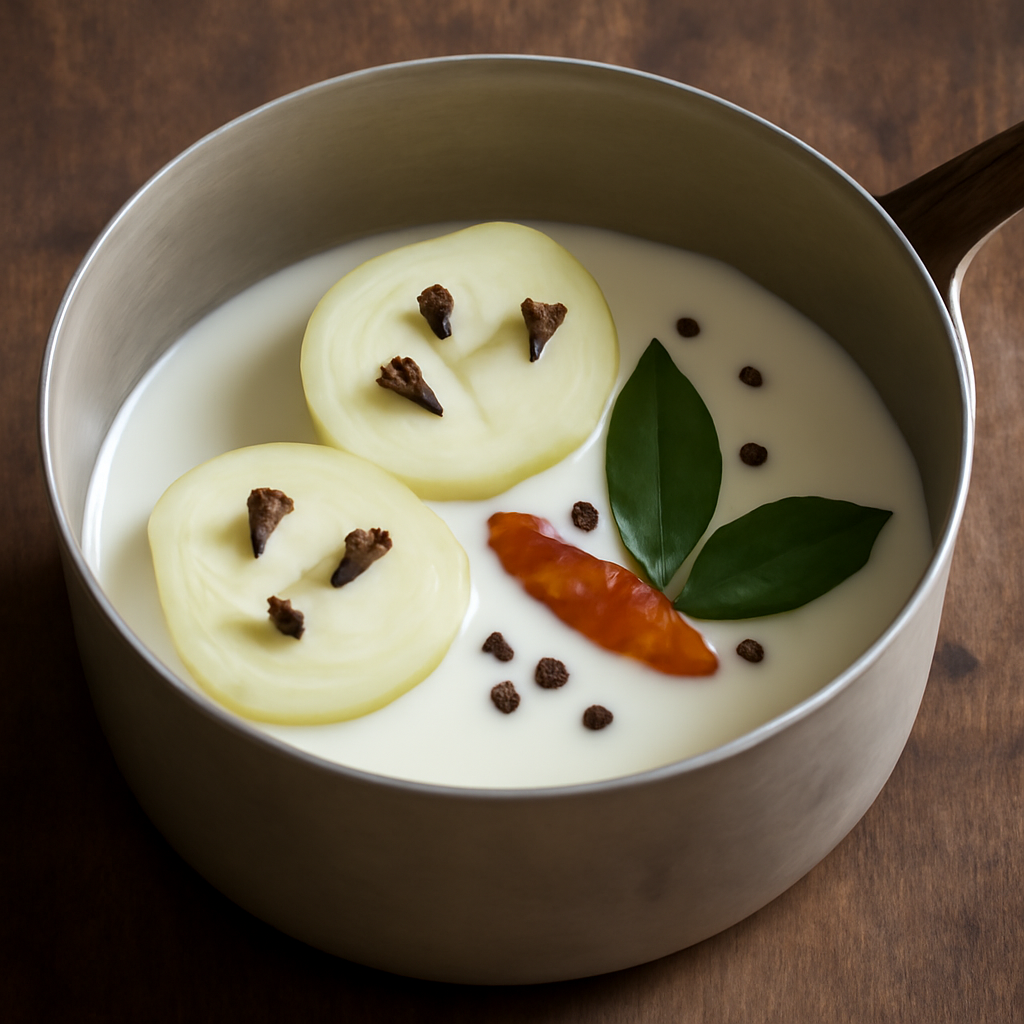
Press the 6 cloves firmly into the cut face of each onion half, 3 per half. This keeps them from floating loose in the milk and makes retrieval straightforward later.
-
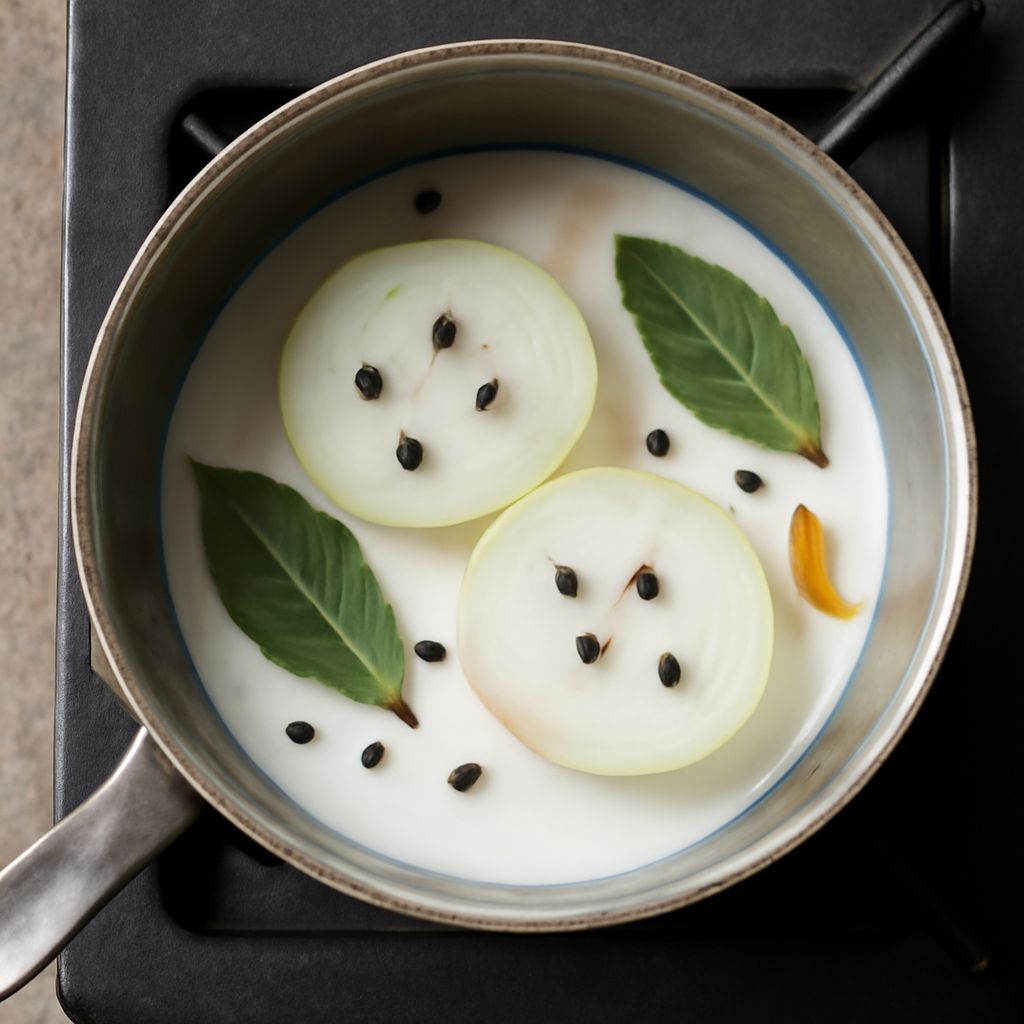
Combine the milk, clove-studded onion halves, bay leaves, peppercorns, and mace blade in a small, heavy-based saucepan. Set over the lowest heat your hob allows. You are not simmering this; you are warming it slowly so the milk steams gently and the aromatics have time to infuse without scorching on the base. Hold it at this temperature for 30 minutes. The milk should shiver occasionally at the surface but never bubble.
-
After 30 minutes, remove the onion halves, bay leaves, peppercorns, and mace blade. Discard them. The milk will smell distinctly of clove and have a faint yellowish tint from the mace.
-
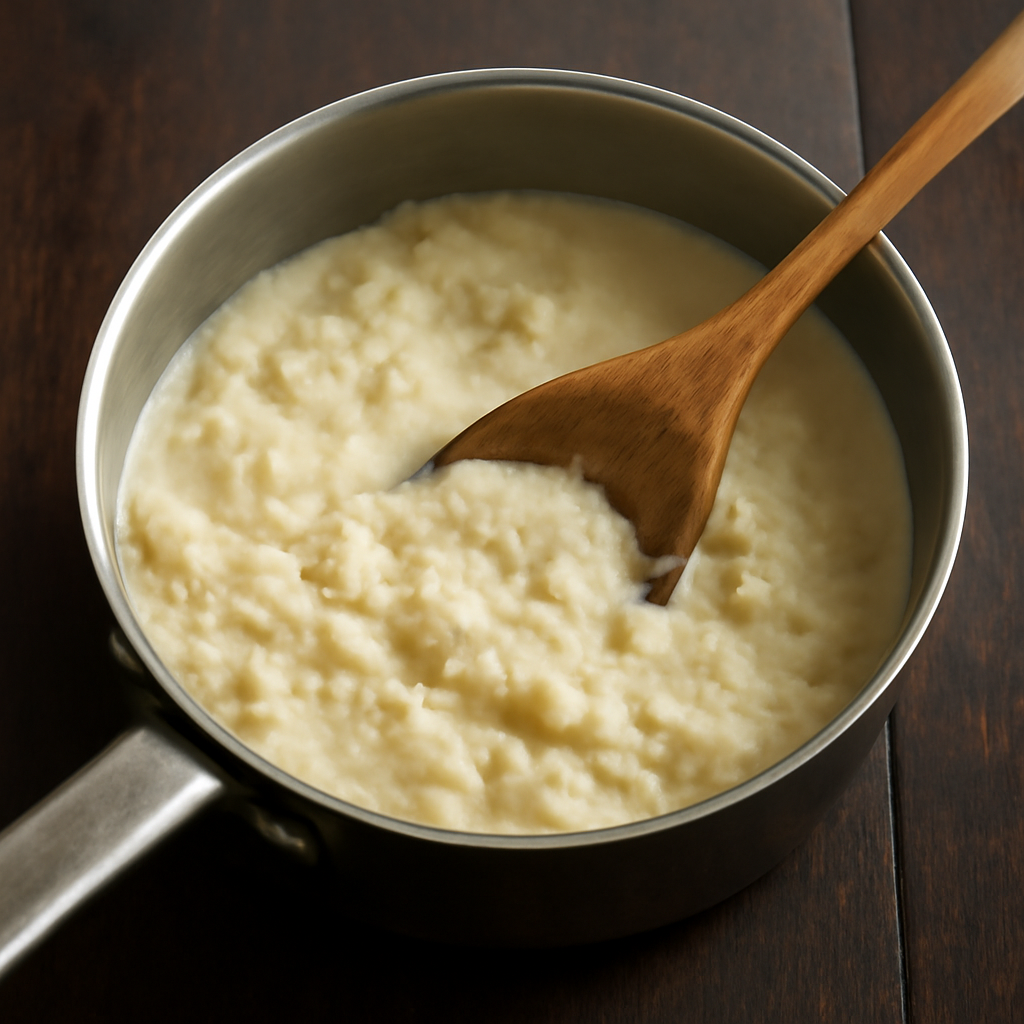
Add the torn bread pieces to the infused milk. Stir once to submerge them. Return to very low heat and cook gently, stirring every few minutes, for 15 to 20 minutes. The bread will absorb the milk and begin to break down into a thick, pale paste. If it looks too tight, add a splash more milk and stir it through.
-
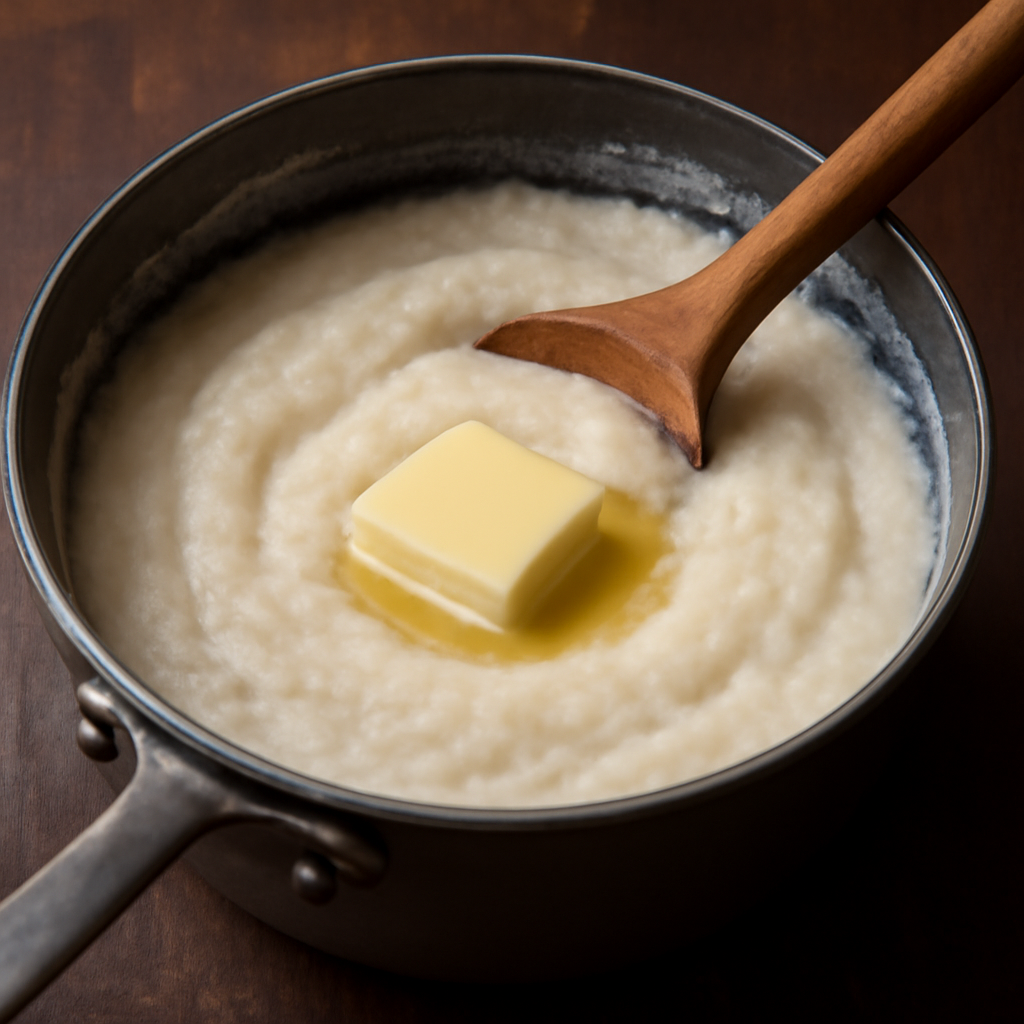
Once the bread has fully softened and the sauce holds its shape briefly before slowly settling, stir in the butter until melted. Add the double cream and stir to combine. The sauce should now be loose enough to pour slowly but thick enough to mound slightly on a spoon.
-
Season carefully with salt, white pepper, and a small grating of fresh nutmeg. Taste again; the clove flavour should be present but not aggressive. If it tastes flat, a little more salt usually resolves it rather than more spice.
-
Serve immediately, or keep warm over the lowest heat with a sheet of baking parchment pressed against the surface to prevent a skin forming. If it thickens further on standing, stir in a tablespoon or two of warm milk before serving.
Irish Context
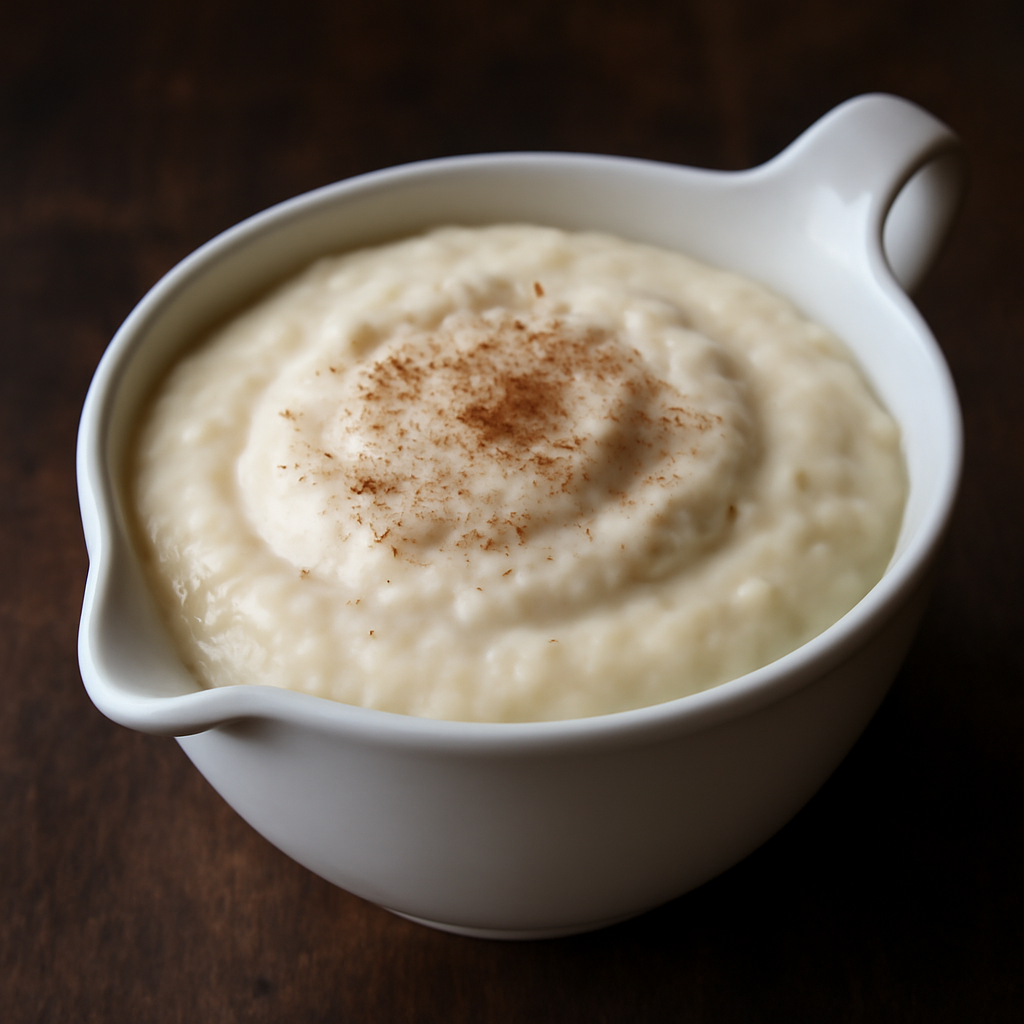
Bread sauce appears regularly on Irish tables for Christmas dinner, Easter roasts, and any Sunday when a bird goes in the oven. It is made from the plainest of ingredients: milk, old bread, and a few spices that would sit in any kitchen cupboard.
Most households have their own proportions, arrived at through trial rather than instruction, and the result tends to vary from quite thick and stodgy to almost pourable depending on the cook. This version sits in the middle: substantial enough to hold its shape on the plate beside slices of roast chicken or turkey, but loose enough to spoon without effort.
Tips
Day-old white bread works better than fresh. Bread that is too soft makes a gluey sauce with a slightly raw starch taste.
If you only have fresh bread, spread the torn pieces on a baking tray and leave them in a low oven at 100 degrees Celsius for 10 minutes to dry slightly before using. White pepper rather than black keeps the sauce looking clean and pale.
Black pepper specks are not a problem flavour-wise, but the appearance suffers if presentation matters to you. The sauce thickens considerably as it cools.
If you are making it ahead, pull it off the heat when it is slightly thinner than you want it to end up. Reheat gently with a splash of milk, stirring the whole time.
A blade of mace is worth seeking out rather than substituting ground mace. The blade releases its flavour gradually and does not muddy the colour of the milk the way ground spice can.
Pressing the cloves into the onion before infusing is not fussy habit; it genuinely matters. Loose cloves tend to get missed during straining and a bite of clove in a finished sauce is unpleasant.

Author Commentary