
 AI
AI
 AI
AI
 AI
AI
Ingredients
Method
-
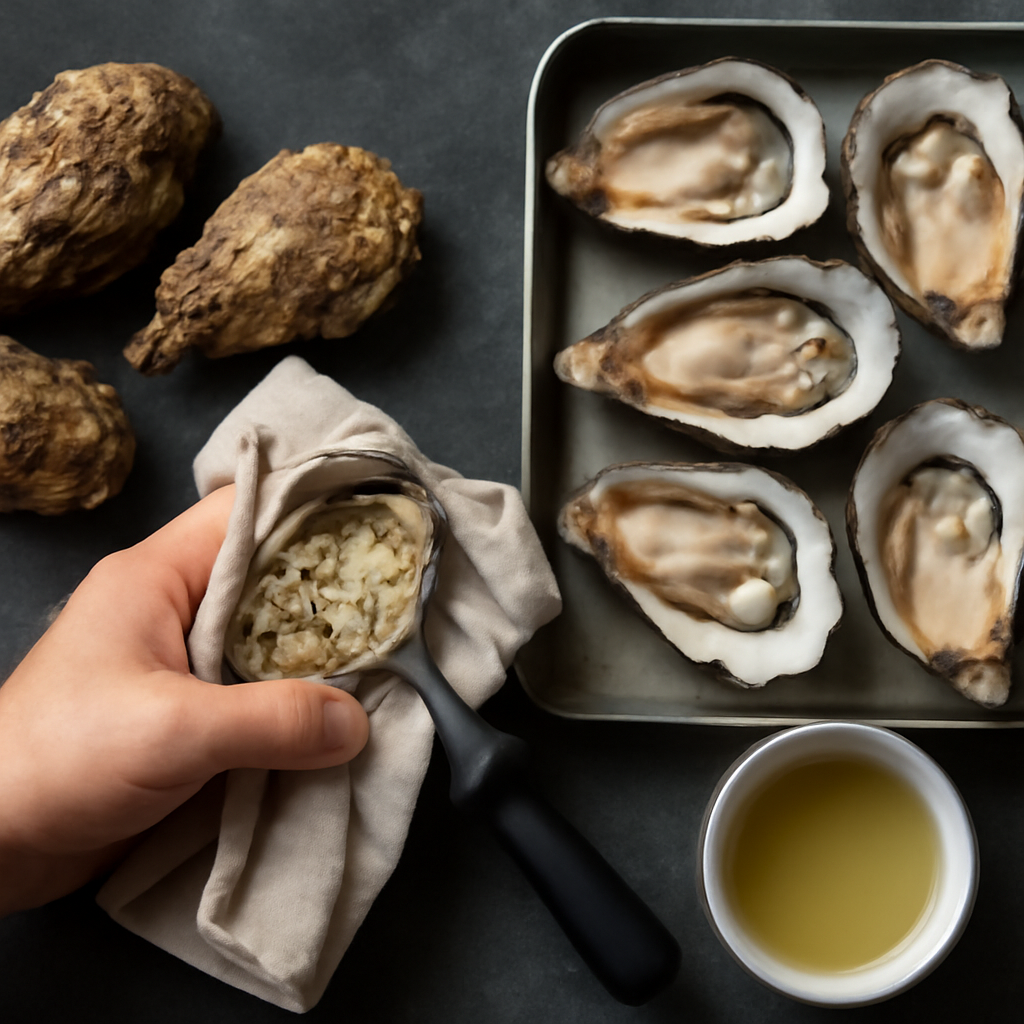
Scrub each oyster under cold running water with a stiff brush. Discard any with cracked shells or that feel unusually light. Set them on a folded tea towel on a stable surface, cupped side facing down.
-
To shuck: grip each oyster firmly in the cloth with the hinge pointing towards you. Insert the tip of an oyster knife into the hinge joint at a slight downward angle, applying firm, controlled pressure. Twist the knife to pop the hinge, then slide it flat along the top shell to sever the adductor muscle. Lift off the flat top shell and discard it. Run the knife under the oyster in the cupped shell to cut the lower muscle, keeping as much of the brine in the shell as possible. Pick out any shell fragments with the tip of the knife.
-
Arrange the shucked oysters in their shells on a tray. Work quickly so they stay cold. Tip off no more than half the natural liquor from each shell into a small bowl; reserve it.
-
Place a wide, heavy-based frying pan over a high heat until it is smoking. Do not add oil or butter at this stage.
-
Add the shallot to the dry pan and let it colour for 30 seconds, stirring once. It will catch slightly at the edges; this is intentional and adds depth to the sauce.
-
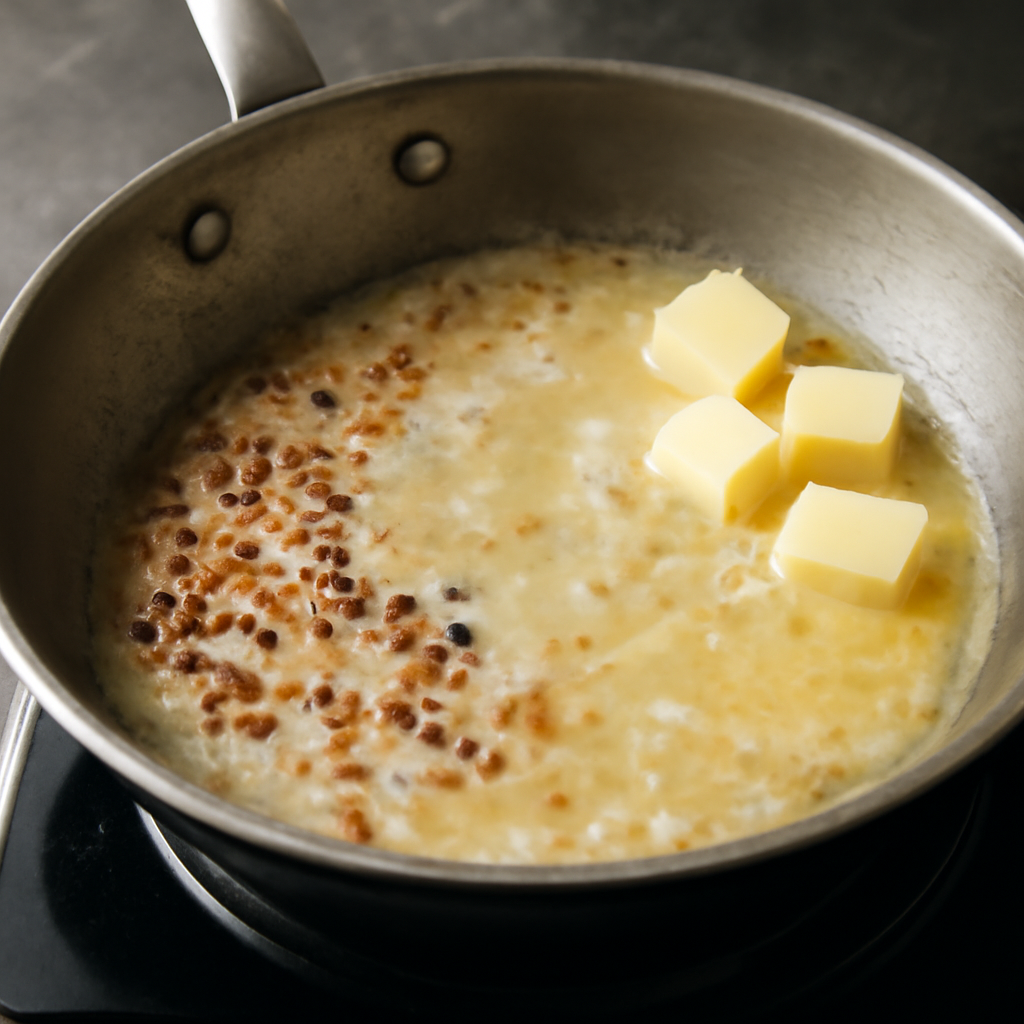
Pour in the dry vermouth. It will spit and reduce fast. Add the reserved oyster liquor. Let the liquid reduce by half, about 45 seconds to 1 minute. The smell will shift from sharp alcohol to something rounded and slightly saline.
-
Reduce the heat to medium. Add the cold butter cubes a few at a time, swirling the pan continuously rather than stirring with a spoon. The butter should melt into the liquid and emulsify into a glossy, lightly thickened sauce. If it separates and looks oily, the pan is too hot; remove from heat briefly and keep swirling. Season with lemon juice, salt, and white pepper.
-
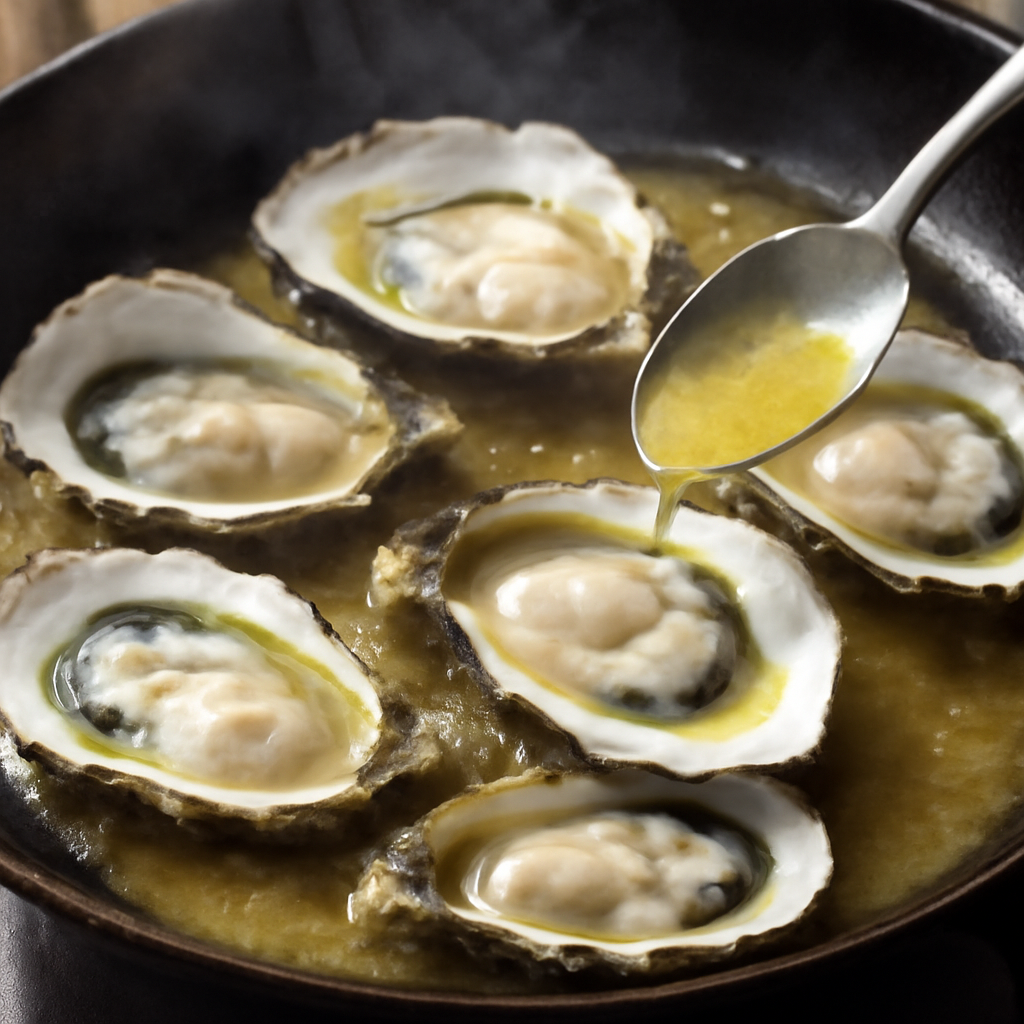
Working in two batches of six, place the oysters directly into the pan in their shells. Spoon the sauce over them. Cook for exactly 60 to 75 seconds. The oysters are done when the edges just begin to curl and the flesh turns from translucent to opaque at the thinnest points. The centre should still look slightly glossy. Overcooked oysters shrink, toughen, and lose all their sea flavour.
-
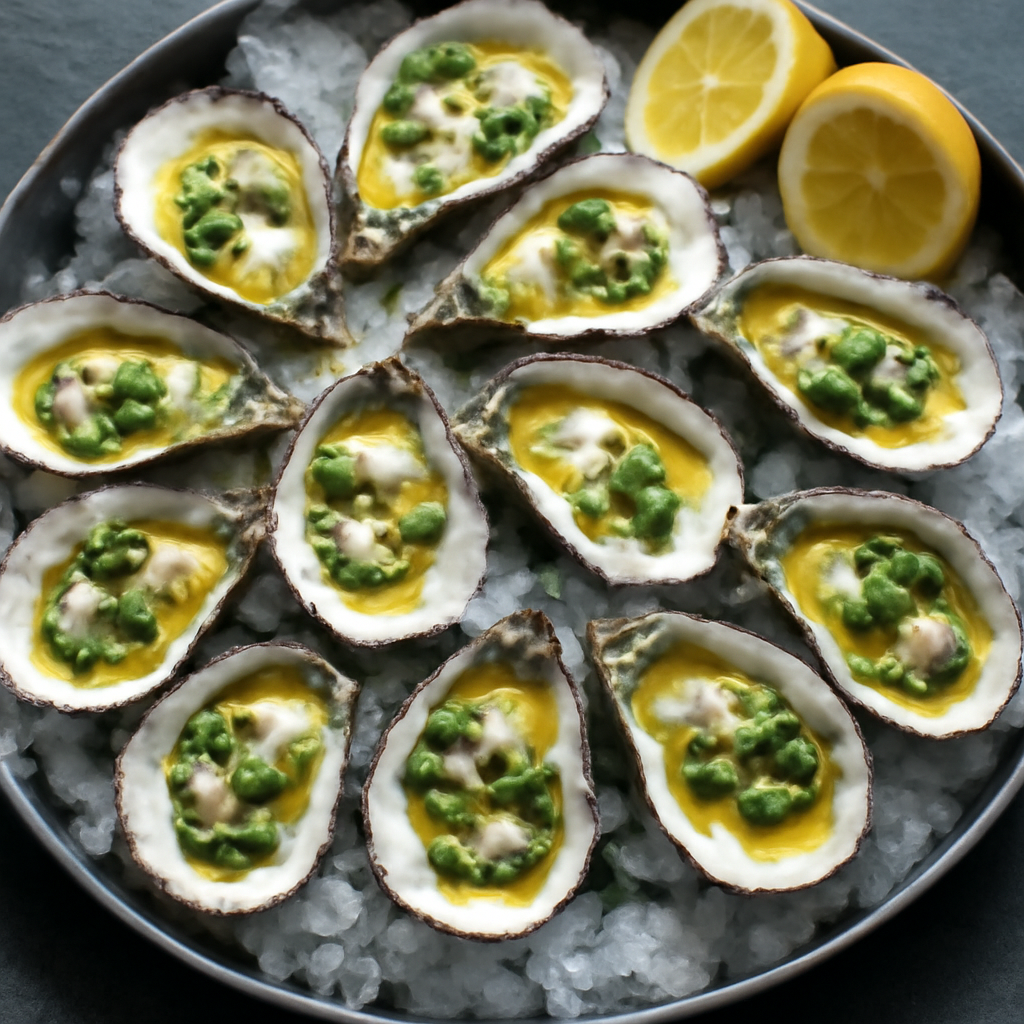
Lift the shells out carefully using tongs. Arrange on a bed of crushed ice or rock salt to keep them level and to slow any further cooking. Spoon any remaining sauce from the pan into each shell. Scatter the parsley over the top.
-
Serve immediately with bread to catch the sauce. The window between ready and cold is about three minutes.
Irish Context
Gigas oysters (Crassostrea gigas) now account for the majority of oyster production along the Irish coast, particularly in Galway Bay, Carlingford Lough, and West Cork. They were introduced commercially in the 1970s and have adapted well to Irish waters, which are cold, clean, and mineral-rich from Atlantic exposure.
Most Irish fishmongers carry them year-round, and they are considerably less expensive than native flats. Buying direct from a producer, or from a covered market stall where turnover is fast, gives you the freshest result for a cooked preparation like this one.
Tips
Gigas oysters are larger and meatier than natives. Their flavour is cleaner and less mineral, which means they hold up well to heat without turning rubbery as fast.
Do not attempt this with native flat oysters; they cook too quickly and the texture suffers. Cold butter is not optional.
Room-temperature butter will break the emulsion before the sauce has a chance to form. Keep it in the fridge until the moment you need it.
If you are shucking more than a dozen, do them in two rounds and keep the first batch covered in the fridge while you finish the second. The oyster should still be alive and cold when it hits the pan.
The sauce quantity here is intentional: enough to coat each oyster and pool slightly in the shell, but not so much that it drowns the oyster's own flavour. Resist the urge to double the butter.
White pepper matters here. Black pepper specks are visually distracting in a pale sauce, and white pepper has a slightly more floral heat that suits shellfish better.
If vermouth is unavailable, a dry white wine works, but reduce it for an extra 30 seconds to drive off more alcohol. The flavour will be slightly flatter but still good.

Author Commentary