
 AI
AI
 AI
AI
 AI
AI
 AI
AI
 AI
AI
Ingredients
Method
-
Remove the corned beef brisket from its packaging and rinse it thoroughly under cold running water for at least 2 minutes. This step matters. The surface brine is sharp and if you skip the rinse, the cooking liquor will be too salty to eat and the vegetables will follow suit. Pat the meat dry with kitchen paper.
-
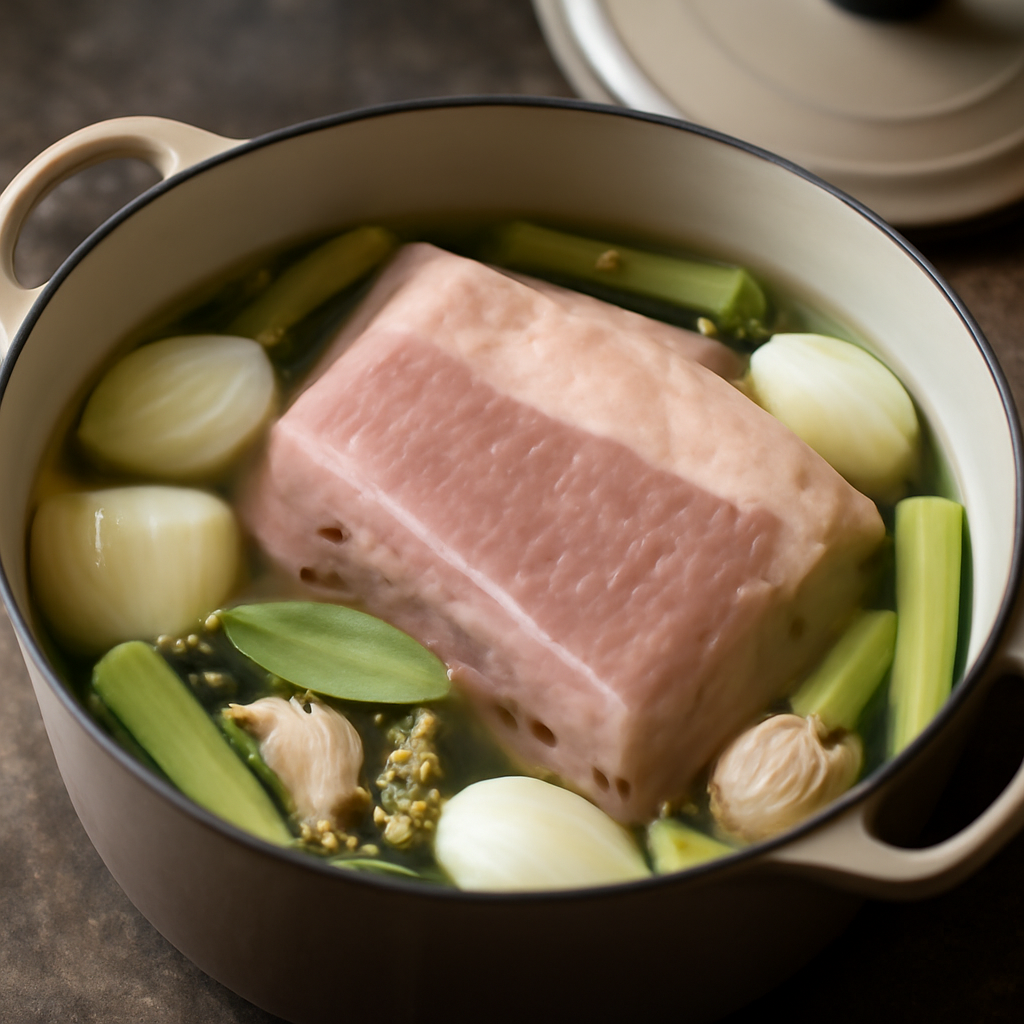
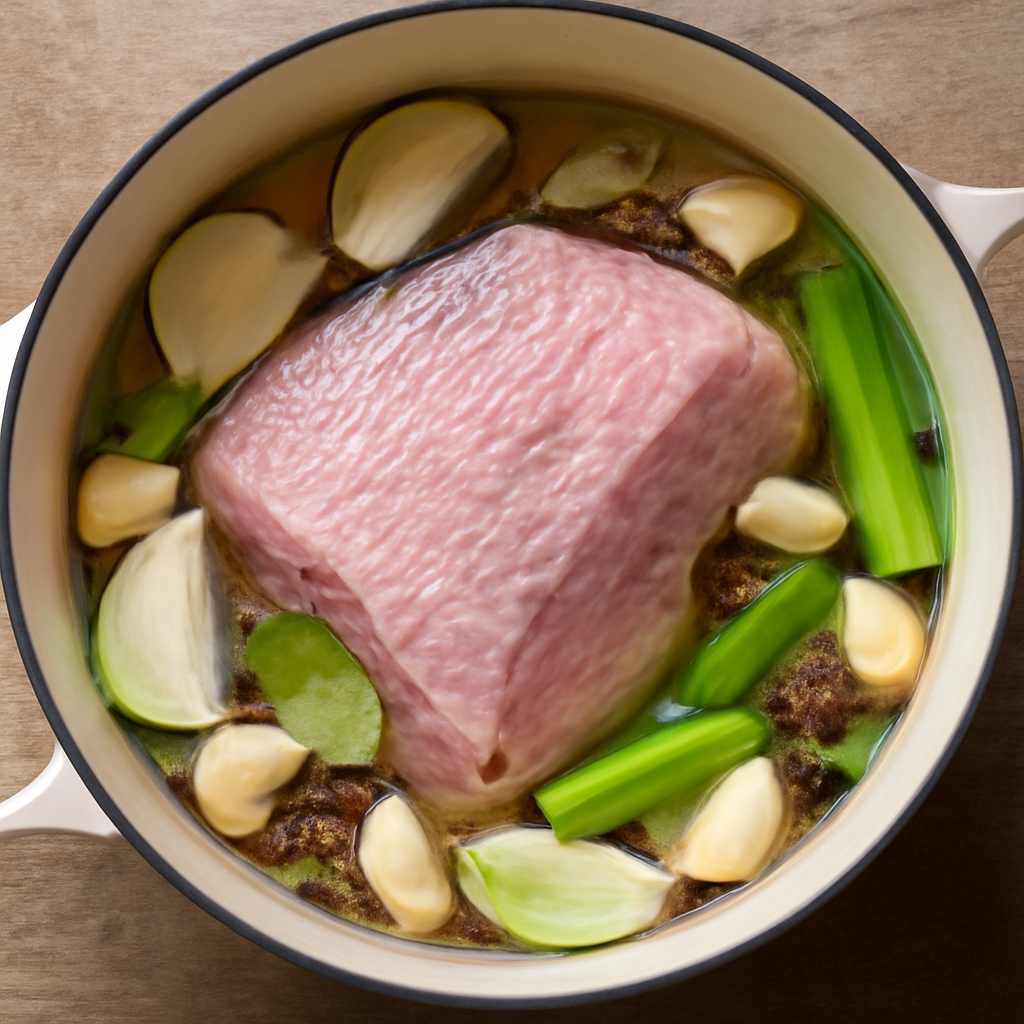
Place the brisket in a large, heavy-based pot or casserole dish, fat side up. Add the quartered onions, celery, garlic, bay leaves, peppercorns, mustard seeds, and cloves. Cover with cold water, ensuring the meat is submerged by at least 5cm. Do not add salt at this stage.
-
Bring the pot to the boil over high heat, uncovered. A grey-brown foam will rise to the surface within the first 10 to 15 minutes. Skim this off thoroughly with a large spoon or ladle and discard it. If you leave it, the broth turns murky and the flavour turns dull. Once skimming is done, reduce the heat to a very gentle simmer. The surface of the liquid should barely tremble.
-
Cover the pot with a lid left slightly ajar and cook at this low simmer for 2 hours. Do not rush this with a rolling boil. The connective tissue in brisket needs sustained low heat to break down properly. A rapid boil will tighten the muscle fibres and leave you with meat that is tough and stringy rather than yielding.
-
After 2 hours, carefully lift the brisket with tongs or two forks and check the texture. Insert a thin skewer or fork into the thickest part; it should meet only moderate resistance. The meat is not done yet at this point, but you are checking progress. Return it to the pot.
-
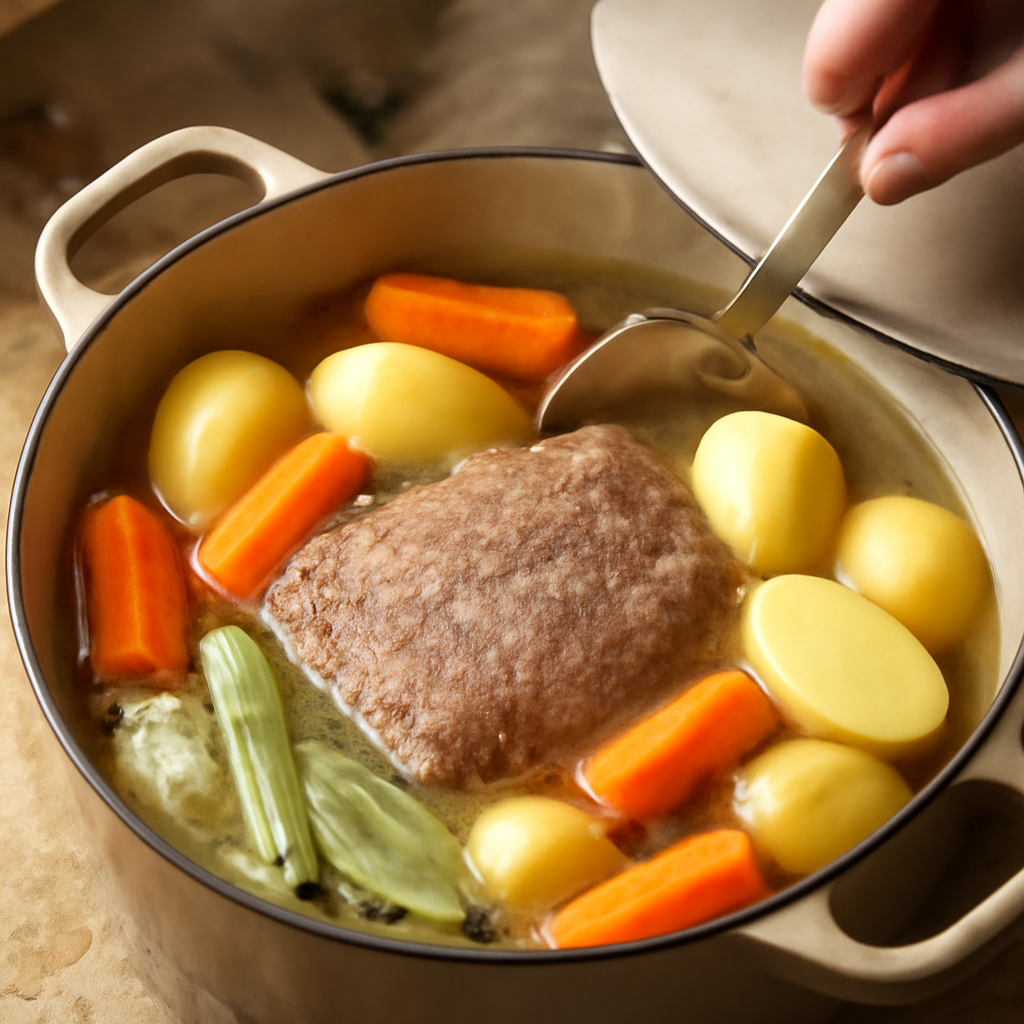
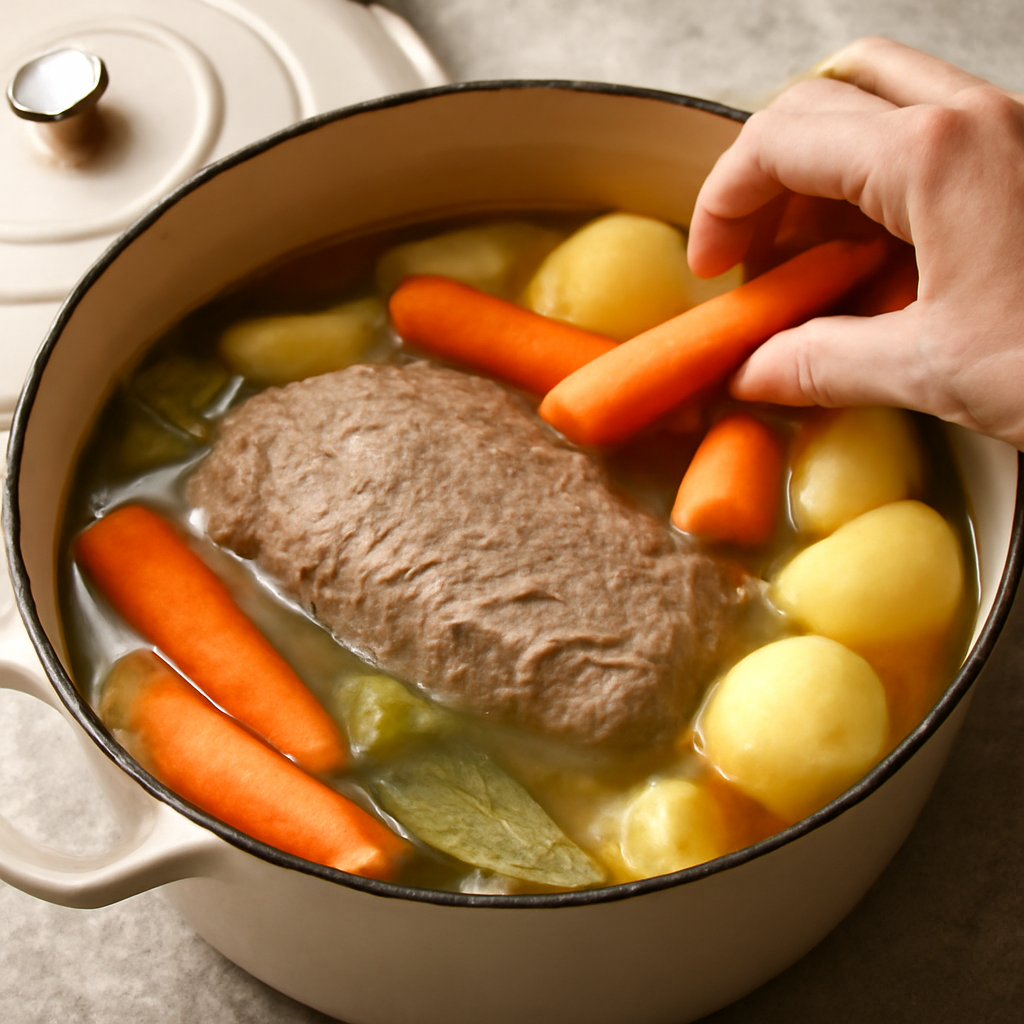
Add the carrots and potatoes to the pot, nestling them around and beneath the brisket. Replace the lid, ajar as before, and continue simmering for a further 30 minutes.
-
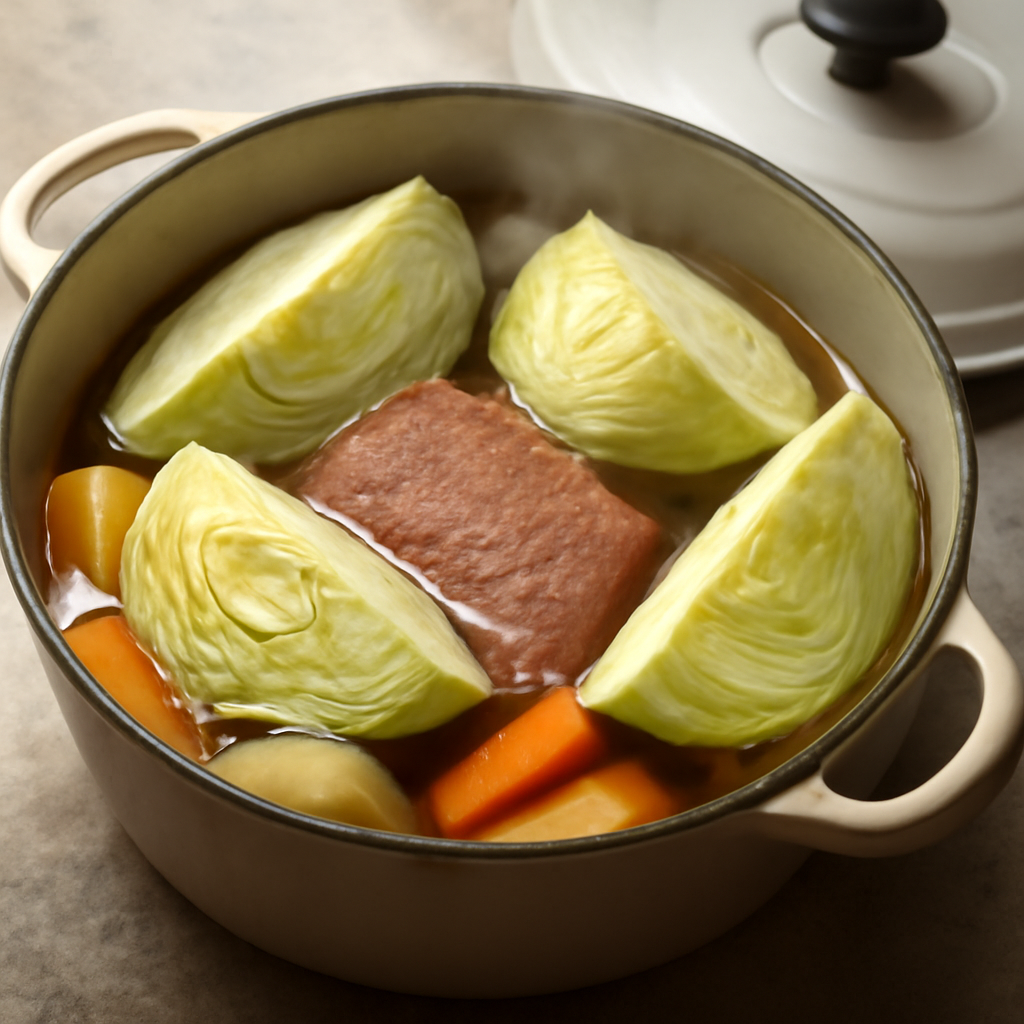
Add the cabbage wedges, pressing them gently into the liquid. They will not be fully submerged and that is fine. They will steam from above and absorb liquor from below. Replace the lid, now closed fully, and cook for a further 20 to 25 minutes. The cabbage should be tender all the way through when pierced with a knife but should still hold its wedge shape. If it collapses into ribbons, it has gone too far.
-
Remove the brisket from the pot and rest it on a board, loosely covered with foil, for 10 minutes before slicing. Do not skip the rest. The internal juices need time to redistribute or the meat will lose moisture as soon as you cut it. Slice against the grain in pieces approximately 1cm thick. The grain in brisket runs lengthways, so your knife should move across the short dimension of the muscle.
-
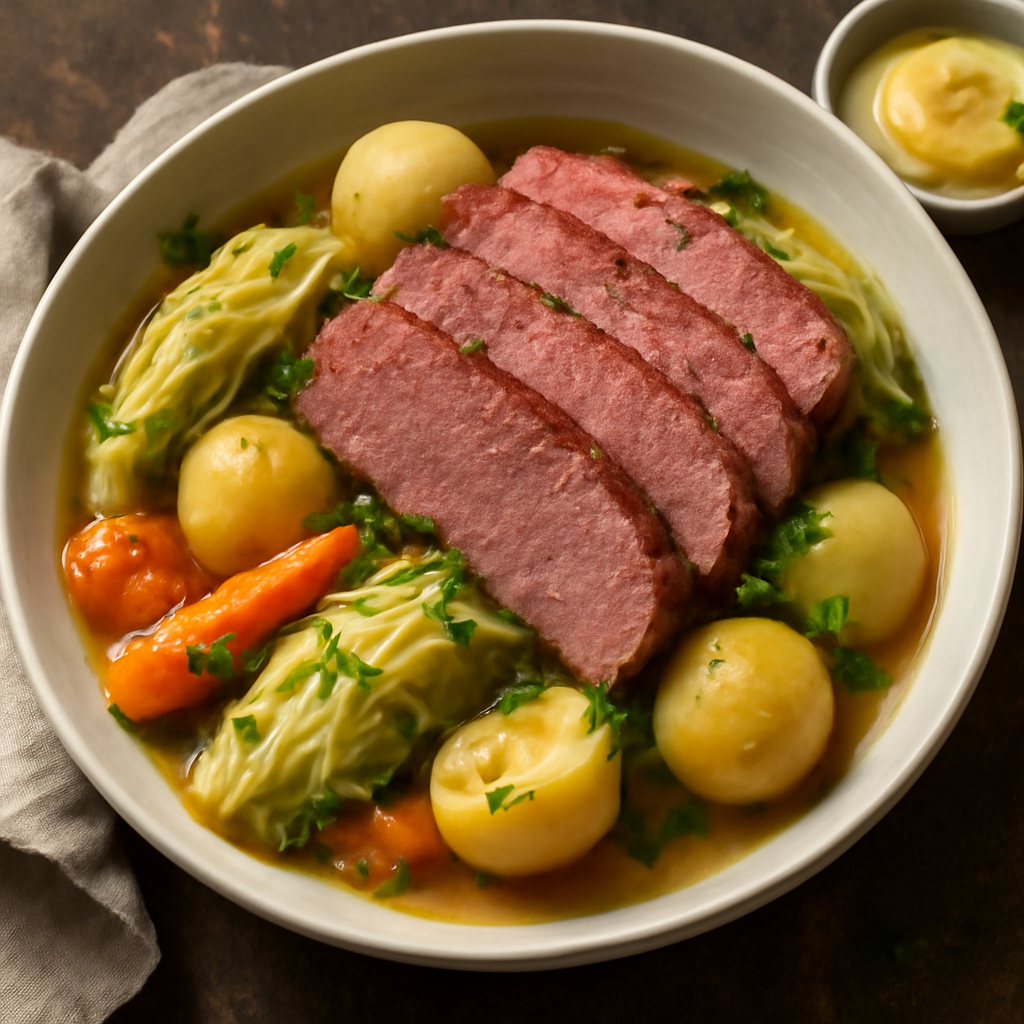
While the meat rests, taste the cooking liquor and adjust salt if needed. Ladle the vegetables into a wide, shallow serving bowl or directly onto plates. Arrange the sliced brisket over or alongside the vegetables. Spoon over a little of the cooking liquor to keep everything moist. Scatter the chopped parsley over the top. Serve with Dijon mustard on the side.
Irish Context
Corned beef in Ireland has a longer domestic history than is sometimes acknowledged, tied closely to the salt-curing trade that ran through Cork from the 17th century onwards. The cured beef produced there was exported widely, but salted and boiled beef was also a practical household choice because the curing extended shelf life without refrigeration.
Cabbage was a staple crop, inexpensive and reliable across the growing season, and the two ingredients ended up together in the pot for reasons of economy and availability rather than ceremony. The dish eaten in Irish households was not the same as the version that became associated with Irish-American communities, where the cut and preparation shifted to suit different markets and traditions.
Tips
The quality of the brisket varies considerably between suppliers. A point cut has more fat marbling than a flat cut, which means it is more forgiving if the heat creeps up slightly.
If you can only find flat cut, be especially attentive to keeping the simmer gentle. If you have time, soak the brisket in a large bowl of cold water in the fridge for 8 to 12 hours before cooking, changing the water once.
This draws out more of the cure and gives you more control over the final salt level in the dish. The cooking liquor left in the pot is worth keeping.
Strain it, allow it to cool, and skim off the fat that solidifies on the surface. The resulting stock is excellent for pea and ham soup or for cooking lentils.
Floury potato varieties such as Rooster or Kerr's Pink work better here than waxy types. They absorb the cooking liquor more readily and their texture complements the softness of the braised cabbage.
Leftovers slice well when cold and work in sandwiches with a little wholegrain mustard and thinly sliced pickled gherkins.

Author Commentary