
 AI
AI
 AI
AI
 AI
AI
Ingredients
Method
-
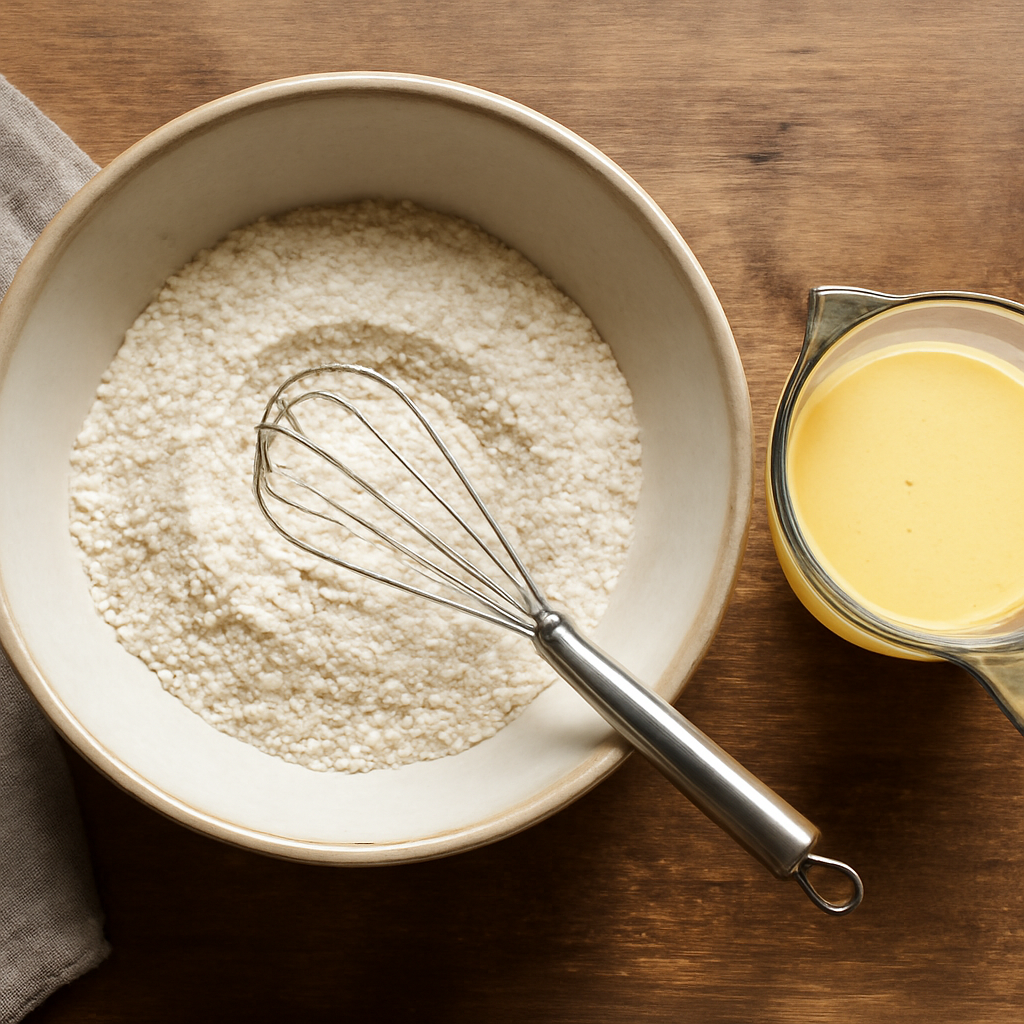
Combine the plain flour, fine oatmeal, baking powder, salt and caster sugar in a large bowl and whisk briefly to distribute the dry ingredients evenly. The oatmeal will not fully dissolve into the batter; small flecks throughout are normal and desirable.
-
In a separate jug, beat the eggs lightly, then add the whole milk, buttermilk, melted butter and vanilla extract. Whisk until the mixture is uniform.
-
Pour the wet ingredients into the dry ingredients and whisk until a smooth batter forms with no dry pockets. The batter will be thinner than a standard dropped scone batter but slightly thicker than a crepe batter. A few small lumps from the oatmeal are fine. Do not over-whisk.
-
Leave the batter to rest at room temperature for 10 minutes. This allows the oatmeal to absorb some of the liquid and the gluten to relax, which means the pancakes will be more tender and less likely to tear when you turn them.
-
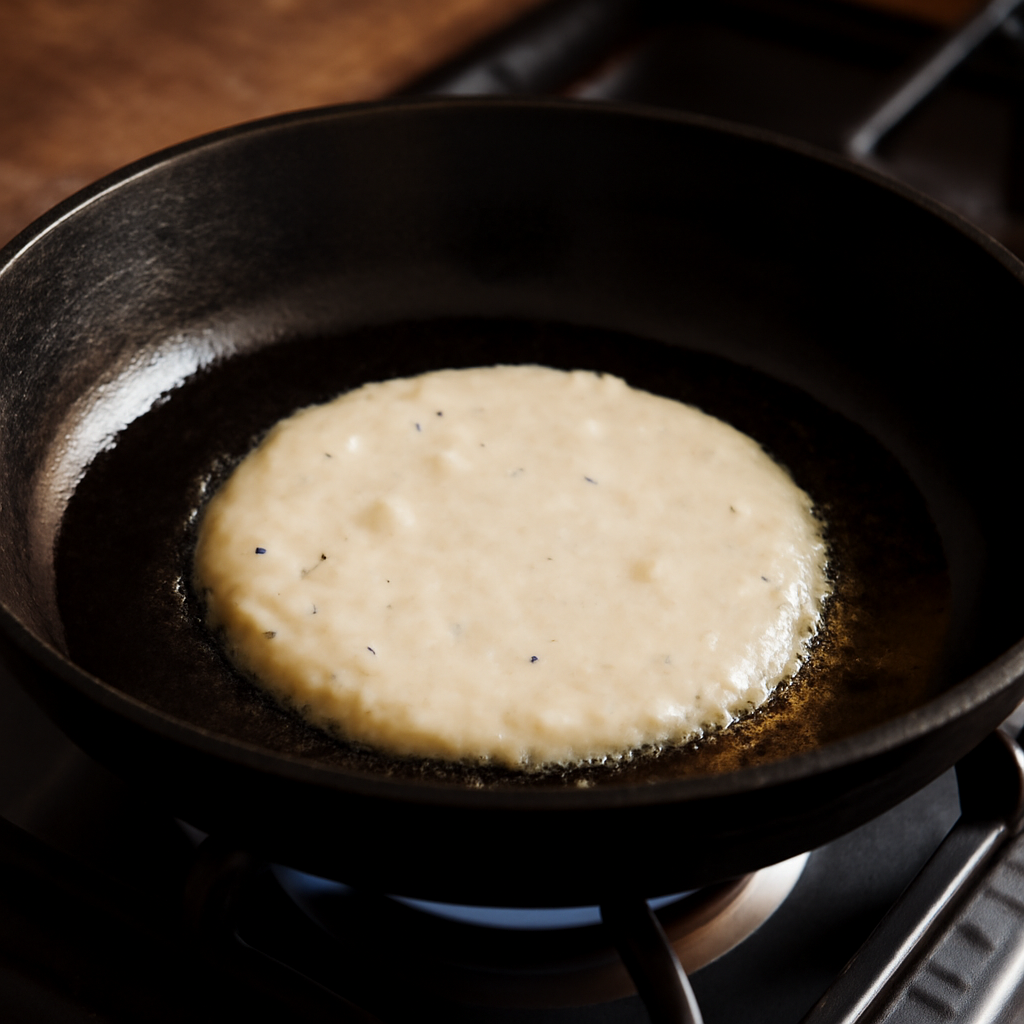
Place a heavy frying pan or flat griddle over a medium heat. When the pan is hot, add a small knob of butter, about 5g, and let it melt and foam. Tilt the pan so the butter covers the base, then let the foam subside before pouring in the batter. If the butter browns immediately, the pan is too hot; lower the heat and wait 30 seconds.
-
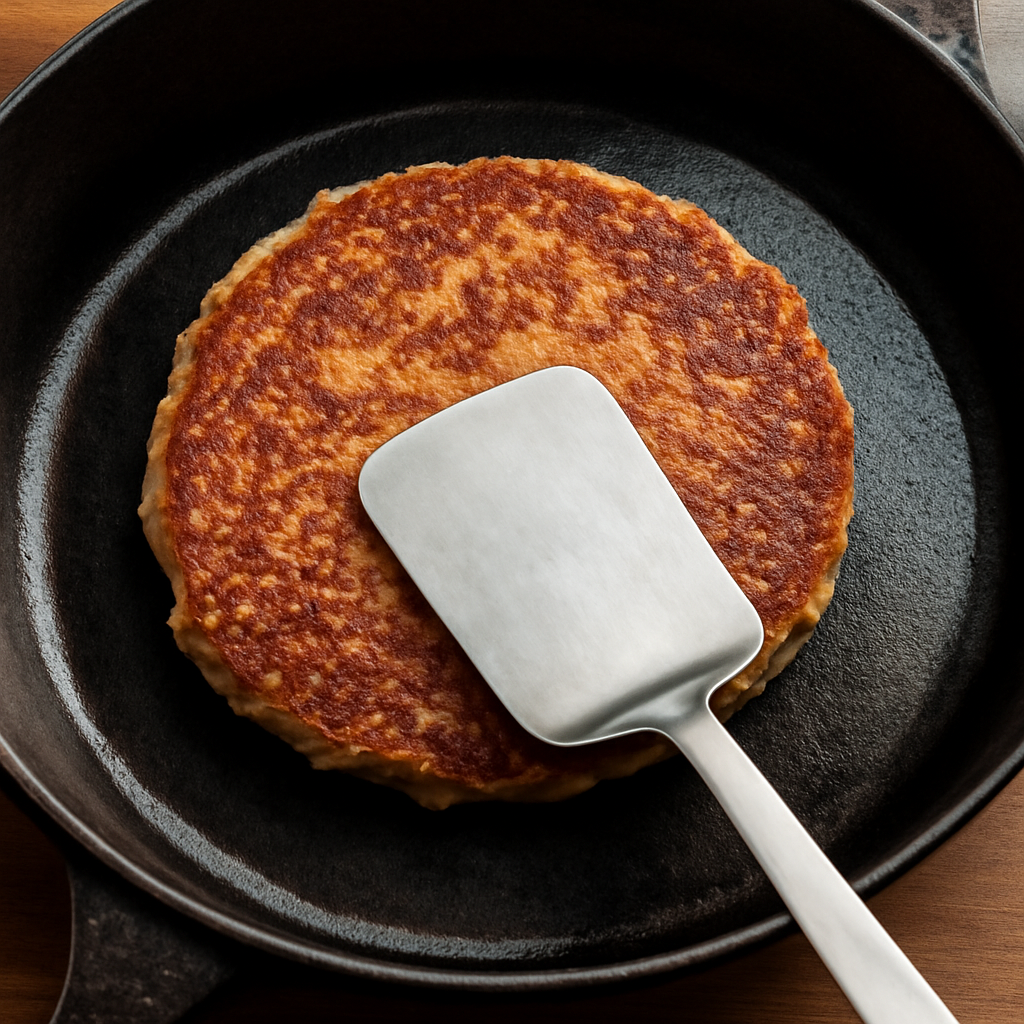
Pour approximately 60ml of batter per pancake into the centre of the pan. It should spread to roughly 12cm in diameter without any encouragement. Cook for 2 to 3 minutes. You will know they are ready to turn when the surface has set across most of its area, bubbles have broken and stayed open at the edges, and the underside is a deep golden brown when you lift one edge with a spatula.
-
Flip each pancake and cook for a further 1 to 1.5 minutes on the second side. The second side will colour faster than the first and will not look as even; this is normal. Press the centre gently with the back of the spatula; it should feel set, not soft or yielding.
-
Transfer the cooked pancakes to a warm plate set over a saucepan of barely simmering water, or place them in an oven at 80 degrees Celsius, loosely covered with foil, while you cook the remaining batches. Re-butter the pan lightly between each batch.
-
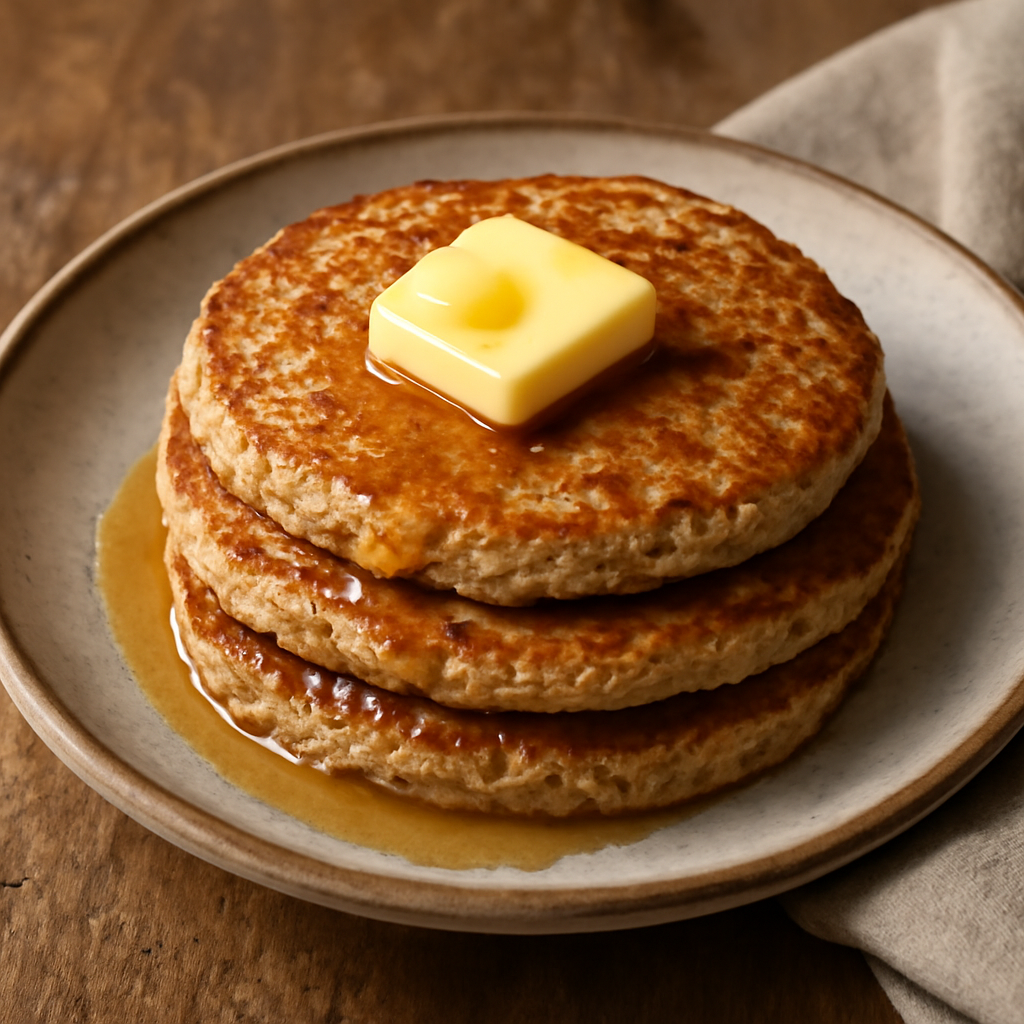
Serve immediately with a generous pat of salted Irish butter on top of each pancake while they are still hot enough to melt it, and a drizzle of honey or a spoonful of bramble jam alongside.
Irish Context
Oatmeal has been a staple grain in Ireland for centuries, grown in the wetter, cooler conditions of the island where wheat has historically been less reliable. Fine oatmeal turns up in soda bread, porridge, and traditional biscuits, and its inclusion in a pancake batter is a straightforward extension of that habit rather than any deliberate act of preservation.
These pancakes are the sort of thing that gets made on a Saturday morning when there is buttermilk left over from baking earlier in the week. The slight sourness of the buttermilk and the earthiness of the oatmeal mean the pancakes do not need anything elaborate on top; salted butter and honey is sufficient, and on a grey morning in October, it is exactly what you want.
Tips
Fine oatmeal is the key ingredient here. Rolled oats or coarse oatmeal will not hydrate properly in the resting time and the texture will be gritty rather than pleasantly rough at the edges.
If you can only find medium oatmeal, blitz it briefly in a food processor before using. Room temperature dairy matters.
Cold milk and buttermilk straight from the fridge will seize the melted butter into small solid flecks in the batter, which affects the texture of the finished pancake. Take the milk out 30 minutes before you start.
The first pancake is almost always a write-off. Use it to test the heat of the pan and the spread of the batter.
Adjust accordingly before committing the rest of the batch. If the pancakes are sticking, the pan is not hot enough rather than too hot.
A correctly heated pan with butter will release a pancake cleanly within seconds of it being poured in. Leftover batter keeps in the fridge, covered, for up to 24 hours.
Stir it gently before using as the oatmeal will have settled. You may need to add a tablespoon or two of milk to loosen it back to the right consistency.

Author Commentary