
 AI
AI
 AI
AI
 AI
AI
Ingredients
Method
-
Put the cold mashed potato into a large bowl. Cold potato is essential here; warm mash is too soft to shape and will break apart in the pan. If you only have warm mash, spread it on a tray and refrigerate for at least 40 minutes.
-
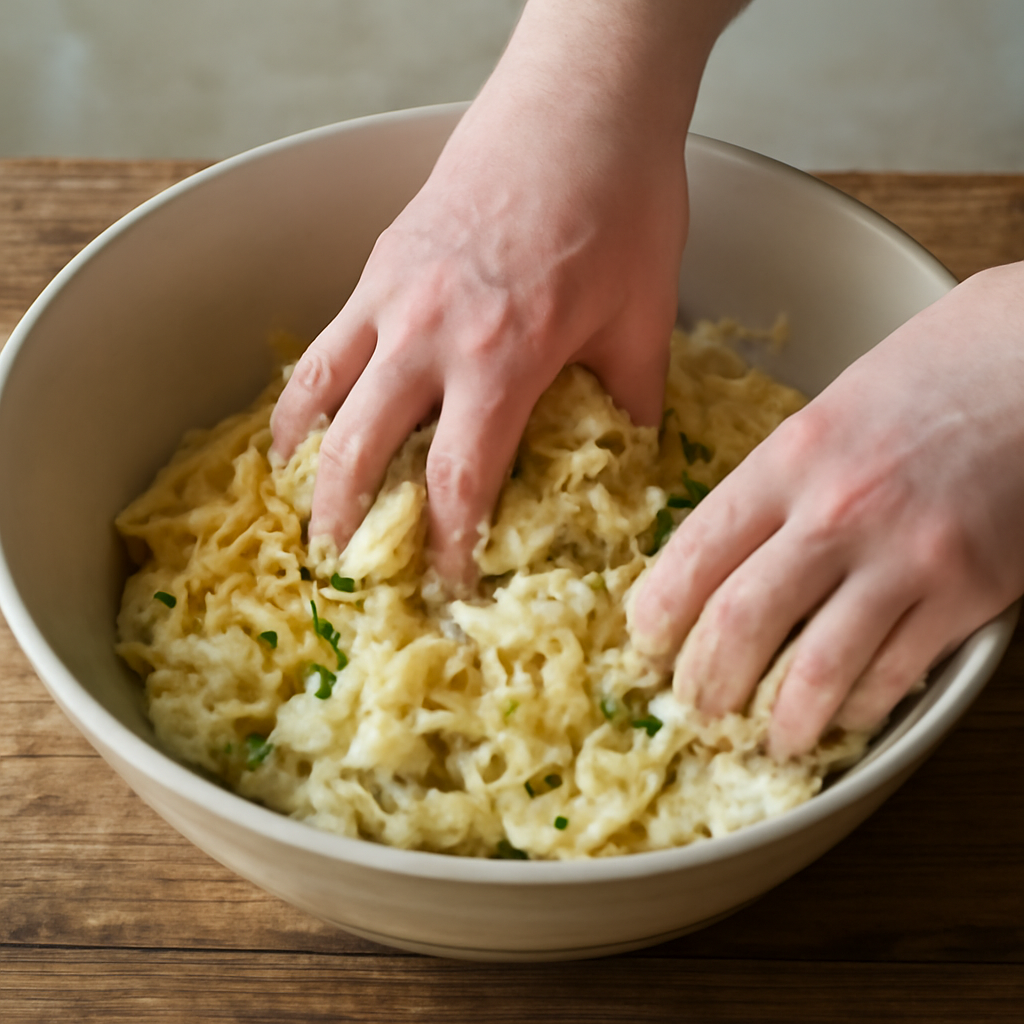
Add the grated Cheddar, spring onions, beaten egg, plain flour, salt and white pepper. Mix with your hands until everything is evenly combined. The mixture should feel slightly tacky but not wet. If it sticks to your palms and won't hold a shape, add another tablespoon of flour and mix again.
-
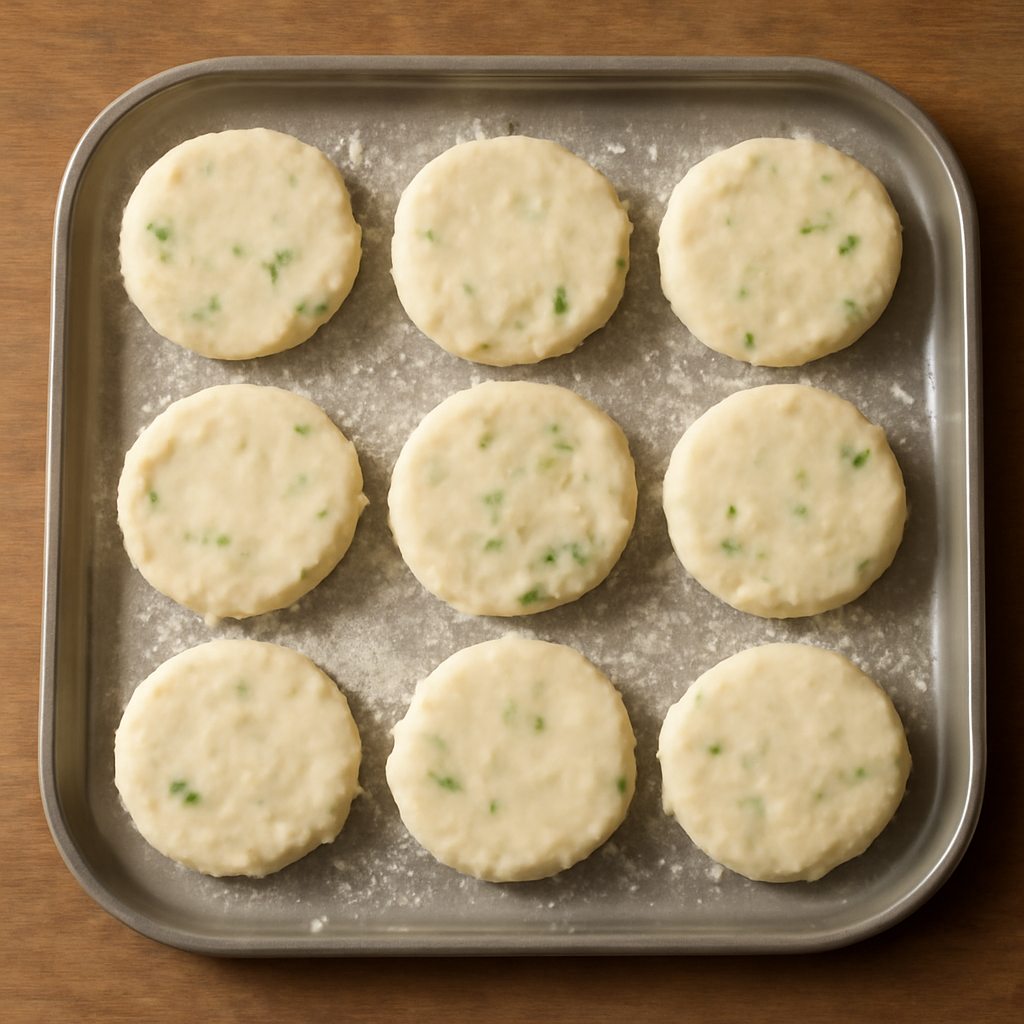
Lightly flour a clean work surface. Divide the mixture into 8 equal portions, roughly 100g each. Press each portion into a round cake about 1.5cm thick and 8cm across. Edges that are uneven will crisp up nicely, so do not over-smooth them.
-
Place the shaped cakes on a floured plate or tray. If you have time, refrigerate them for 10 minutes; this firms them further and reduces the chance of them splitting when they hit the hot pan.
-
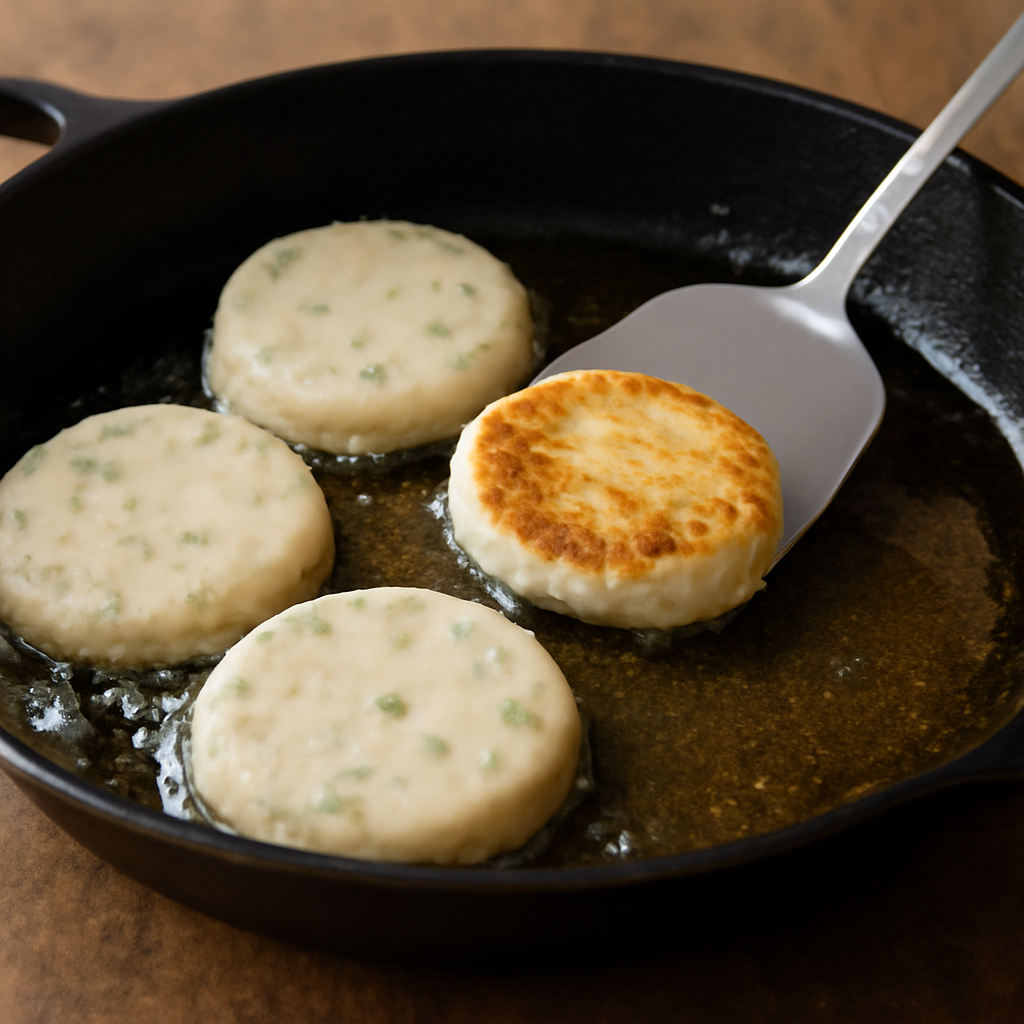
Heat a large, heavy frying pan over a medium heat. Add the sunflower oil and let it come to temperature; a pinch of flour dropped in should sizzle immediately. Lay in the cakes in a single layer, leaving space between them. Do not crowd the pan or the temperature will drop and the cakes will steam rather than fry.
-
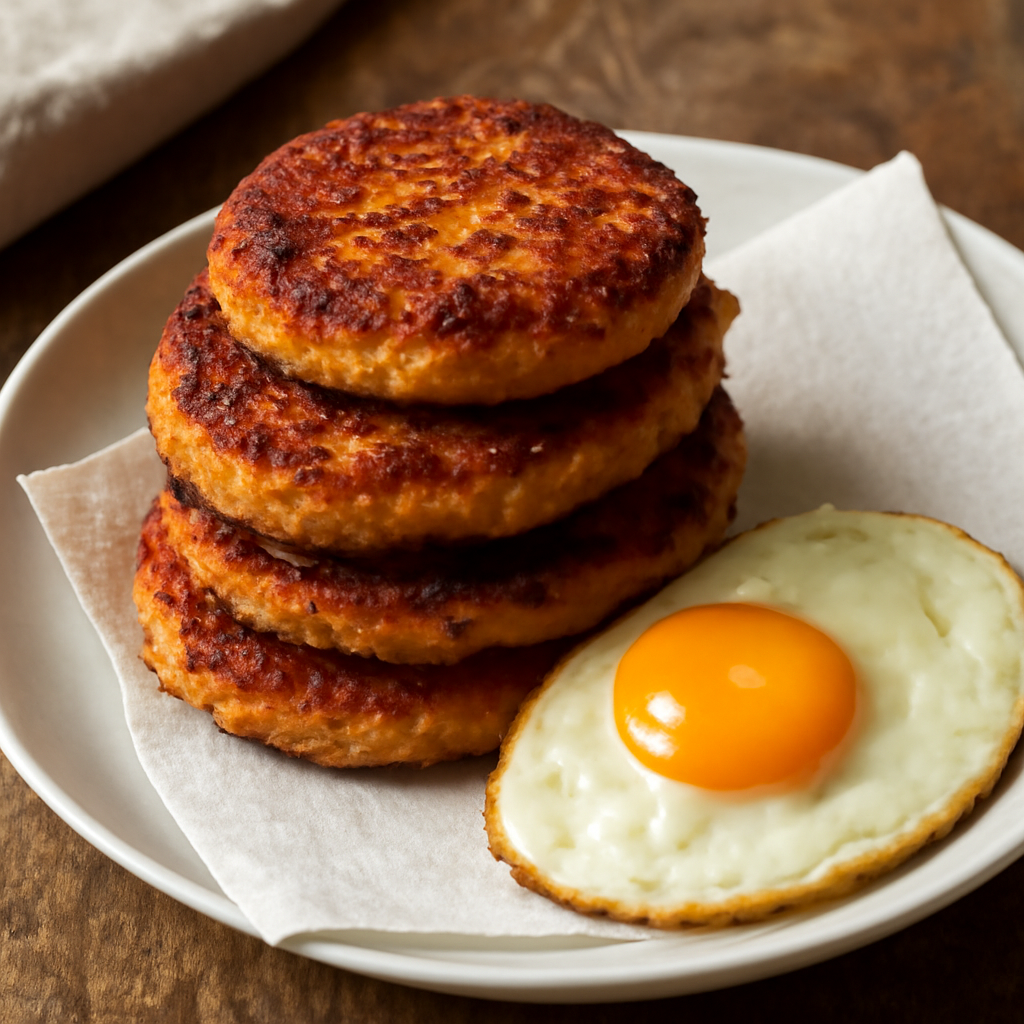
Cook for 4 to 5 minutes on the first side without moving them. You are waiting for a deep golden-brown crust to form. Lift one edge with a spatula to check; if it pulls away cleanly and the colour is a dark biscuit-gold, they are ready to turn. If the crust is not there yet, leave them another minute.
-
Flip each cake carefully with a wide, flat spatula. Press down gently. Cook for a further 4 to 5 minutes on the second side until the same colour is achieved.
-
Transfer to a plate lined with kitchen paper. Eat immediately; they soften within a few minutes of leaving the pan.
Irish Context
Potato cakes in Ireland are made from whatever mash is left over; there is no fixed recipe in any household. Some people add a little white onion instead of spring onions.
Some use Red Leicester rather than Cheddar. What stays consistent is the method: cold potato, enough flour to bind, enough heat to crust.
They appear at breakfast alongside rashers and eggs, or at lunch with soup, or on their own as a late-night thing. They are not a special occasion food.
Tips
Day-old mash that was made without added milk or cream gives the driest, most workable base. Mash with butter only is fine.
Mash that has had a lot of milk stirred through it will need considerably more flour to bind, and the cakes will taste floury rather than potato-forward. The Cheddar melts into the potato during frying and forms pockets of browning cheese where it touches the pan.
This only happens with a full-fat mature Cheddar that has a lower moisture content. Mild or processed cheese will make the cakes greasy.
If the cakes begin to crack along the edges when you flip them, press them back together immediately with the spatula and leave them alone. They will re-seal as the second side cooks.
These reheat adequately in a dry frying pan over a low-medium heat for 2 to 3 minutes per side, but the crust will never be quite as pronounced as when freshly cooked.

Author Commentary