
 AI
AI
 AI
AI
 AI
AI
 AI
AI
 AI
AI
Ingredients
Method
-
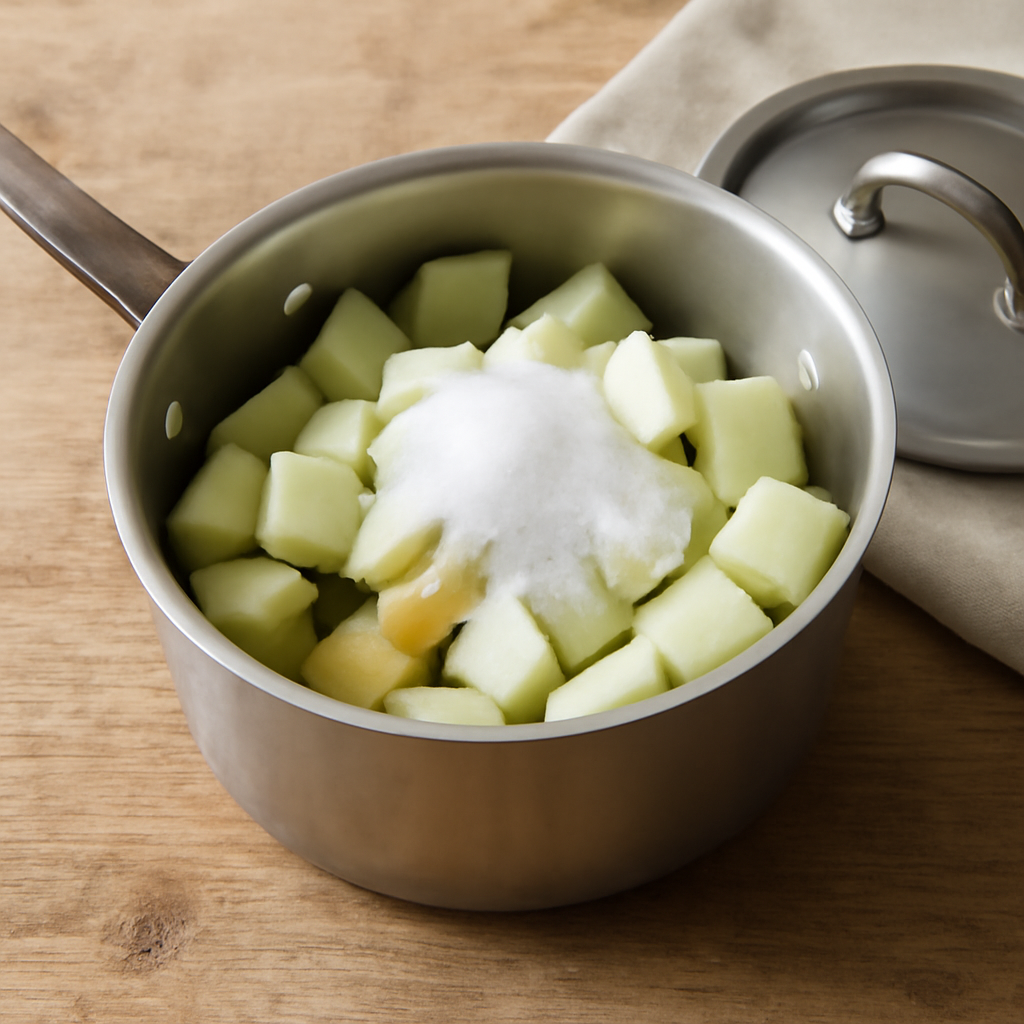
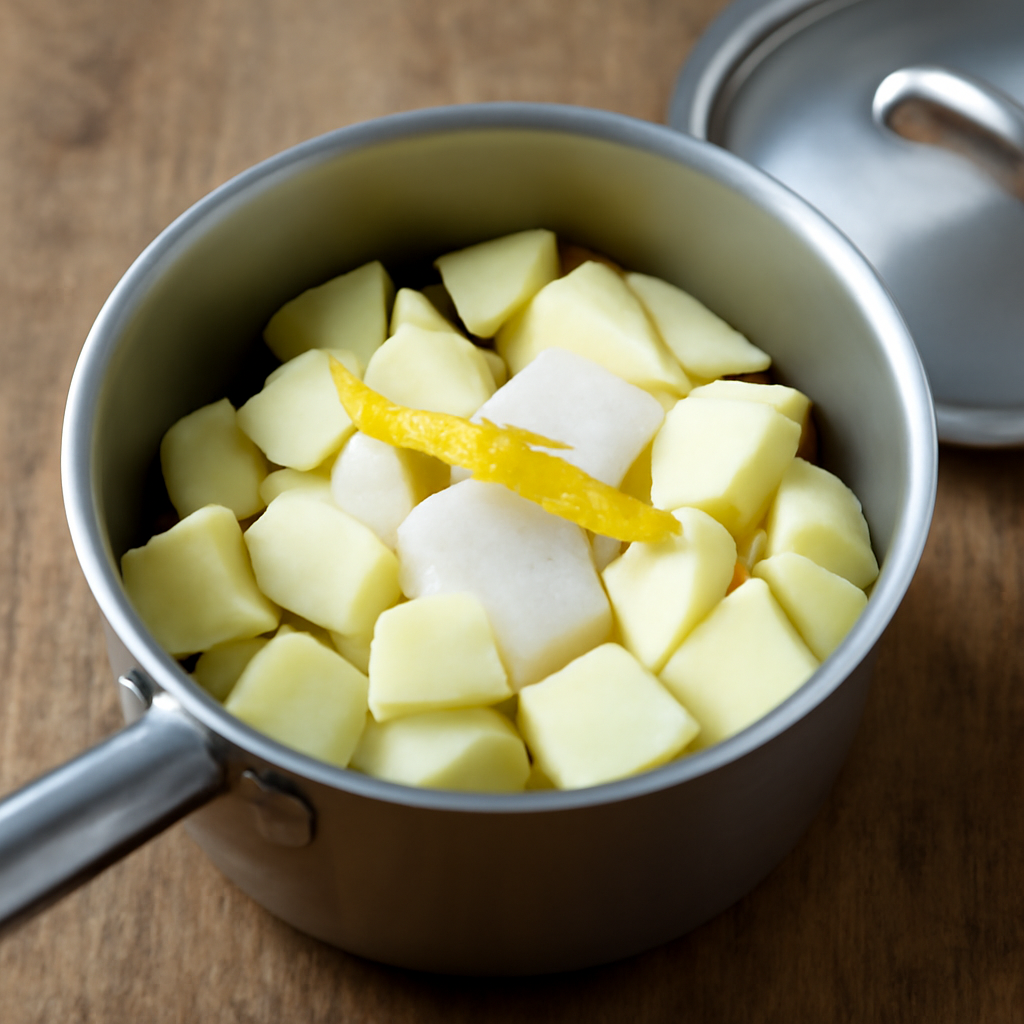
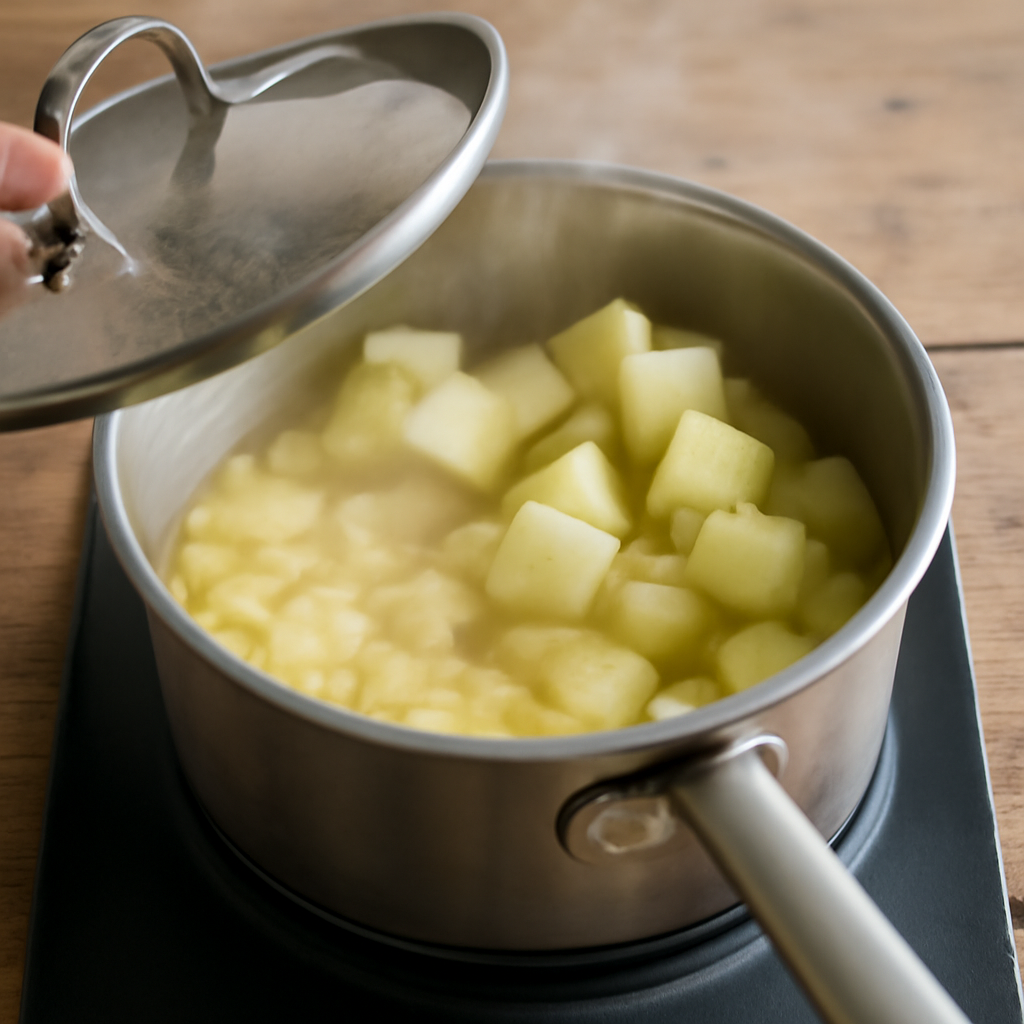
Put the apple chunks, water, lemon zest, and sugar into a medium saucepan over a low-medium heat. Stir briefly to combine, then cover with a lid.
-
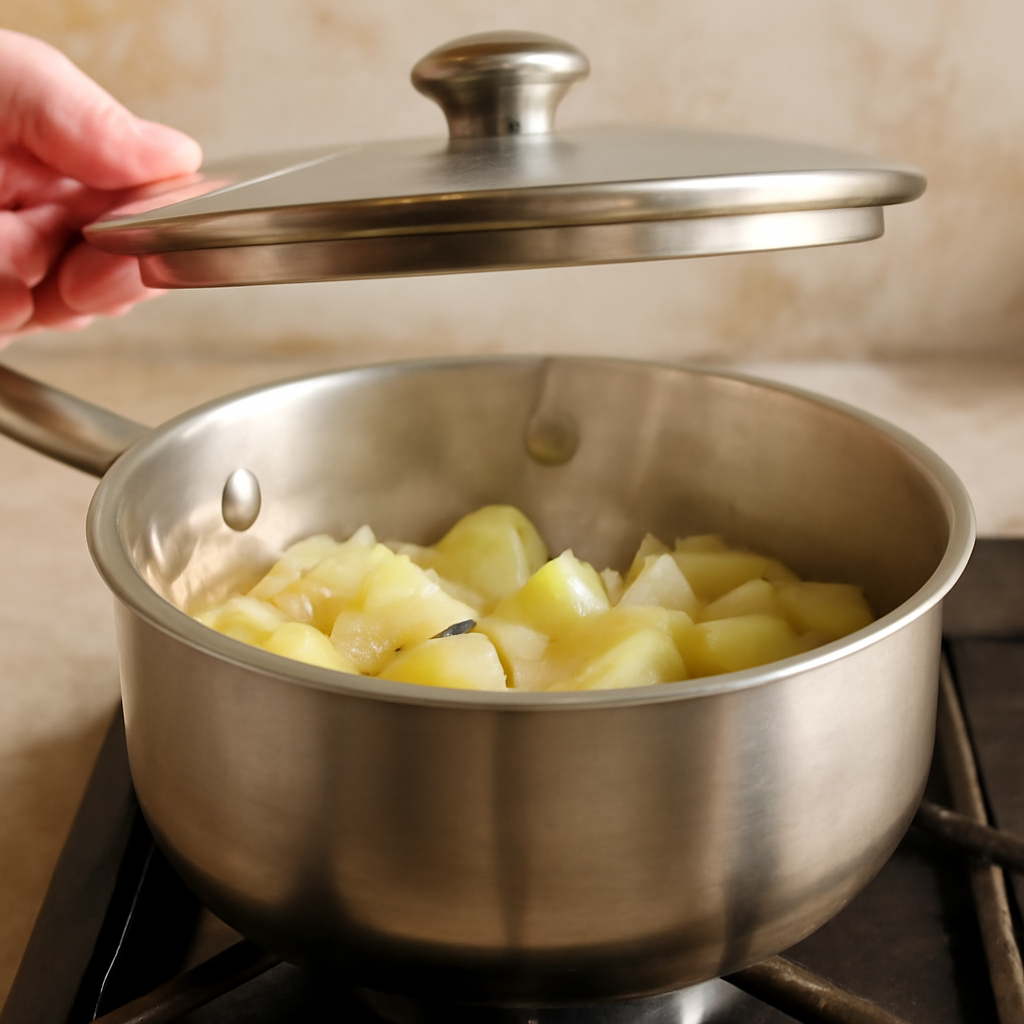
Cook for 8 to 10 minutes, lifting the lid to stir once or twice. Bramleys break down quickly and unevenly; you will see the pieces at the bottom go almost translucent before the top ones soften. That is normal. Keep the heat moderate so nothing catches on the base.
-
Once all the apple has collapsed into a rough, pale yellow mush with no firm pieces remaining, remove the lemon zest strip and discard it.
-
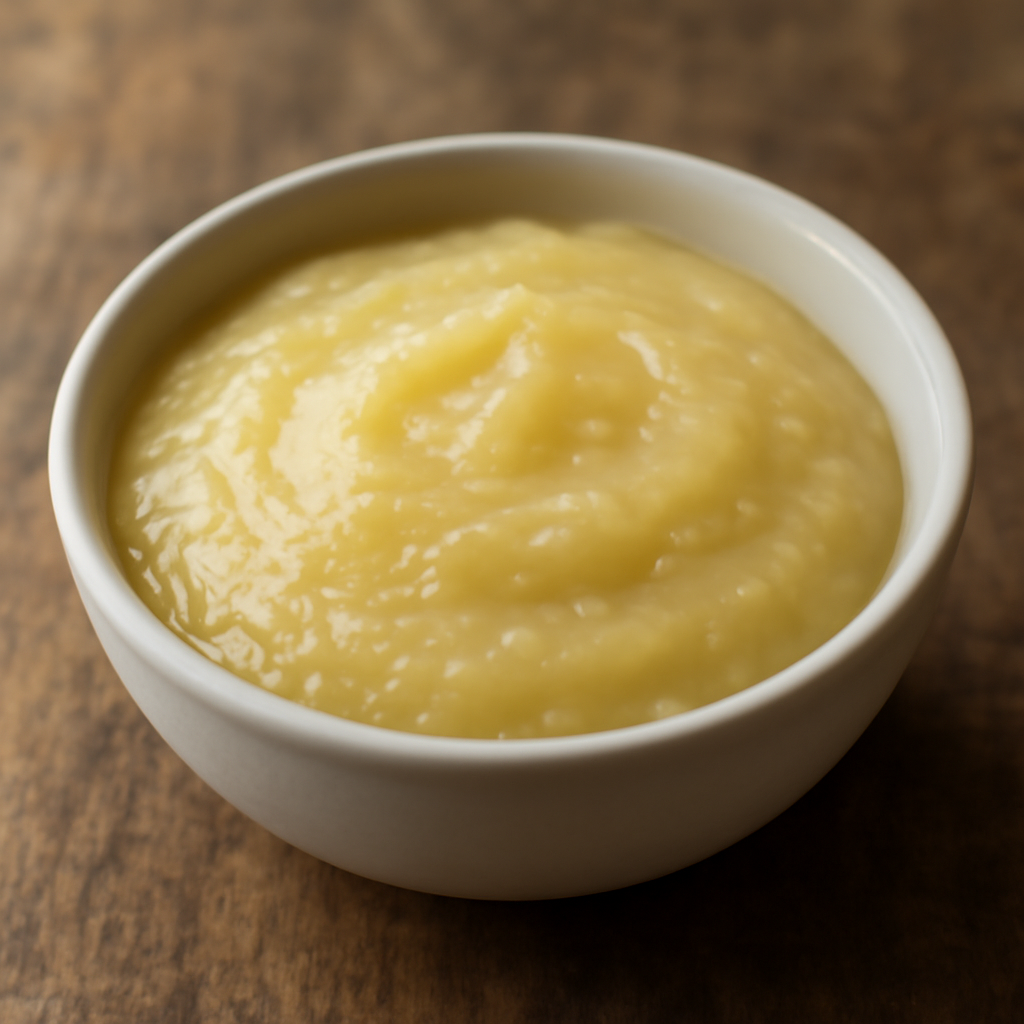
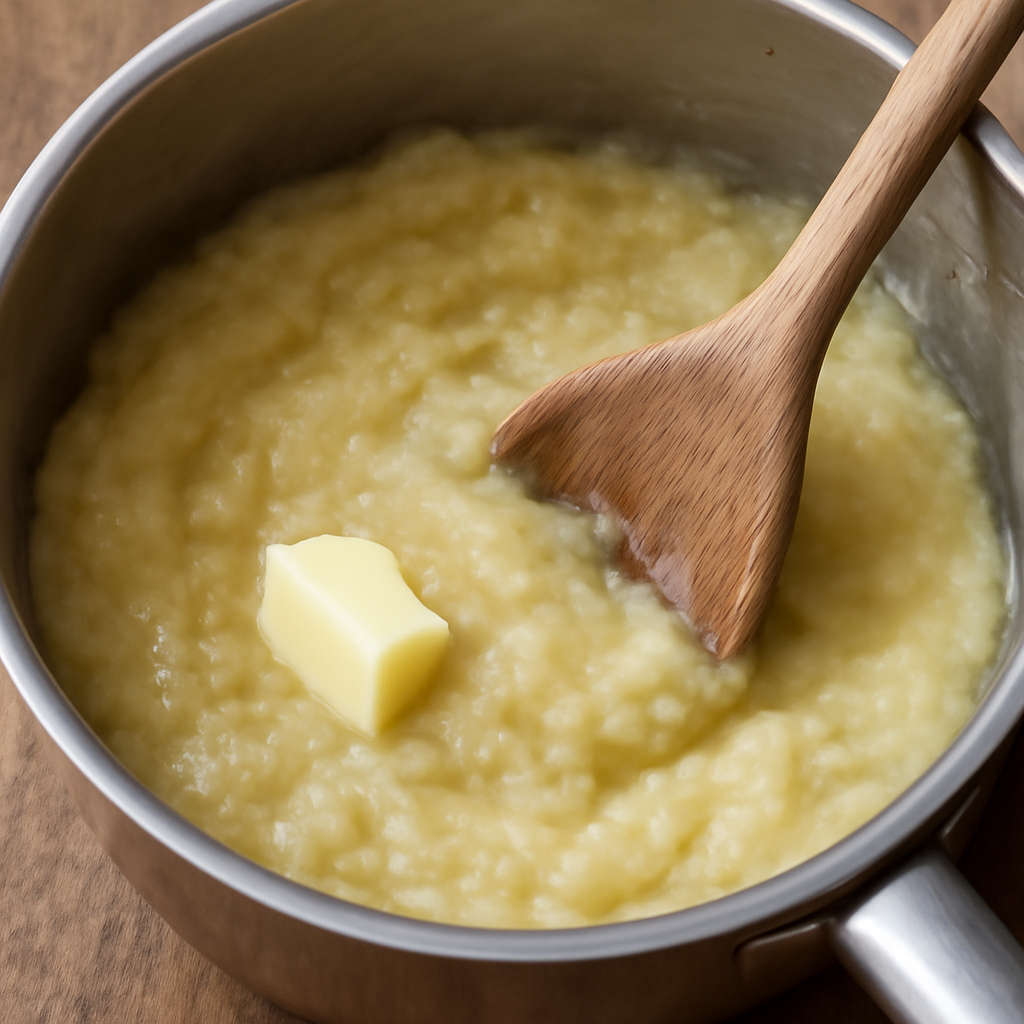
Take the pan off the heat. Add the butter and lemon juice, then beat the sauce with a wooden spoon or a balloon whisk for about 30 seconds. This produces a smoother, slightly glossy result without turning it into baby food. If you want it completely smooth, pass it through a sieve. If you want texture, leave it as it is.
-
Taste carefully. Bramleys vary considerably in acidity depending on the time of year and how long they have been stored. Add sugar a teaspoon at a time if needed, but resist over-sweetening: the sauce should still have a distinct sharpness. Stir over a very low heat for 30 seconds after any sugar addition to dissolve it fully.
-
Serve warm, or transfer to a clean bowl and press a sheet of cling film directly onto the surface to prevent a skin forming as it cools. Refrigerate for up to five days.
Irish Context
Bramley apples have been grown in Ireland for well over a century, and Armagh in particular has long been associated with commercial Bramley production. The apple is suited to the Irish climate in a way that dessert varieties often are not: the wet summers and cool temperatures produce fruit with a pronounced acidity that holds up well in cooking.
Most supermarkets and fruit and vegetable markets across the country carry Bramleys reliably from late summer through to spring. Outside of that window, they are available from cold store, though the texture can be slightly more floury late in the season.
Tips
Bramleys are the only apple worth using here. Eating apples such as Gala or Granny Smith do not break down in the same way and produce a sauce with hard, slippery pieces that never quite integrate.
If you can only get eating apples, add an extra 10ml of water and cook for longer, but the result will be noticeably different in both texture and taste. The amount of sugar needed can change significantly from batch to batch.
Early-season Bramleys picked in September are more acidic than ones bought in February from cold store. Always taste before serving and adjust accordingly.
Do not add more water than stated. The apple releases a good deal of liquid as it cooks, and excess water produces a watery sauce that struggles to hold its texture on a plate.
This sauce freezes well in small portions. Use ice cube trays to freeze individual servings, then transfer to a bag once solid.
Reheat gently in a small saucepan with a splash of water.

Author Commentary