
 AI
AI
 AI
AI
 AI
AI
Ingredients
Method
-
Divide the peeled potatoes roughly in half by weight. Cut one half into even chunks and place in a saucepan of cold salted water. Bring to the boil and cook for 15 to 18 minutes until completely tender when pierced with a knife. Drain thoroughly, then return the pot to a low heat for 1 to 2 minutes to steam off excess moisture. Mash with 30g butter and the milk until smooth. Set aside to cool to room temperature.
-
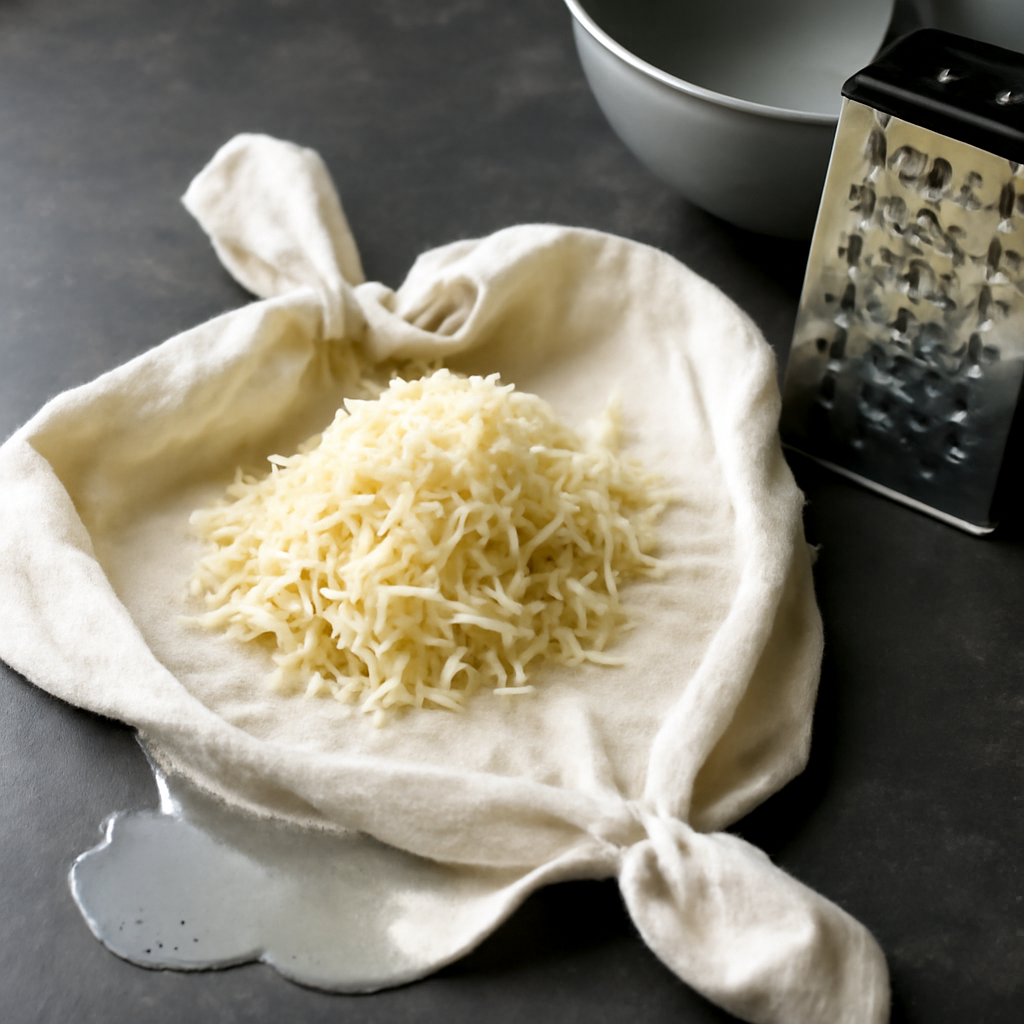
While the mash cools, grate the remaining raw potato on the coarse side of a box grater directly onto a clean tea towel. Gather the towel into a bundle and squeeze firmly over the sink, wringing out as much liquid as possible. The grated potato should feel almost dry to the touch. This step matters: too much moisture and the batter will not hold together in the pan.
-
Collect any potato starch that has settled at the bottom of the liquid you squeezed out. Pour off the grey water carefully and scrape the white starch back into the bowl with the squeezed grated potato. This starch acts as a natural binder and improves the texture of the finished boxty.
-
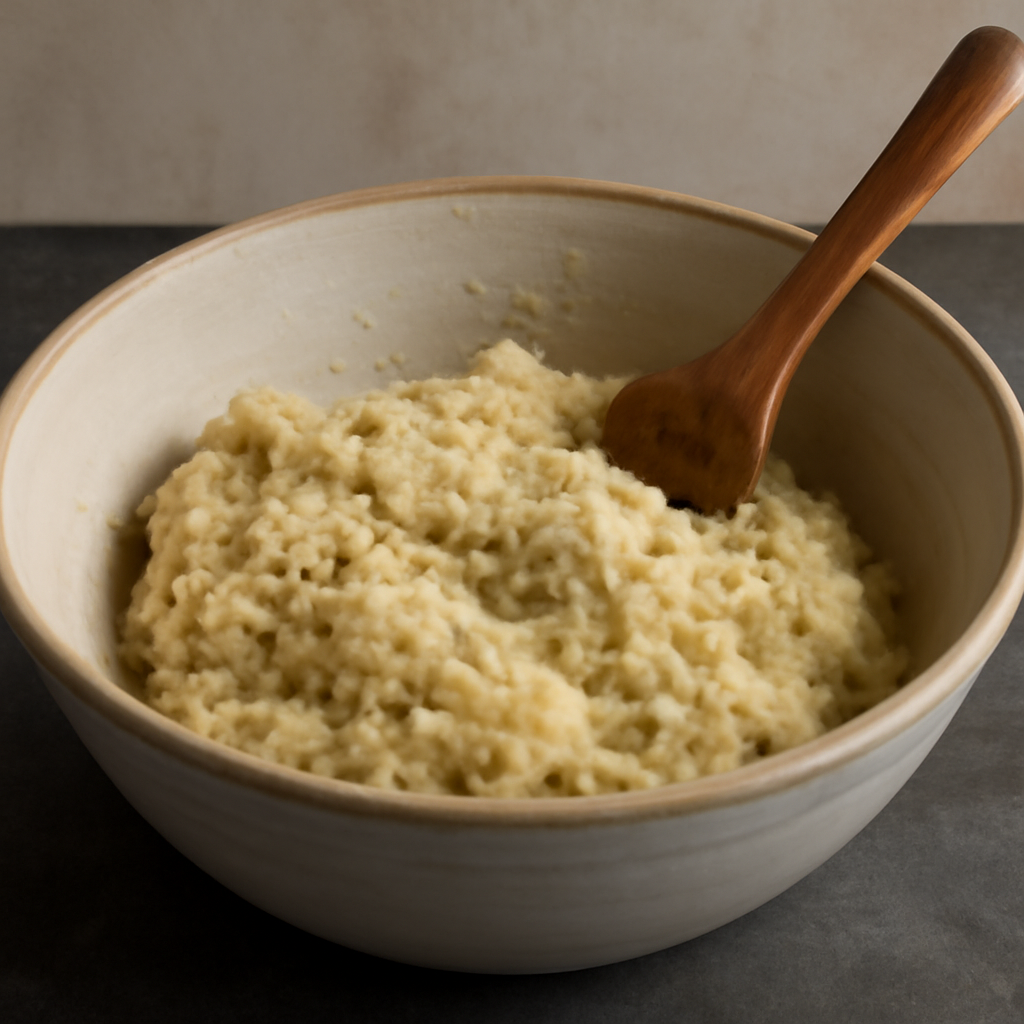
In a large bowl, sift together the plain flour, baking powder, salt, and black pepper. Add the cooled mashed potato and stir with a wooden spoon until the flour is fully incorporated and no dry streaks remain. The mixture will be stiff.
-
Add the grated potato and the recovered starch to the bowl along with the beaten egg. Mix until everything comes together into a thick, cohesive batter. It should hold its shape when dropped from a spoon but not be so firm that it cannot spread slightly. If it seems very stiff, add milk one tablespoon at a time, up to an additional 20ml.
-
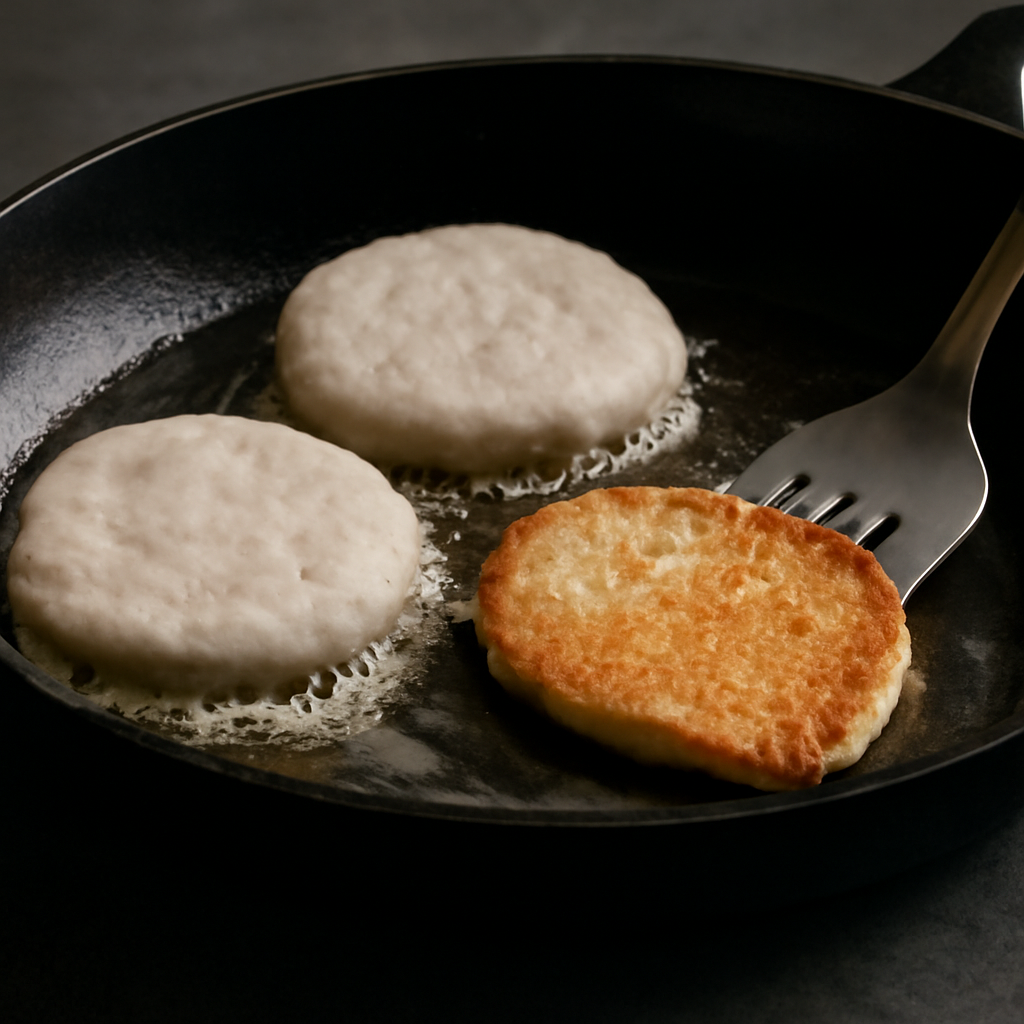
Heat a large, heavy frying pan over a medium heat. Add a knob of butter and let it foam and subside. Drop heaped tablespoons of batter into the pan, pressing each one gently to a disc about 8cm wide and 1cm thick. Do not crowd the pan; work in batches of three or four.
-
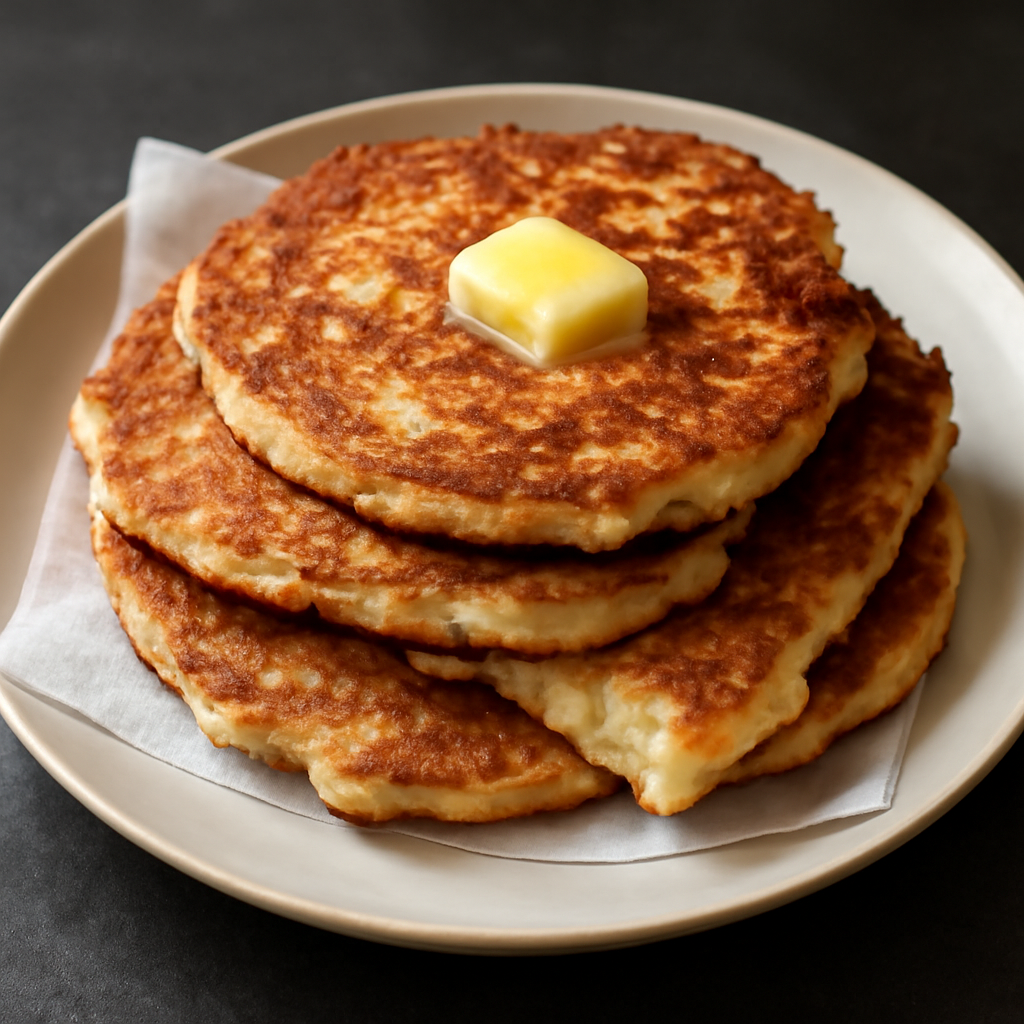
Cook for 4 to 5 minutes on the first side without moving them. The edges will look set and the underside should be deep golden brown when you lift a corner. Flip carefully and cook for a further 4 minutes on the second side. Press down very lightly with a spatula once during the second side to ensure even contact with the pan.
-
Transfer finished boxty to a plate lined with kitchen paper and keep warm in an oven at 100 degrees Celsius while you cook the remaining batches, adding fresh butter to the pan between each one. Serve immediately.
Irish Context
Boxty is a potato preparation that depends on using both cooked and raw potato in the same batter, which is a practical solution to situations where you have potatoes at different stages of readiness, or where you want to extend a small amount of mash. The two textures cook into each other but never fully homogenise: there is always a slight pull from the grated raw component against the softness of the mash.
It is the kind of dish that rewards attention to small details, particularly the drying of the raw potato and the temperature of the mash, neither of which can be skipped without visible consequence in the finished result.
Tips
Floury potato varieties are non-negotiable here. Waxy potatoes like Charlotte will not mash smoothly and the raw grated texture will be rubbery rather than slightly fibrous and tender.
Kerr's Pink or Rooster give the correct starchiness in both elements of the batter. The mash must be completely cool before you combine it with the flour.
Warm mash activates the gluten prematurely and the boxty turns tough and chewy rather than having a short, almost crumbly interior. If the batter begins to discolour and turn grey-pink while you are working through batches, it is oxidation from the raw potato.
It does not affect the flavour or safety, but working quickly after grating minimises this. A cast-iron frying pan gives the most consistent heat and the best crust.
Non-stick works but produces a paler, softer exterior. Avoid stainless steel unless you are very confident with temperature control, as the boxty will stick before releasing.
Boxty eaten cold the next morning is a different but worthwhile experience: slice one cold boxty thickly and fry in a dry pan until a crust forms on each cut face. It stands up to a fried egg and some good back rashers in a way the fresh version does not.

Author Commentary