
 AI
AI
 AI
AI
 AI
AI
Ingredients
Method
-
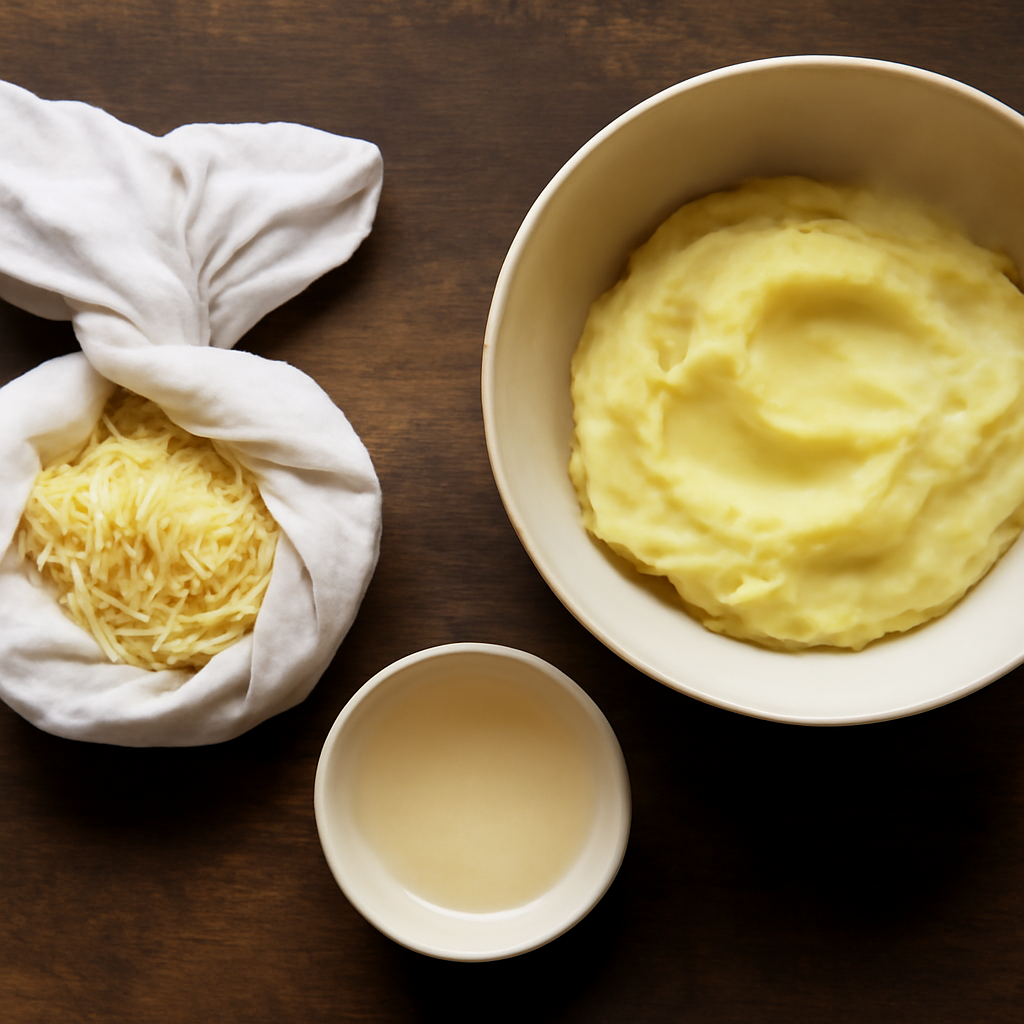
Place the grated raw potato into a clean tea towel and wring it firmly over the sink. You want to extract as much liquid as possible , press hard and repeat twice. The potato should feel almost dry and slightly starchy to the touch. Reserve the liquid in a bowl and let it sit for 5 minutes; the white starch will settle at the bottom. Pour off the water carefully and scrape the starch back into your grated potato. This step matters: skipping it makes slack, difficult batter.
-
In a large mixing bowl, combine the wrung raw potato with the hot mashed potato. Mix them together while the mash is still warm so they start to bind. The mixture will look uneven at first, stringy from the grated potato against the smooth mash. Keep mixing until it comes together into a rough, cohesive mass.
-
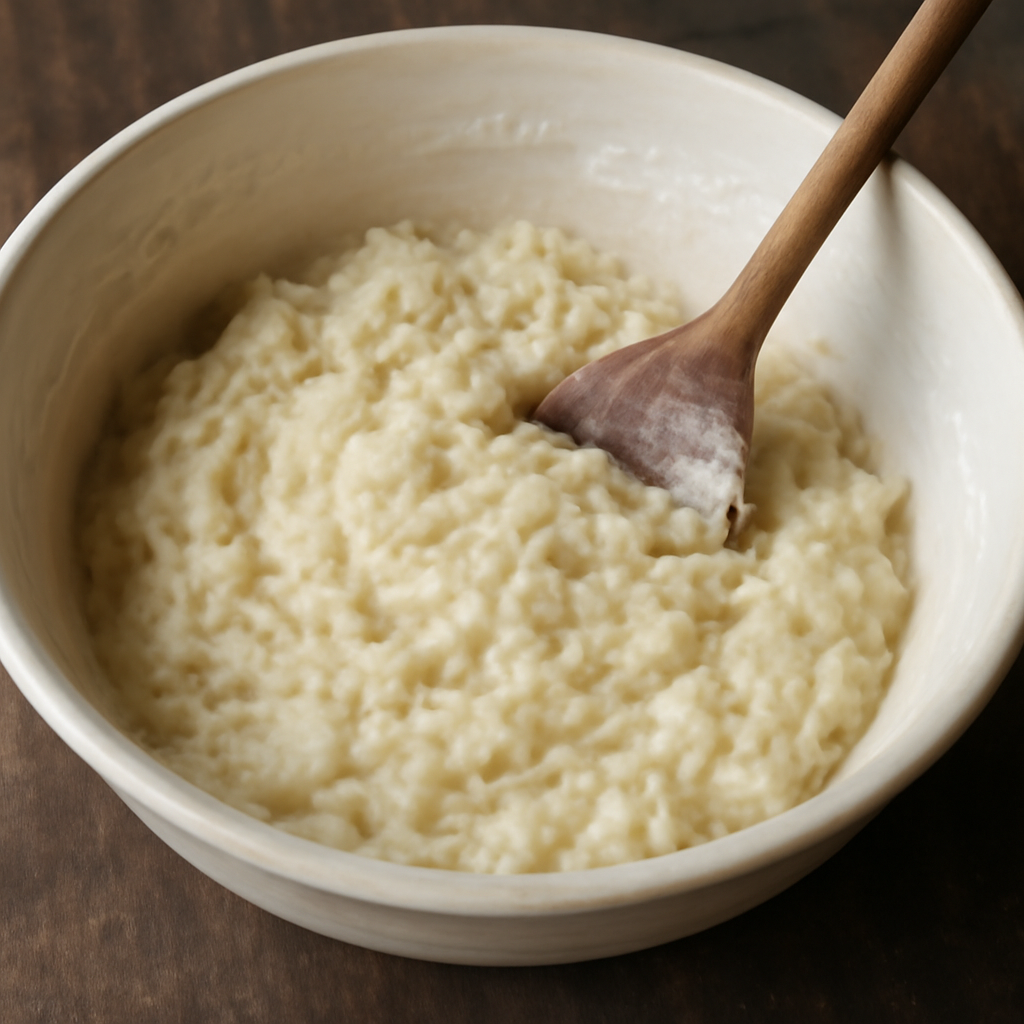
Sift in the plain flour and baking powder directly over the potato mixture. Add the salt and white pepper. Stir through with a wooden spoon until no dry flour remains. The batter will be stiff at this point, not pourable.
-
Add the beaten egg and milk, stirring firmly to bring everything together into a thick, dropping batter. It should hold its shape when spooned but not be stiff enough to roll out. If it seems dry and refuses to come together, add a further 10 to 15ml of milk, no more.
-
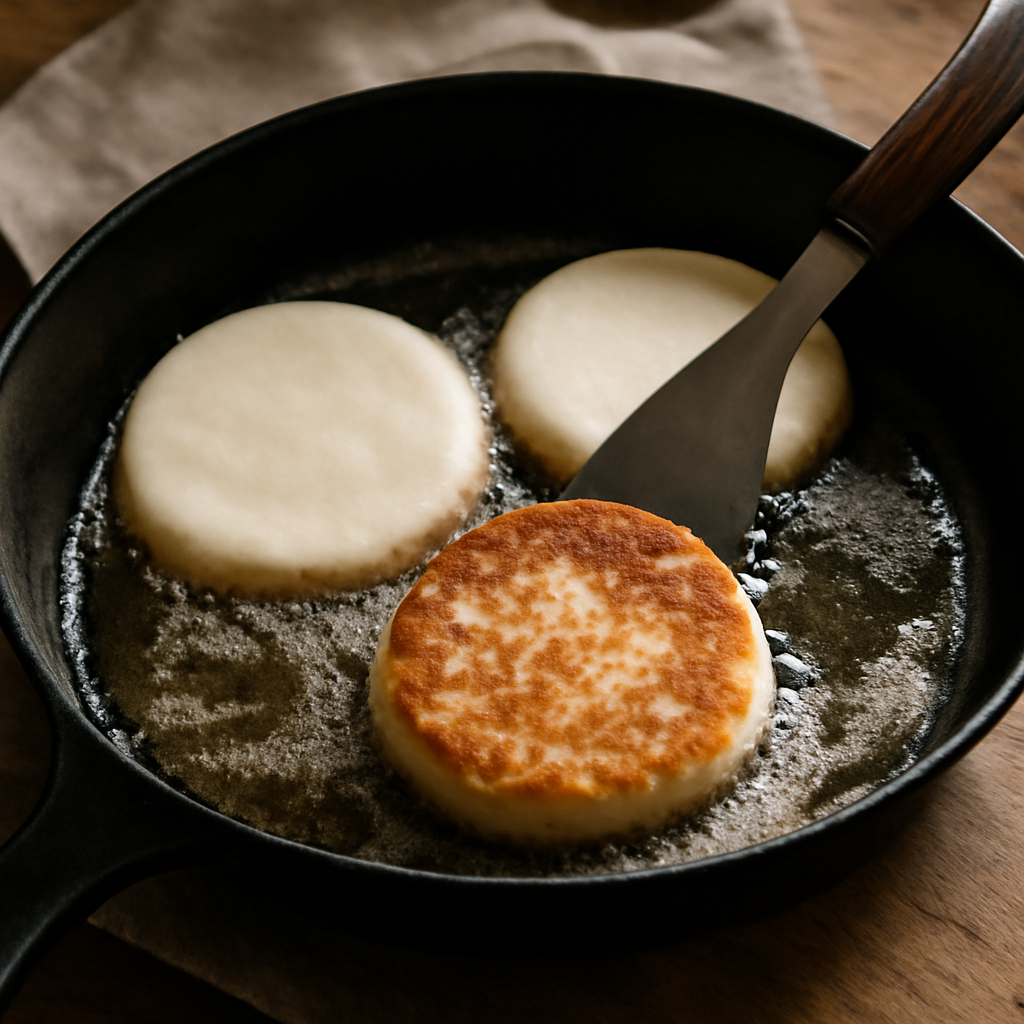
Heat a large heavy frying pan over a medium heat. Add half the butter and half the oil together. When the butter has melted and begun to foam but not colour, drop heaped tablespoons of batter into the pan, pressing each one gently into a round about 1cm thick and 8cm across. Do not crowd the pan; work in batches of three or four.
-
Cook on the first side for 4 to 5 minutes without moving them. The edges will begin to look set and slightly dry, and the underside, when you lift one carefully with a spatula, should be a deep golden brown. If it is pale after 5 minutes, your pan is not hot enough; increase the heat slightly before continuing.
-
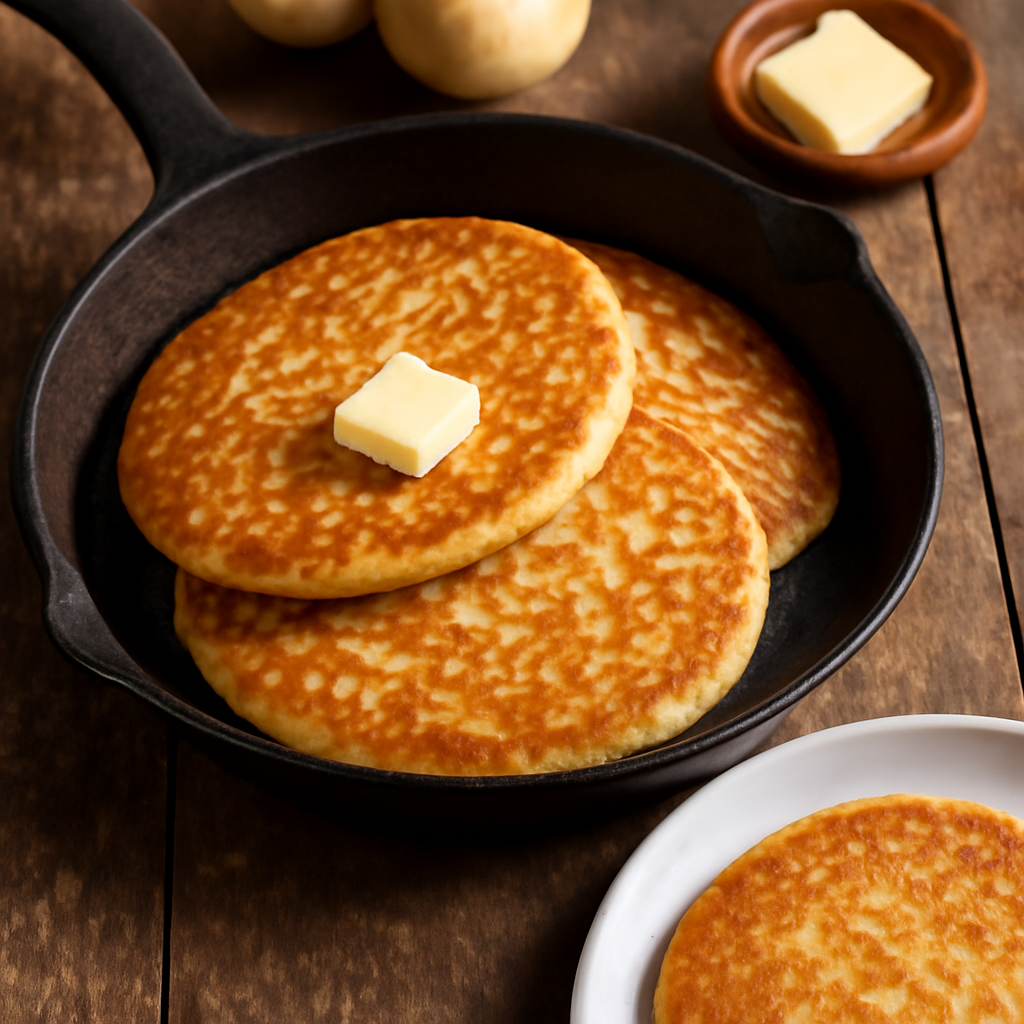
Flip each boxty carefully and cook on the second side for 3 to 4 minutes. The second side takes less time and will colour faster. Both sides should be evenly browned with a few darker spots where the starch has crisped against the pan.
-
Transfer the cooked boxty to a warm plate and cover loosely with foil while you cook the remaining batches, adding the rest of the butter and oil as needed between batches. Serve within 10 minutes of cooking; they soften noticeably as they sit.
Irish Context
Boxty is made across the north midlands and border counties of Ireland, where floury potato varieties have always grown well. The combination of raw and mashed potato in the same batter is what distinguishes it from potato pancakes made elsewhere, and the texture that results from that combination is unlike anything you can achieve with one type of potato preparation alone.
It appears at breakfast alongside bacon and eggs, as a side at dinner, or eaten on its own with a knob of butter melting into the surface.
Tips
Floury potato varieties are not optional here. Waxy potatoes hold too much water and produce a gummy, pale result that will not crisp properly.
Roosters are widely available across Ireland and are the most reliable choice. The reserved potato starch returned to the grated potato acts as a natural binder and contributes to the slightly chewy interior texture.
Do not discard it. If your batter is weeping liquid as it sits before frying, the grated potato was not wrung dry enough.
Tip the batter into the tea towel again and give it another squeeze. A cast iron frying pan gives the best crust but a heavy stainless steel pan works well too.
Non-stick pans tend to produce a steamed rather than fried finish; the exterior stays pale and soft. Boxty batter can be prepared up to 2 hours ahead and kept covered in the fridge.
It will stiffen as it chills; stir it briefly and bring it back to room temperature for 10 minutes before frying. Do not press down on the boxty after flipping.
Pressing forces moisture out into the pan and makes the surface stew rather than fry.

Author Commentary