

 AI
AI
 AI
AI
 AI
AI
Ingredients
Method
-
If you have just roasted meat, pour off most of the fat from the roasting tray and deglaze directly with the red wine over high heat, scraping up every browned bit from the base. Reduce by half, then pour through a sieve into a jug and set aside. If starting without drippings, begin at step two.
-
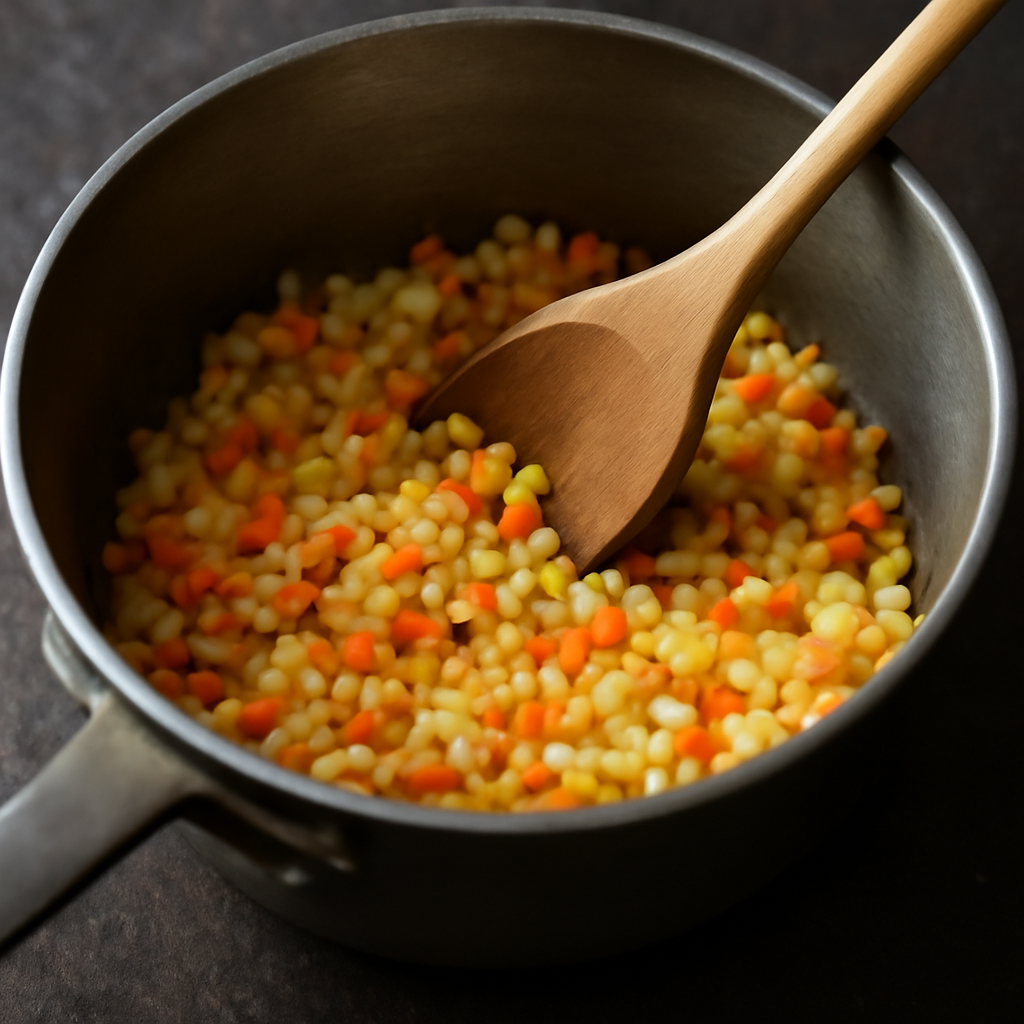
Melt the 30g of butter in a medium, heavy-based saucepan over a moderate heat. Add the shallot, carrot, and celery. Cook gently for 8 to 10 minutes, stirring occasionally, until the vegetables have softened and begun to colour at the edges. Do not rush this stage; the fond that builds on the base of the pan contributes to the final colour and depth.
-
Add the crushed garlic and cook for a further 1 minute, stirring constantly so it does not catch.
-
Sprinkle in the plain flour and stir it through the vegetables. Cook for 2 minutes, stirring continuously, until the flour smells slightly nutty and loses its raw scent. The mixture will look paste-like and dry at this point; that is correct.
-
Pour in the red wine, or add the already-reduced dripping liquid from step one along with any remaining red wine. Stir vigorously to incorporate the flour paste into the liquid, removing any lumps. Bring to a brisk simmer and reduce by roughly half, approximately 3 to 4 minutes.
-
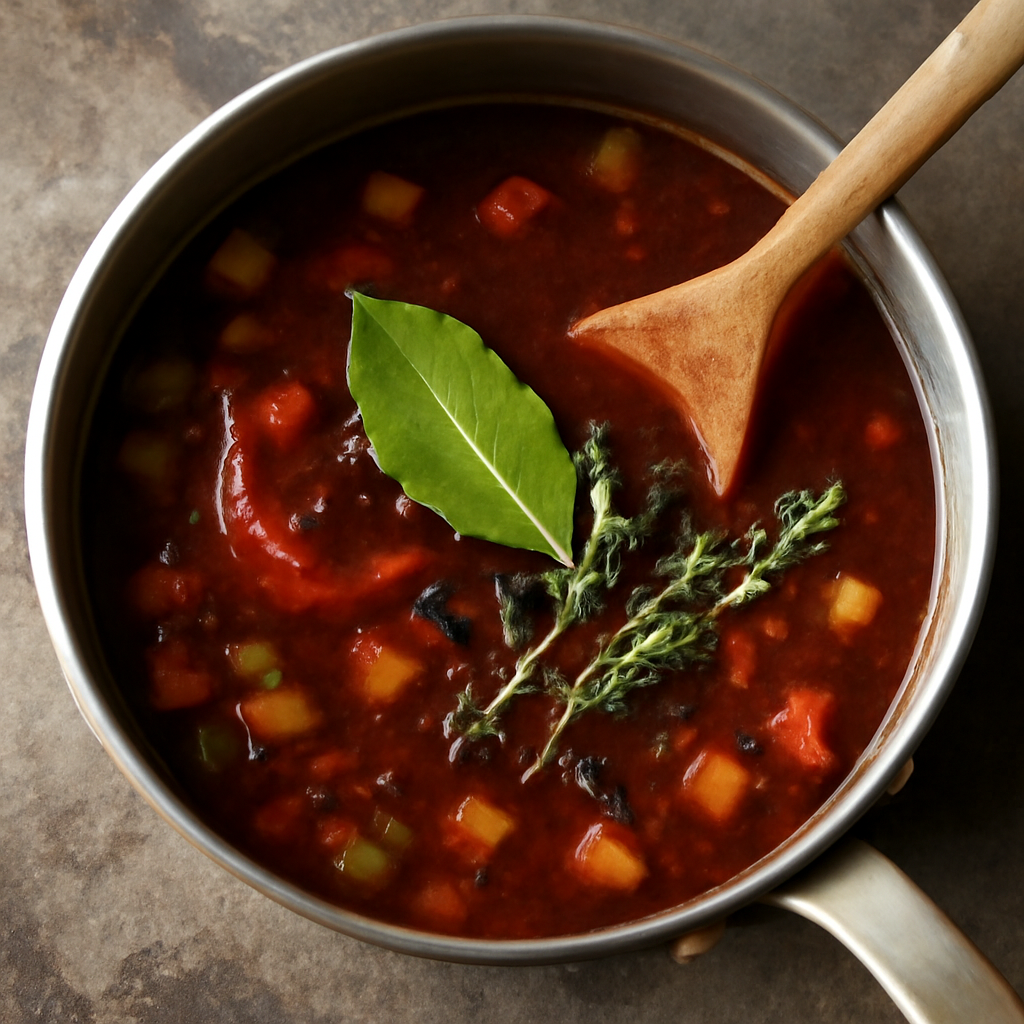
Add the tomato purée and stir through. Then pour in the stock gradually while stirring. Add the bay leaf, thyme sprigs, and black peppercorns.
-
Bring to a simmer, then reduce the heat to low. Leave the sauce to cook uncovered for 18 to 20 minutes, skimming off any grey foam that rises to the surface during the first few minutes. The sauce should reduce by about one third and coat the back of a spoon clearly when you draw a finger through it.
-
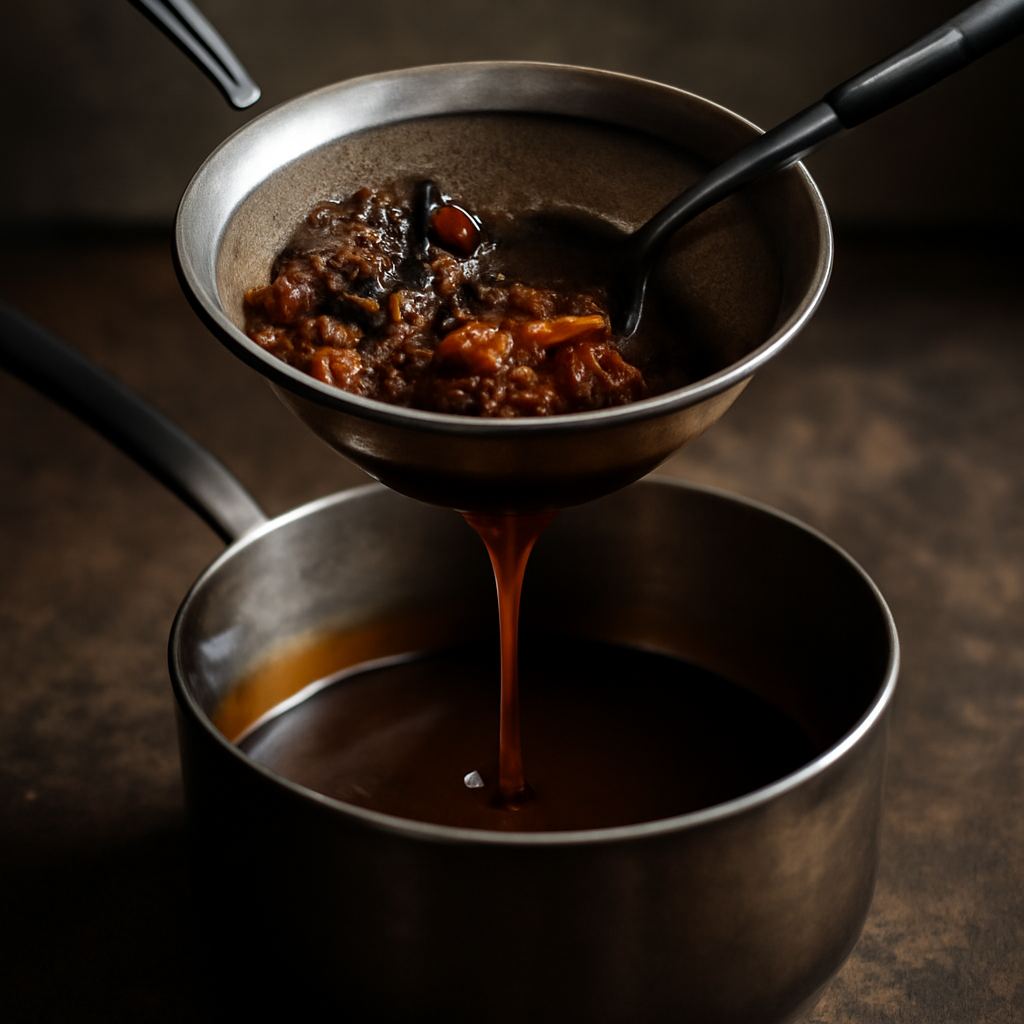
Strain the sauce through a fine-mesh sieve into a clean saucepan, pressing lightly on the vegetables to extract all the liquid. Discard the solids.
-
Return the strained sauce to a low heat. Stir in the redcurrant jelly and let it dissolve fully, about 1 minute. Taste and adjust salt carefully, especially if the stock was already seasoned.
-
Remove from the heat and whisk in the 15g of cold butter in small pieces. This is the finishing step: it gives the sauce a slight gloss and rounds out any sharp edges from the wine. Serve immediately, or keep warm in the pan with a lid slightly ajar over the lowest possible heat for up to 20 minutes.
Irish Context
Brown sauce made from pan drippings and stock has been standard in Irish kitchens wherever meat was roasted. Venison, once more commonly available from estate farms and upland farms across counties like Wicklow, Tipperary, and Donegal, has come back into circulation through Irish deer farms and game suppliers.
This sauce suits both farmed and wild deer, as well as beef and lamb. The use of redcurrant jelly to balance a reduced wine sauce is long-established in Irish farmhouse cooking, where the jelly was often made from garden currants in late summer and kept in the larder through winter for exactly this kind of use.
Tips
If the sauce tastes sharp or acidic after reducing, the wine was likely too tannic or the stock too thin. The redcurrant jelly corrects this to a point, but avoid adding more than a teaspoon or the sauce will read as sweet rather than savoury.
For venison specifically, the sauce benefits from an extra 2 or 3 juniper berries added with the bay leaf and thyme. Remove them at the straining stage.
They cut through the gamier notes in farmed and wild deer alike. Homemade stock makes a substantial difference here.
Supermarket stock cubes or concentrate tend to produce a sauce that is either oversalted or tastes flat once reduced. If using commercial stock, dilute it slightly and hold off on any salt until the final seasoning.
The sauce can be made up to two days ahead and refrigerated. Reheat gently, whisking occasionally, and add the cold butter finish only when reheating before service.
If the sauce is too thin after straining, return it to a moderate heat and reduce it further without the lid. It will thicken noticeably in 3 to 4 minutes.
Do not add more flour at this stage; it will turn the texture chalky. A sauce that has gone lumpy before straining is usually caused by adding the stock too quickly while the flour paste was still cold and clumped.
Straining will remove the lumps, so do not panic mid-cook.

Author Commentary