
 AI
AI
 AI
AI
 AI
AI
Ingredients
Method
-
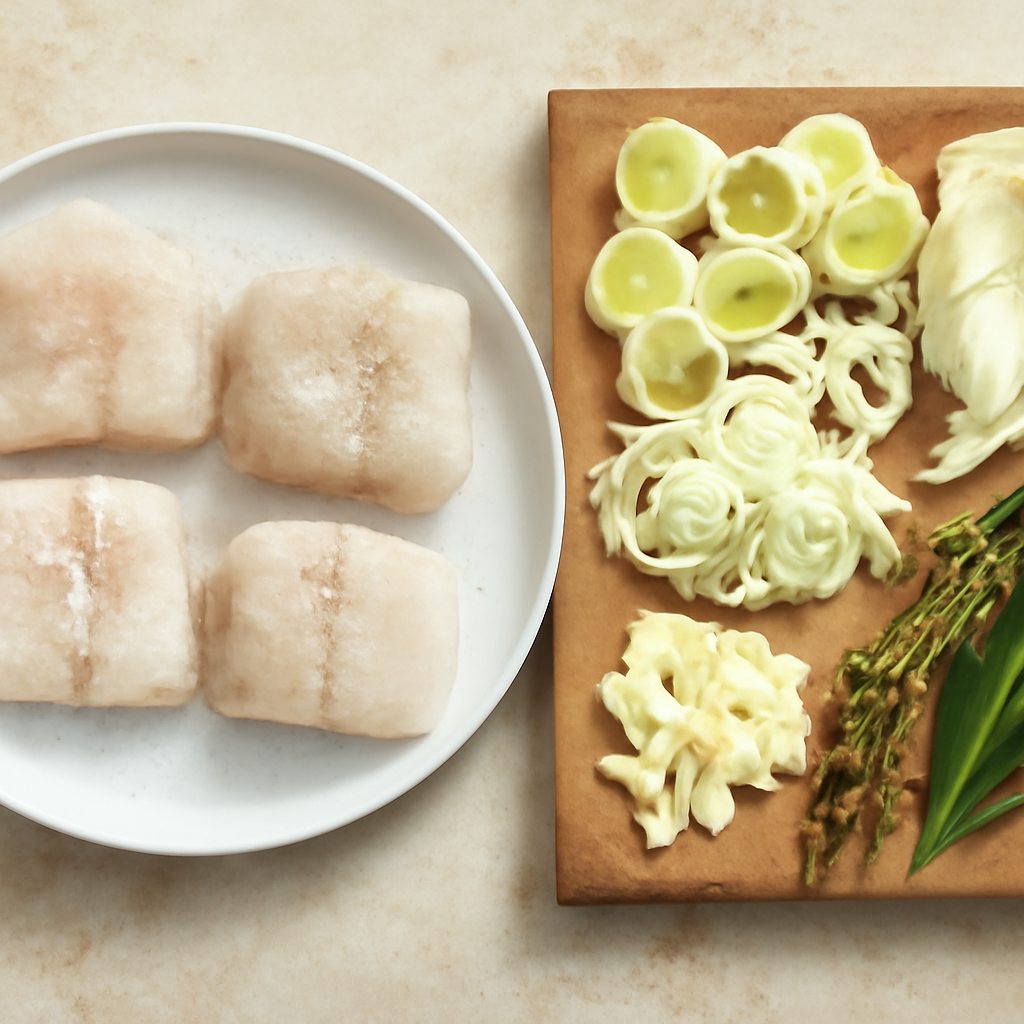
Pat the monkfish portions dry with kitchen paper and season all over with the sea salt. Leave uncovered on a plate in the fridge for 15 minutes. This draws out surface moisture and helps the fish hold its shape during coddling.
-
Set a wide, shallow casserole or a deep-sided frying pan over a medium-low heat. Add the rapeseed oil and butter together. When the butter has melted and stopped foaming, add the sliced onion with a pinch of salt and cook gently for 8 minutes, stirring occasionally, until soft and translucent but without any colour.
-
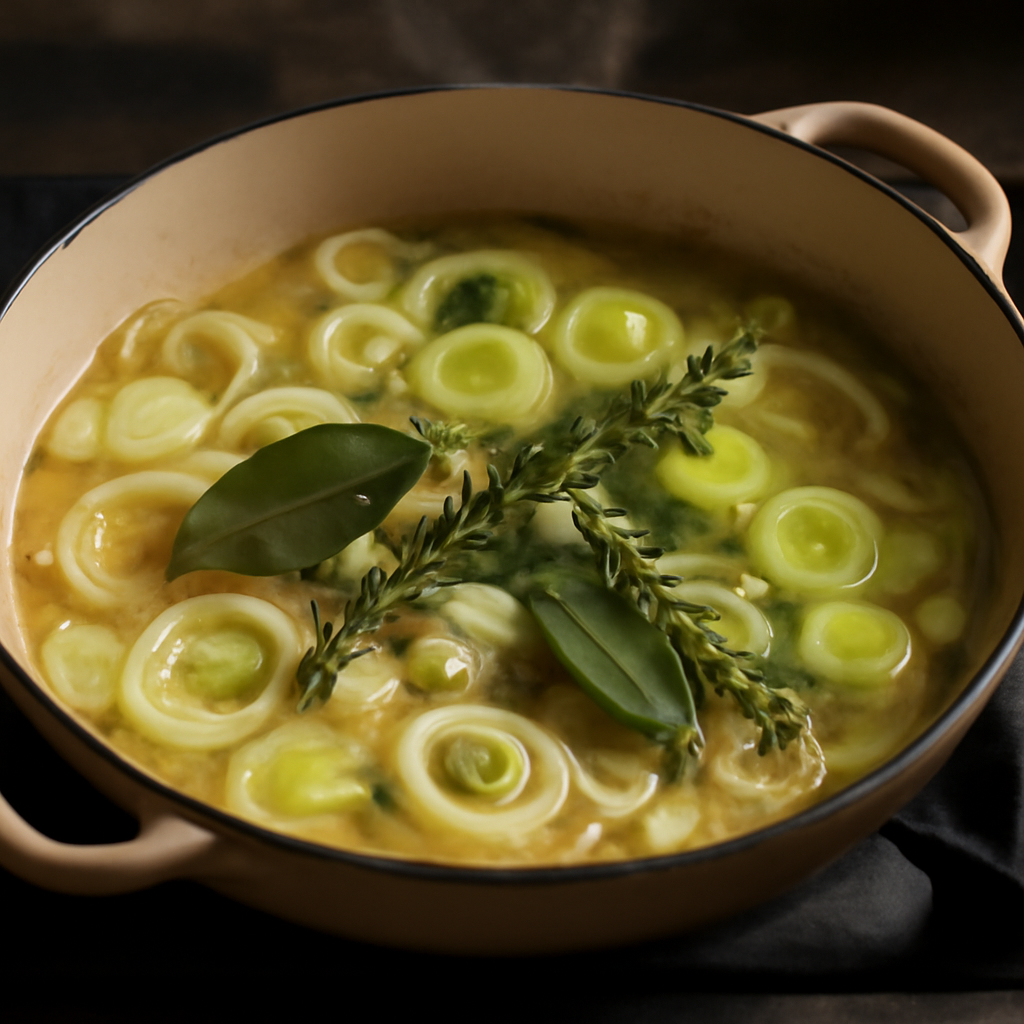
Add the garlic and cook for a further 2 minutes. Add the leek rounds and stir everything together. Cook for 4 to 5 minutes until the leeks have softened slightly but still hold their shape. You want some texture left in them because they will continue cooking with the fish.
-
Pour in the cider and let it bubble for 2 minutes to cook off the sharpest of the alcohol. Add the fish stock, bay leaves, peppercorns, and thyme sprigs. Bring the liquid to a very gentle simmer, around 80 to 85 Celsius. You should see occasional bubbles breaking the surface, nothing more. A rolling boil will tighten and toughen the monkfish.
-
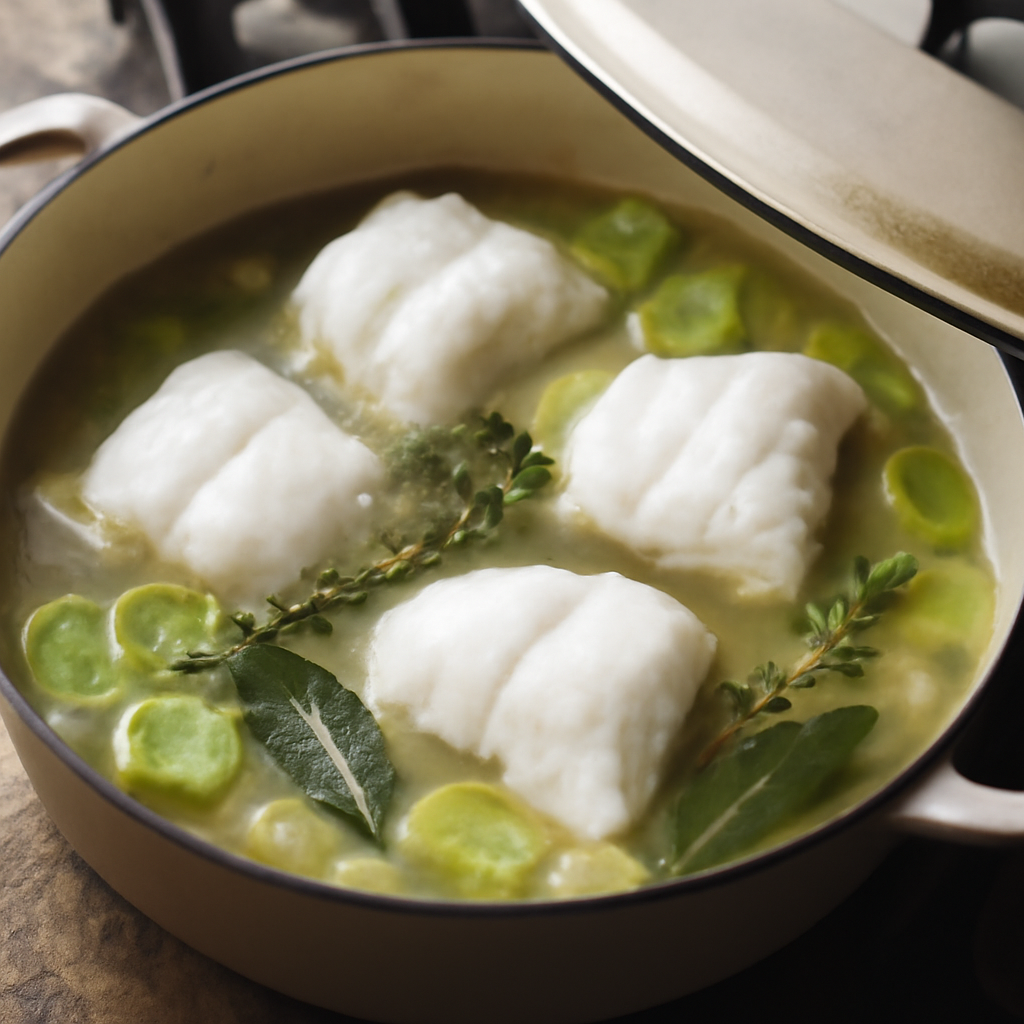
Lower the seasoned monkfish portions into the liquid, nestling them among the leeks so they are about two-thirds submerged. Cover the pan with a lid or a sheet of foil. Cook for 18 to 22 minutes, depending on the thickness of the portions. Monkfish tail at this size is done when the flesh has turned from translucent grey-white to fully opaque white throughout and offers no resistance when pressed at the thickest point with a finger.
-
Lift the fish portions out carefully with a slotted spoon or fish slice and set aside on a warm plate, loosely covered. Remove and discard the bay leaves, peppercorns, and thyme sprigs from the pan.
-
Increase the heat to medium and stir in the double cream. Let the liquid reduce for 4 to 5 minutes, stirring occasionally, until it coats the back of a spoon and has a loose, brothy sauce consistency. Taste and adjust the salt.
-
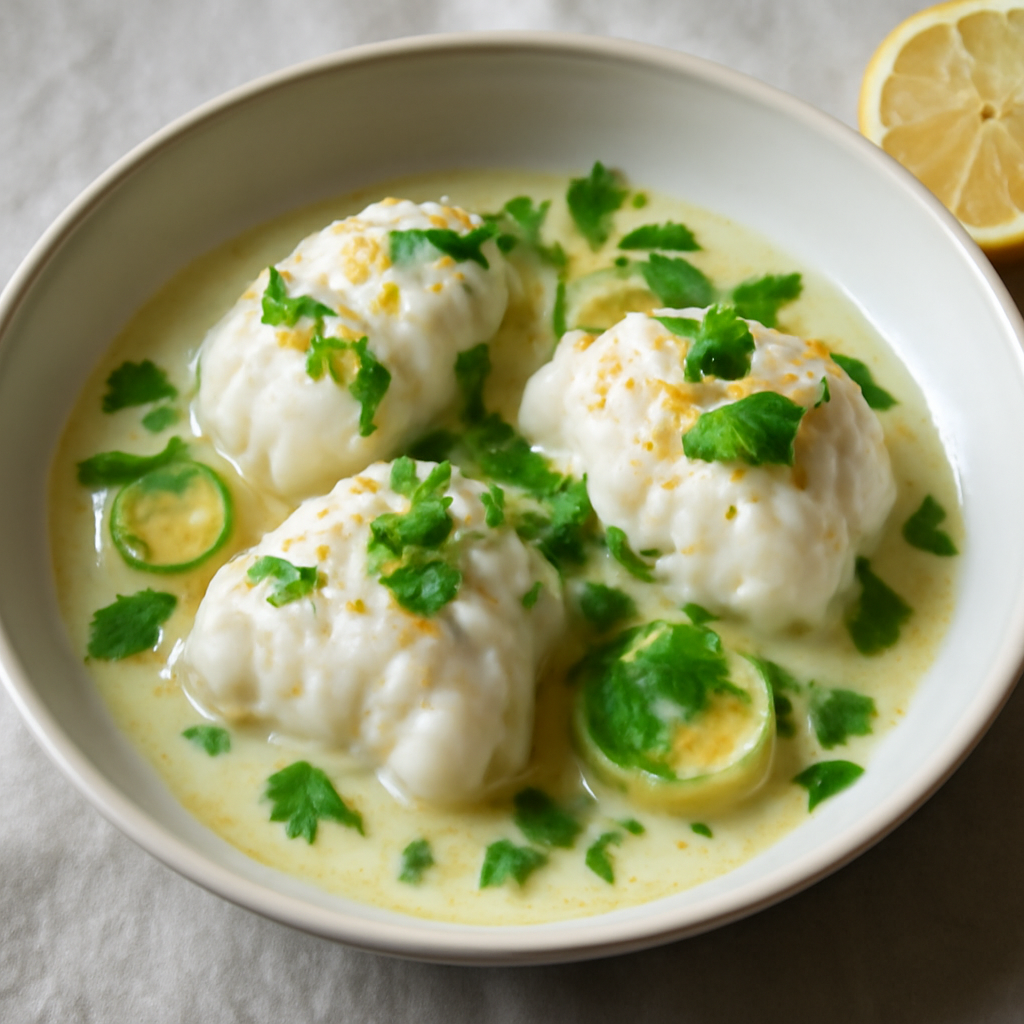
Return the monkfish to the pan for 1 minute to warm through. Scatter over the lemon zest and parsley just before serving. Bring the pan directly to the table or serve straight into shallow bowls with the leeks spooned around and the sauce ladled over.
Irish Context
Monkfish is landed at ports along the west and south coasts of Ireland, including Killybegs, Castletownbere, and Dingle, and tends to appear on fishmongers' counters from late spring through autumn. It is a fish that many Irish home cooks have overlooked in favour of cod or haddock, partly because of its appearance whole and partly because of its higher price.
At its best it is firm-fleshed, mild, and takes slow, moist cooking better than most white fish. Coddling, which here means gentle poaching in a covered pan rather than the Dublin dish of the same name, suits monkfish particularly well because the controlled low heat keeps the flesh from seizing.
The use of dry Irish cider in the cooking liquid is practical rather than decorative; it thins the stock, lifts the sweetness of the leeks, and leaves a faint apple note in the finished sauce without being identifiable as such.
Tips
The membrane on monkfish is pale pink and slightly rubbery. If your fishmonger has left any on, use a sharp knife to slide it away from the flesh before cooking.
Leaving it on causes the fish to curl and contract unevenly. Do not rush the coddling temperature.
If the liquid starts to boil properly, the monkfish will go grainy and dry at the edges while still undercooked in the centre. Keep the heat low and trust the time.
Monkfish holds well at a gentle simmer but dries out fast at high heat. If you are unsure whether it is done, cut into the thickest piece at the centre.
The flesh should be white, firm, and pull apart in clean flakes with no translucency remaining. If the sauce reduces too quickly before the fish is done, add a splash more stock and lower the heat further.
This dish works well with a floury boiled potato alongside to absorb the sauce, or with good soda bread torn at the table.

Author Commentary