
 AI
AI
 AI
AI
 AI
AI
Ingredients
Method
-
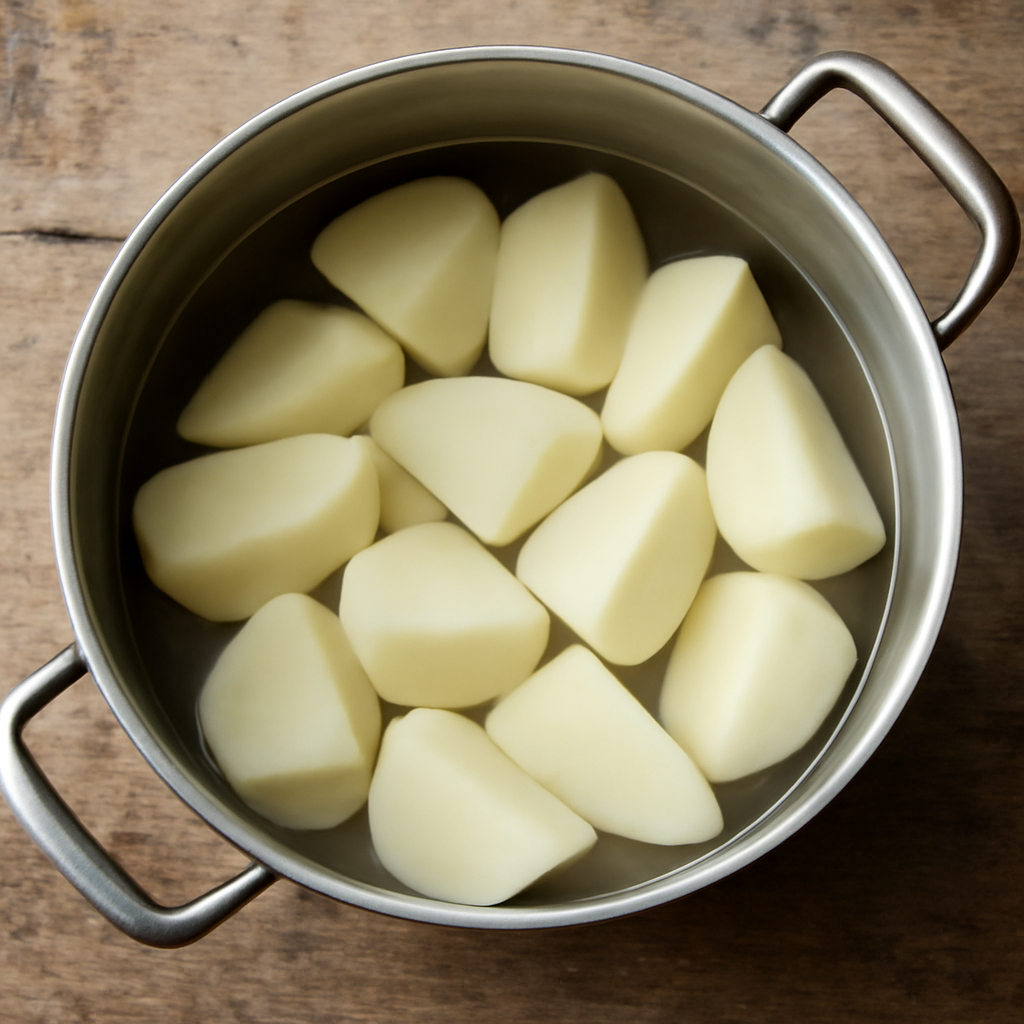
Place the potatoes in a large saucepan and cover generously with cold salted water. Bring to the boil over a high heat, then reduce to a steady simmer. Cook for 20 to 25 minutes until completely tender when pierced with a skewer. There should be no resistance at all at the centre. Drain thoroughly in a colander and leave to steam-dry for 3 to 4 minutes. Do not skip this step; wet potatoes make watery colcannon.
-
While the potatoes are cooking, bring a separate small saucepan of salted water to the boil. Add the shredded cabbage and cook for 3 to 4 minutes until just tender but still holding some colour. Drain and press firmly in the colander with the back of a spoon to remove as much liquid as possible. Set aside.
-
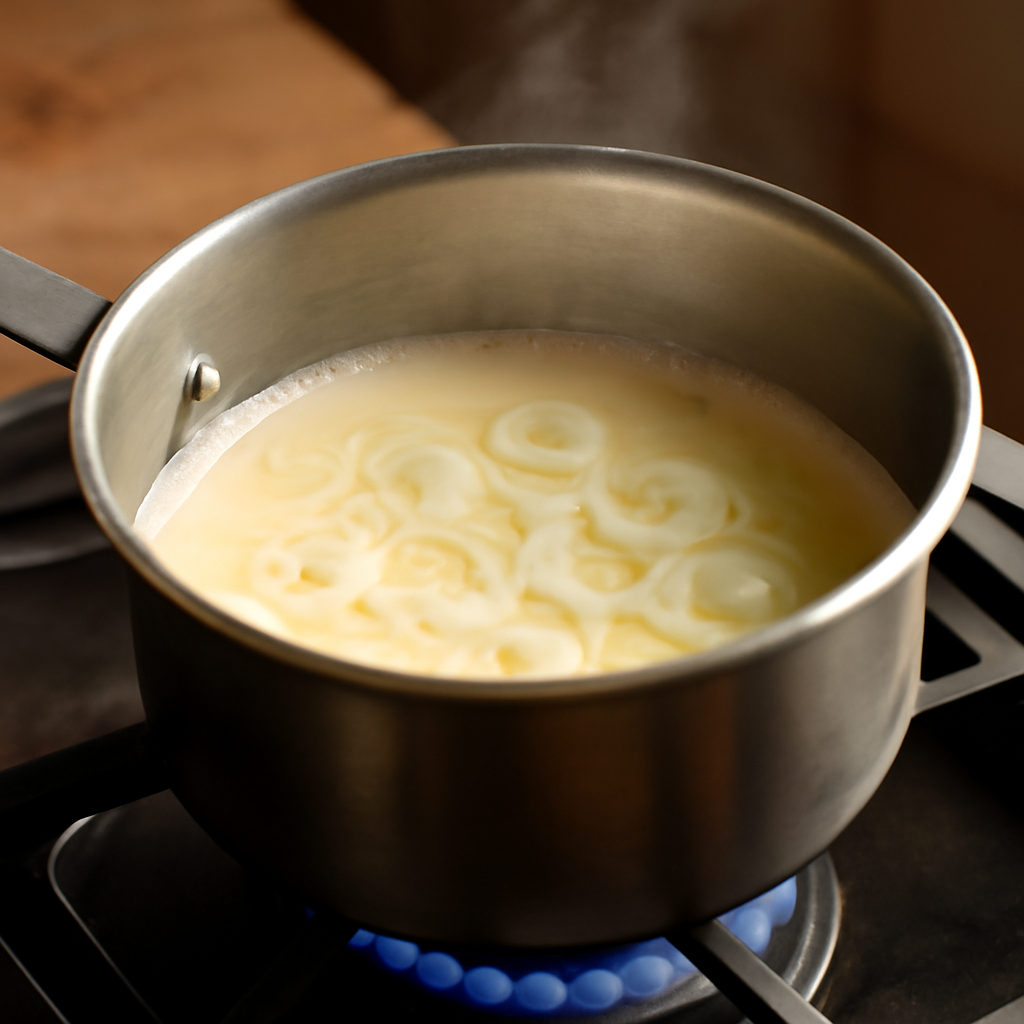
In the same small saucepan, warm the milk and 80 g of butter over a low heat until the butter has melted and the mixture is steaming but not boiling. Add the white parts of the spring onions and cook gently for 2 minutes to soften them slightly and take the raw edge off.
-
Return the drained potatoes to the large saucepan over a very low heat. Mash thoroughly until no lumps remain. Work quickly here; the potatoes should still be hot. Pour in the warm milk and butter mixture gradually, beating with a wooden spoon or spatula between additions until the mash is smooth and just loose enough to fold through the cabbage without stiffening.
-
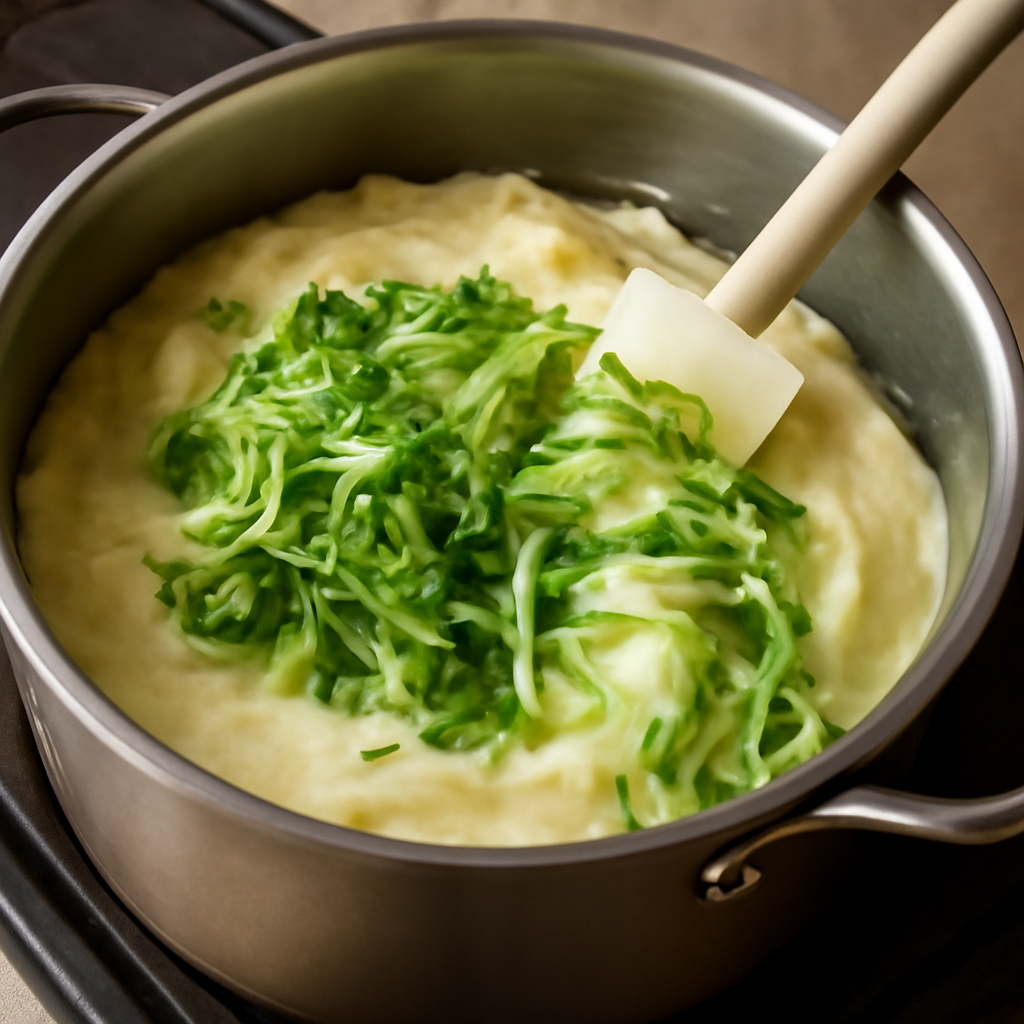
Add the drained cabbage and the green parts of the spring onions. Fold everything together with a spatula using broad, deliberate strokes. You want the cabbage evenly distributed but not mashed into the potato; there should still be distinct green threads throughout. Season well with the sea salt and several grinds of black pepper. Taste and adjust.
-
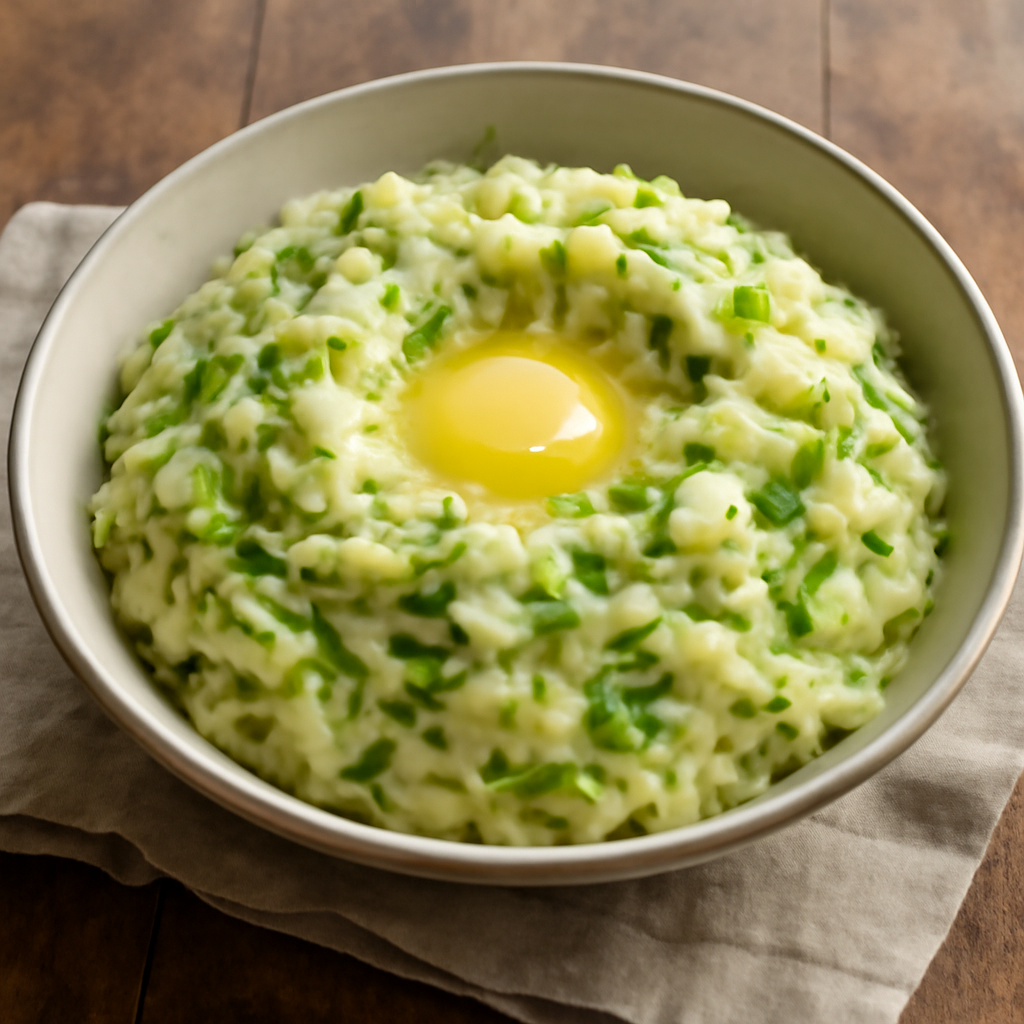
Spoon into a warmed serving bowl. Make a shallow well in the centre with the back of a spoon and place the remaining 20 g of butter directly into it. Serve immediately. The butter should be visibly melting as it reaches the table.
Irish Context
Colcannon is made in Irish households because potatoes are grown here in quantity, cabbage is cheap and keeps, and the two together need almost nothing else to become a proper meal or a substantial side. It turns up alongside pork sausages, a boiled bacon joint, or simply eaten in a bowl on its own with the butter pooled in the middle.
The dish is at its best in autumn and winter when floury potato varieties are fully mature and the cabbage is at its densest. In October, some households serve it on Halloween night, sometimes with a small coin pressed into the centre as a token for whoever finds it.
Tips
Floury potato varieties are non-negotiable here. Waxy types will give you a gluey, dense result no amount of butter will rescue.
Rooster, Kerr's Pink, or Golden Wonder are all reliable. Buy them loose if you can and check that the skin is dry and papery rather than damp.
The steam-drying stage after draining matters more than most recipes admit. Even an extra minute in the colander will make the mash noticeably lighter.
If the mash starts to stiffen before you have folded in the cabbage, a splash more warm milk will bring it back. Do not add cold milk directly; it will cool the whole thing down and the texture will seize.
Savoy cabbage works just as well as green cabbage and holds its texture a little better. Kale is sharper in flavour and takes longer to cook; if using it, allow 6 to 7 minutes and shred it more finely.
Colcannon does not hold well. Make it just before you need it.
If you must reheat it, do so in a saucepan over a low heat with a small splash of milk, stirring regularly, and accept that it will be slightly denser than when freshly made.

Author Commentary