
 AI
AI
 AI
AI
 AI
AI
Ingredients
Method
-
Heat the oven to 220°C (200°C fan). Place a baking tray on the middle shelf to heat up as the oven comes to temperature.
-
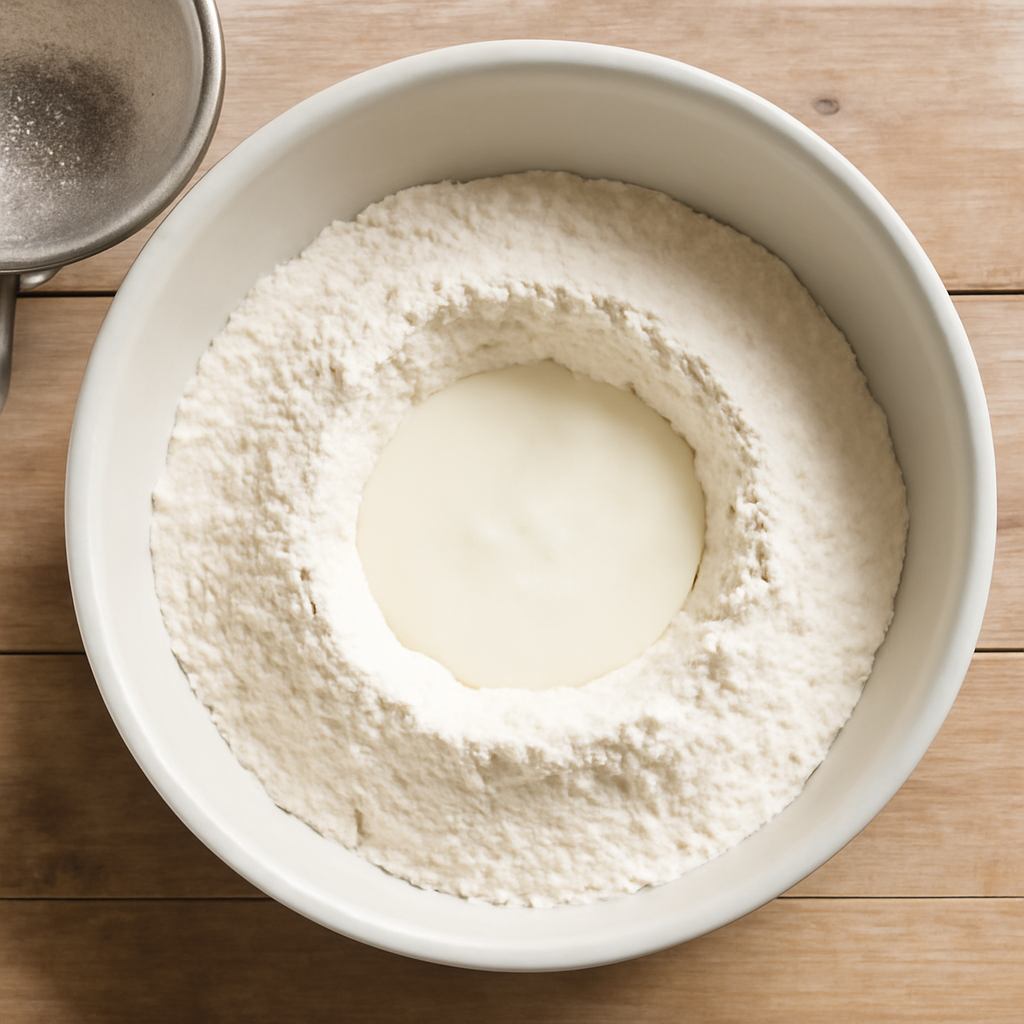
Sift the plain flour, salt, and bicarbonate of soda together into a wide mixing bowl. Lift the sieve high so the flour aerates as it falls. Stir the dry ingredients briefly with your fingers to make sure the soda is evenly distributed through the flour.
-
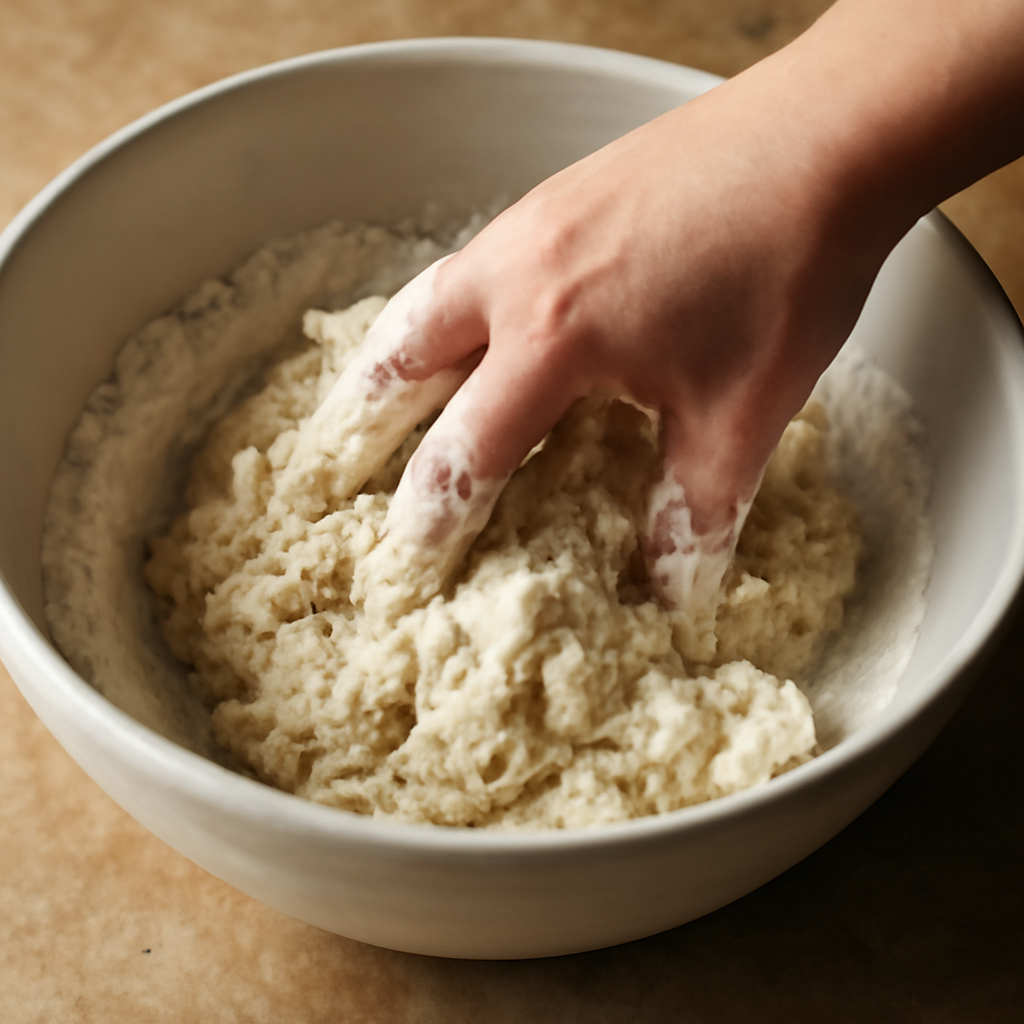
Make a well in the centre of the flour and pour in all the buttermilk at once. Using one hand, work the mixture from the outside in, pulling the flour into the buttermilk with a loose, claw-like motion. Stop the moment a shaggy, slightly sticky dough comes together. Overworking at this stage will tighten the gluten and give you a dense loaf with a gummy centre.
-
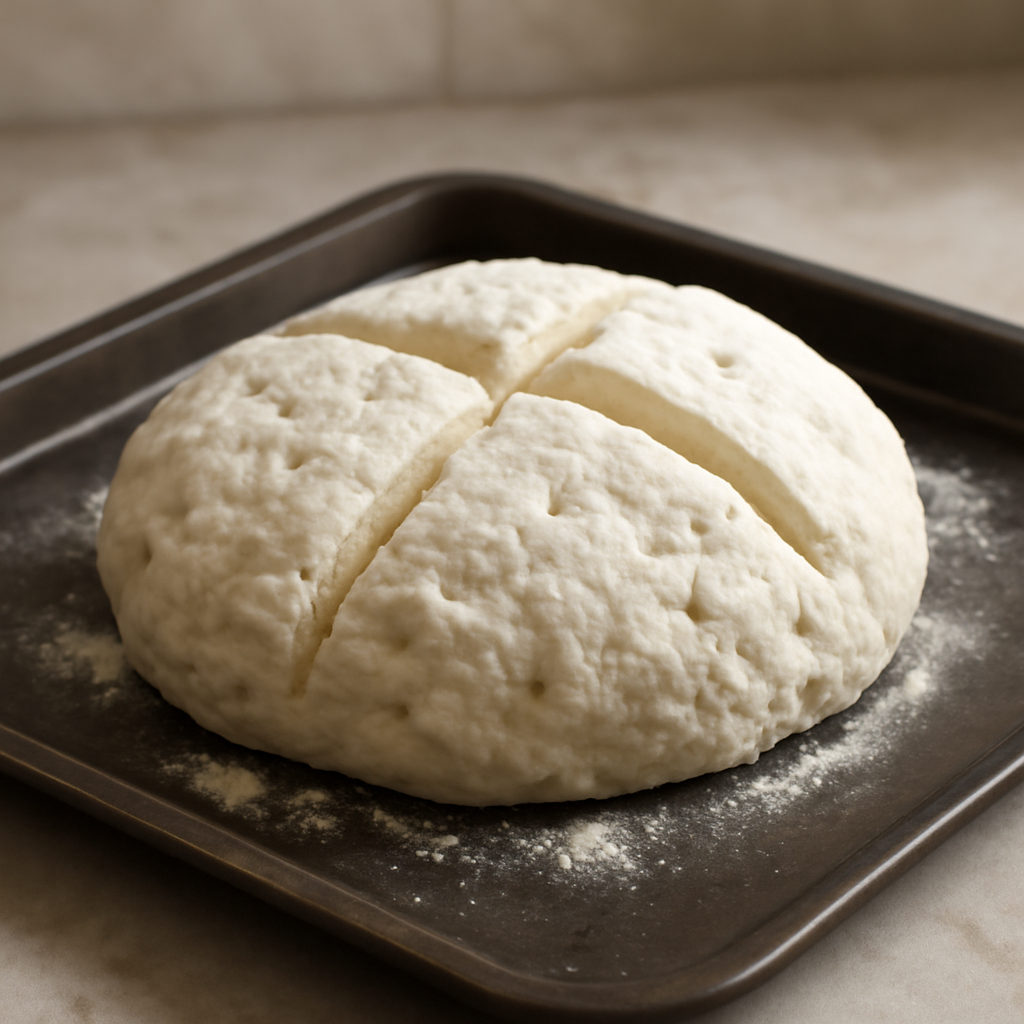
Turn the dough out onto a lightly floured surface. Pat and fold it gently two or three times, just enough to bring it into a rough round shape about 5cm tall. Do not knead. The dough should look a little rough on the surface; that is correct.
-
Lift the dough onto the hot baking tray. Cut a deep cross across the top with a sharp knife or a lame, going about two-thirds of the way through the loaf. Then pierce each of the four quadrants once with the tip of the knife. In older practice this was said to let the fairies out; more practically it helps the heat penetrate the thick centre.
-
Bake at 220°C for 15 minutes, then reduce the oven to 200°C (180°C fan) and bake for a further 20 to 25 minutes. The loaf is done when it sounds hollow when tapped firmly on the base. If it sounds dense and dull, return it to the oven directly on the shelf, without the tray, for five more minutes.
-
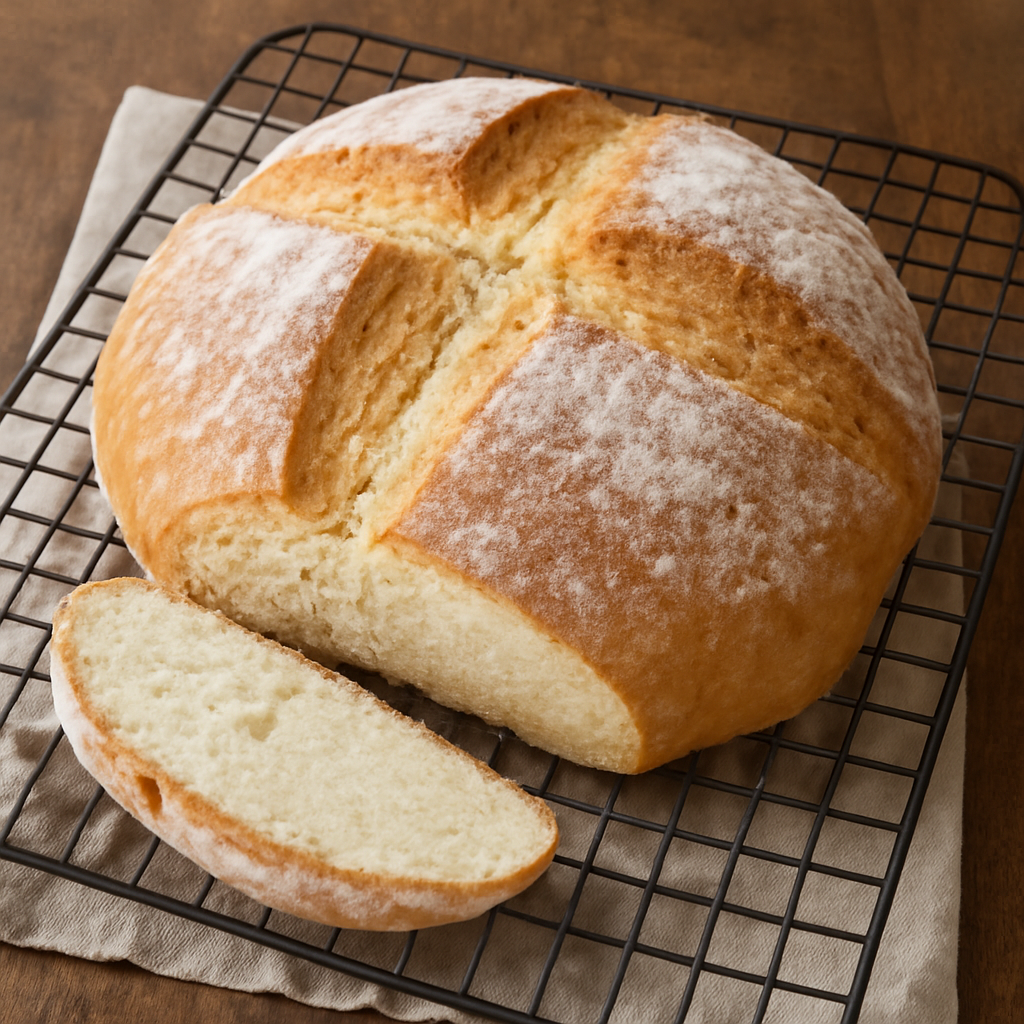
Cool on a wire rack for at least 20 minutes before cutting. Cutting too early compresses the crumb and makes it gummy. The crust will soften slightly as it cools, which is normal.
Irish Context
Soda bread became a staple in Irish households during the nineteenth century when bicarbonate of soda became widely available and affordable. Buttermilk, a byproduct of churning butter, was plentiful in rural areas.
Together these two ingredients made leavened bread possible in kitchens without an oven capable of sustaining the long, steady heat that yeasted loaves require. The flat-bottomed bastible pot hanging over an open fire was the original vessel; the loaf cooked in the radiant heat from below and from the lid piled with glowing turf.
The modern kitchen oven replicates this reasonably well if you preheat the tray and start at a high temperature. The white version, made from bolted flour, was considered a step up from the wholemeal brown soda bread that used the whole grain.
Both remain common across the country, sold in every bakery and made in many homes still.
Tips
Cold buttermilk gives the soda more time to react evenly before the heat sets the crumb. Room-temperature buttermilk can cause uneven rising.
If you do not have buttermilk, add 1 tablespoon of white wine vinegar to 360ml of full-fat milk, stir once, and leave for five minutes. It is a reasonable substitute, though the flavour will be slightly less tangy.
The cross must be deep enough that the loaf can open and spread as it bakes. A timid cut will leave you with a split crust that tears unevenly.
Soda bread stales faster than yeasted bread. If you have leftovers, slice and toast them the next day; toasting recovers the texture well.
After that, blitz for breadcrumbs. Do not use strong bread flour here.
The higher protein content will tighten the dough and work against the open, tender crumb you want. Plain flour only.

Author Commentary