
 AI
AI
 AI
AI
 AI
AI
Ingredients
Method
-
Preheat your oven to 220°C (200°C fan). Place a baking tray on the middle shelf to heat up while you mix the dough.
-
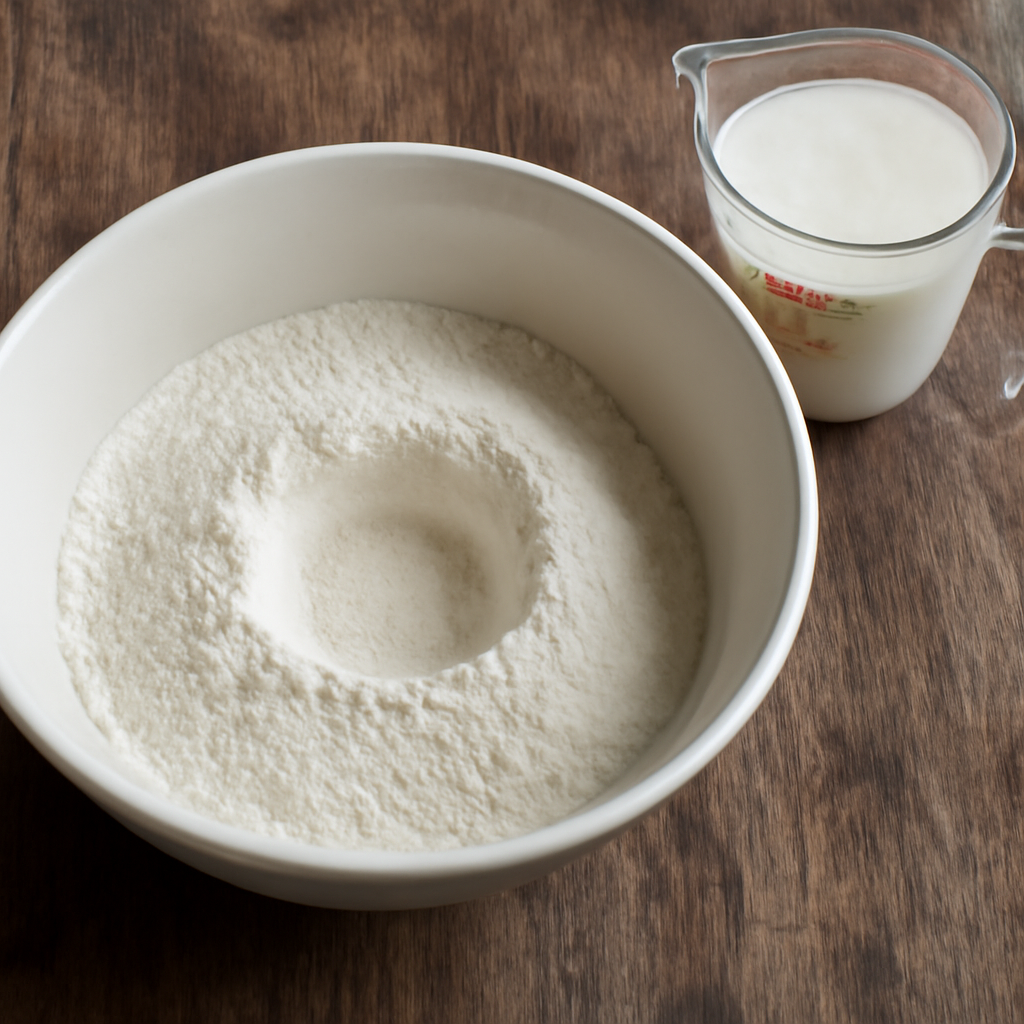
Sift the flour, salt and bicarbonate of soda together into a large wide bowl. Use your fingers to make a well in the centre, large enough to pour the buttermilk into without it running over the sides.
-
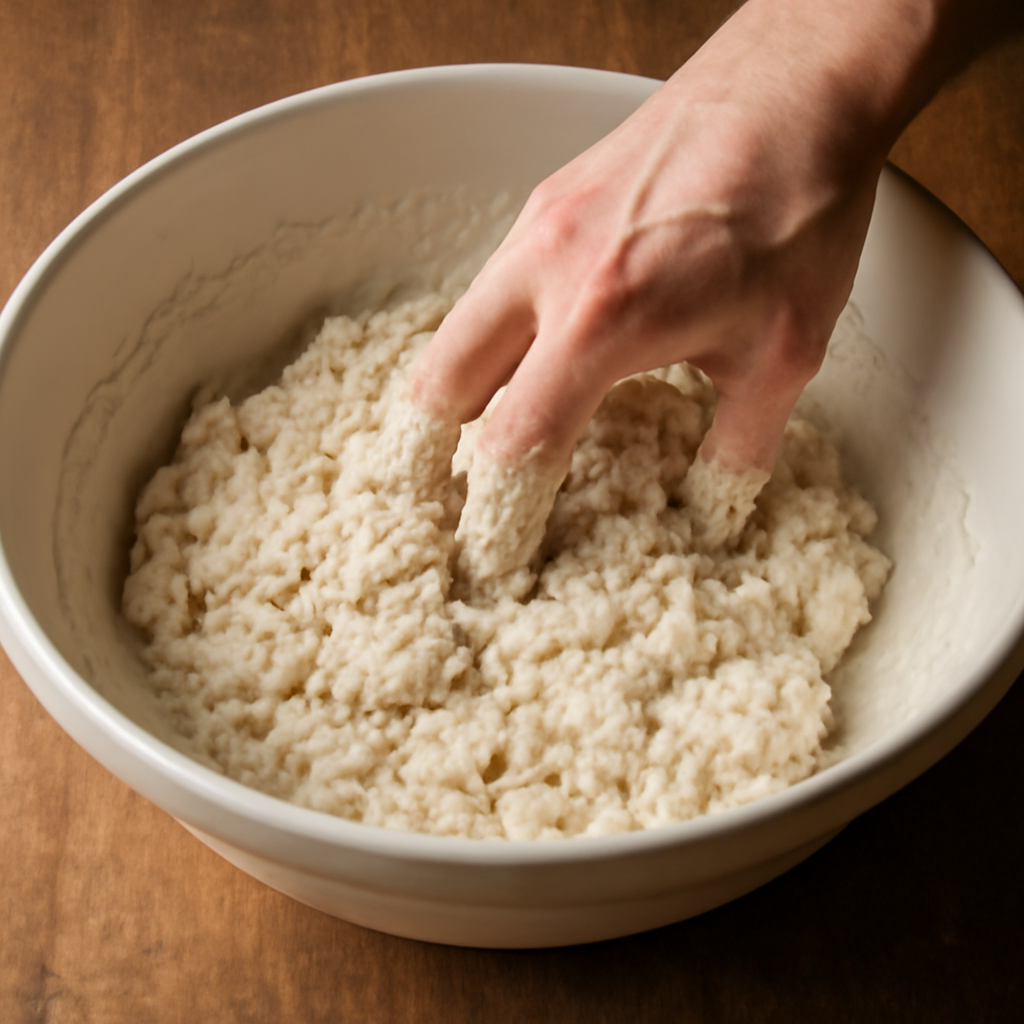
Pour in 320ml of the buttermilk. Using one hand held like a claw, bring the flour into the liquid in a circular motion, working from the outside inward. Do not knead. The dough should come together quickly into a rough, slightly sticky mass. If it feels dry and crumbly at the edges, add the remaining 30ml of buttermilk, a splash at a time. The dough should be soft enough to hold together but firm enough to shape.
-
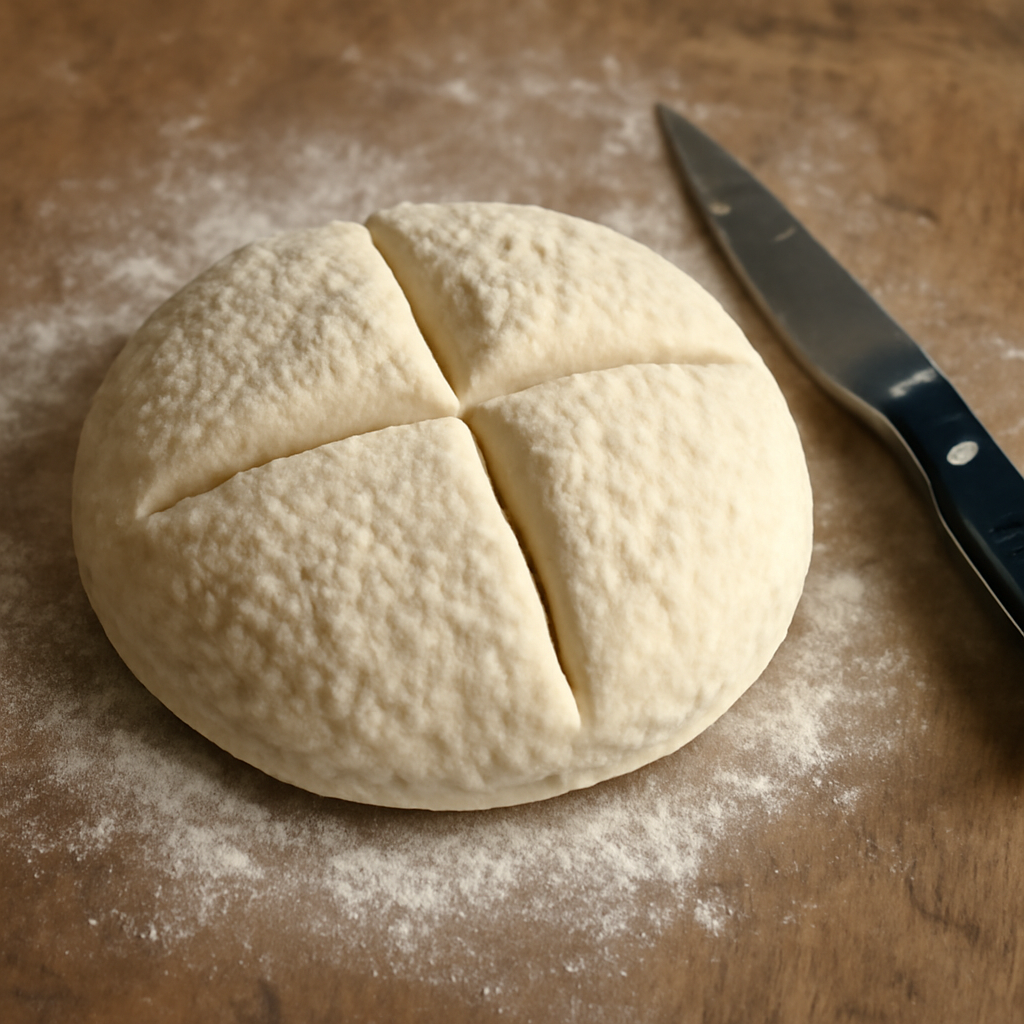
Turn the dough out onto a lightly floured surface. Pat and push it gently into a round roughly 20cm across and about 4cm deep. Do not handle it more than necessary. Overworked dough produces a dense, tough loaf.
-
Using a sharp knife or dough scraper, cut a cross into the top of the loaf, going about 2cm deep. This lets the heat reach the centre and helps the bread open evenly as it bakes. Some people score to the very edges; either way is fine, but at least reach 1cm from the rim.
-
Dust the hot baking tray lightly with flour, place the loaf on it, and bake at 220°C for 15 minutes. Then reduce the heat to 200°C (180°C fan) and bake for a further 18 to 20 minutes.
-
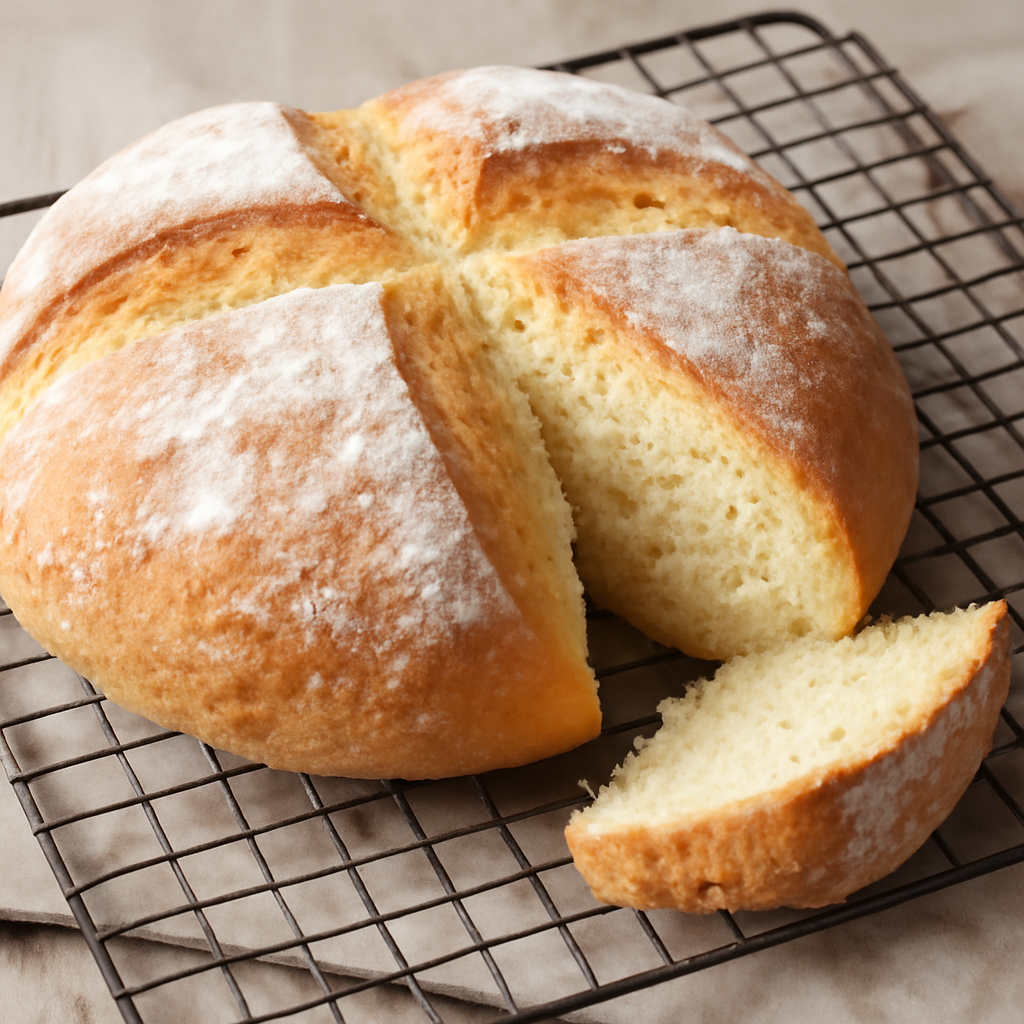
The loaf is ready when it sounds hollow when tapped on the base with your knuckles. The crust should be pale gold with a slightly floury, matte surface. If it sounds dense or thudding, return it to the oven for 5 more minutes directly on the oven rack, without the tray.
-
Transfer to a wire rack and leave to cool for at least 20 minutes before cutting. Cutting too soon compresses the crumb and produces a gummy interior.
Irish Context
Soda bread became a staple in Irish kitchens because it requires no equipment beyond a bowl, a baking tray and an oven, and because bicarbonate of soda worked efficiently with the acidic buttermilk produced as a byproduct of home butter-churning. White soda bread uses plain flour rather than wholemeal, giving a paler, softer loaf with a more neutral flavour that suits both savoury and sweet toppings.
In rural households it was often made daily, or several times a week, and eaten at every meal. The version here is the simplest possible interpretation: four ingredients, one bowl, no resting time.
Tips
Cold buttermilk straight from the fridge works better than buttermilk at room temperature. The slower chemical reaction gives you slightly more time to get the dough shaped before the soda starts working.
If you have no buttermilk, add 1 tablespoon of white wine vinegar or lemon juice to 350ml of whole milk and leave it for 10 minutes. It will curdle slightly and behave similarly, though the flavour will be a touch milder.
The cross is not decorative. Cutting it too shallow means the centre stays raw longer than the outside, which throws off your baking time.
Do not use strong bread flour here. The lower protein content of plain flour gives soda bread its characteristic close, tender crumb.
Bread flour makes it chewy and unpleasant. This bread stales quickly.
It is best on the day it is baked. Leftover slices from day two are excellent toasted.
If your loaf cracks unevenly at the sides rather than along the scored cross, your oven is probably too hot. Drop the initial temperature to 210°C next time.

Author Commentary