
 AI
AI
 AI
AI
 AI
AI
Ingredients
Method
-
If your prawns are live, place them in the freezer for 20 minutes before cooking. This stuns them quickly and humanely. Do not skip this step.
-
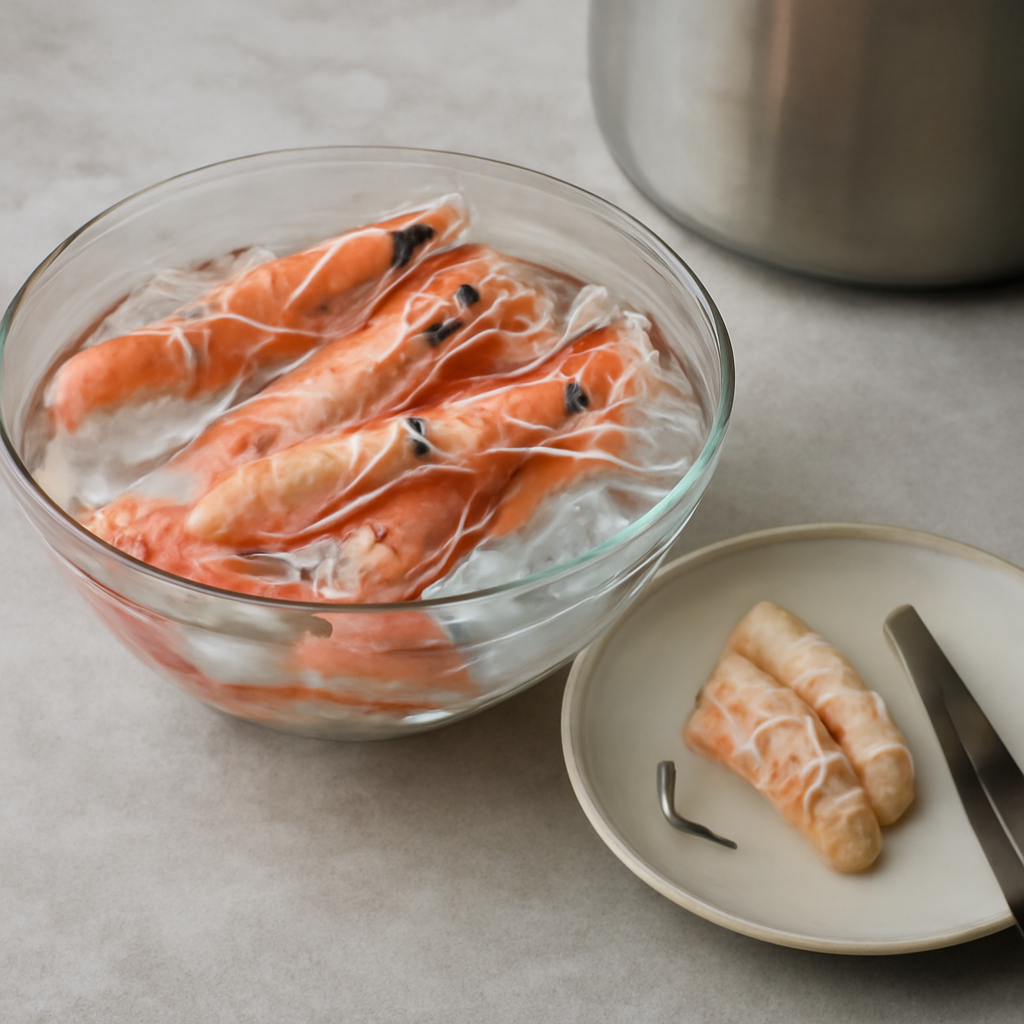
Bring a large pot of heavily salted water to a rolling boil. Add the prawns and cook for exactly 3 minutes. They should be just pink through and no more. Pull one open to check the tail meat is opaque but still yielding. Drain immediately and transfer to a bowl of iced water for 5 minutes to stop the cooking.
-
Once cooled, peel the prawns carefully. Twist the head off and pull away the shell in sections. Run a small knife along the back of each tail to remove the dark intestinal thread. Keep the heads and shells. Set the peeled tails aside on a plate, cover with cling film and refrigerate.
-
Make the prawn stock: put the shells and heads into a saucepan with the onion, celery, bay leaf, peppercorns, white wine and 700ml cold water. Bring to a gentle simmer over medium heat and cook uncovered for 20 minutes. Do not boil hard or the stock will turn cloudy and bitter. Strain through a fine sieve into a clean saucepan and discard the solids. You should have approximately 550ml of pale amber stock.
-
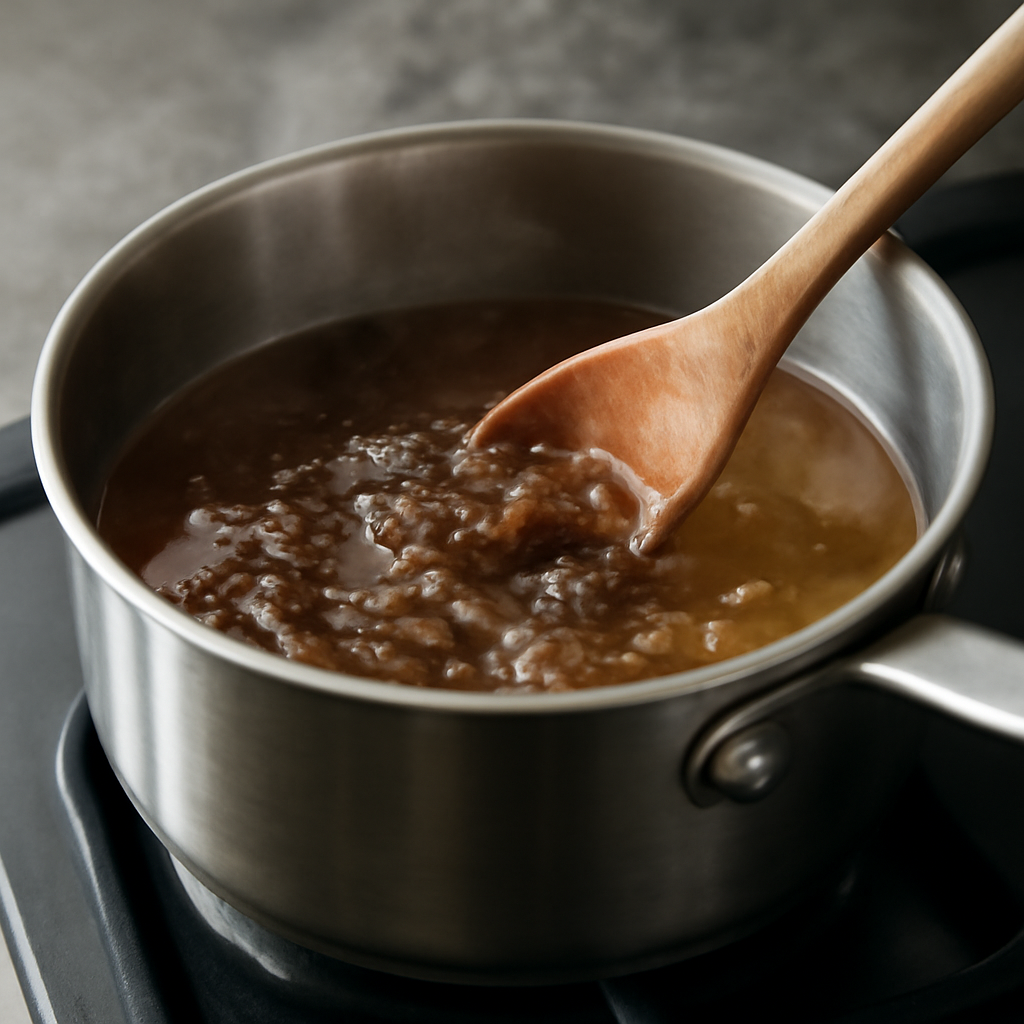
Add the rinsed carragheen moss to the warm strained stock. The moss should go in while the liquid is still hot, around 85 to 90 degrees Celsius. Stir once, then simmer very gently for 10 to 12 minutes, stirring occasionally. The stock will thicken noticeably and the moss will begin to break down and look slightly gelatinous. Do not let it boil.
-
Strain the carragheen stock through a fine sieve or muslin cloth into a clean jug, pressing the moss gently to extract all the liquid. Discard the spent moss. Season the strained liquid with 1 teaspoon fine sea salt and 1 teaspoon cider vinegar. Taste it: it should be savoury and faintly briny with a clean mineral note from the seaweed. If it tastes flat, add a little more salt.
-
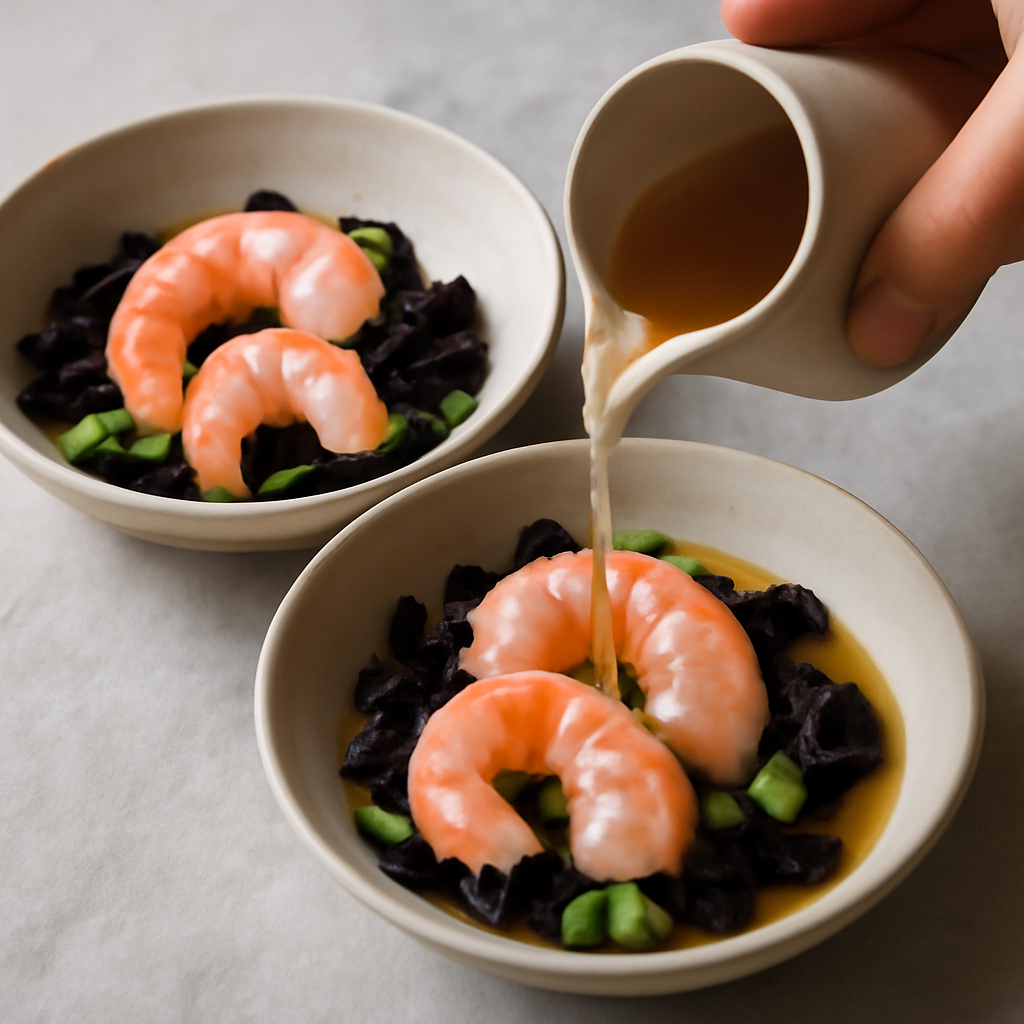
Scatter the drained dulse and sliced spring onions evenly across the bases of four shallow bowls or individual terrine moulds. Arrange three prawns in each bowl in a single layer, tails curled inward. Pour the warm carragheen liquid slowly over the prawns until they are just submerged. The liquid should reach no higher than 5mm above the top of the prawns. Allow to cool at room temperature for 10 minutes, then refrigerate for a minimum of 2 hours until fully set.
-
For the buttermilk dressing, whisk together the buttermilk, Dijon mustard, cider vinegar and rapeseed oil in a small bowl until combined. Season with salt and white pepper. The dressing should be thin enough to pool slightly on the plate and sharp enough to cut through the mineral sweetness of the jelly. Taste and adjust.
-
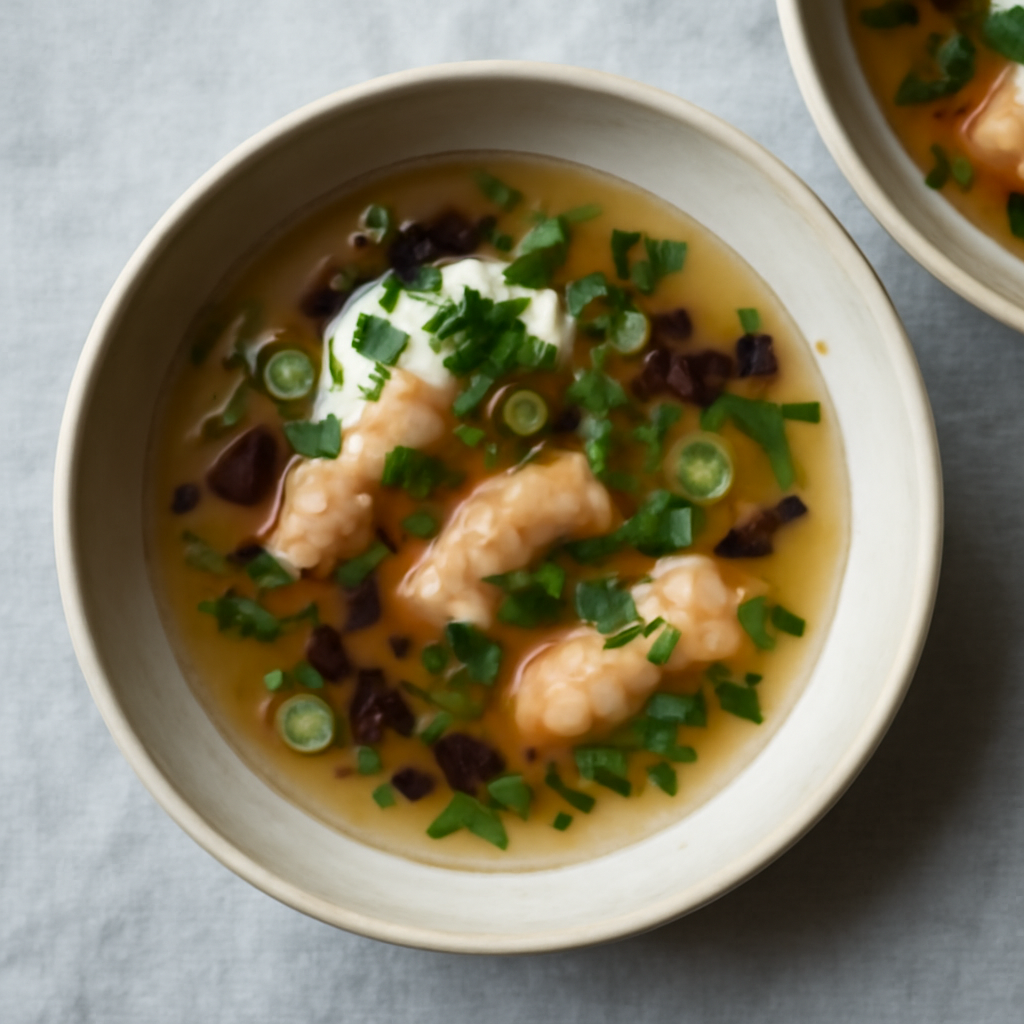
To serve, if using moulds, run a thin knife around the edge of each one and invert onto a chilled plate. If serving in bowls, bring straight from the fridge. Spoon a little buttermilk dressing over and around each portion. Finish with the chopped flat-leaf parsley scattered on top. Serve immediately with good brown soda bread on the side.
Irish Context
Carragheen moss (Chondrus crispus) grows on rocks along the Atlantic coastline and has been harvested and used as a setting agent in Irish kitchens for a very long time, most often in milk puddings and medicinal drinks. It behaves differently from sheet gelatine: the set is firmer and more opaque, with a faint oceanic smell that is barely perceptible in the finished dish but gives the jelly a quality that gelatine cannot replicate.
Dublin Bay prawns (Nephrops norvegicus, also known as langoustines or Norway lobster) are caught in significant quantities in Irish waters, particularly in Donegal Bay, Kenmare Bay and the waters around Dublin Bay that give them their common Irish name, though they are landed at ports all around the coast. They are exported in large volumes, which means the freshest specimens require some effort to source domestically, but good fishmongers in coastal towns and at several Dublin markets stock them regularly.
Tips
Carragheen sets firmer than gelatine and at a higher temperature, so do not worry if the liquid looks thin when warm. It will firm significantly once chilled.
If you are unsure of your set, spoon a small amount onto a cold saucer and refrigerate for 5 minutes to test before pouring into the moulds. The jelly will not demould cleanly if set in anything with undercuts or very steep sides.
Wide, shallow dishes with straight sides work best. A brief dip of the base in warm water for 10 seconds helps release the jelly if it is reluctant.
Dublin Bay prawns deteriorate faster than almost any other shellfish. Buy them the day you plan to cook them, ideally from a fishmonger who gets them in fresh that morning.
If they smell at all of ammonia, do not use them. The buttermilk dressing can be made up to 24 hours in advance and kept covered in the fridge.
Give it a brisk whisk before serving as it may separate slightly. Do not over-soak the dulse before adding it.
Ten minutes is enough. Over-soaked dulse loses its colour and texture and will look grey in the finished jelly.

Author Commentary