
 AI
AI
 AI
AI
 AI
AI
Ingredients
Method
-
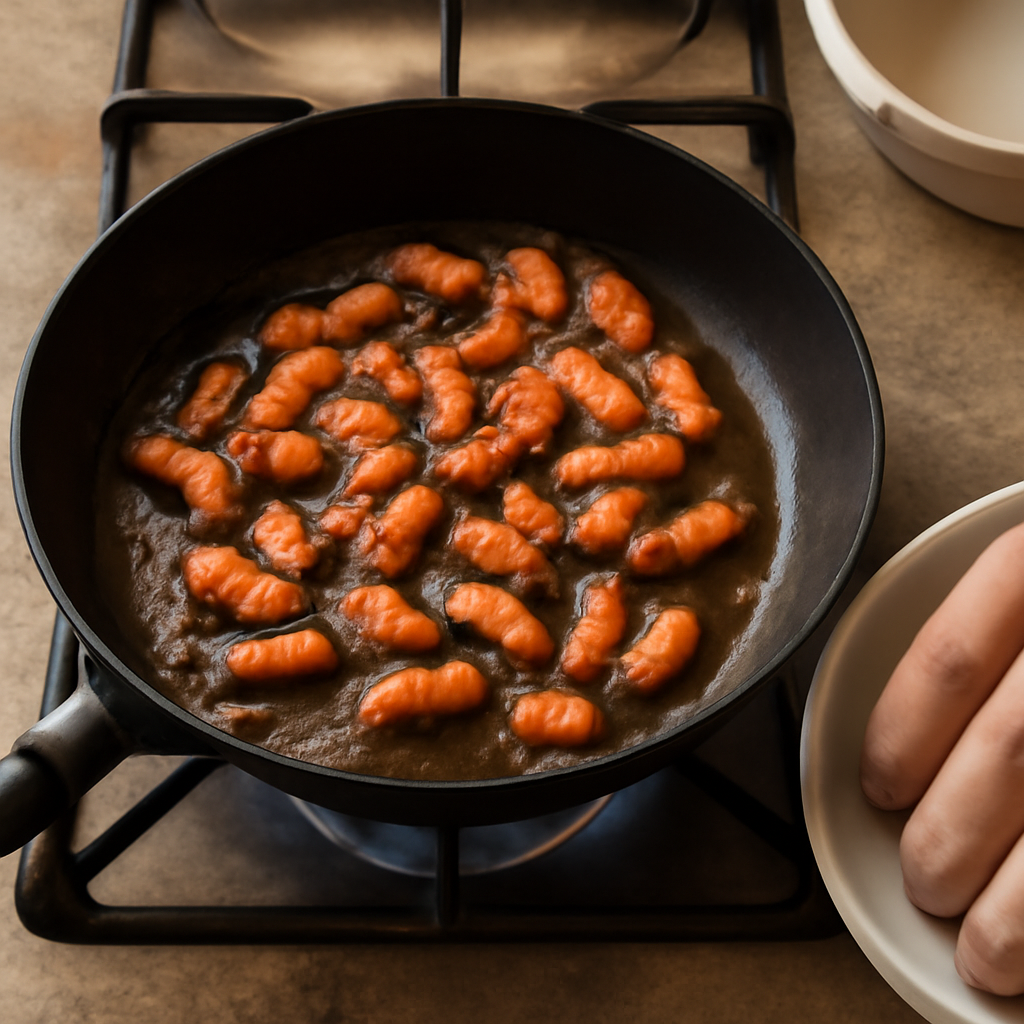
Place a large, heavy-based frying pan over a medium-high heat. Add the bacon lardons and fry without any added fat for 4 to 5 minutes, turning occasionally, until the fat has rendered and the edges have taken on some colour. You are not trying to crisp them through; you want enough browning to add depth to the broth. Transfer to a large, deep ovenproof casserole dish or Dutch oven.
-
In the same frying pan, still over a medium-high heat, brown the sausages in the residual bacon fat for 5 to 6 minutes, turning them every minute or so. They should be a deep golden brown on at least two sides. Do not cook them through at this stage. Transfer to the casserole dish alongside the bacon.
-
Preheat your oven to 160°C (fan 140°C, gas mark 3).
-
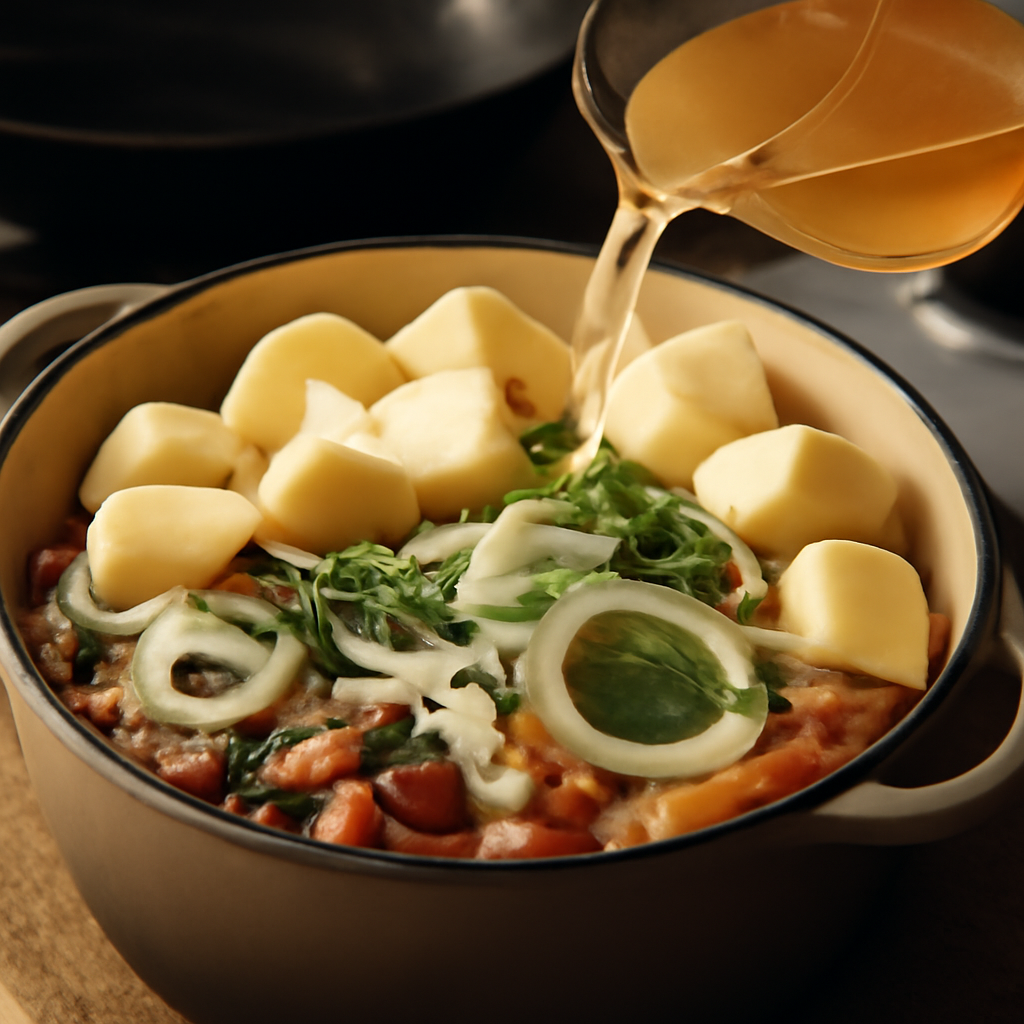
Layer the sliced onions and garlic directly over the sausages and bacon in the casserole. Tuck in the bay leaf and the thyme sprigs. Arrange the potato chunks on top of the onions in a single layer as best you can, overlapping slightly if needed. Season generously with black pepper and a modest pinch of salt; the bacon and stock will carry a good deal of salt already, so hold back and adjust at the end.
-
Pour the warm chicken stock and the water over the contents of the pot. The liquid should come about two-thirds of the way up the potatoes but not fully submerge them. The top layer of potato should sit just at or slightly above the liquid line so it steams and softens rather than boiling to mush.
-
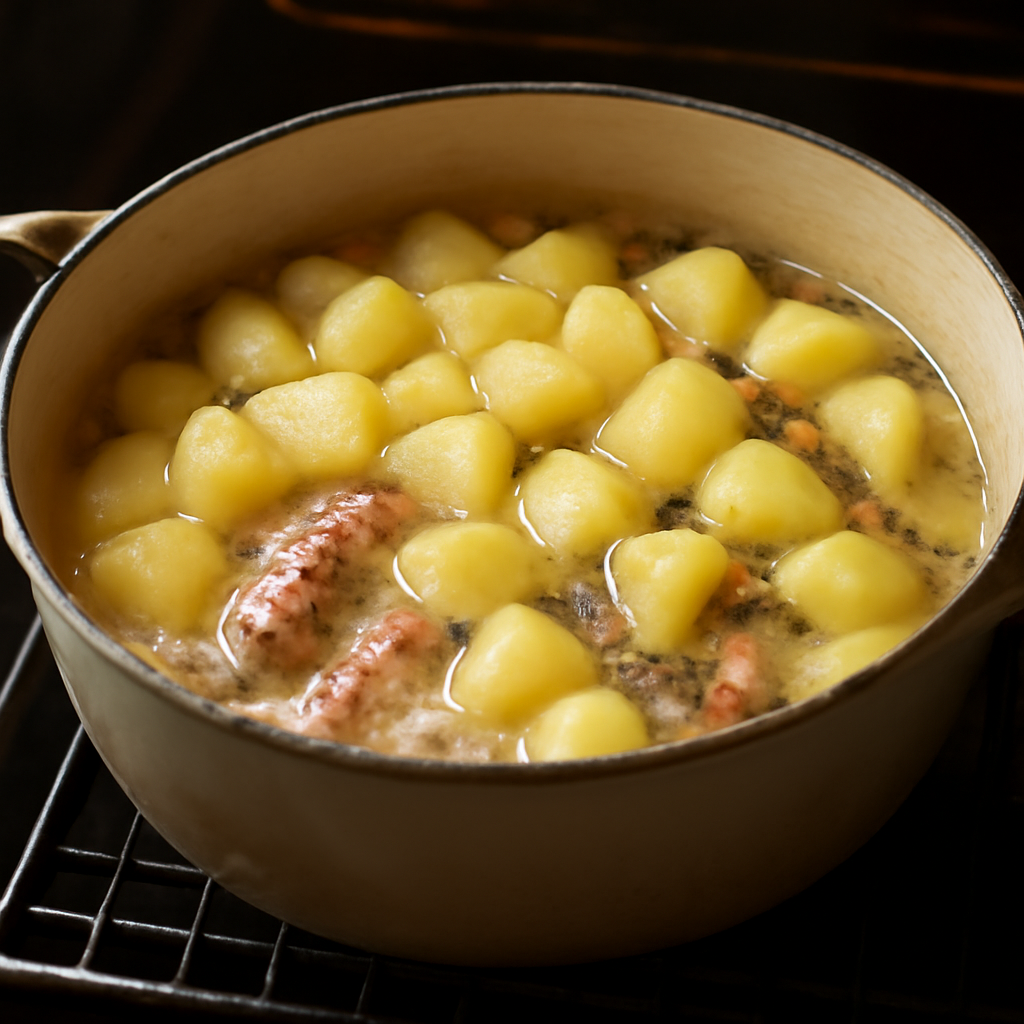
Cover the casserole with a tight-fitting lid and transfer to the oven. Cook at 160°C for 1 hour.
-
After 1 hour, remove the lid. The broth should be pale and faintly cloudy from the potato starch, with small beads of fat on the surface from the sausages and bacon. Check the potatoes with a skewer; they should be very nearly tender but not yet falling apart. Return the pot to the oven uncovered for a further 20 to 25 minutes. This allows a little of the broth to reduce and the top layer of potato to take on a lightly softened, slightly glazed appearance.
-
Remove from the oven. Discard the bay leaf and thyme sprigs. Taste the broth and adjust the seasoning. The flavour should be deeply savoury with a mild sweetness from the slow-cooked onion and a clean, porky backbone. If it tastes flat, it needs salt. If it tastes too salty, a little extra hot water stirred in will bring it back.
-
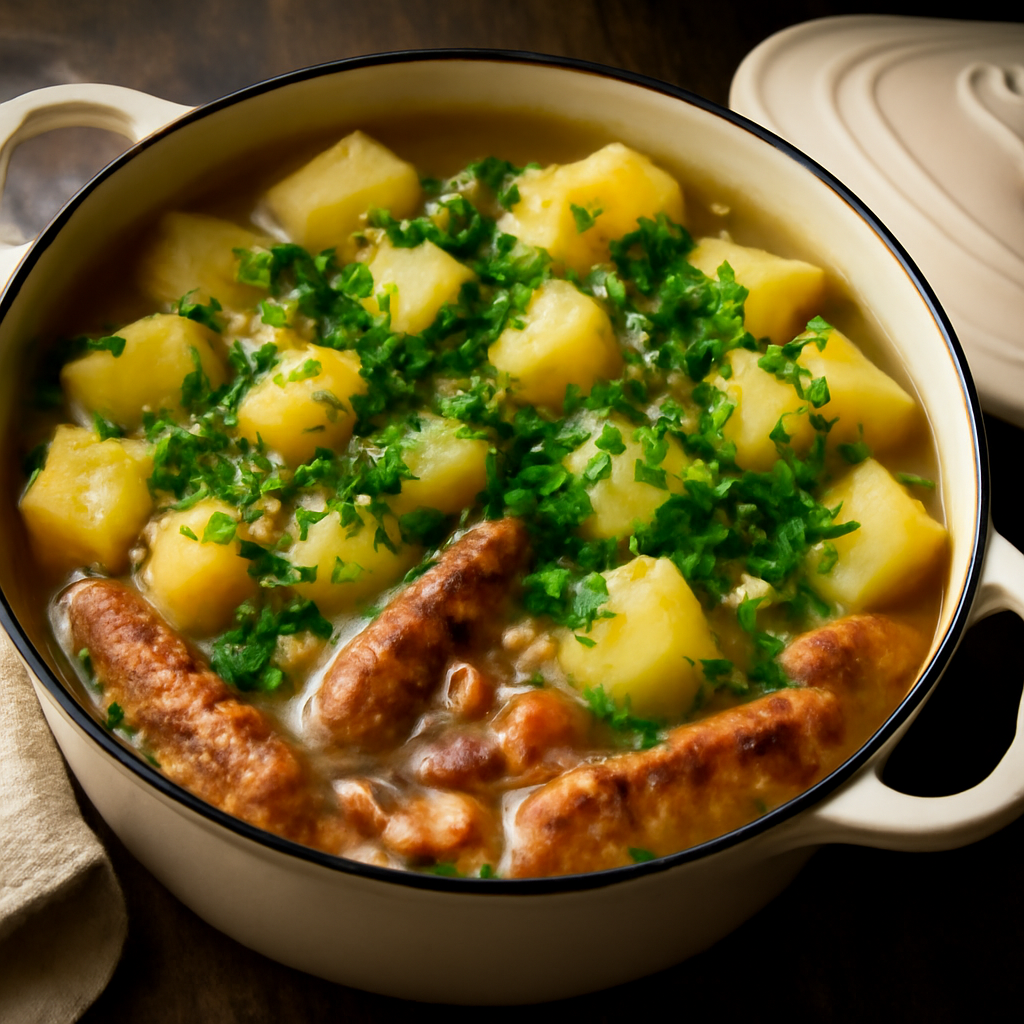
Scatter the chopped parsley over the top and bring the dish straight to the table. Serve in wide, deep bowls with thick slices of soda bread or white yeast bread on the side to mop up the broth.
Irish Context
Coddle is a Dublin dish in the specific, practical sense: it was a way to use the leftover sausages and rashers from earlier in the week, stretched with potatoes and onions into a supper that fed more people than the ingredients might suggest. It is still eaten in Dublin homes on Friday nights, though the tradition of eating it after a late night out has become less common than it once was.
It has no strong association with rural Ireland; it belongs to the city, to small terraced kitchens and cold evenings.
Tips
Floury potatoes are non-negotiable here. Waxy varieties hold their shape but will not absorb the broth in the same way; you end up with potato sitting in liquid rather than potato becoming part of it.
Kerr's Pink or Rooster both break down slightly at the edges and thicken the broth naturally. The browning step for the sausages and bacon is worth the extra pan to wash.
Without it, the broth can taste thin and pallid. You are building the only colour this dish has.
If your casserole lid does not fit snugly, place a sheet of foil directly over the pot before pressing the lid down. Steam escaping from a loose lid will dry the broth out before the potatoes have cooked through.
Coddle is better the next day. The broth thickens overnight and the sausages take on the flavour of everything around them.
Reheat gently on the hob, covered, over a low heat with a splash of water added if needed. Do not boil it hard or the sausage skins will split and the potatoes will turn grainy.
Some people add a small amount of pearl barley to the pot with the stock, approximately 40g. It swells and thickens the broth considerably, giving the dish a slightly more substantial texture.
If you do this, increase the liquid by 150ml and extend the covered cooking time by 15 minutes.

Author Commentary