
 AI
AI
 AI
AI
 AI
AI
Ingredients
Method
-
Place the live lobsters in the freezer for 25 to 30 minutes before cooking. This renders them insensible before dispatch. Do not skip this step.
-
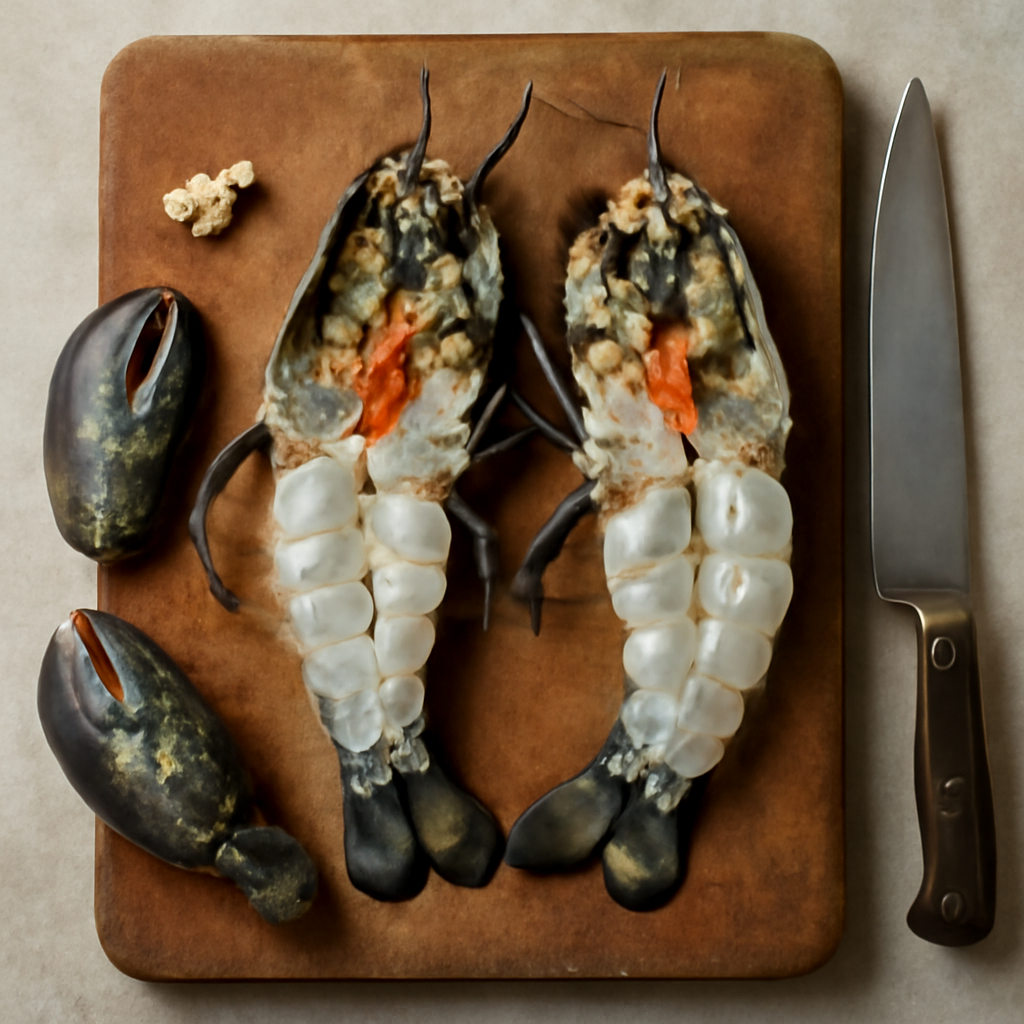
Once the lobsters are still, place each one on a sturdy chopping board. Using a large, heavy chef's knife, drive the blade firmly and quickly down through the cross mark on the head, then cut forward through the carapace to split the head. Follow through by splitting the tail lengthways. The lobster is now halved. Remove the stomach sac from the head cavity and discard it. Leave any coral or green tomalley in place; both will enrich the sauce.
-
Twist the claws and knuckles away from the body. Using the back of the knife, crack each claw firmly on both sides. You want the shell fractured so that heat can penetrate and the meat stays accessible, but the shell should still hold its shape in the pan.
-
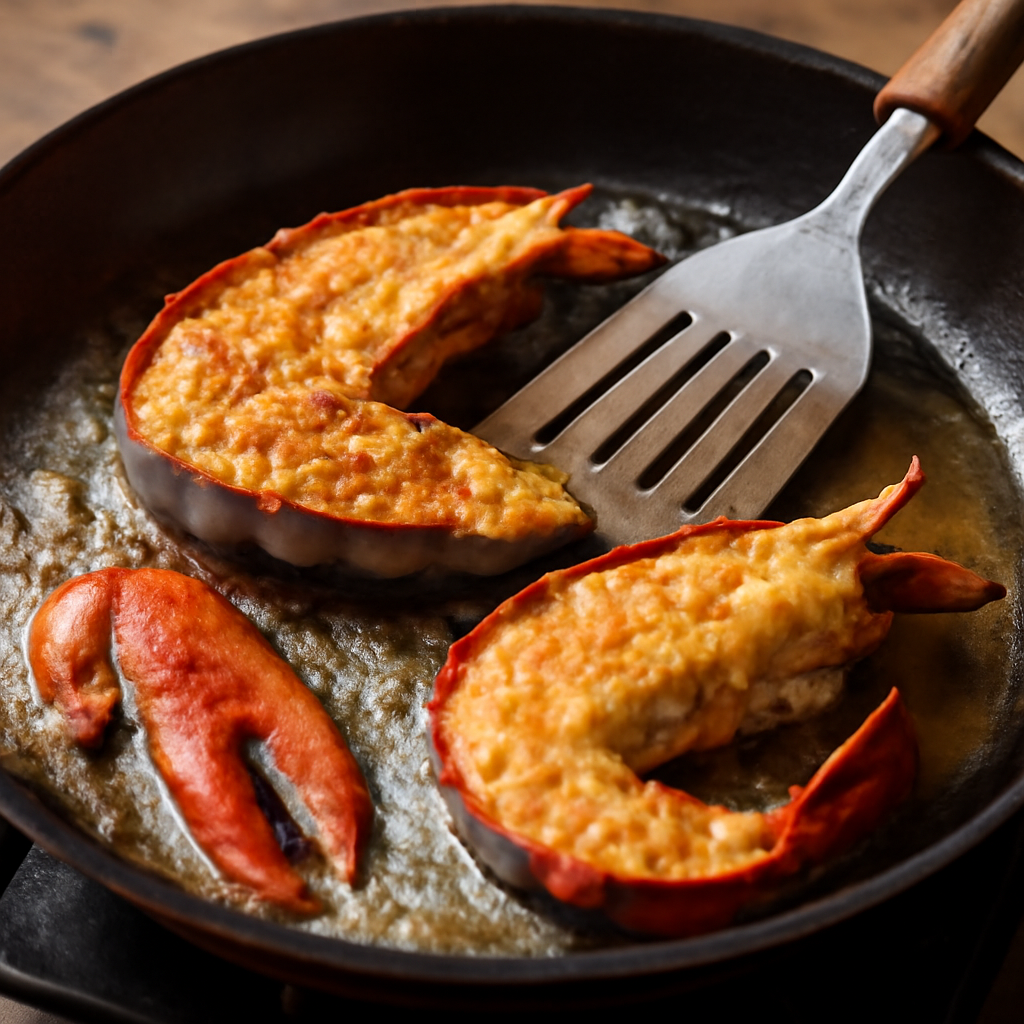
Heat a large, heavy-based frying pan over a high heat until very hot. Add the sunflower oil and let it shimmer. Lay the lobster halves cut-side down in the pan along with the cracked claws. Press them gently with a spatula to ensure contact with the surface. Cook for 3 minutes until the cut flesh is golden and has just started to firm at the edges.
-
Turn the lobster halves shell-side down. Add 30g of the cold butter to the pan. It will foam immediately. Tilt the pan and baste the lobster repeatedly for 2 minutes. The shell will have turned a deep red-orange and the exposed meat should look just opaque. Remove the lobster pieces to a warm plate and set aside; do not cook them further at this stage or they will toughen.
-
Reduce the heat to medium. If the pan has gone dry, add a very small knob of the remaining butter. Pour in the whiskey and let it bubble and reduce for about 45 seconds, scraping any solids from the base of the pan with a wooden spoon. Do not flambé unless you are confident and working away from an extractor fan; burning off the whiskey this way is unnecessary and loses too much of the flavour.
-
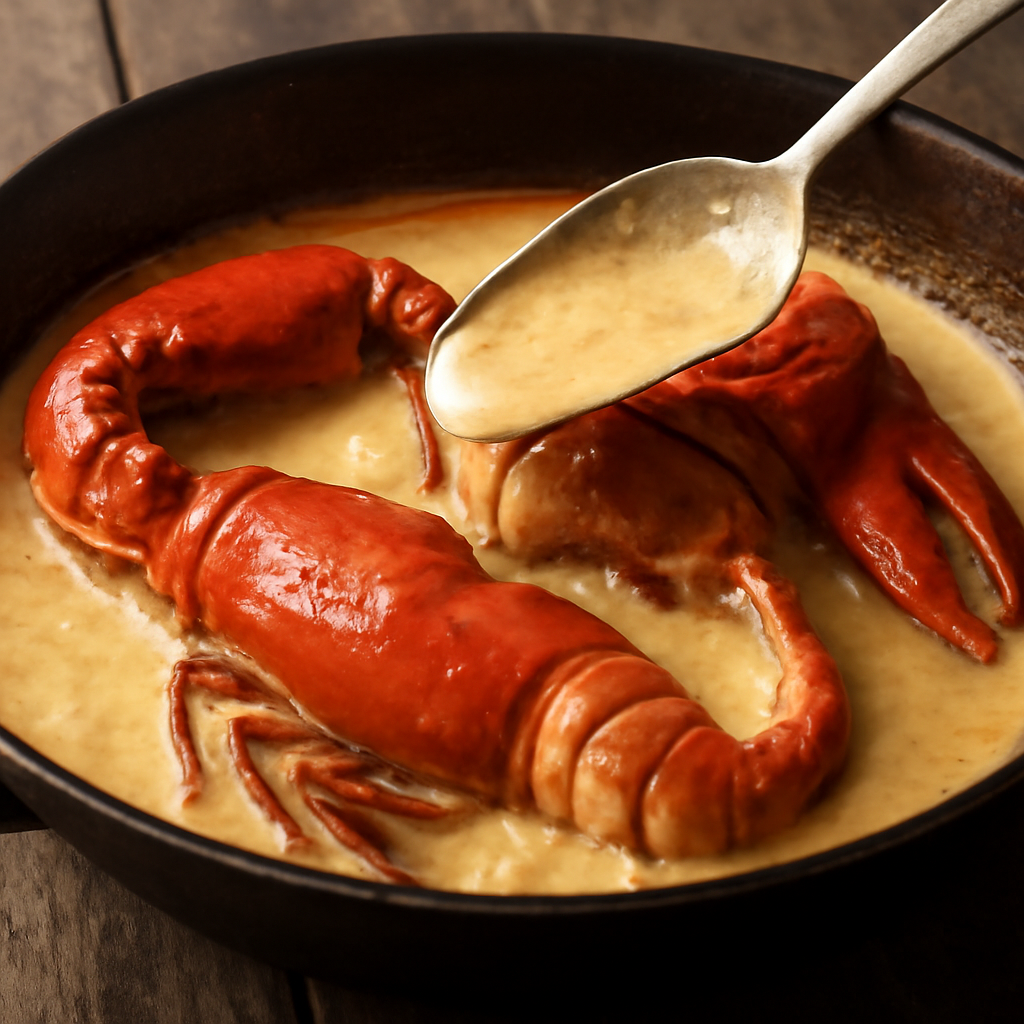
Stir in the Dijon mustard, then pour in the double cream. Bring to a steady simmer and cook for 4 to 5 minutes, stirring occasionally, until the cream has reduced by about a third and coats the back of a spoon. The sauce should smell of whiskey and toasted butter with a faint brininess from the pan juices.
-
Return the lobster pieces to the pan, cut-side down in the sauce. Spoon the sauce over them continuously and cook for a further 2 to 3 minutes. The lobster is ready when the meat at the thickest part of the tail resists very slight pressure, like a firm handshake rather than a squeeze. Do not let the sauce boil rapidly at this stage; a gentle simmer keeps the cream stable.
-
Remove the pan from the heat. Add the lemon juice, then add the remaining cold butter a few cubes at a time, swirling the pan to melt and emulsify each addition before adding the next. This gives the sauce a glossy, slightly thickened body rather than something thin and greasy.
-
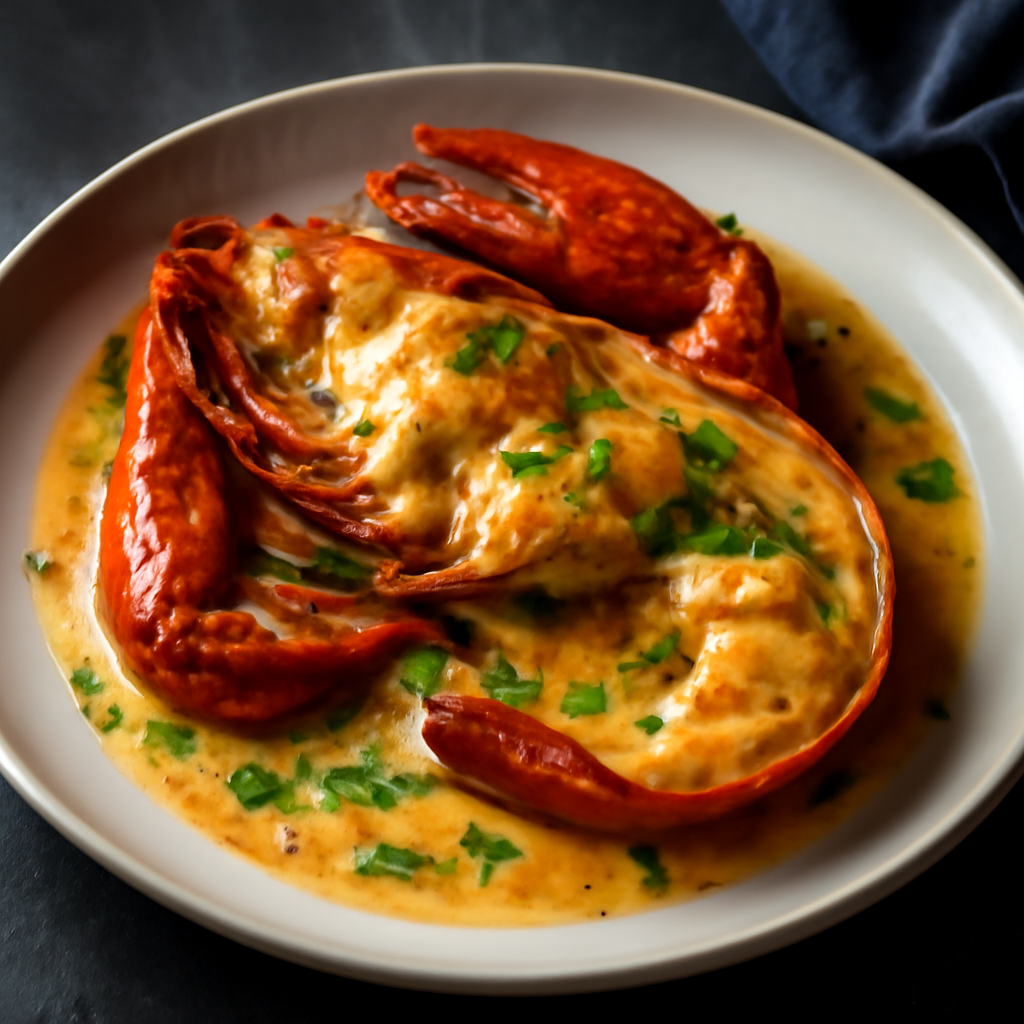
Taste and season with salt and white pepper. Arrange the lobster halves and claws on warmed plates, spooning the sauce generously over and into the shell cavities. Scatter the chopped parsley over the top and serve immediately with crusty bread or nothing at all.
Irish Context
Dublin Lawyer has been on the menus of Irish hotel restaurants and seafood houses for decades. The name almost certainly comes from the idea that both lawyers and the dish are extravagant and consume a great deal of expensive spirit.
Irish whiskey and Irish lobster are two things this island produces seriously well, and the combination is straightforward enough that neither overwhelms the other. The lobsters most commonly used in Ireland come from the west coast, particularly from the waters off Clare, Connemara, and Kerry, where cold Atlantic water produces animals with dense, sweet meat.
The dish is not everyday cooking; it is something you make when a lobster has come your way and you want to do right by it.
Tips
The freezer method for dispatching lobster is the most practical approach for a home kitchen. Thirty minutes is usually enough for a 600g lobster; if yours are larger, give them closer to 40 minutes.
Do not use a peaty or heavily smoked whiskey here. A lighter Irish pot still whiskey works well because it gives the sauce warmth and a faint sweetness without dominating the lobster.
If the cream sauce splits, it is usually because the heat was too high when you returned the lobster. Take the pan off the heat entirely, let it cool for a minute, then stir in a splash of cold cream to bring it back.
Cold butter added off the heat at the end is not optional; it is what separates a sauce from a pool of reduced cream. Keep the cubes small and work quickly.
Lobsters this size take exactly 5 to 6 minutes of total pan time. If you go much beyond that the tail meat will curl tightly and become rubbery.
When in doubt, pull them slightly early; residual heat in the shell carries the cooking on. Serve on plates that have been warming in a low oven for at least 10 minutes.
The sauce drops temperature quickly in the shell and a cold plate makes it worse.

Author Commentary