
 AI
AI
 AI
AI
 AI
AI
Ingredients
Method
-
Preheat the oven to 200 degrees Celsius, fan 180 degrees Celsius. You want a proper roasting heat here, not a moderate one.
-
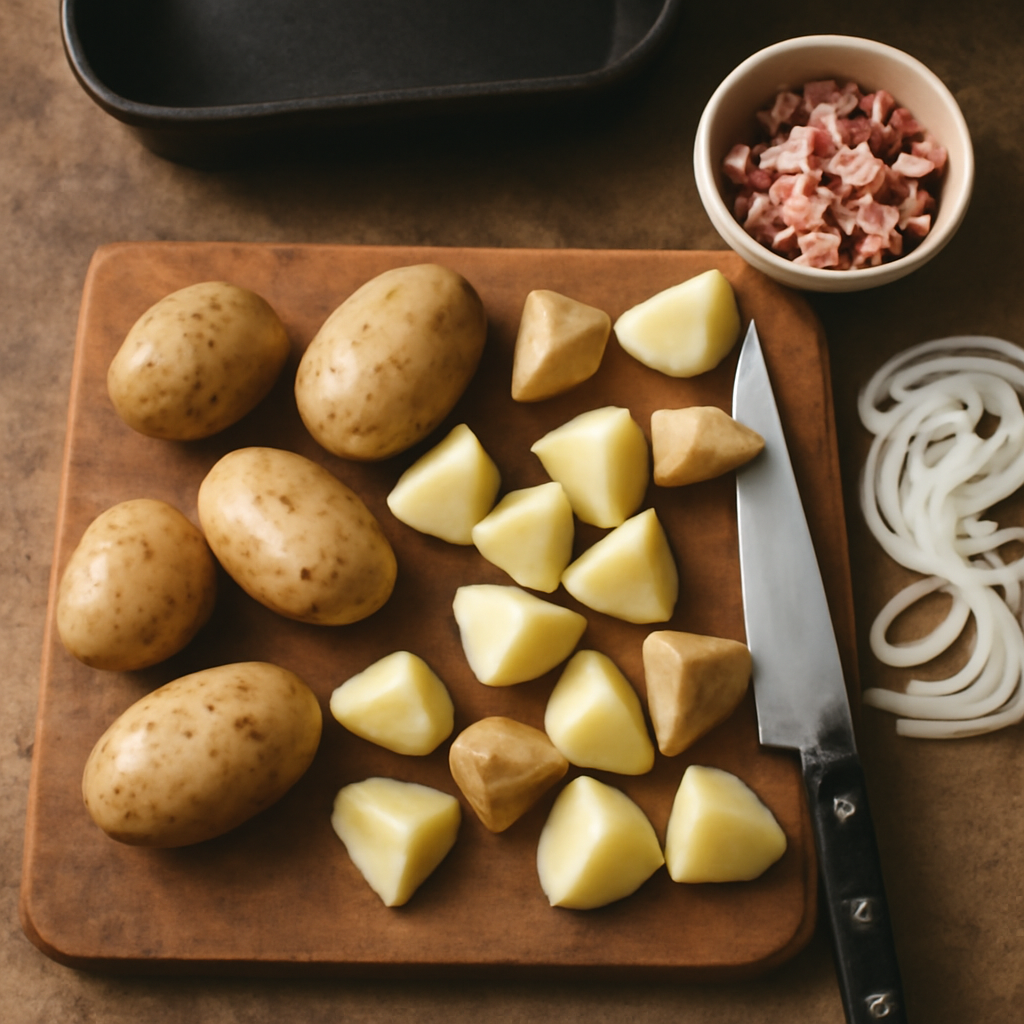
Cut the scrubbed potatoes into rough chunks of around 4 to 5cm. Do not peel them. The skin holds everything together during the long roast and chars slightly at the edges, which is part of what makes this dish taste the way it does.
-
Place a large heavy-based roasting tin, ideally cast iron or dark metal, on the hob over medium-high heat. Add the sunflower oil and let it heat for 90 seconds until it shimmers.
-
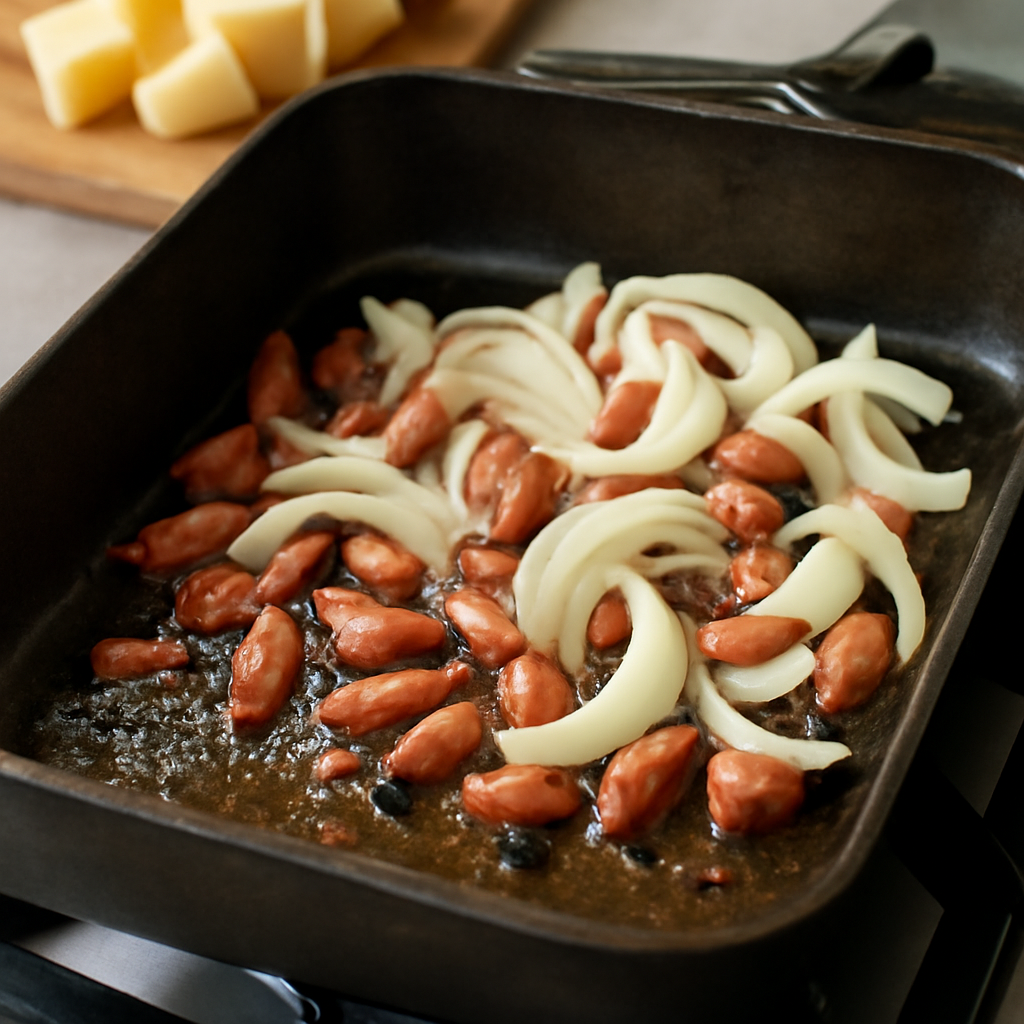
Add the bacon lardons and fry for 4 to 5 minutes, stirring occasionally, until they have rendered most of their fat and are beginning to colour. Do not drain the fat. It is going to do useful work.
-
Add the sliced onion to the tin and cook for a further 3 minutes, stirring once or twice. The onion should soften slightly and pick up colour from the bacon fat in the pan.
-
Tip in the potato chunks and toss everything together so the potatoes are coated in the fat. Season with the salt and pepper. Tuck the thyme sprigs in among the potatoes.
-
Dot the butter cubes over the top, then pour the cold water around the edges of the tin, not over the potatoes. The water creates a brief steaming effect in the oven that stops the potatoes catching before they have softened through.
-
Transfer to the oven and roast for 30 minutes without touching anything. Resist the urge to open the oven before this point.
-
After 30 minutes, remove the tin and turn the potatoes with a spatula or tongs. Some will have stuck slightly to the base and that is exactly right. The stuck bits will release now that a crust has formed. If anything is genuinely burning, reduce to 185 degrees Celsius.
-
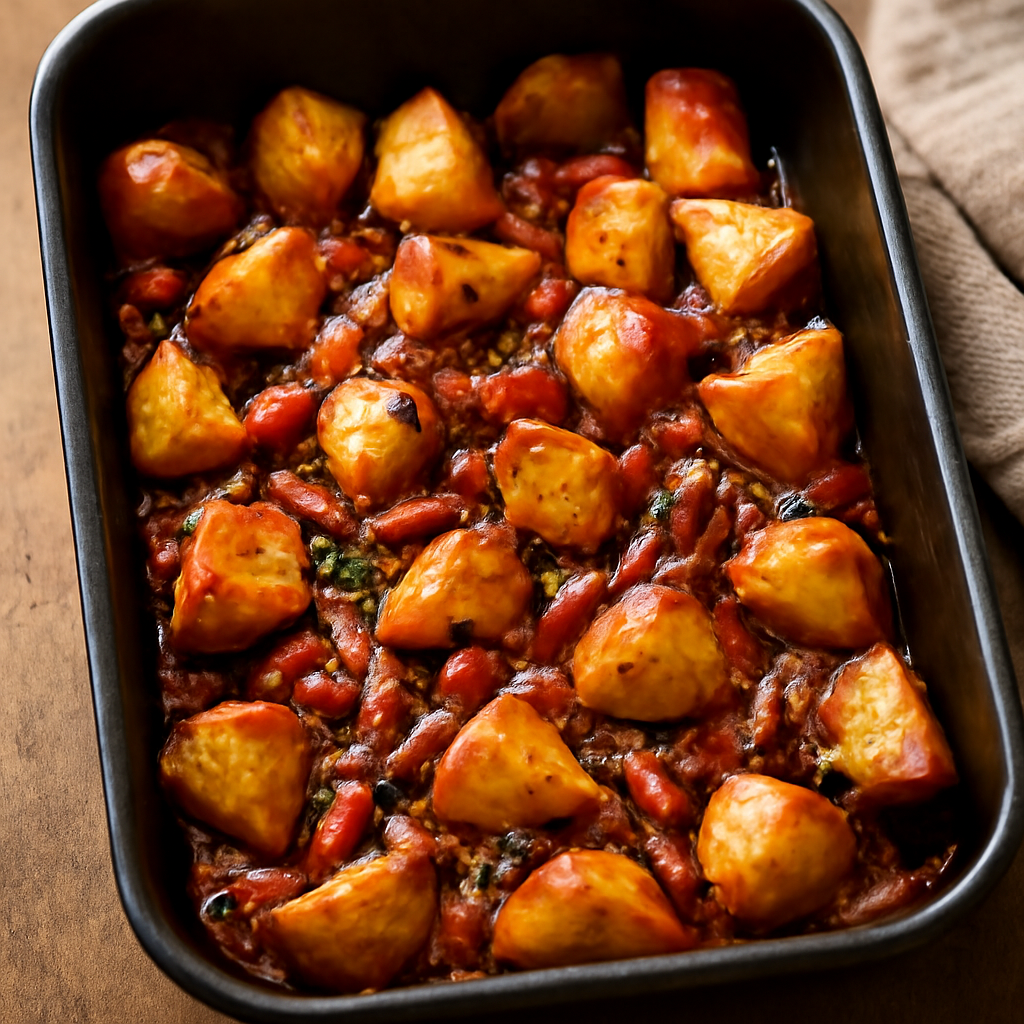
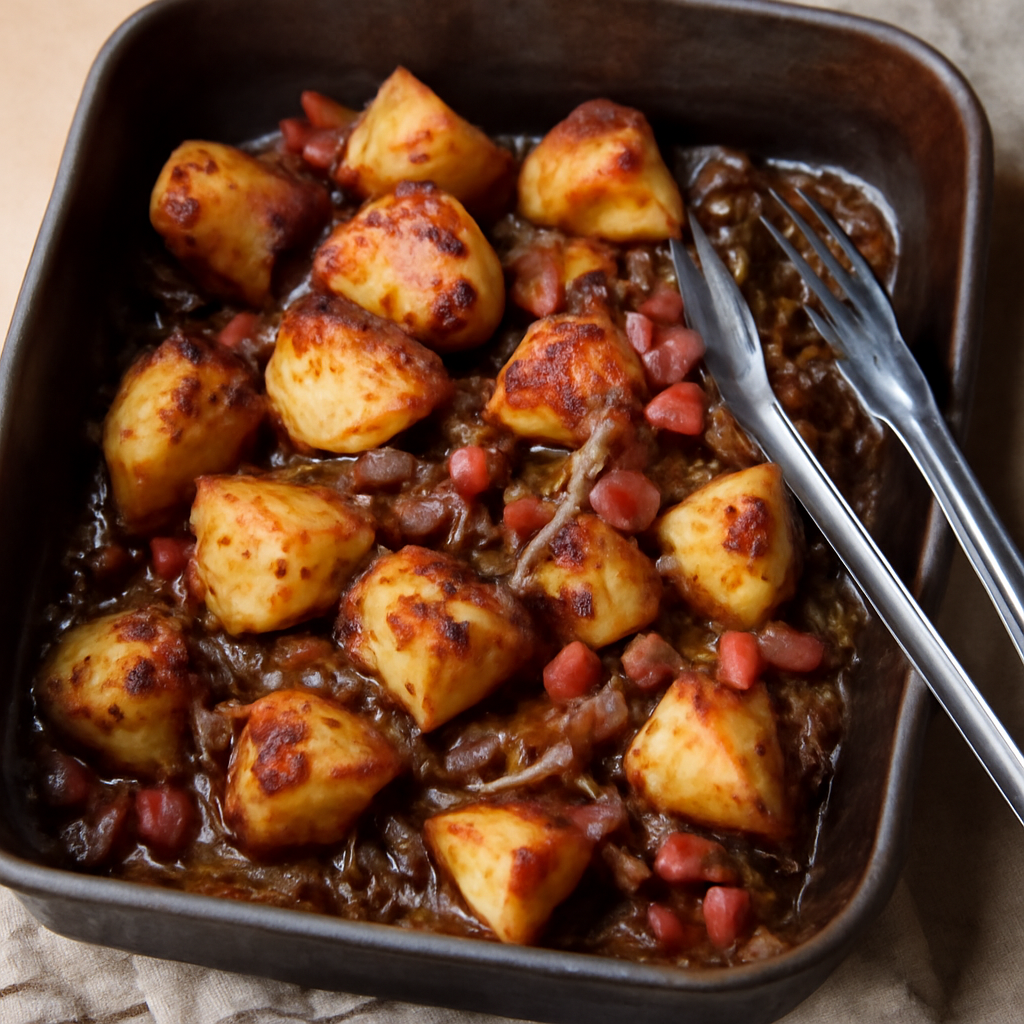
Return to the oven for a further 20 to 25 minutes until the potatoes are deeply golden on at least two sides, the onion has caramelised at the edges, and a skewer slides through the thickest piece with no resistance.
-
Remove the thyme sprigs, which will have shed most of their leaves into the tin during cooking. Taste and adjust seasoning. Serve directly from the tin at the table.
Irish Context
Floury potatoes roasted in their skins with bacon and onion appear in Irish farmhouse cooking without any particular ceremony. This is the kind of dish that exists because all three ingredients were routinely to hand, not because anyone designed it.
The Rooster potato, developed in Ireland in the 1990s, has become the standard floury variety in most Irish households and greengrocers, and it performs better in this recipe than older varieties like Golden Wonder, which can be harder to source consistently.
Tips
Floury varieties are non-negotiable. A waxy potato will hold its shape but will not give you the collapsed, slightly mealy interior that contrasts with the crust.
Roosters are the most widely available floury variety in Ireland and they work well here. The chunks should be genuinely rough and uneven, not neat cubes.
The irregular edges are what catch and char in the oven. If your roasting tin is thin aluminium, the base of the potatoes may burn before the tops colour.
Use the thickest tin you have, or place a second tin underneath to diffuse the heat. The water added before roasting will have evaporated entirely by the time you turn the potatoes at 30 minutes.
If there is still liquid in the tin at that point, your oven is running cool. Give it another 10 minutes before turning.
Leftovers reheat well in a dry frying pan over medium heat, pressed down lightly with a spatula. They will not be the same as they were fresh, but they are very good the next morning alongside eggs.

Author Commentary