
 AI
AI
 AI
AI
 AI
AI
Ingredients
Method
-
Place a heavy cast-iron griddle or thick-based frying pan over a medium heat. Let it warm for at least 3 minutes before you start mixing the dough. The pan needs to be hot enough that a pinch of flour flicked onto the surface turns pale brown in about 10 seconds, but not so hot that it smokes.
-
Sift the plain flour, bicarbonate of soda, and salt into a wide mixing bowl. Add the wholemeal flour and stir once with your hand to combine the two flours loosely.
-
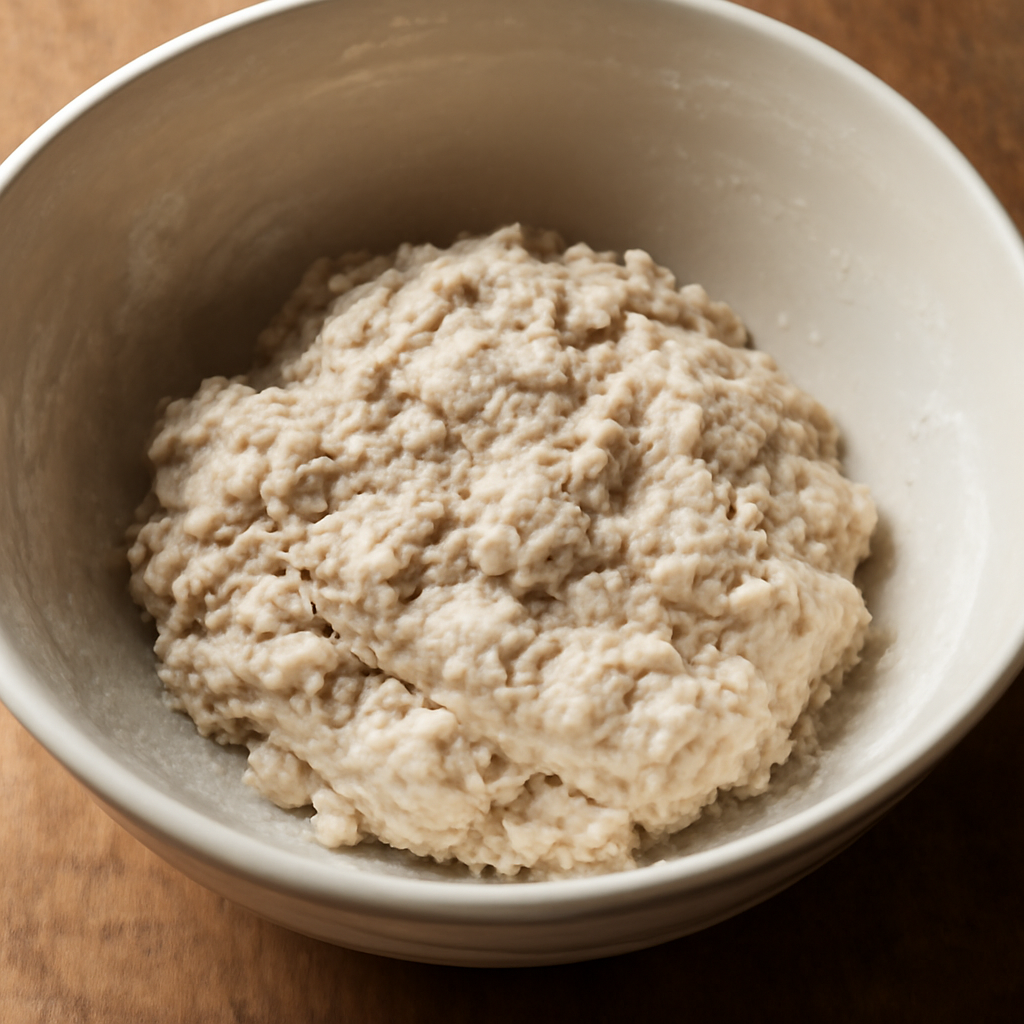
Make a well in the centre and pour in all the buttermilk at once. Using your fingers spread wide, stir from the centre outward in a wide circular motion. Stop the moment the dough comes together into a rough, shaggy mass. It should look a little ragged and uneven. Do not knead it.
-
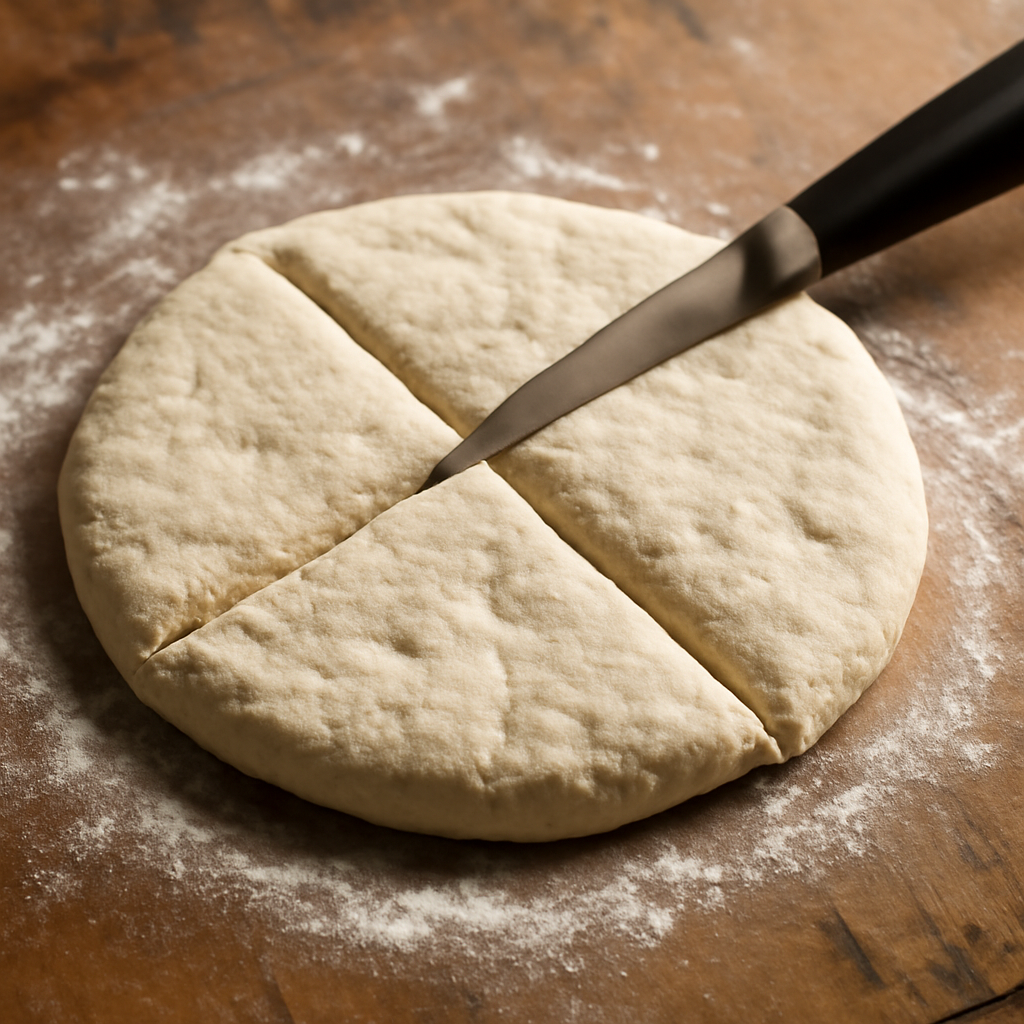
Dust your work surface lightly with plain flour and turn the dough out. Pat it gently with your palm into a round disc roughly 20cm in diameter and about 1.5cm thick. Use a sharp knife or dough scraper to cut straight through the centre in both directions, making four even triangles. You are not rolling the dough; you are pressing it.
-
Dust the griddle very lightly with flour and lay all four farls onto the surface. Cook at medium heat for 7 to 8 minutes on the first side. After about 4 minutes you will see the outer edge begin to look dry and set; that is normal. Do not press down on them.
-
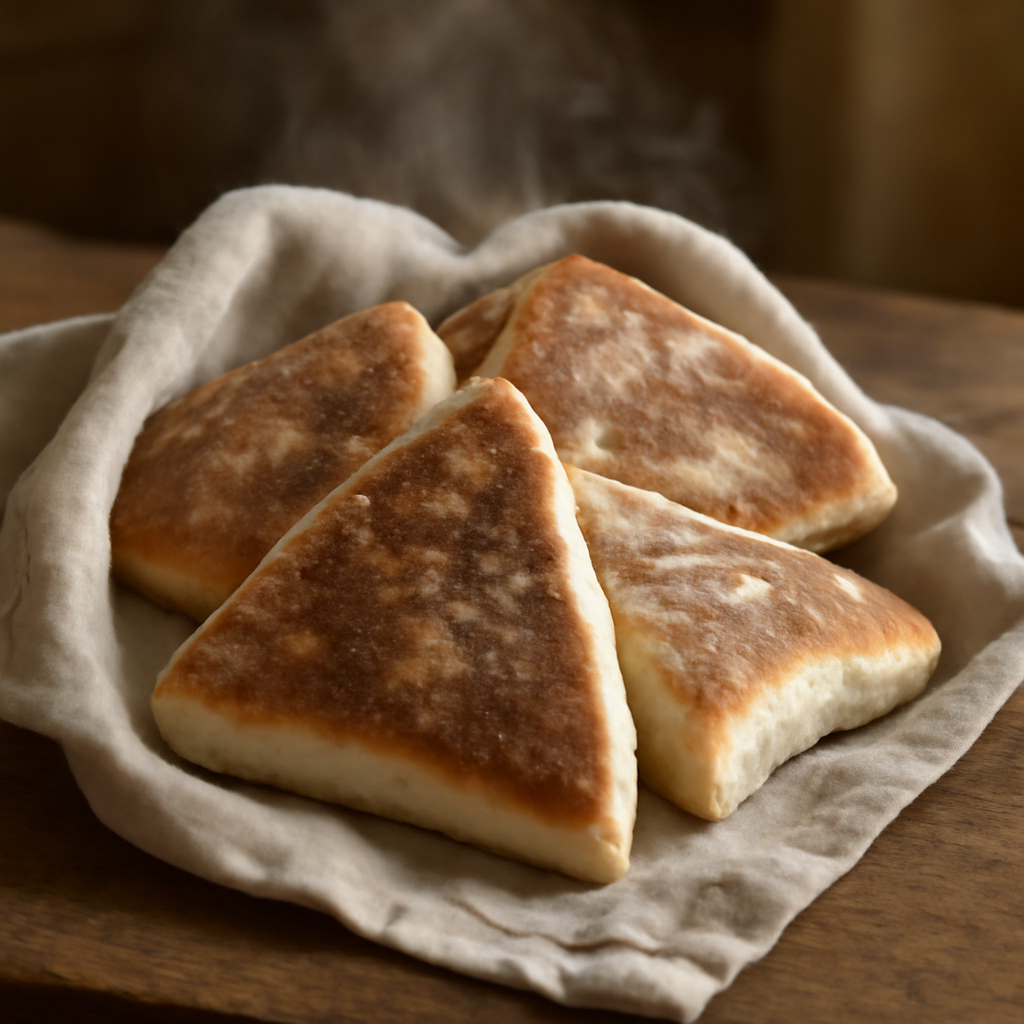
Turn each farl over using a wide spatula. The underside should be an even mid-brown, the colour of a digestive biscuit, with a few slightly darker patches where the surface touched the pan directly. If it looks pale or blotchy, your pan was not hot enough. Cook the second side for a further 7 to 8 minutes.
-
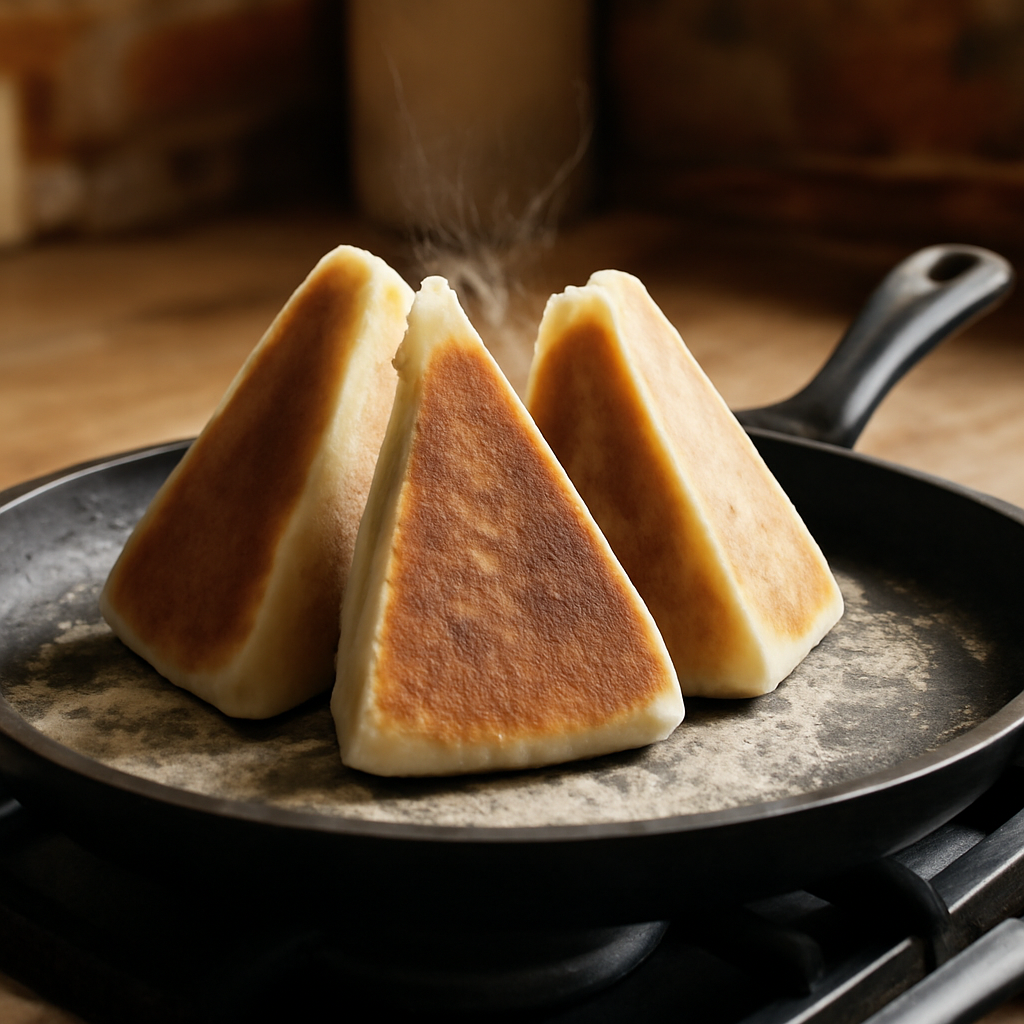
Stand the farls on their longest edge, leaning them against each other in a tent shape in the pan. Cook in this position for 2 minutes to dry out the cut sides and ensure the centre is cooked through. The farl is done when it sounds hollow if you tap its base.
-
Remove from the heat and wrap loosely in a clean tea towel for 2 minutes before serving. This softens the crust slightly without making it soggy.
Irish Context
The farl is the standard unit of Irish soda bread cooked on a griddle rather than baked in an oven. The word itself comes from the Scots Gaelic 'fardel', meaning a fourth part.
Dividing a round of dough into quarters before cooking it flat is a practical method suited to open-fire cooking where a consistent oven temperature was not always available. The griddle farl is still made in homes across Ulster and the northern midlands and is a common sight at breakfast alongside eggs and rashers, or eaten simply with butter and a scrape of jam while still warm enough to melt it.
Tips
Cold buttermilk is important. Warm buttermilk activates the bicarbonate of soda too quickly before the dough hits the pan, and you lose the lift where it matters most.
If your buttermilk is very thick, add a splash of whole milk to loosen it slightly. The dough should be sticky but not wet enough to pour.
The wholemeal flour adds a mild nuttiness and a slightly rougher texture to the crumb. If you prefer a softer, lighter farl, replace it with an equal weight of plain flour.
A cast-iron griddle gives the most even heat, but a heavy stainless-steel frying pan works well. Avoid non-stick pans with shallow sides; the farls need room to sit upright in the final drying stage.
Farls do not keep well. Eat them within a few hours of cooking.
If you must store them, cool completely and keep in a paper bag, not plastic, for up to one day. Reheat in a dry pan for 2 minutes each side.
The dough takes no more than 60 seconds to bring together once the buttermilk goes in. Any longer and you are developing gluten you do not want.
A tough, dense farl almost always comes from over-mixing.

Author Commentary