
 AI
AI
 AI
AI
 AI
AI
Ingredients
Method
-
Sift the flour, bicarbonate of soda, and salt into a wide mixing bowl. Make a well in the centre and pour in 300ml of the buttermilk. Use one hand, fingers spread and moving in circles, to bring the dough together. Add the remaining buttermilk a little at a time only if the dough feels dry; it should be soft and slightly sticky but hold its shape when you press it.
-
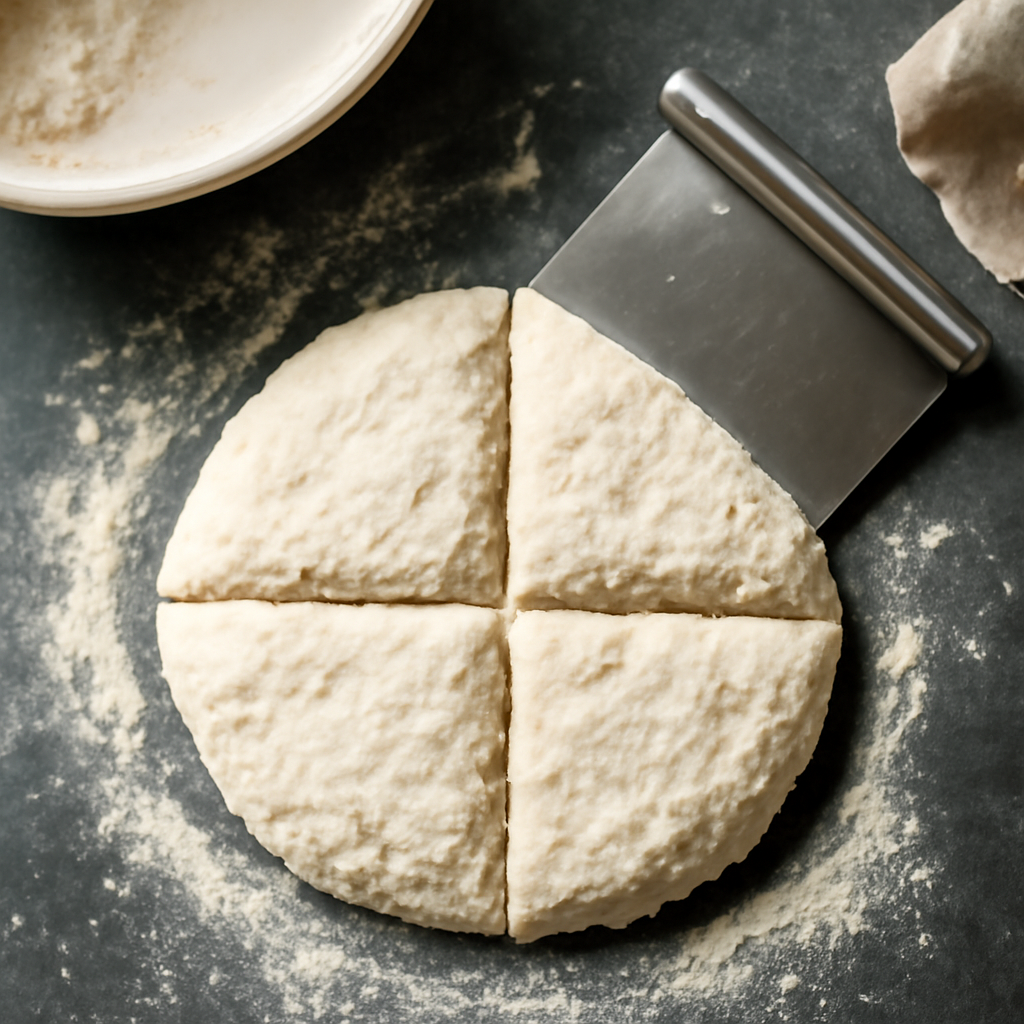
Turn the dough onto a lightly floured surface. Do not knead it. Pat it gently into a round roughly 22cm across and no thicker than 2cm. Too thick and the centre will stay raw by the time the outside is cooked through.
-
Cut the round into four equal quarters (farls) with a sharp knife or a bench scraper in one clean press. Dust each farl lightly on both sides with flour.
-
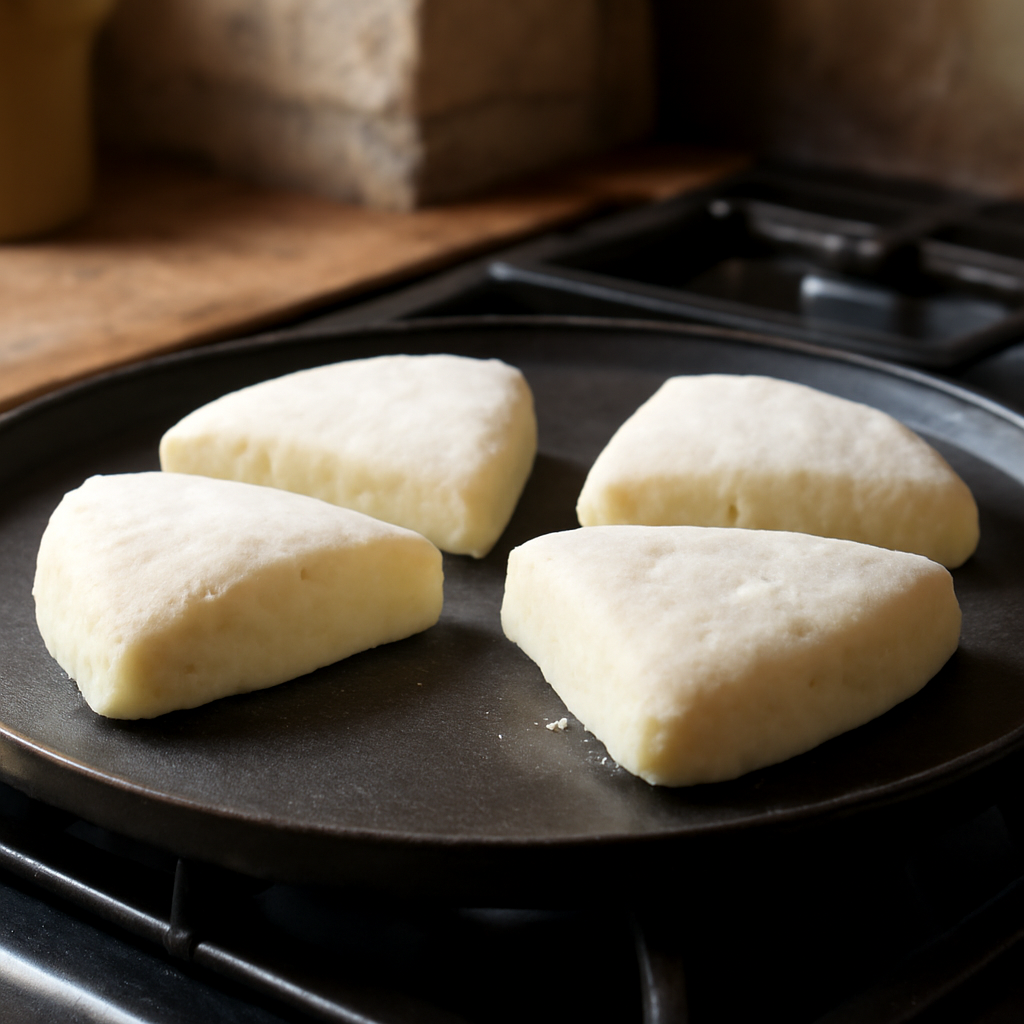
Heat a cast iron griddle or a heavy frying pan over a medium-low heat for at least three minutes before the farls go in. The pan should be dry, no oil, no butter. Sprinkle a pinch of flour on the surface; if it turns pale gold in about 20 seconds the temperature is right. Too hot and the outside chars before the inside bakes; too cool and the dough spreads and turns leathery.
-
Place the four farls flat-side down on the griddle. Leave space between them. Cook for 9 to 10 minutes on the first side. You are looking for a base that is matte rather than shiny, with a few darker freckles across it, and sides that have started to look dry and set about halfway up.
-
Flip each farl carefully with a fish slice. Cook for a further 9 to 10 minutes. The farls will puff slightly as they cook. Press the top of one gently with your fingertip; it should spring back rather than leave a dent.
-
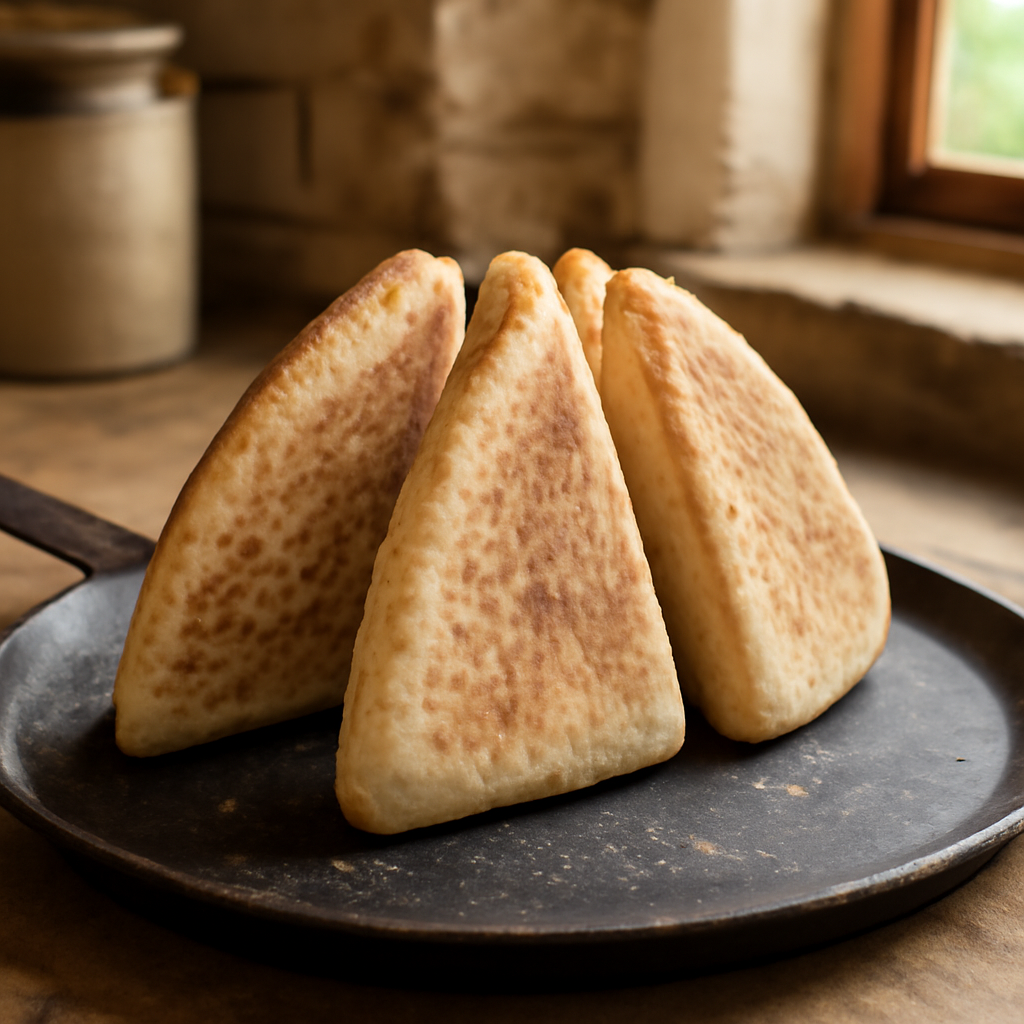
Stand the farls on their curved edges, leaning them against each other like a tent, for 4 to 5 minutes to dry out the sides. This step matters; skipping it leaves a doughy strip around the edge.
-
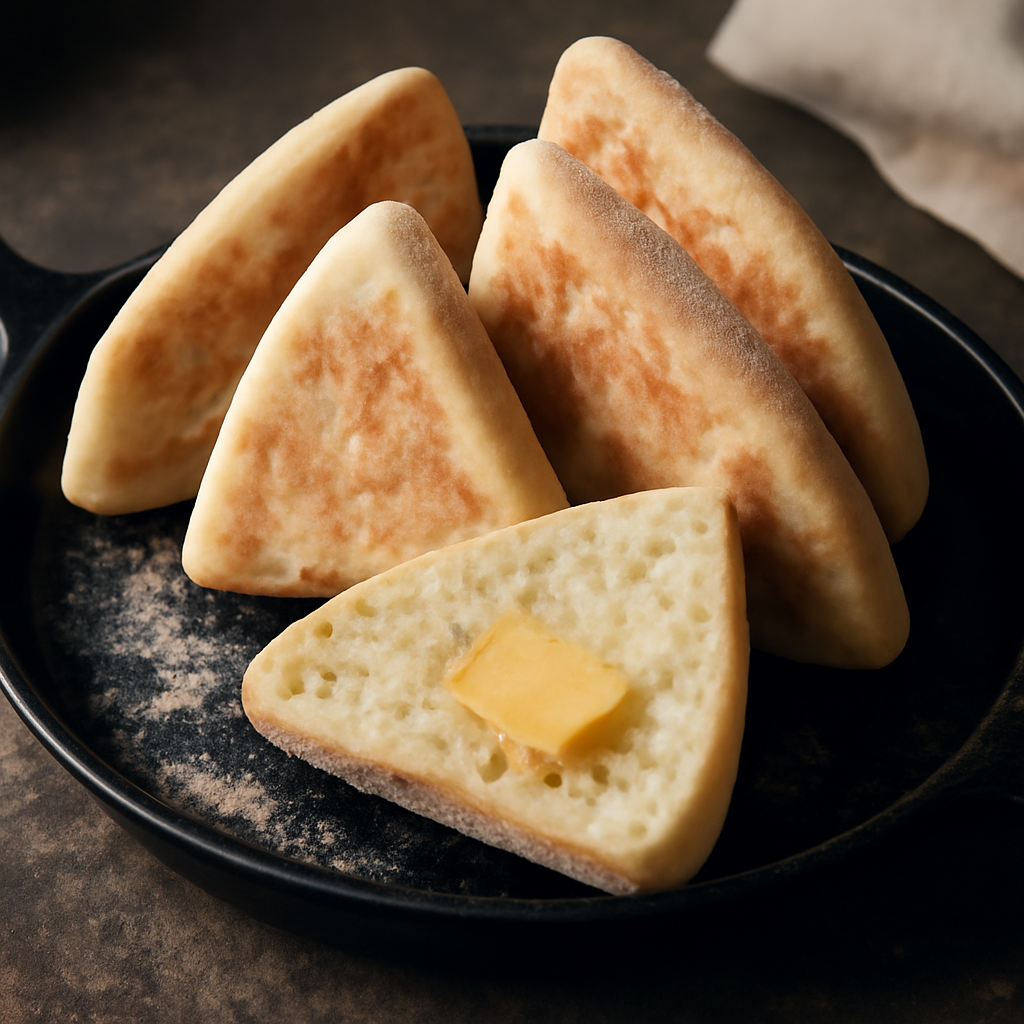
Wrap in a clean cloth if eating within the hour, or cool flat on a wire rack if storing. The interior crumb should be white and close-textured with no gummy patches when you split one open. The crust should be thin, pale brown, and give a faint hollow tap when you knock it with a knuckle.
Irish Context
Farls are the griddle-cooked form of Irish soda bread, and the method is older than domestic ovens in most rural households. The word farl comes from the Scots Gaelic 'fardel', meaning a fourth part, which describes the shape rather than any particular ingredient or regional origin.
The griddle version produces a quite different result from the tin-baked loaf; there is no Maillard browning from an oven, so the crust stays thin and pale, and the crumb is denser and moister. They are a staple of the Ulster fry, served alongside bacon, eggs, and soda bread with tea, though they appear on kitchen tables across the island at any hour of the day.
Tips
Cold buttermilk straight from the fridge gives a better rise than room-temperature; the cold slows the bicarbonate of soda reacting until the dough hits the heat. If buttermilk is unavailable, stir 1 tablespoon of white wine vinegar into 350ml of whole milk and leave it for 5 minutes before using.
The result is slightly less tangy but works. The dough should not be worked.
Every squeeze and fold tightens the gluten and toughens the farl. Mix it until it just comes together and stop.
A cast iron griddle gives the most even heat. A heavy stainless frying pan is the next best option.
A thin non-stick pan tends to create hotspots that scorch the base before the inside is ready. Leftover farls split and toasted the next morning under a grill are better than fresh ones to many people; the crumb dries slightly overnight and toasts crispier than it would the day of baking.
Do not cover the farls tightly while warm; steam trapped inside the crust softens it completely within minutes.

Author Commentary