
 AI
AI
 AI
AI
 AI
AI
Ingredients
Method
-
Pat the prawns dry with kitchen paper and season lightly with salt and white pepper. Set aside in the fridge until needed. Cold prawns added to a hot base cook more evenly and stay firmer.
-
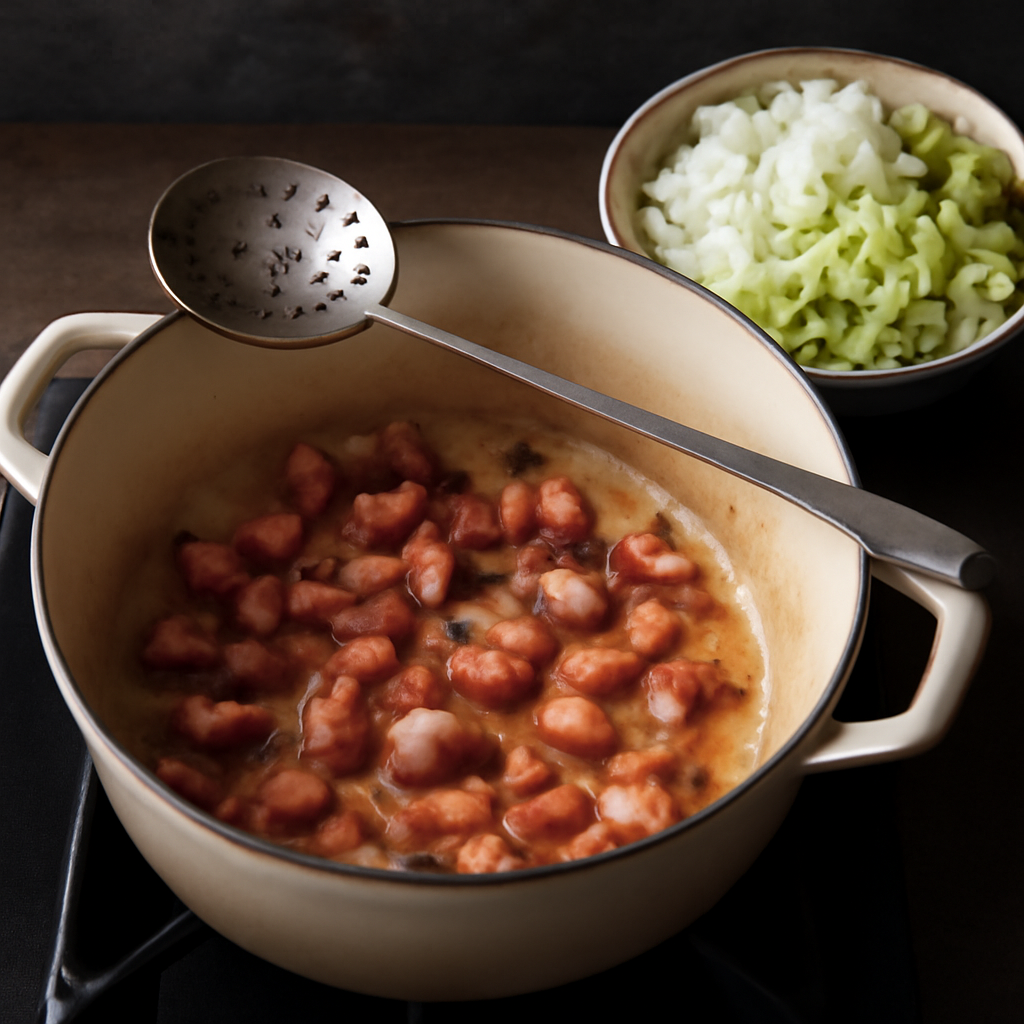
Place a wide, heavy-based pot over a medium heat. Add the sunflower oil and, once it shimmers, add the bacon lardons. Cook for 5 to 6 minutes, stirring occasionally, until the fat renders and the edges begin to colour. You want some caramelisation on the bacon but not blackened edges. Lift the bacon out with a slotted spoon and set aside on a plate, leaving the rendered fat in the pot.
-
Reduce the heat to medium-low. Add the butter to the pot. Once it melts, add the diced onion, sliced leeks, and celery. Cook gently for 8 to 10 minutes, stirring every couple of minutes, until completely softened and translucent. Do not let them brown. If the vegetables start catching at the edges, add a splash of water and scrape the base. Add the garlic for the final minute.
-
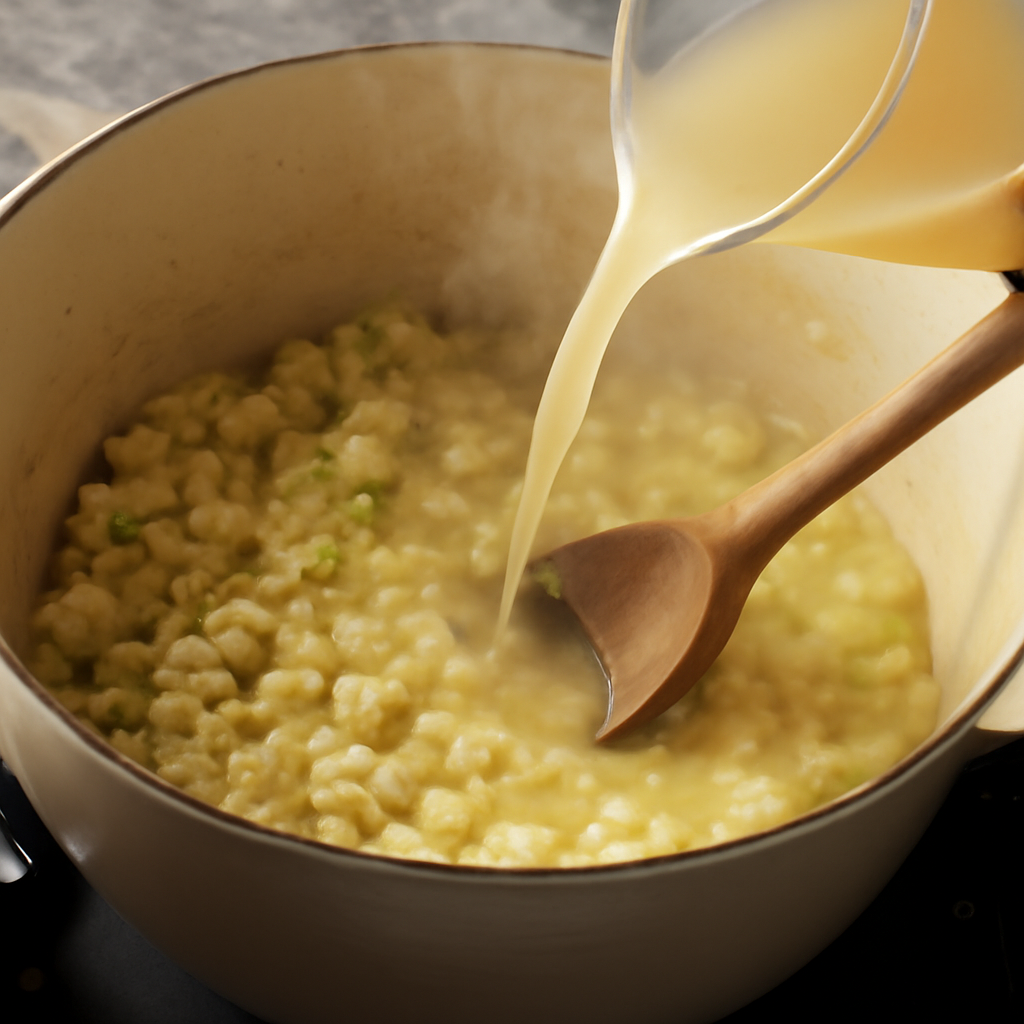
Sprinkle the plain flour over the softened vegetables. Stir continuously for 2 minutes over the medium-low heat to cook out the raw flour taste. The mixture will clump slightly and smell faintly biscuity. That is correct.
-
Add the warm fish stock gradually, a ladleful at a time, stirring well after each addition to prevent lumps. Once all the stock is incorporated, add the warm milk and stir again. Bring the liquid to a gentle simmer.
-
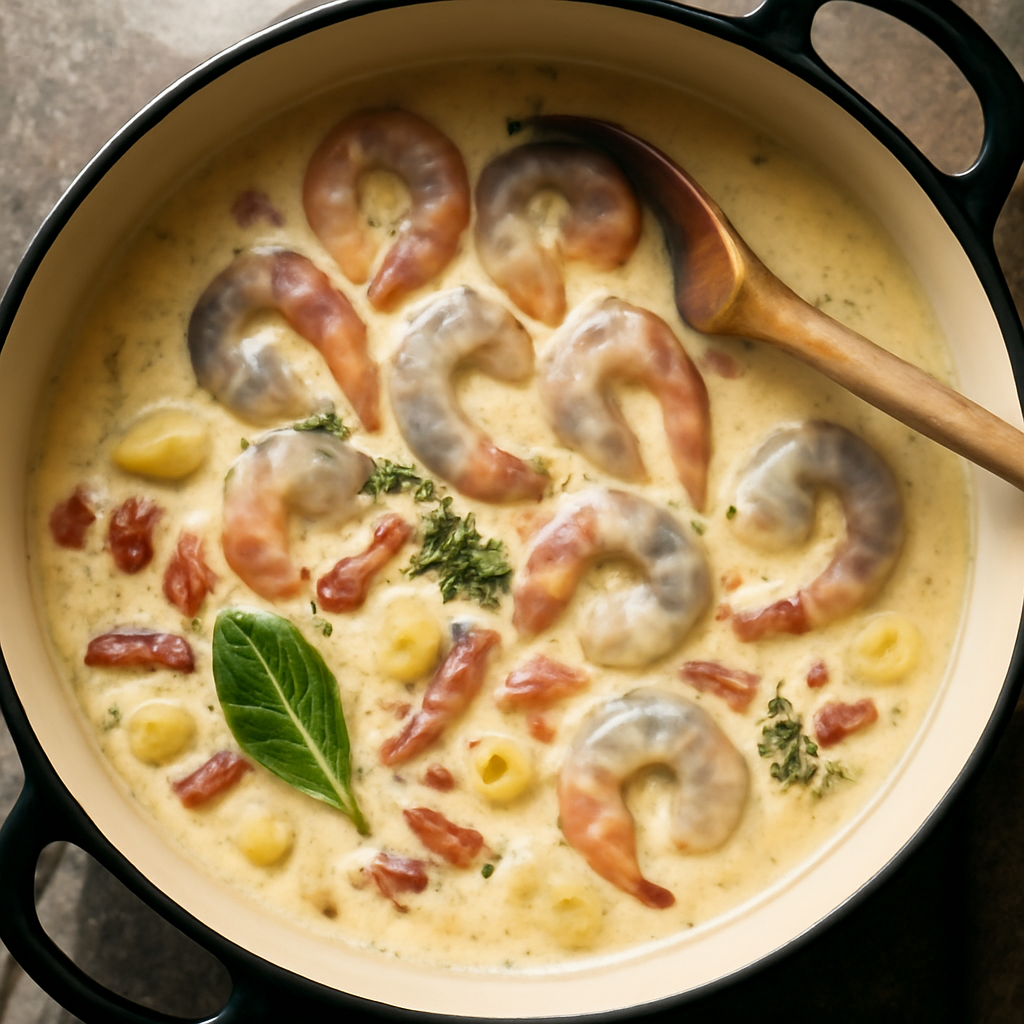
Add the potato cubes, bay leaf, and thyme sprigs. Simmer uncovered for 12 to 15 minutes until the potatoes are just tender when pierced with the tip of a knife. They should hold their shape; if they begin to break apart the chowder will turn starchy and glue-like.
-
Stir in the double cream and the Dijon mustard. Taste the broth at this point. It should be savoury, mildly smoky, and have a clean dairy sweetness. Adjust salt as needed.
-
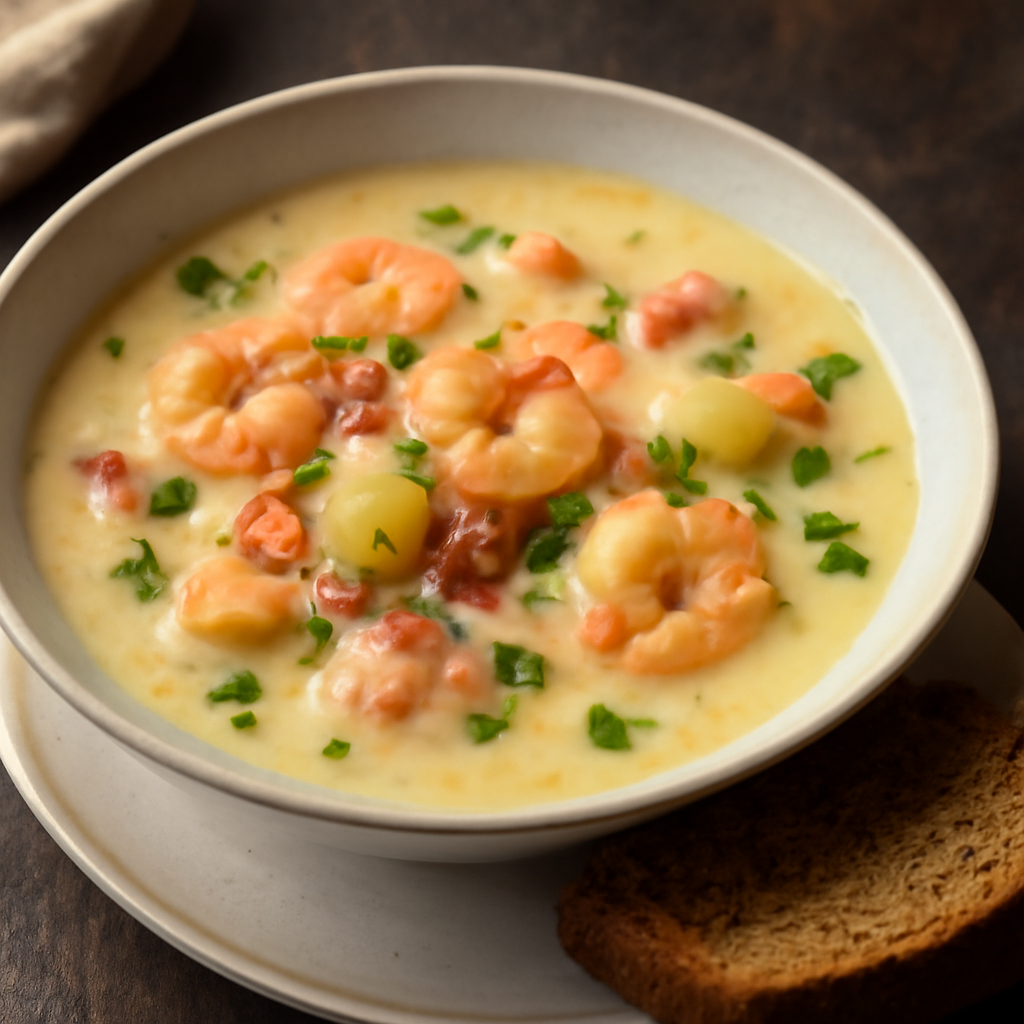
Return the cooked bacon lardons to the pot. Add the prawns to the simmering chowder and stir gently. Cook for 3 to 4 minutes only, until the prawns are opaque and pink throughout. Cut one open to check; the centre should be white with no grey translucency remaining. Remove the bay leaf and thyme sprigs.
-
Add the lemon juice and stir through. Taste again. The lemon lifts the cream and makes the prawn flavour more distinct. Finish with the chopped flat-leaf parsley.
-
Ladle into warmed bowls and serve immediately. The chowder thickens considerably as it sits, so if there is any delay, thin it back with a small splash of warm milk before serving.
Irish Context
Atlantic prawns, often labelled Dublin Bay prawns or langoustines when larger, are caught in significant quantities off the west and south-west coasts of Ireland. The smaller shrimp used in this chowder are widely available fresh in Irish fishmongers from spring through autumn, and frozen year-round.
Smoked back bacon from an Irish curer adds a distinctly local note that ties the chowder to the land as much as the sea. The combination of cream, potato, and seafood in a single pot is a practical use of what Irish coastal households have generally had available, though this version makes no claim to being a traditional regional dish.
Tips
If your prawns are frozen, defrost them overnight in the fridge rather than under running water. Quickly defrosted prawns release a lot of water into the chowder and dilute the broth.
Floury potatoes such as Rooster or Kerr's Pink hold their structure better than waxy varieties in a cream-based broth. Waxy potatoes stay too firm and do not absorb the surrounding flavour.
Warming the fish stock and milk before adding them to the roux prevents the fat from seizing and forming stubborn lumps. It is a small step and worth doing.
Do not let the chowder boil after the cream is added. A rolling boil will cause the cream to split, leaving a greasy, broken-looking broth.
A steady gentle simmer is what you need from that point on. This chowder does not freeze well once the cream and prawns are in.
You can make the base up to the point before adding the cream and prawns, cool it fully, and refrigerate for up to two days. Reheat the base slowly, then finish with cream, bacon, and prawns to order.

Author Commentary