
 AI
AI
 AI
AI
 AI
AI
Ingredients
Method
-
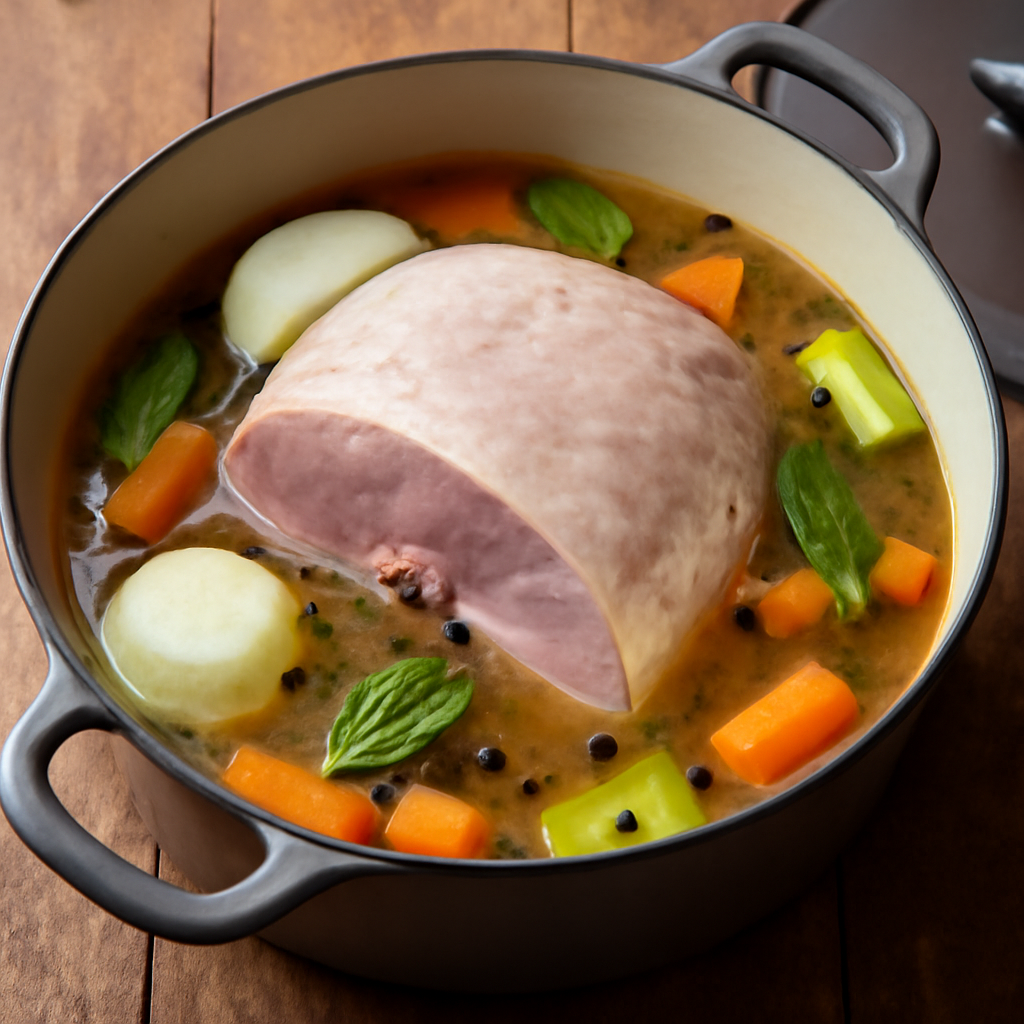
Place the gammon joint in a large pot and cover with cold water. Bring to the boil over high heat, then drain and discard the water. This removes excess salt without washing out the flavour of the meat itself.
-
Return the joint to the pot, fat-side up. Add the 2 litres of fresh cold water and the litre of cider. Add the halved onion, chopped carrots, celery sticks, peppercorns, 4 whole cloves, bay leaves, and cinnamon stick. The liquid should come roughly three-quarters of the way up the joint; top up with cold water if needed.
-
Bring to a gentle simmer over medium heat. Do not let it boil hard; a rolling boil tightens the muscle fibres and gives you dry, stringy meat. Skim off any grey foam that rises in the first 10 minutes. Reduce the heat to low, cover with a lid slightly ajar, and simmer for 20 minutes per 500 g. For a 2.5 kg joint, that is 100 minutes total.
-
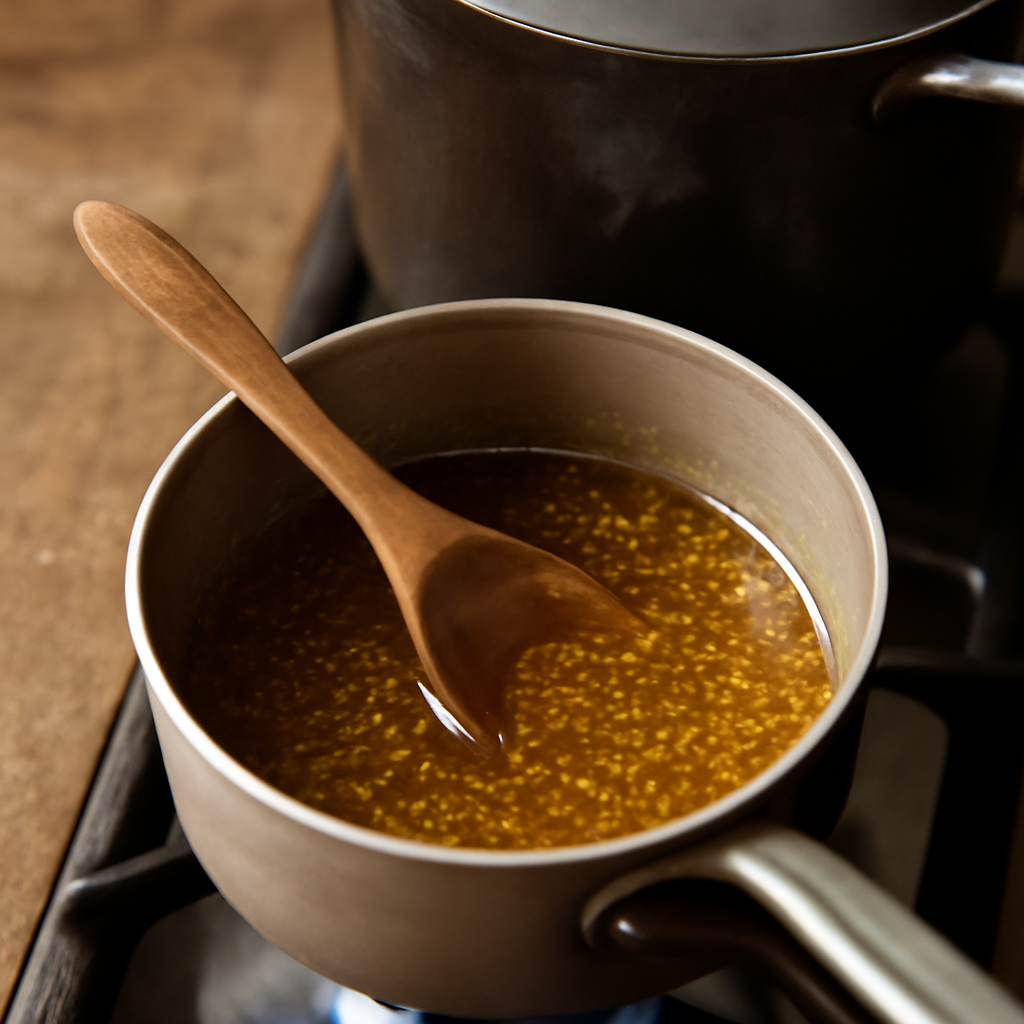
While the joint simmers, make the glaze. Combine the honey, wholegrain mustard, dark brown sugar, apple cider vinegar, and ground allspice in a small saucepan. Place over low heat and stir until the sugar dissolves, about 2 to 3 minutes. The mixture should be loose and pourable. Remove from the heat and set aside.
-
Preheat your oven to 200 degrees Celsius, fan 180 degrees Celsius.
-
When the joint has finished poaching, lift it carefully from the stock using two large spoons or a slotted spoon and tongs. Place it on a foil-lined roasting tin and leave it to cool for 10 minutes so it is handleable. Reserve the poaching stock; it makes an excellent base for pea and ham soup.
-
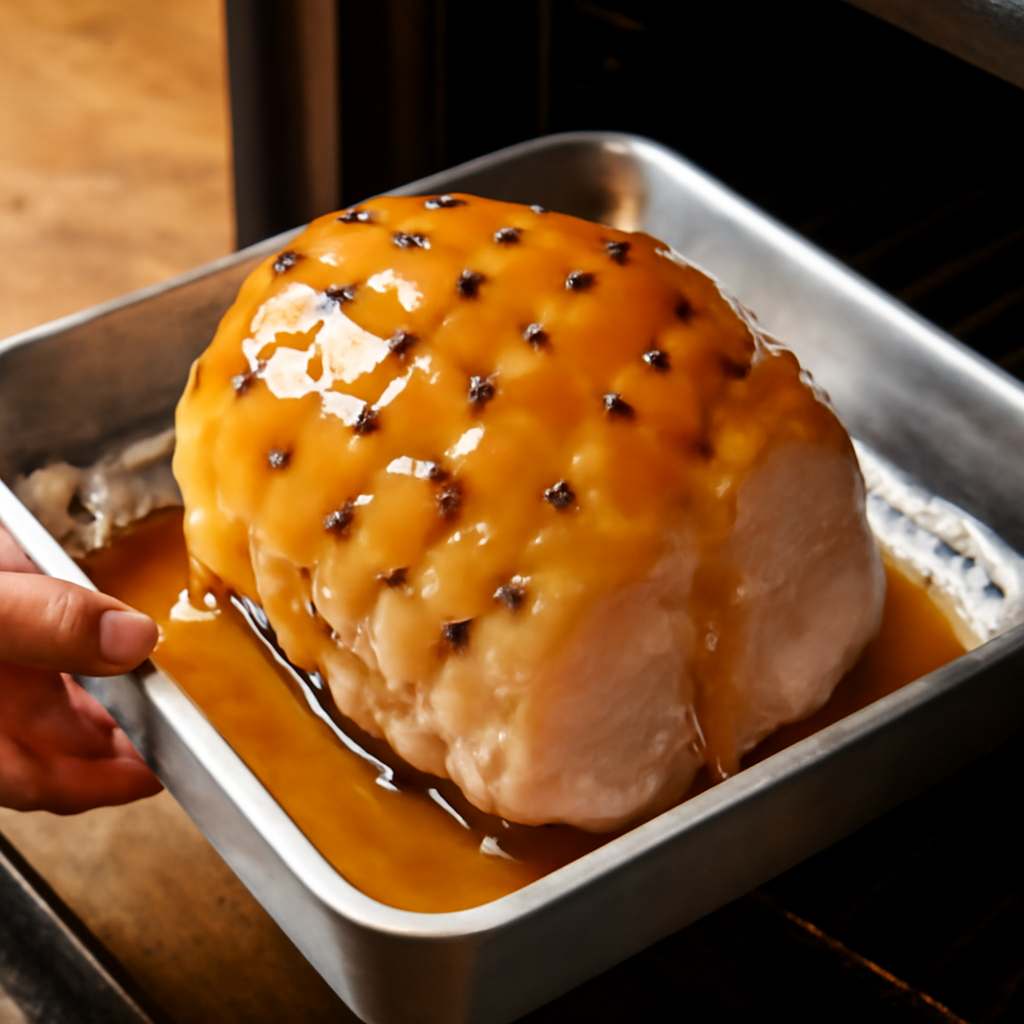
Using a sharp knife, score through the fat layer in a diamond pattern, cutting about 5 mm deep. Take care not to cut into the meat itself. Press one whole clove into the centre of each diamond.
-
Spoon half the glaze over the joint, spreading it into the scored lines with the back of the spoon. The first coat will drip; that is fine. Place the roasting tin on the middle shelf of the oven.
-
Roast for 25 to 30 minutes, basting with the remaining glaze every 8 to 10 minutes. You are looking for a deep amber colour, almost the shade of dark caramel. The edges of the scored diamonds will catch and darken; this is where the flavour concentrates. If it is colouring too fast in spots, lay a small sheet of foil loosely over those areas without sealing the whole joint.
-
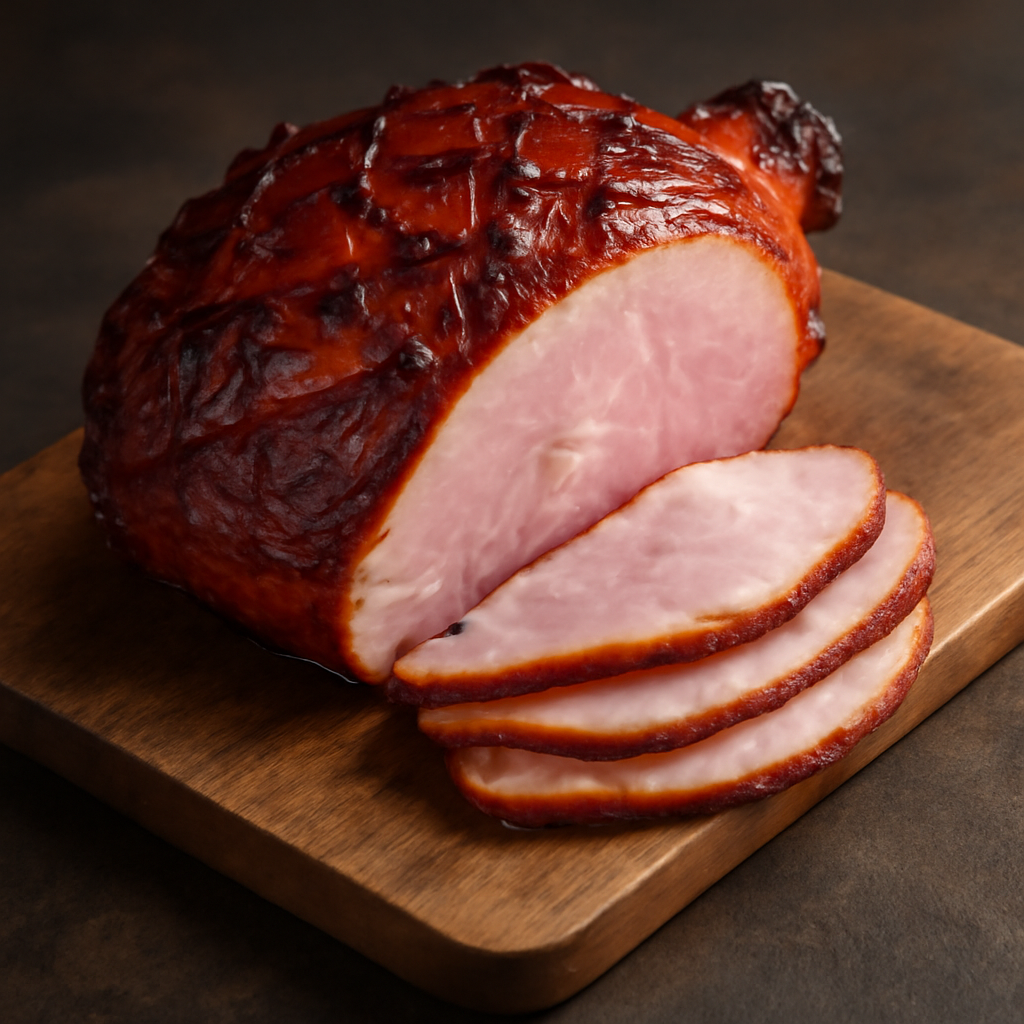
Remove from the oven and rest the joint uncovered on a board for at least 15 minutes before carving. The internal temperature at the thickest point should read 70 degrees Celsius on an instant-read thermometer. Carve against the grain in slices about 8 mm thick.
Irish Context
Boiled ham and bacon have been central to the Irish table for a long time, appearing at Sunday dinners, Christmas, and Easter with little variation in method from one decade to the next. Most Irish households have their own approach to the poaching liquid; some use cola, some use ginger ale, some use nothing but water and a bay leaf.
The honey glaze in this recipe is a straightforward evolution of the older clove-studded fat tradition, which is still the most common sight at Christmas dinner tables across the country. Irish honey varies considerably depending on where the bees have foraged, and a darker, stronger honey from upland heather will give the glaze a slightly more bitter edge than a lighter wildflower variety.
Both work; they just produce a slightly different finish.
Tips
If you are using a smoked gammon rather than unsmoked, soak it in cold water overnight in the fridge before cooking, changing the water once. Smoked joints tend to carry more salt and the extra soak compensates.
The poaching stock is worth keeping. Strain it through a fine-mesh sieve, cool it completely, and skim the fat from the surface once it has solidified in the fridge.
It keeps for up to 3 days refrigerated or 3 months frozen. Glazing with honey at high heat moves fast.
Stay near the oven during the roasting stage; 5 minutes is the difference between a beautiful lacquered crust and a burnt one. If your glaze is not thickening and clinging to the joint, return the saucepan to the heat and simmer it for a further 3 to 4 minutes until it reduces slightly and coats the back of a spoon.
Leftover ham keeps well wrapped in the fridge for 4 to 5 days. The cold slices are good in a cheese toastie with a little grain mustard, or chopped through a potato and spring onion frittata.

Author Commentary