
 AI
AI
 AI
AI
 AI
AI
Ingredients
Method
-
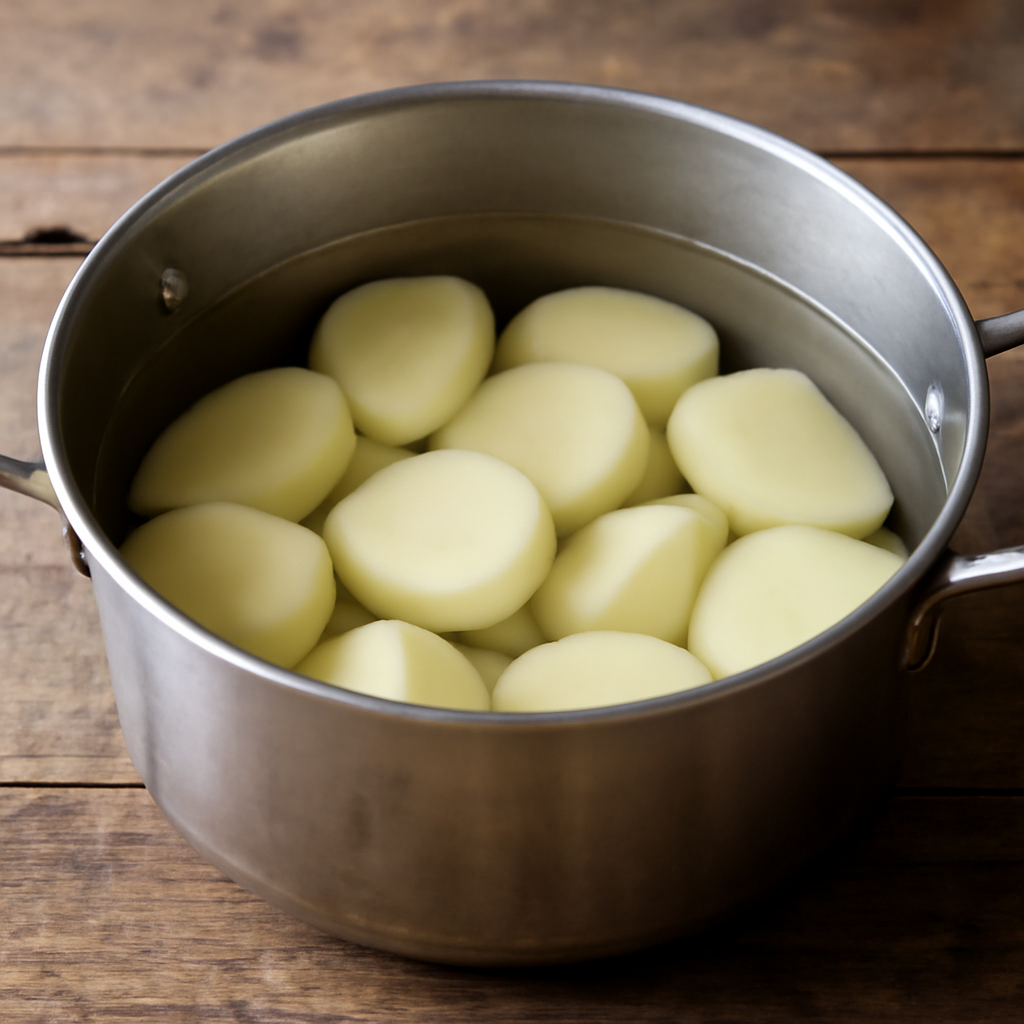
Place the peeled, halved potatoes in a large saucepan and cover with cold water. Salt the water generously, about 1 tsp per litre. Bring to the boil over a high heat, then reduce to a steady simmer. Cook for 20 to 25 minutes until a knife passes through the largest piece without any resistance. Floury potatoes will begin to crack at the edges when they are ready; that is what you want.
-
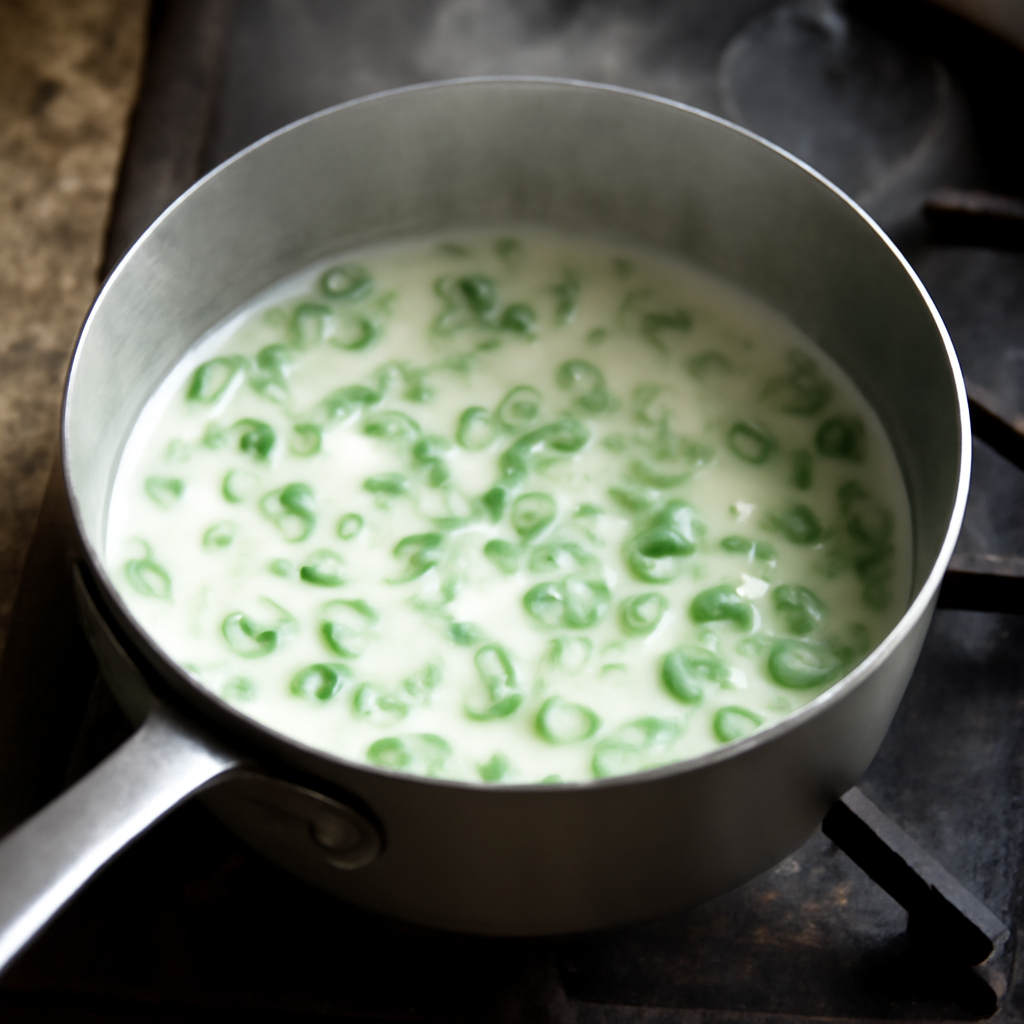
While the potatoes cook, combine the milk and double cream in a small saucepan over a low heat. Add all of the sliced spring onions. Bring the mixture slowly to just below a simmer, around 80 degrees Celsius. You will see small bubbles forming at the edges and steam rising. Do not let it boil. Hold it at this temperature for 5 minutes so the spring onions soften slightly and their flavour infuses the liquid. Remove from the heat and set aside.
-
Drain the potatoes thoroughly through a colander and return the empty saucepan to the hob over a low heat for 30 seconds to drive off any remaining moisture. Add the potatoes back in. This step matters: wet potatoes produce gluey mash.
-
Pass the potatoes through a potato ricer directly back into the warm saucepan, or mash by hand with a masher if that is what you have. Do not use a food processor or blender. Working the starch too hard makes the mash sticky and dense rather than light.
-
Pour the warm spring onion milk and cream through a sieve over the riced potatoes, pressing the onions firmly against the sieve with the back of a spoon to extract as much liquid as possible. Reserve the strained spring onions.
-
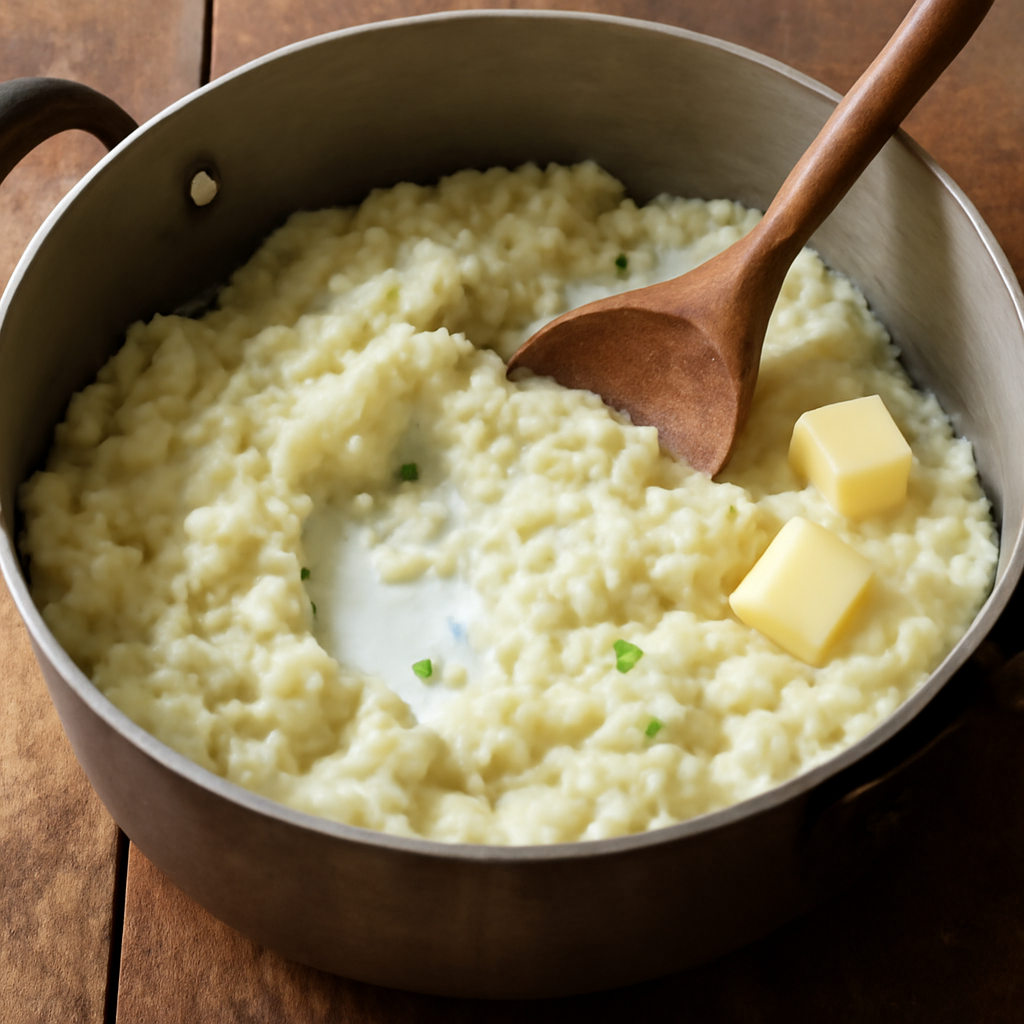
Fold the liquid into the potato using a wooden spoon, working gently from the outside in. Add the cold butter cubes gradually, folding after each addition rather than beating. The mash should be loose enough to fall from the spoon in slow waves, not hold a stiff peak. Season with fine sea salt and white pepper, tasting as you go.
-
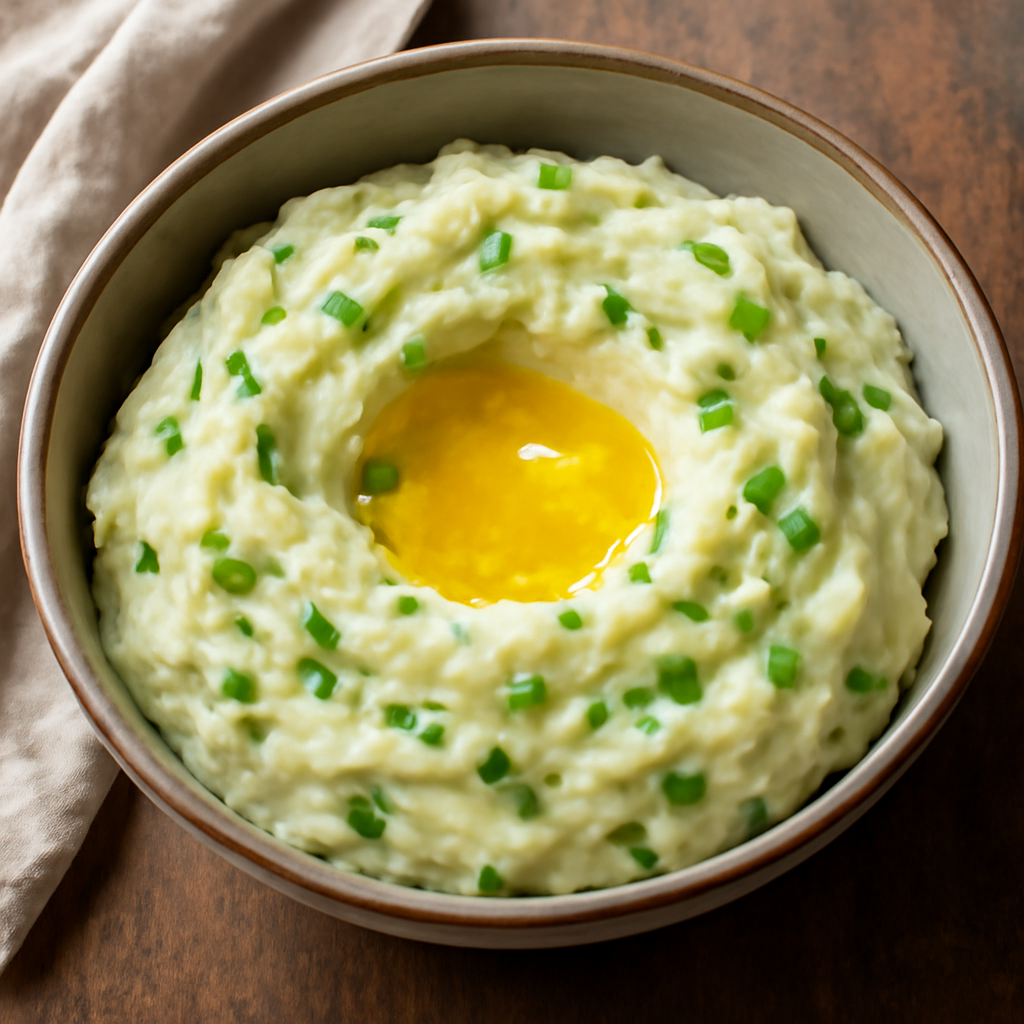
Fold in the reserved spring onions from the sieve. Spoon the champ into warmed bowls, making a well in the centre of each portion with the back of a spoon. Place a generous knob of cold butter, roughly 10 to 15g, into each well and serve immediately. The butter should melt visibly as you bring the bowls to the table.
Irish Context
Champ is the Ulster name for this dish, though variations of mashed potato with something green stirred through it appear all over Ireland under different names. The distinction between champ and colcannon comes down to the green element: spring onions for champ, kale or cabbage for colcannon.
The two are sometimes conflated, but they taste quite different. Spring onions give a mild, grassy sharpness that sits differently in the mouth than the mineral bitterness of cooked kale.
Both dishes rely on the same principle: that floury Irish potatoes, cooked and mashed with dairy and something aromatic, become considerably more than the sum of their parts.
Tips
Rooster potatoes are the most reliably available floury variety in Irish supermarkets and work very well here. Kerr's Pink or Golden Wonder, if you can find them, produce a slightly drier, more intensely flavoured mash.
If your mash feels stiff after adding all the liquid, warm a little more milk separately and stir it in a tablespoon at a time. Never add cold liquid directly to mash; it tightens the starch and the texture does not recover.
White pepper rather than black is the traditional choice. It disappears into the pale mash without dark flecks and has a slightly sharper, more mineral heat that suits the dish.
The dish sits and waits very badly. Mash begins to stiffen within minutes once plated.
Have your bowls warmed in a low oven, around 80 degrees Celsius, before you start mashing, and bring everyone to the table before you serve.

Author Commentary