
 AI
AI
 AI
AI
 AI
AI
Ingredients
Method
-
Place the ham in a large stockpot and cover with cold water. Bring to the boil over high heat, then drain completely. This draws out excess salt from the cure and prevents the finished dish from tasting brined rather than smoky.
-
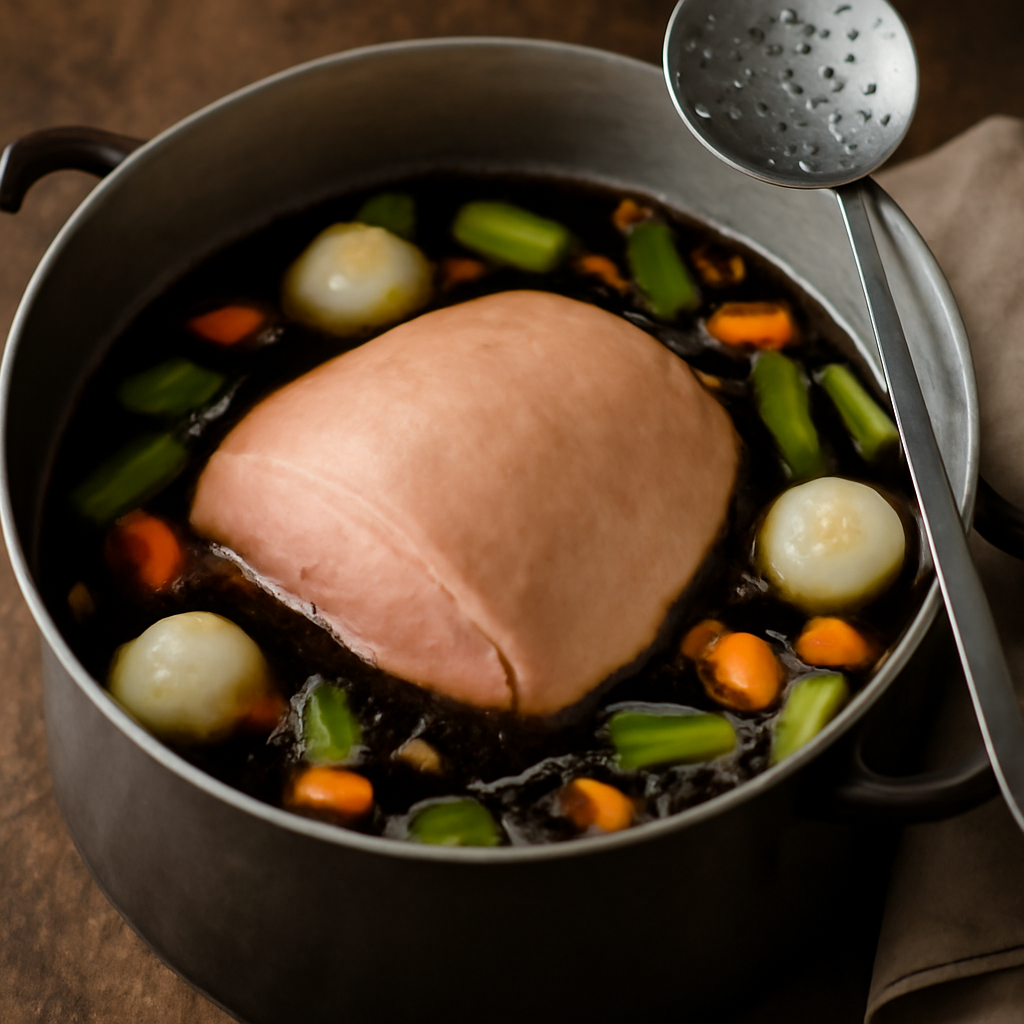
Return the ham to the pot. Pour in the stout and top up with 1 litre cold water until the ham is submerged by at least 5 cm. Add the onions, carrots, celery, peppercorns, bay leaves, and whole cloves.
-
Bring to a gentle simmer over medium heat, then reduce to low. The surface should show only occasional slow bubbles. Maintain this at 85 to 90 Celsius throughout. A rolling boil will tighten the meat and make the outer layers chalky. Skim any grey foam from the surface during the first 20 minutes.
-
Poach for 25 minutes per 500 g, so approximately 2 hours 55 minutes for a 3.5 kg joint. The ham is ready when a skewer inserted into the thickest part near the bone meets no resistance. Set the pot aside and allow the ham to cool in the liquid for 30 minutes. Reserve 30 ml of the poaching liquid for the glaze before discarding the rest.
-
Preheat the oven to 200 Celsius, fan 180 Celsius.
-
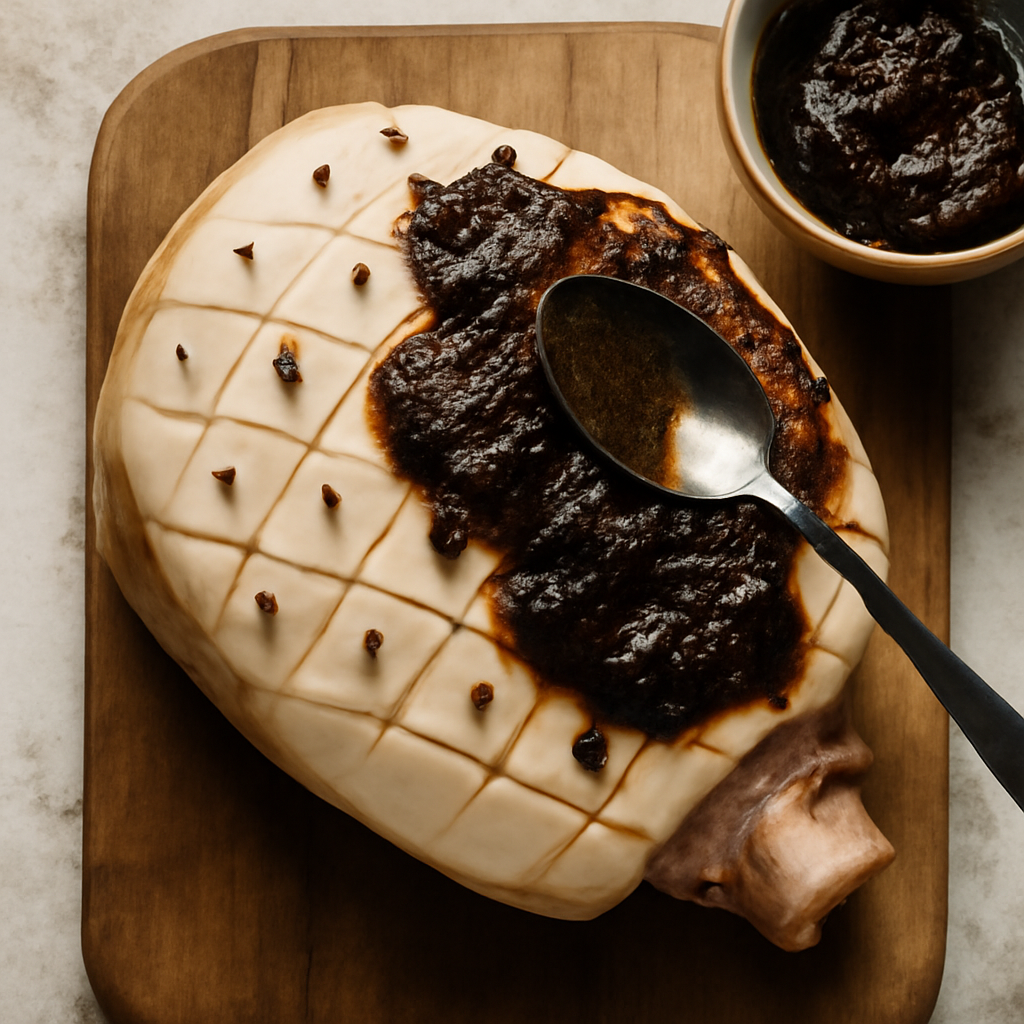
Lift the ham onto a board and carefully peel away the skin, leaving the fat layer intact. Use a sharp knife to score the fat in a diamond pattern, cutting down to a depth of about 5 mm but not into the meat. Cut too shallow and the glaze sits on the surface rather than soaking in; cut too deep and the fat splits during roasting.
-
Stud the centre of each diamond with a whole clove.
-
In a small bowl, mix the dark brown sugar, dry mustard powder, ground cloves, treacle, and 30 ml reserved poaching liquid into a thick paste. It should hold its shape on a spoon. If it runs, add a little more sugar.
-
Place the ham fat-side up in a roasting tin. Spread the glaze evenly over the scored fat using the back of a spoon or a pastry brush, working it down into the cuts.
-
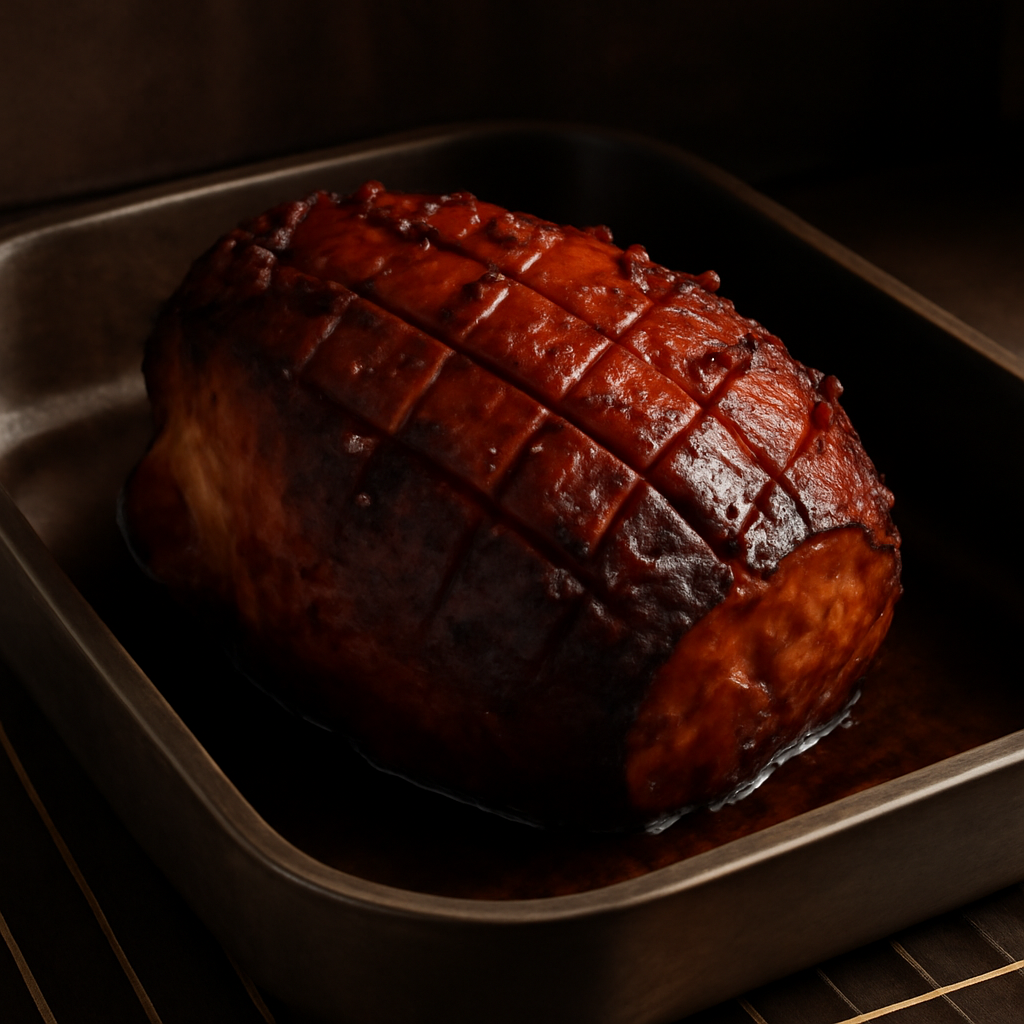
Roast at 200 Celsius for 25 to 30 minutes, checking at 20 minutes. The glaze should be deeply coloured and set to a slight crackle at the edges, not burnt. If it is darkening too fast on one side, rotate the tin. Do not baste during roasting; opening the oven repeatedly drops the temperature and the glaze will not set properly.
-
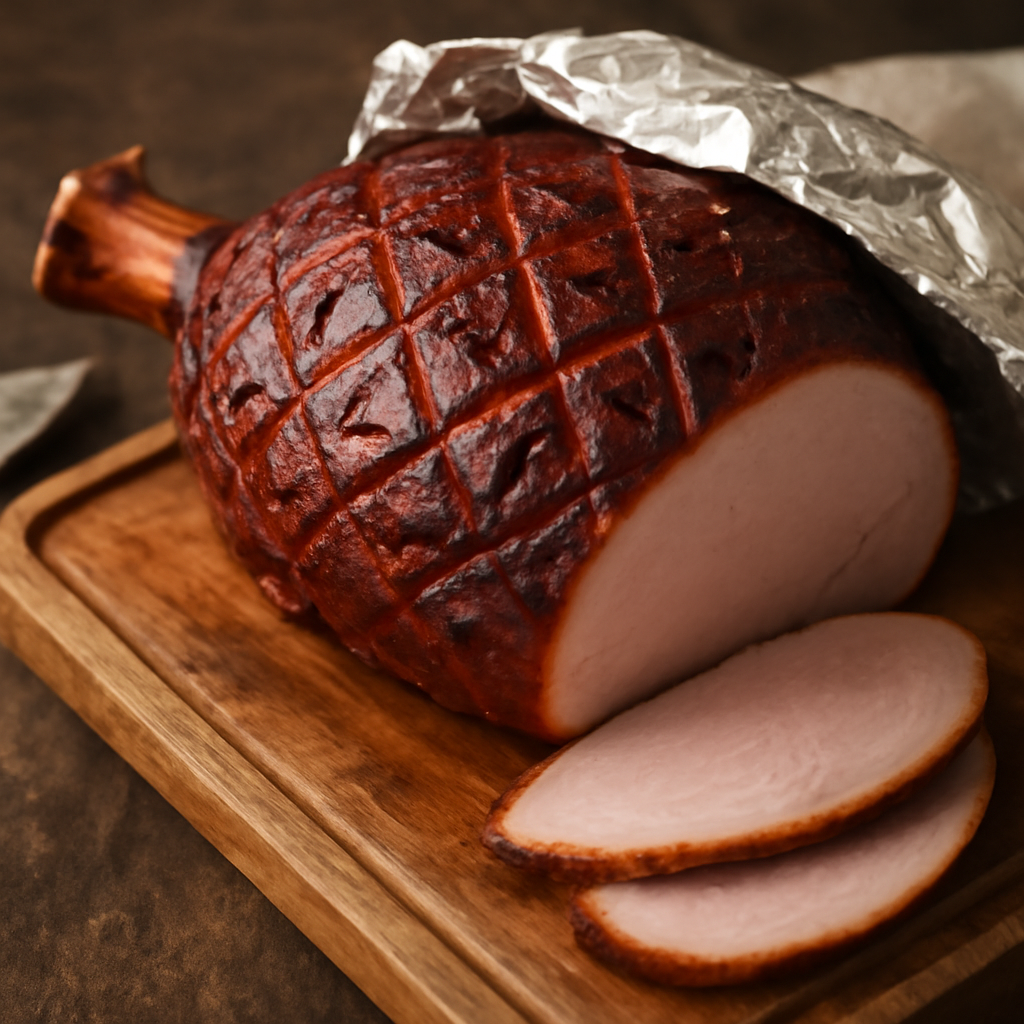
Remove from the oven and rest the ham on a board, loosely covered with foil, for at least 20 minutes before carving. The internal temperature should read 70 Celsius at the centre near the bone. Carve against the grain in slices of about 5 to 7 mm.
Irish Context
Limerick has a long association with cured and smoked pork, tied to the city's position as a centre for pig processing in the nineteenth and early twentieth centuries. The style of ham associated with the region is typically dry-cured and lightly smoked, with a milder cure than hams from elsewhere.
Using stout in the poaching liquid is a longstanding domestic practice in Irish cooking, softening the smokiness without masking it. The combination of mustard and dark sugar in the glaze appears in household recipe collections across Munster, though proportions vary widely between families.
This dish appears at Christmas and Easter tables, at large family gatherings, and sliced cold into sandwiches for the days after.
Tips
Buy the ham two to three days ahead and ask your butcher whether it needs soaking overnight before cooking. Heavily cured hams will need 8 hours in cold water before the initial blanching step.
If you skip this and the ham is very salty, the finished dish will be unpleasant regardless of the glaze. The poaching liquid is not stock worth keeping.
The salt and bitterness from the stout make it unsuitable for most other uses. Pour it away.
If the fat layer is thicker than 2 cm, trim it back slightly before scoring. Too much fat and the centre will not render properly during the 30-minute roasting window.
Leftover ham keeps refrigerated for up to five days and slices well cold directly from the fridge. It does not freeze particularly well once glazed; the crust softens on thawing.
A dry mustard powder (not prepared mustard) matters here. Prepared mustard adds moisture and prevents the glaze from setting to that lacquered finish.

Author Commentary