
 AI
AI
 AI
AI
 AI
AI
Ingredients
Method
-
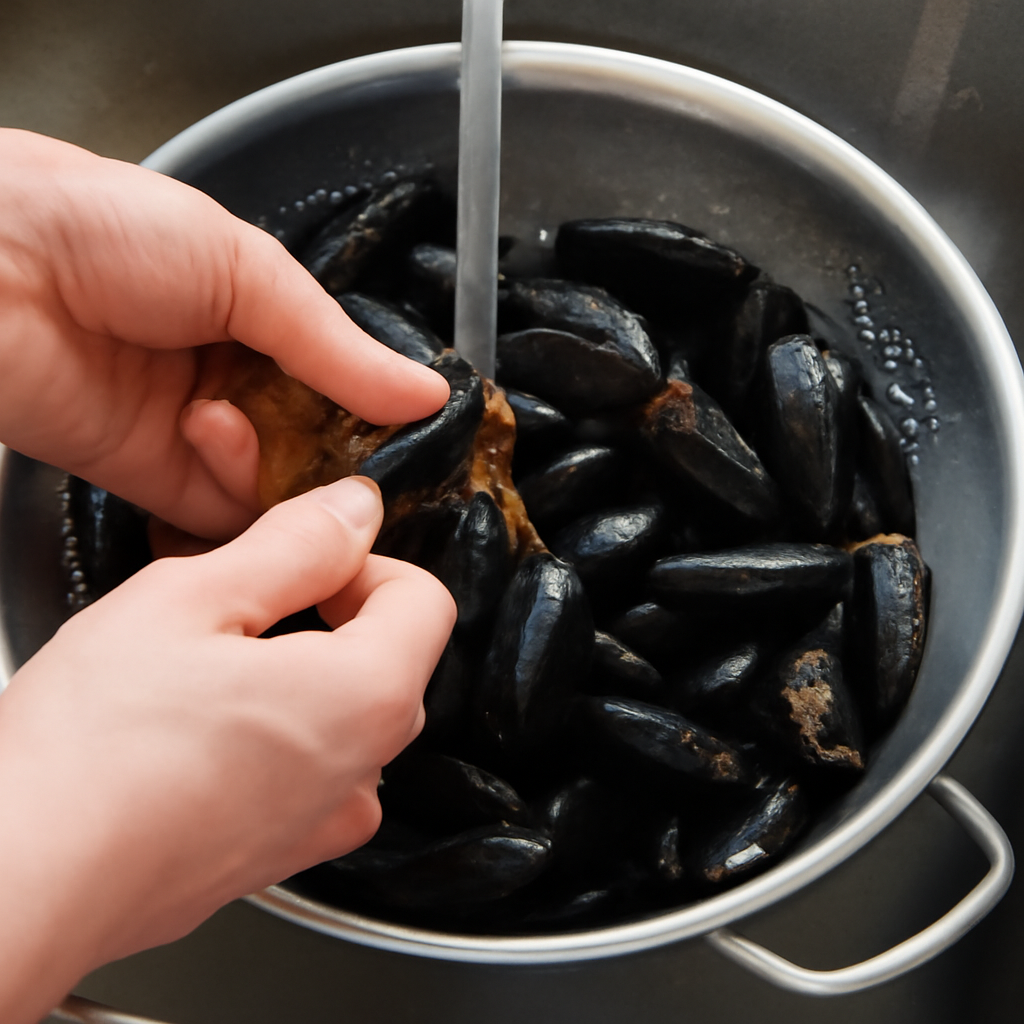
Start with the mussels. Tip them into the sink under cold running water and scrub each one. Pull away the fibrous beard by tugging it firmly toward the pointed end of the shell. Discard any mussels that are already open and do not close when you tap them sharply against the side of the sink. Set the cleaned mussels aside in a colander over a bowl in the fridge while you build the broth.
-
Set a wide, heavy-based saucepan or casserole pot (at least 26 cm across) over a medium-low heat. Add the rapeseed oil and butter together. Once the butter has melted and stopped foaming, add all the sliced onions. Stir to coat them evenly, then add the salt and caster sugar. Spread the onions across the base of the pan and leave them mostly undisturbed for the first 5 minutes. They need to sweat down rather than colour immediately.
-
After 5 minutes, stir and scrape the base. Continue cooking the onions over medium-low heat for a further 12 to 14 minutes, stirring every couple of minutes, until they are completely soft, translucent, and beginning to turn a pale gold at the edges. The sugar encourages a little colour without burning. If they start to stick or catch, add a splash of water and scrape the pan. The onions should smell sweet and slightly sharp from their own juices.
-
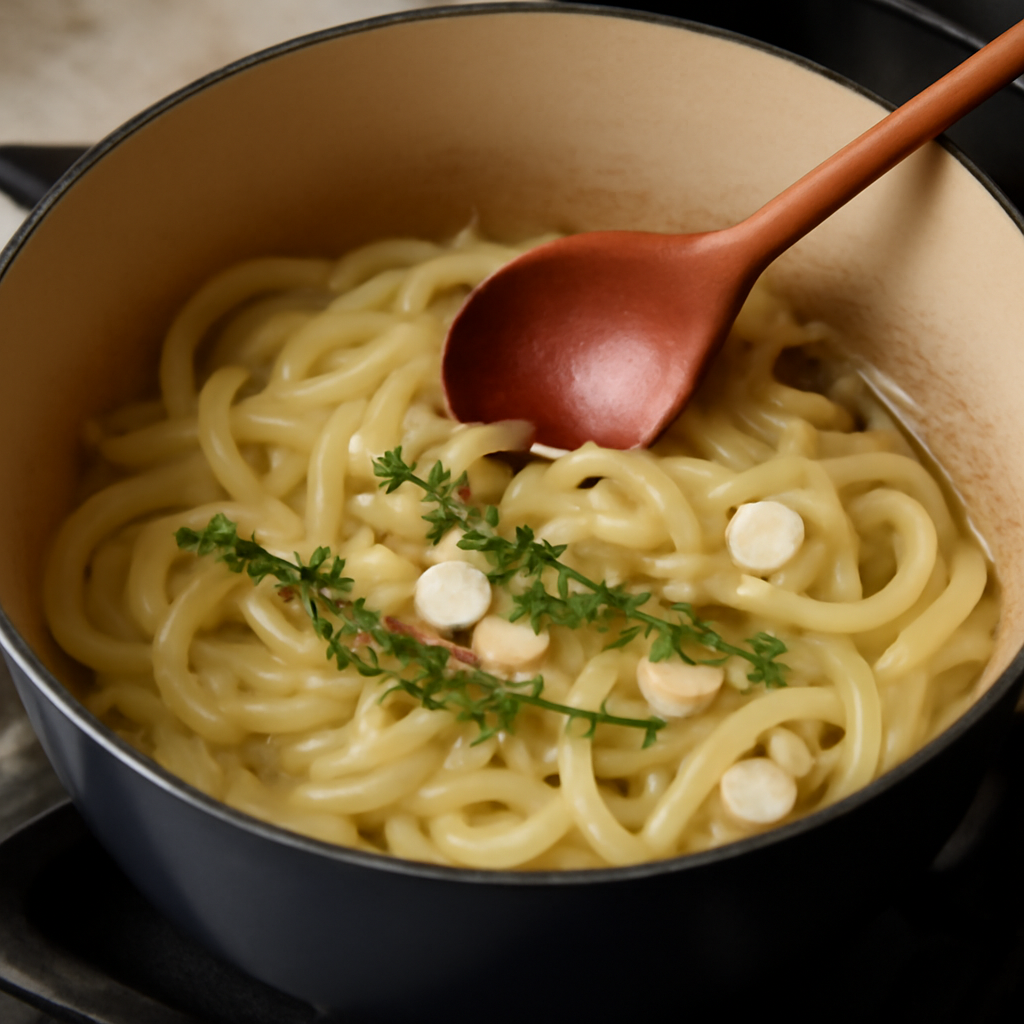
Add the sliced garlic and the thyme sprigs. Stir through and cook for 2 minutes until the garlic has softened but not browned. The raw sharpness of the garlic should mellow into the onions.
-
Increase the heat to high. Pour in the white wine. It will hiss and steam immediately. Stir once to lift anything from the bottom of the pan, then let the wine bubble hard for 90 seconds to cook off the raw alcohol. The liquid should reduce slightly and the sharp edge of the wine should soften.
-
Pour in the double cream and stir it through. Bring back to a brisk simmer over high heat. Taste the broth at this point. It should be savoury, slightly sweet from the onions, and gently acidic. Adjust salt if needed but remember the mussels will release their own salty liquid into the pot.
-
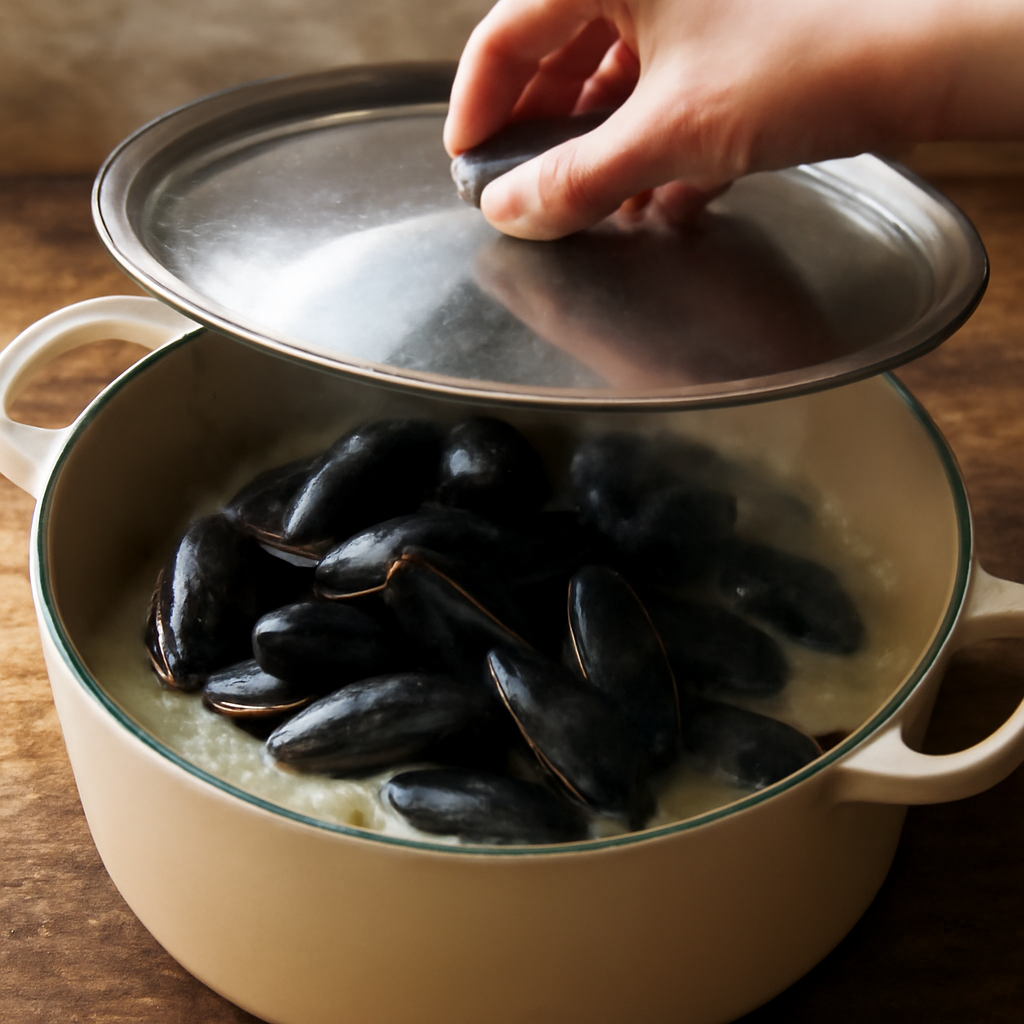
Tip in the mussels from the fridge all at once. Put the lid on the pot immediately and cook over high heat for 3 to 4 minutes, shaking the pot once or twice by the handles rather than lifting the lid too early. After 3 minutes, lift the lid. The mussels should be open. If some are still closed, replace the lid for another 60 seconds.
-
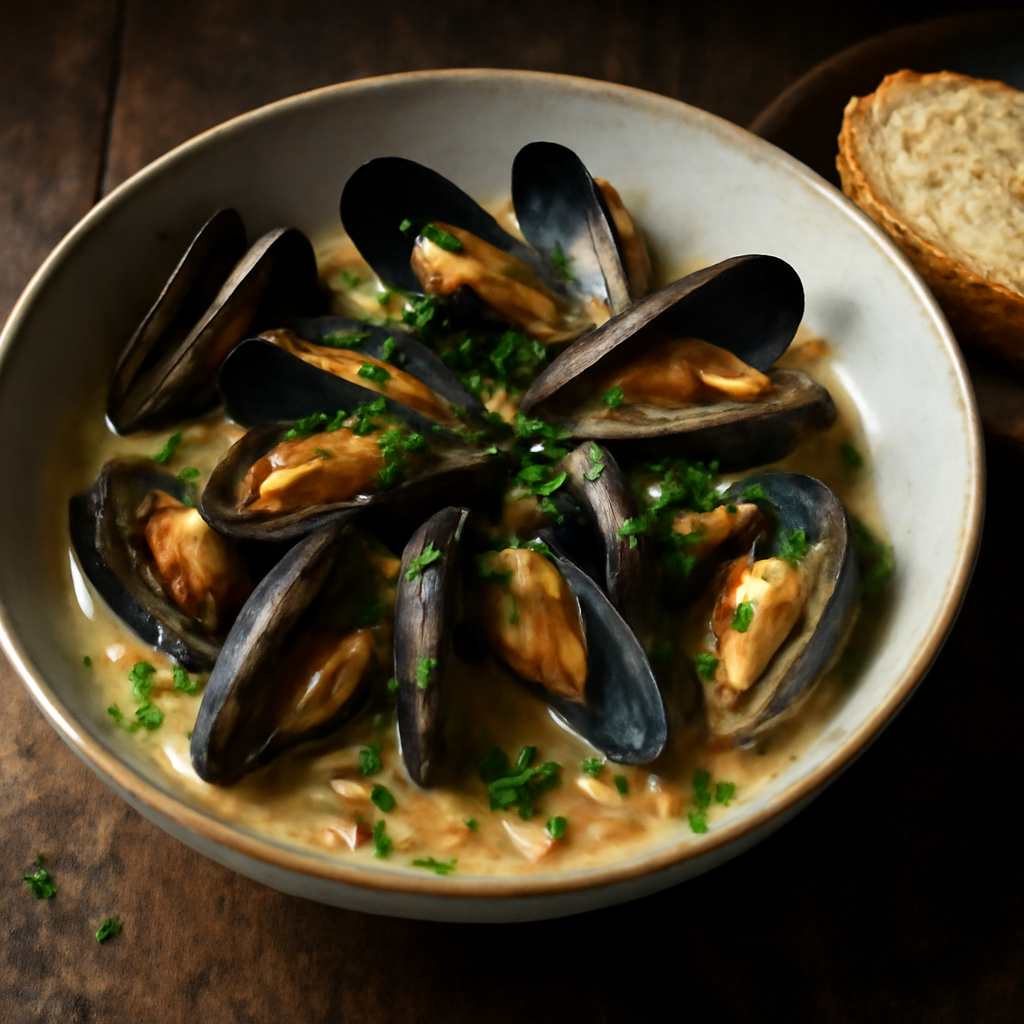
Remove the pot from the heat. Discard any mussels that have not opened at all. Fish out the thyme sprigs. Scatter over the chopped parsley and give the pot a gentle stir to bring the broth up through the mussels.
-
Serve immediately in deep wide bowls, spooning plenty of the onion broth over each portion. The bread goes alongside for mopping.
Irish Context
Rope-grown mussels from the west coast, particularly from Killary Harbour in Connemara and from the waters around Bantry Bay in Cork, are harvested year-round and are among the most consistently available fresh shellfish in Irish supermarkets and fishmongers. The season where quality peaks tends to be autumn through late spring, roughly September to April, when the mussels are heavier and the meat fills the shell more fully.
A summer mussel can taste fine but is often smaller and slightly milkier. The caramelised onion approach in this recipe is a practical response to the sweetness that mussels carry naturally.
Rather than the cleaner, more herb-forward broth you might associate with French moules marinière, this version leans into the natural sugars of the onion so the two work together rather than one simply carrying the other.
Tips
The single most important thing in this recipe is the onion cook time. If you rush them past 15 minutes and they are still white and crunchy, the broth will taste raw and slightly harsh.
The onions need to collapse fully into the fat before anything else goes in. Use mussels the day you buy them if at all possible.
If you must store them overnight, keep them in the fridge in a bowl covered with a damp cloth, not submerged in water and never in a sealed bag. The 'tap test' for live mussels matters.
A mussel that is gaping open and stays open after a firm tap is dead and should go in the bin without exception. A dry, unoaked white wine works well here.
Muscadet, Pinot Grigio, or a basic Irish supermarket Sauvignon Blanc all do the job. Avoid anything oaked or very fruity as it fights with the onions.
If the broth looks thin after the mussels have steamed, quickly ladle most of it into a small saucepan before serving, reduce it for 2 minutes over high heat, then pour it back over the mussels in the bowl. This concentrates the onion flavour considerably.
Flat-leaf parsley holds its colour and flavour better than curly parsley at this stage. Add it only after the pot is off the heat.

Author Commentary