
 AI
AI
 AI
AI
 AI
AI
Ingredients
Method
-
Preheat the oven to 180°C (fan 160°C). Butter a 20cm x 28cm baking dish generously, making sure to get into the corners.
-
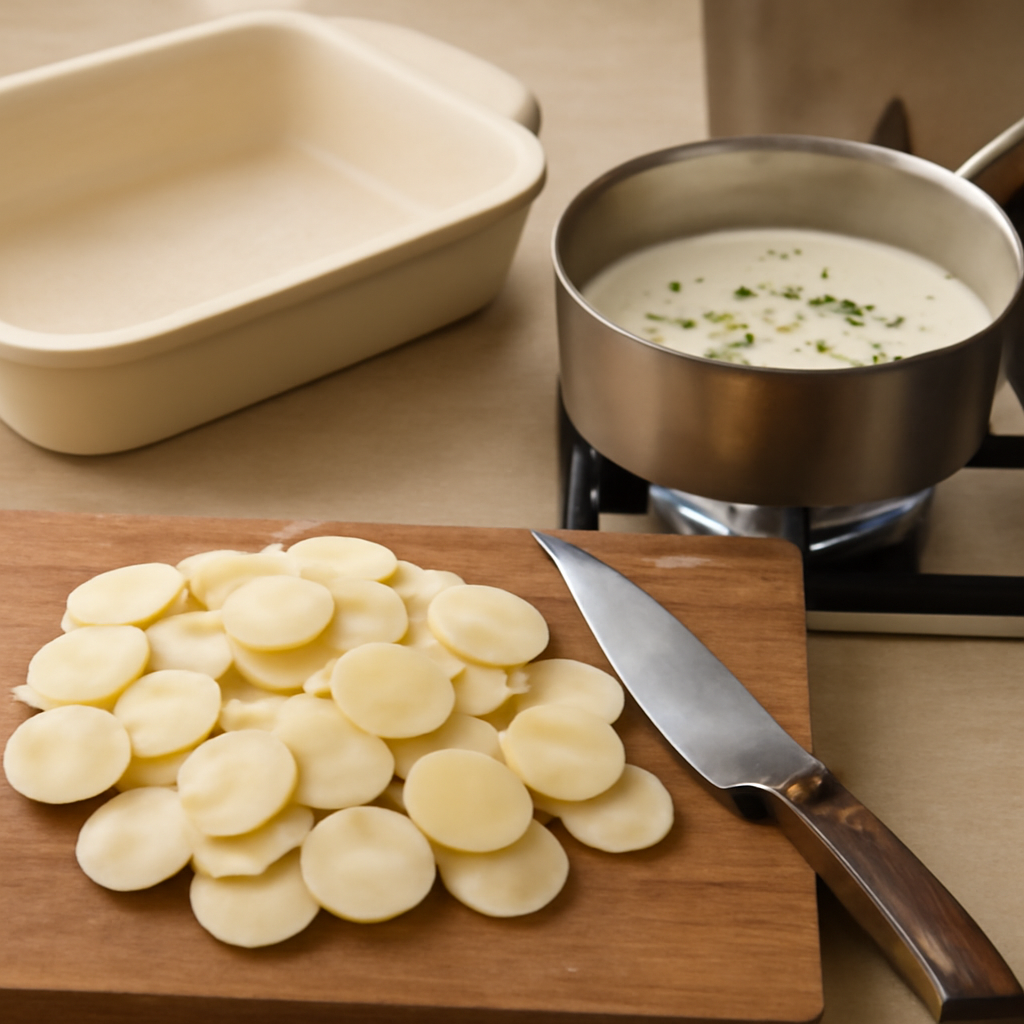
Slice the peeled parsnips on a mandoline or with a sharp knife to 3mm thickness. Thin enough to cook through, thick enough to hold a layer. Uneven slices mean some will stay hard while others go to mush, so take the time here.
-
Combine the double cream, milk, sliced garlic, thyme leaves, salt, pepper, and nutmeg in a small saucepan. Bring to a bare simmer over a low heat, stirring once or twice. Do not boil. Remove from the heat as soon as you see the first few bubbles break the surface, about 3 to 4 minutes. The garlic should have softened slightly and the cream will smell of thyme.
-
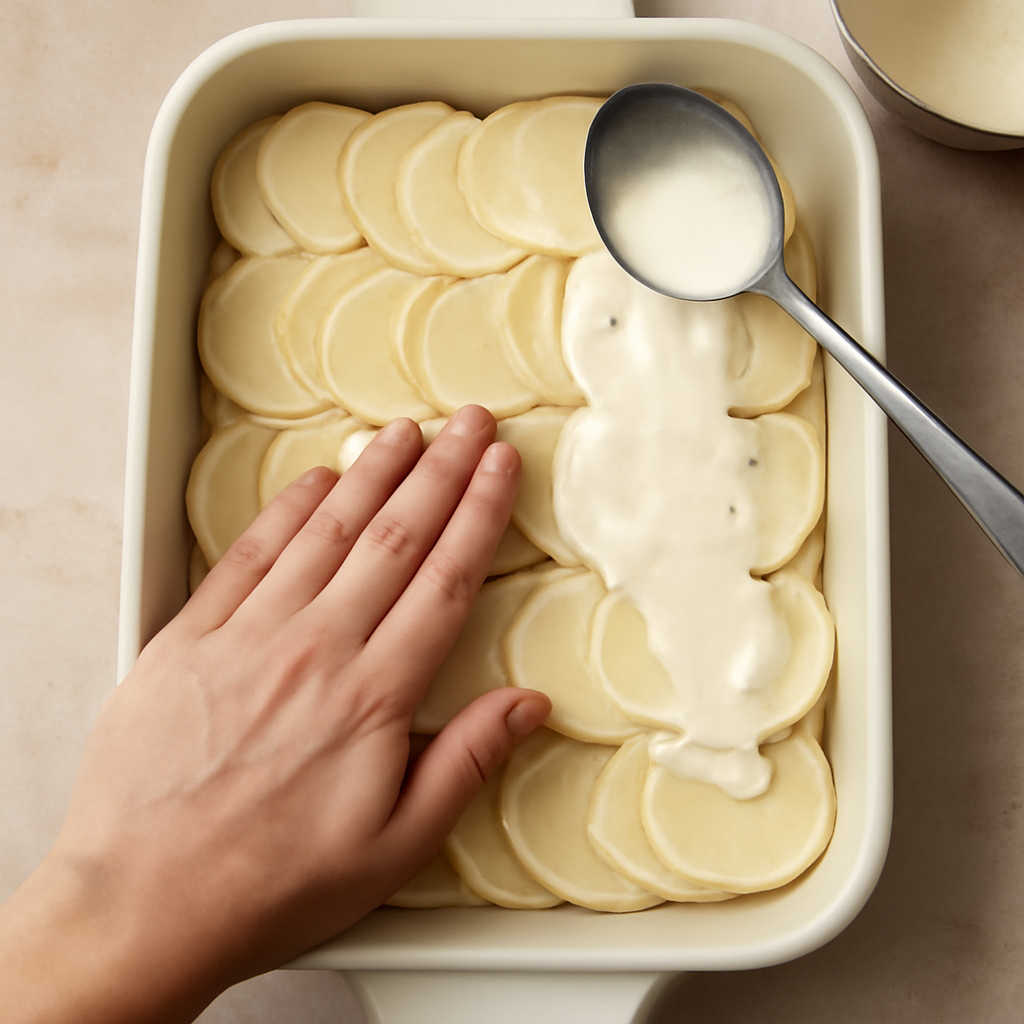
Arrange one layer of parsnip slices in the buttered dish, overlapping slightly like roof tiles. Spoon over a few tablespoons of the warm cream mixture. Repeat the layers, pressing each layer down gently with your palm before adding the next, until all the parsnips and cream are used. The cream should just reach the top layer when you press down; if it does not quite cover, add a splash of milk.
-
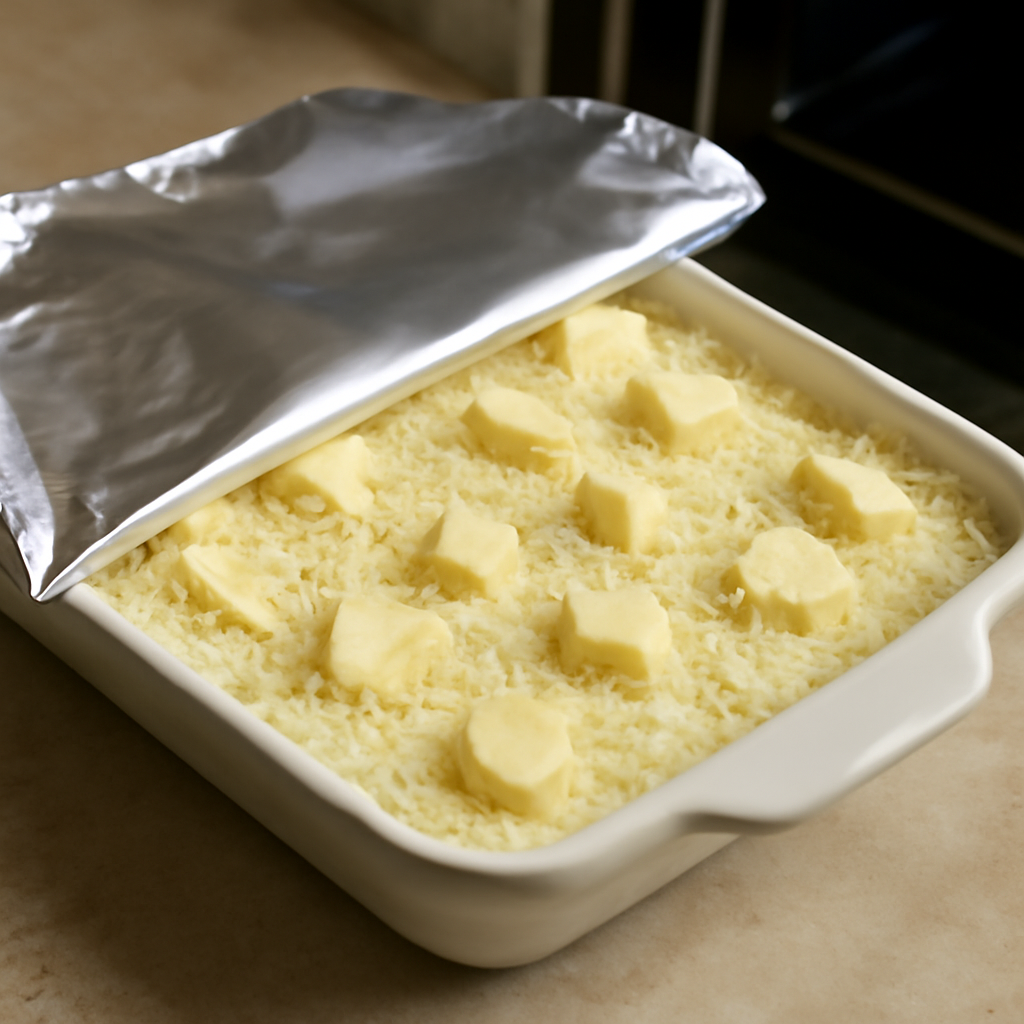
Scatter the grated cheese evenly across the top. Dot the 30g of butter in small pieces over the cheese.
-
Cover tightly with foil and bake at 180°C for 35 minutes. The parsnips need this covered time to steam through properly before browning begins.
-
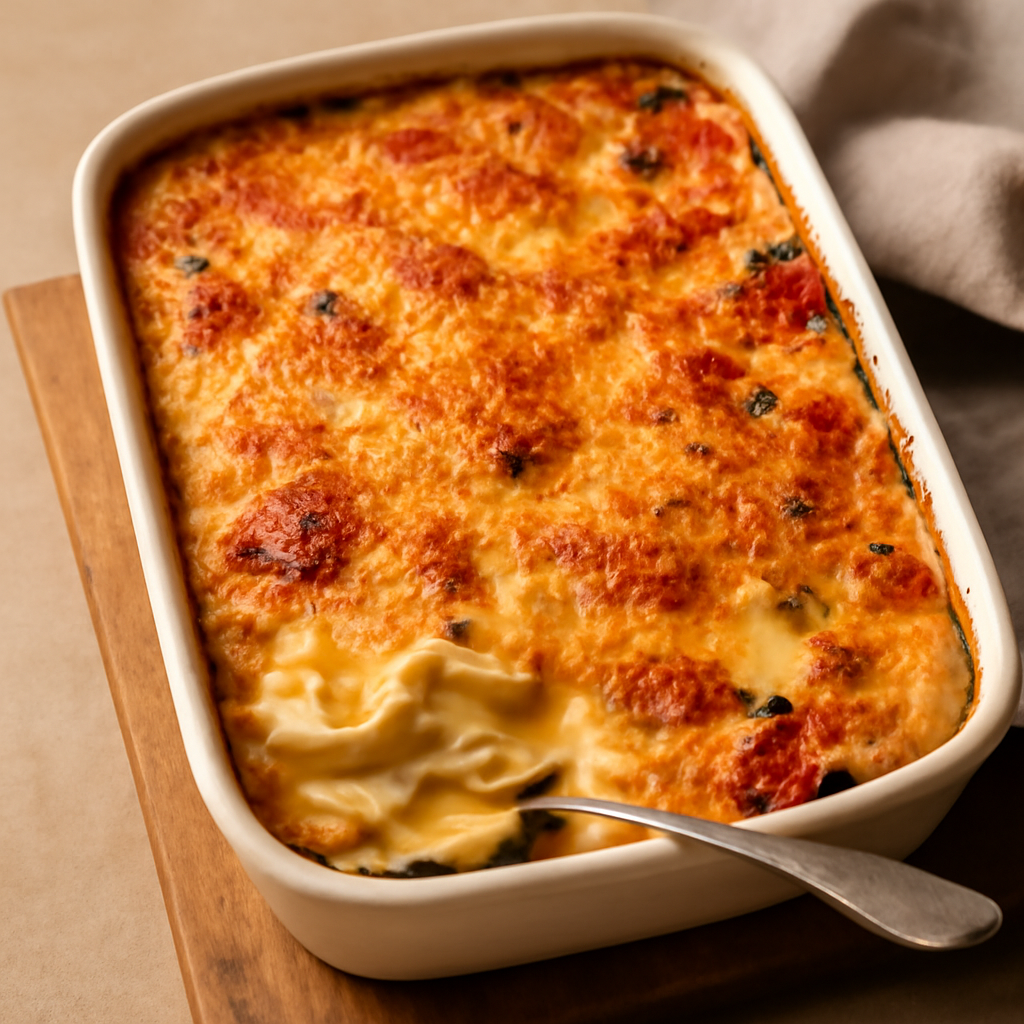
Remove the foil and return to the oven for a further 18 to 20 minutes, until the top is golden in patches and a skewer meets no resistance when pushed through the centre. If the top is browning too fast before the centre is soft, lay the foil back loosely and give it another 5 minutes.
-
Leave to stand for 10 minutes before serving. This rest allows the cream to set slightly so the layers stay together when spooned out.
Irish Context
Parsnips have been a reliable winter crop in Irish kitchen gardens for as long as there have been kitchen gardens. They keep well in the ground and in cold storage, which made them a practical choice through the months when little else was available.
Today they are grown commercially across several counties, with Wicklow and Meath producers supplying the bulk of what reaches supermarkets and farm shops. The parsnip's natural sweetness, which intensifies after the first frosts, suits this slow bake well.
It is the kind of dish that works through the Irish winter without requiring anything that is not already in the kitchen.
Tips
Parsnips vary considerably in water content depending on how long they have been stored. Freshly harvested parsnips in autumn tend to be drier and will absorb the cream well.
Older parsnips bought in spring may release more liquid; if the dish looks watery after removing the foil, simply increase the final uncovered baking time by 5 to 8 minutes. A mandoline makes the slicing fast and consistent, but if you use one, watch your fingers on the last inch of each parsnip.
A sharp cook's knife at a steady pace is safer and almost as effective. The nutmeg is not decorative.
Parsnip has a sweetness that needs a warm, slightly bitter note to stay savoury. Do not leave it out and do not increase it; a quarter teaspoon is exactly enough.
Parmesan gives a sharper, drier crust. Mature Cheddar melts a little softer and goes slightly sticky at the edges, which some people prefer.
Both work; the choice is yours. This reheats well the next day.
Cover the dish with foil and place in a 160°C oven for 20 minutes. It slices more cleanly when cold and reheated than it does straight from the oven.

Author Commentary