
 AI
AI
 AI
AI
 AI
AI
Ingredients
Method
-
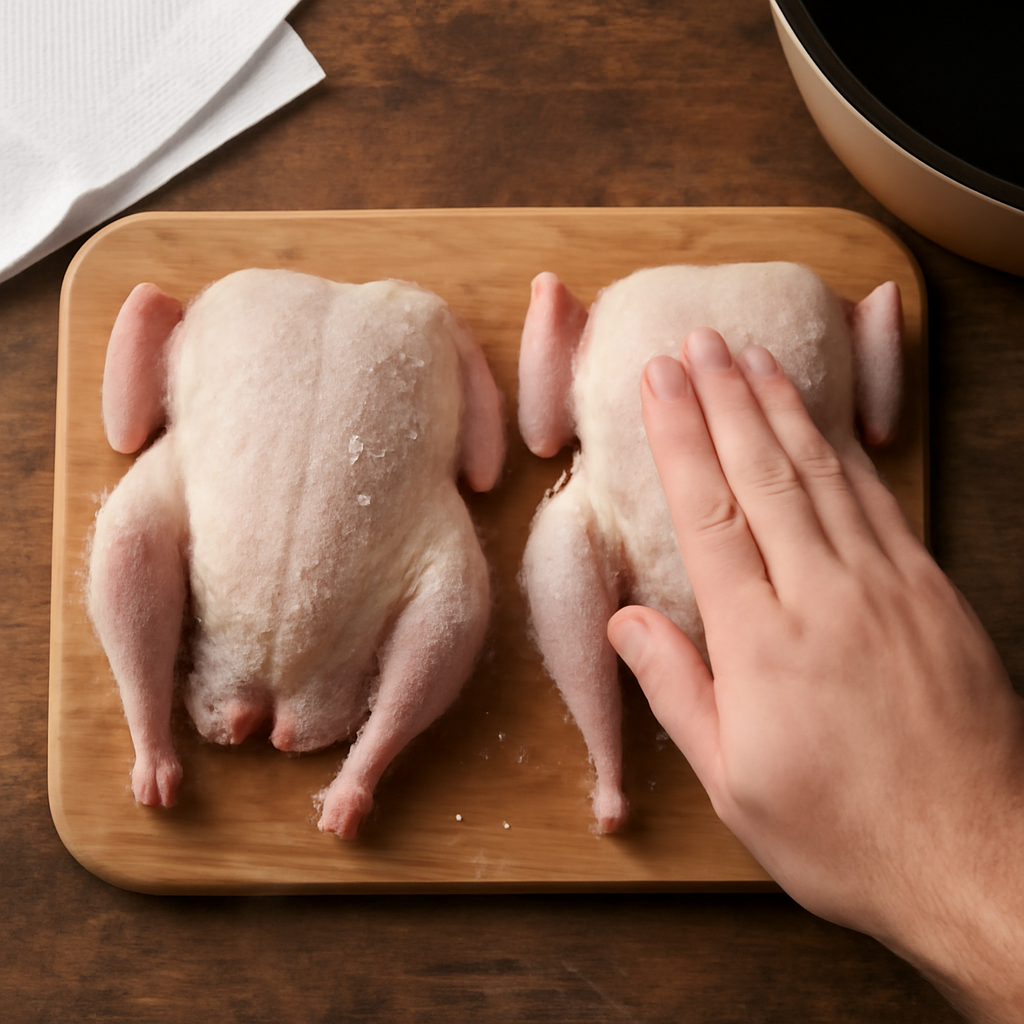
Take the partridges out of the fridge 30 minutes before cooking. Pat the skin completely dry with kitchen paper. Any moisture left on the skin will steam instead of colour, and you lose the fond you need for the base of the pot.
-
Season both halves of each bird generously on all sides with salt. Press it into the skin with your palm.
-
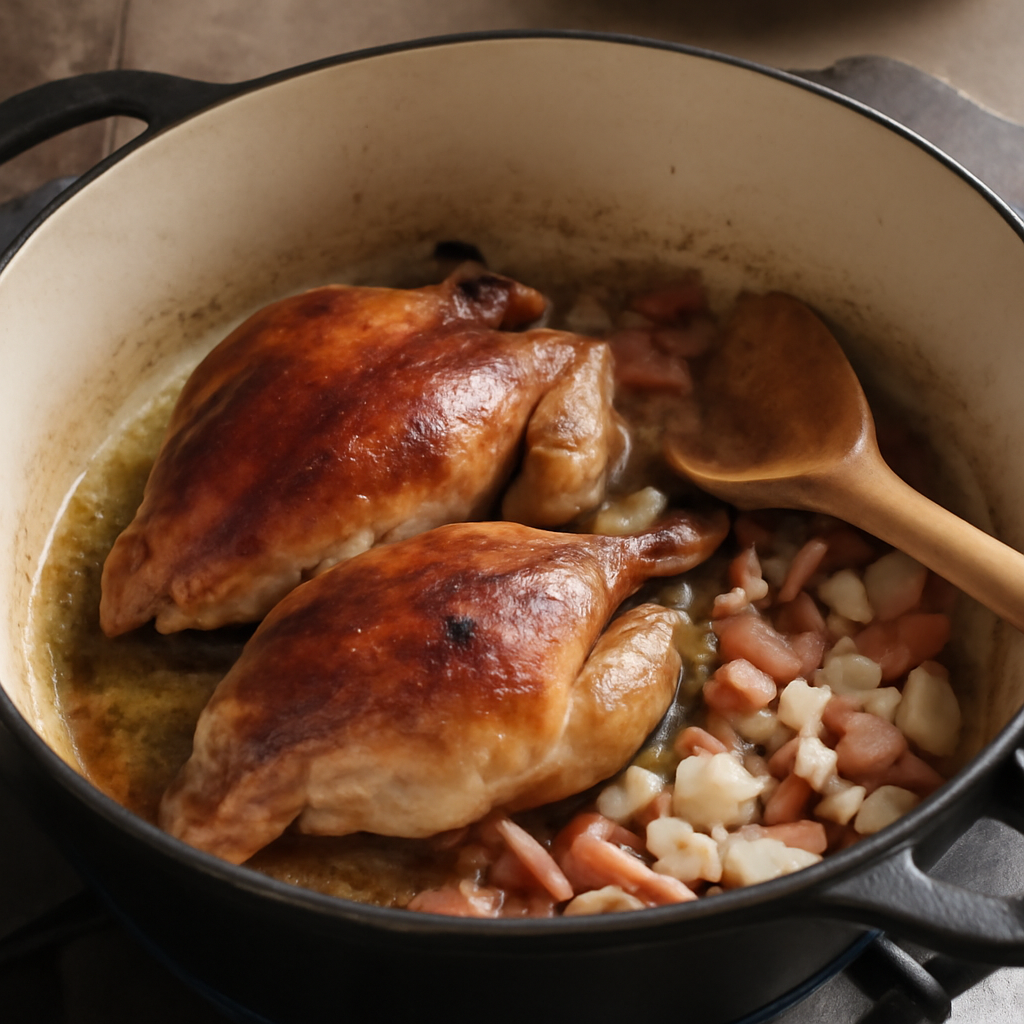
Heat the rapeseed oil in a large, heavy-based casserole or Dutch oven over a medium-high heat until it shimmers. Place the partridge pieces skin-side down and leave them completely alone for 4 to 5 minutes. You want deep golden-brown colour, almost mahogany at the edges. Turn and colour the other side for 2 to 3 minutes. Remove to a plate.
-
Reduce the heat to medium. Add the lardons and cook for 4 minutes until the fat renders and the edges start to crisp. Do not drain the fat. Add the onion and cook for 6 to 7 minutes, stirring occasionally, until it softens and turns translucent with some golden patches at the edges.
-
Add the garlic and cook for 90 seconds until fragrant but not coloured. Add the flour, stir it through the fat and onion mixture, and cook for 1 minute to lose the raw smell.
-
Pour in the stout. Scrape the bottom of the pot firmly with a wooden spoon to lift every bit of the darkened fond. Let it bubble and reduce by half, which takes about 3 minutes.
-
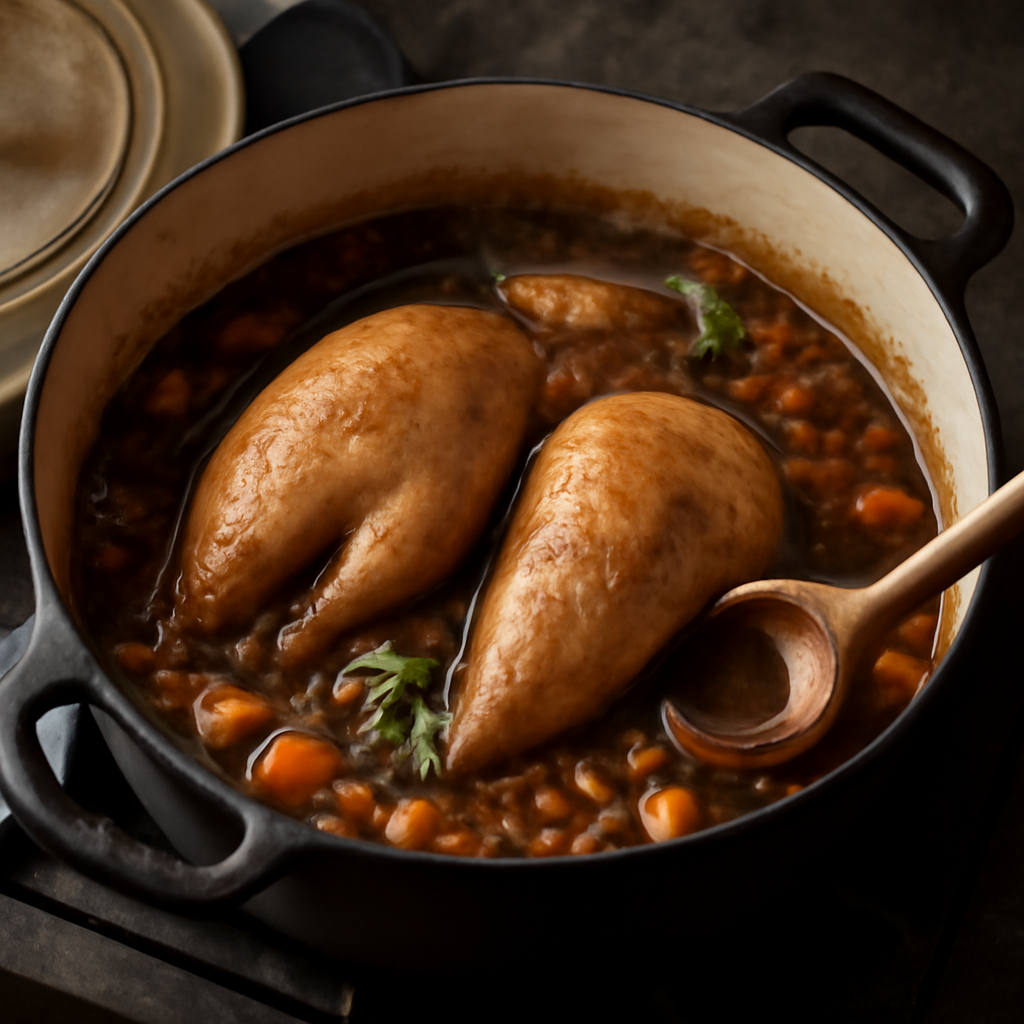
Add the stock, Worcestershire sauce, bay leaves, thyme, rosemary, and peppercorns. Stir to combine. Add the carrots, parsnips, celery, and turnip. Nestle the partridge pieces back into the pot, skin-side up, so they sit above the vegetables rather than drowning in the liquid.
-
Add the rinsed pearl barley. The liquid should come approximately two-thirds of the way up the partridge. If it falls short, top up with a little more stock or water.
-
Bring everything to a gentle simmer, then reduce the heat to low. Cover with a tight-fitting lid and cook for 1 hour 45 minutes. Check every 30 minutes that the liquid is maintaining a very low simmer, not a rolling boil. A boil will tighten the meat.
-
After 1 hour 45 minutes, remove the lid. The barley will have absorbed a significant amount of liquid and the pot will have thickened considerably. The partridge skin will have lost its crispness by this point, which is expected. Check the thigh joint by pressing it with a spoon; the meat should give completely without resistance and be pulling away from the bone.
-
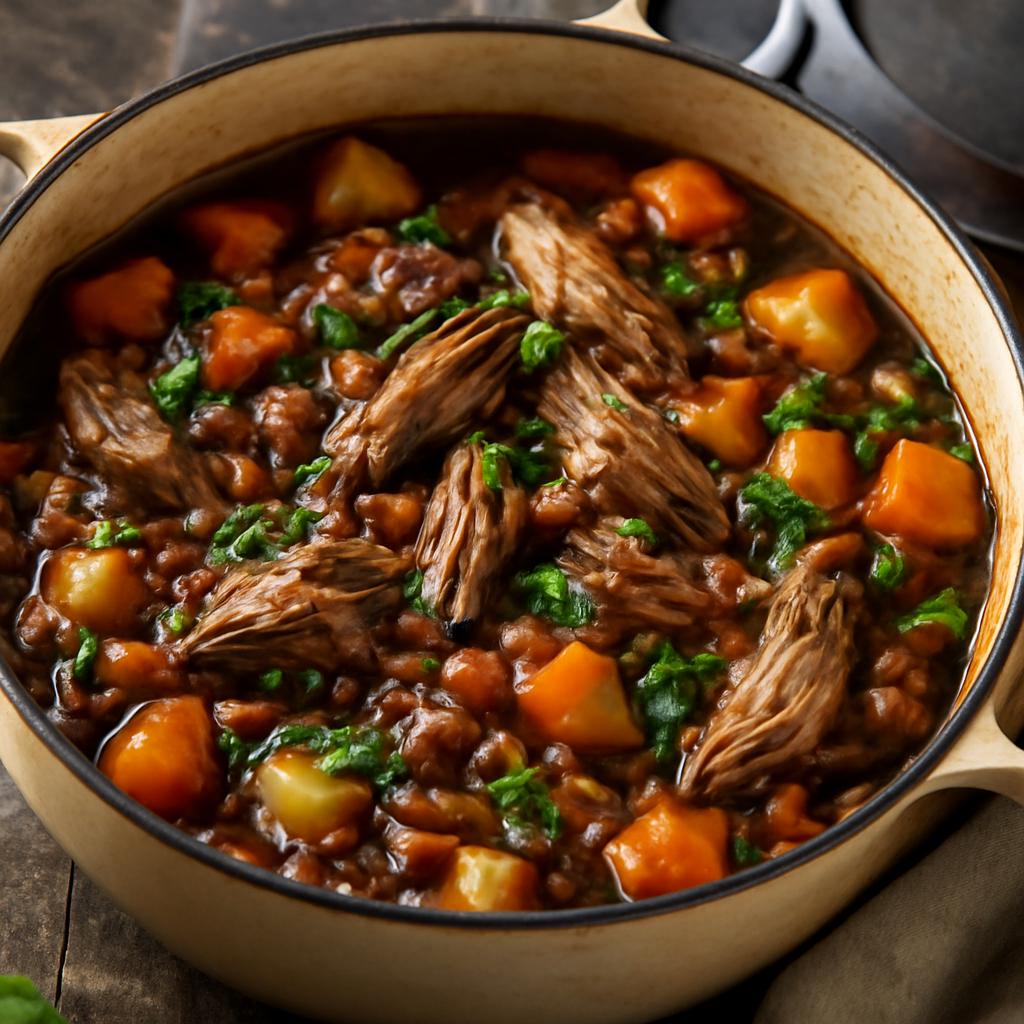
Remove the partridge pieces. Pull the meat from the carcasses while they are still hot, discarding the bones and any cartilage. Return the meat in rough, generous pieces back to the pot.
-
Add the butter and stir gently through the pot. Taste and adjust salt now. Pick out the bay leaves, thyme and rosemary stalks.
-
Let the pot sit off the heat for 10 minutes before serving. The barley continues to absorb as it rests and the flavour of the stock settles into something more cohesive. Scatter the flat-leaf parsley over the top at the table, not in the kitchen, so it stays bright.
Irish Context
Partridge shooting has a long association with rural Irish estates and farmland, and the bird was frequently available to ordinary households either through poaching, gleaning what gamekeepers allowed, or barter with local hunting families. It is not a bird that appears much in modern Irish cookbooks, which is partly why this preparation stays close to a one-pot approach that requires no specialist equipment.
Pearl barley, turnip, and parsnip are all crops with a deep footprint in Irish kitchen gardens and smallholdings, and they suit the slow, wet cooking that a modest farmhouse hearth would have produced. The stout in the braising liquid is a practical addition that works well with the slightly mineral quality that game birds carry, without overwhelming the meat the way red wine sometimes does.
Tips
Partridge is a lean bird and will dry out if the heat is even slightly too high. The liquid in the pot must never bubble aggressively.
If you lift the lid and see a rolling boil, reduce the heat immediately and move the lid slightly ajar. The pearl barley does the thickening here.
If you want a looser, more soup-like result, reduce the barley to 60g. If you want a stiffer, almost stew-like consistency, leave it at 100g and remove the lid for the final 20 minutes.
Partridge can be replaced with pheasant, using the same method, but increase the cooking time by 20 to 25 minutes. Pheasant legs in particular need longer.
If your stock is already well-seasoned, hold back on salt until the end. Stout and Worcestershire sauce both carry salt, and over-seasoning is far more common than under-seasoning with this pot.
This is better the following day. Reheat gently on a low heat with a splash of additional stock or water to loosen, as the barley continues to absorb overnight.
Do not skip the resting step. Ten minutes off the heat makes a noticeable difference to how the sauce clings to the meat when served.

Author Commentary