
 AI
AI
 AI
AI
 AI
AI
Ingredients
Method
-
Heat the oven to 200 degrees Celsius, fan 180 degrees Celsius. Remove the outermost leaves of the cabbage and discard them, then cut the cabbage through the root into 8 equal wedges. The root must stay attached to each wedge or they will fall apart during cooking. Do not trim it off.
-
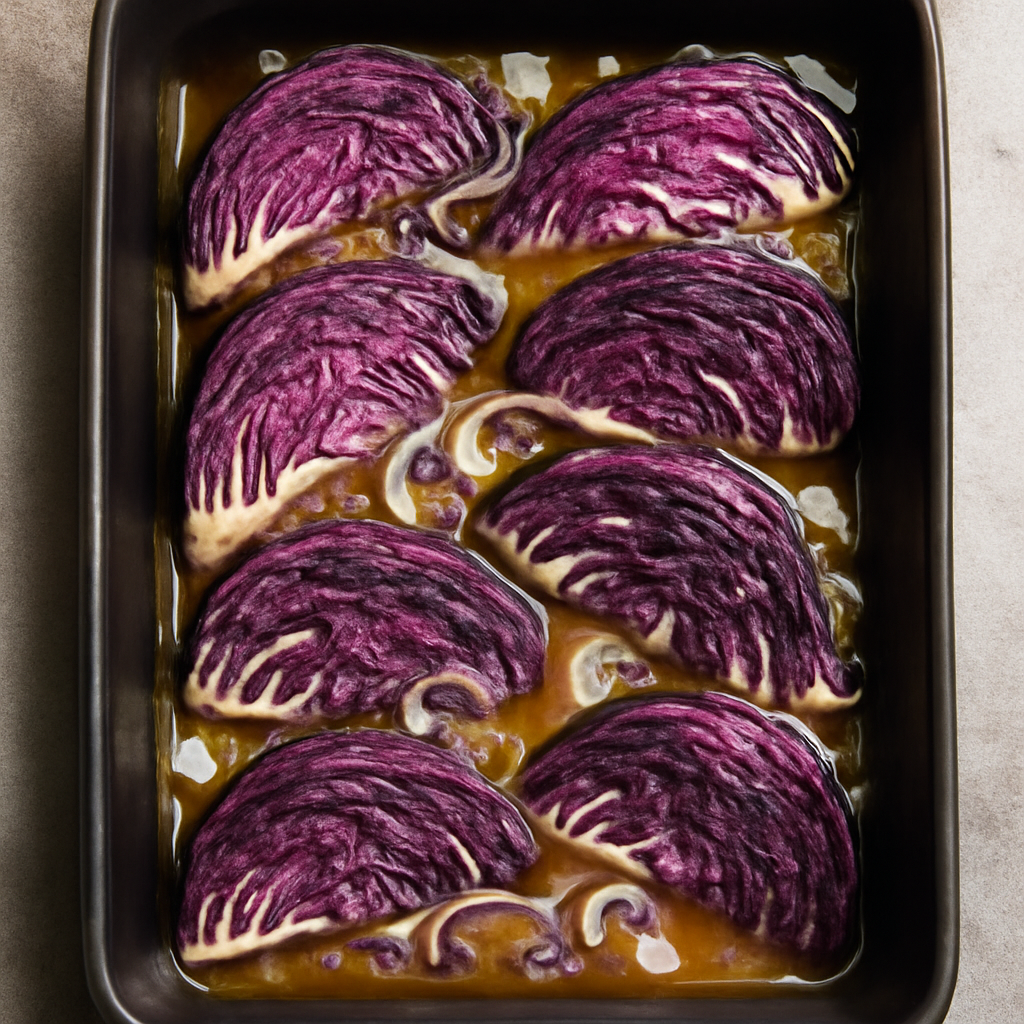
Lay the wedges cut-side down in a large, heavy-based roasting tin. They need space around them; if the tin is too crowded the cabbage steams rather than roasts and the cut surfaces never colour properly. Use two tins if necessary.
-
Whisk together the olive oil, apple cider vinegar, and honey in a small bowl until the honey dissolves fully. Spoon roughly two-thirds of this mixture over the wedges, turning each one so both cut faces get coated. Season with the salt and pepper.
-
Scatter the sliced garlic and red onion over and around the cabbage, then sprinkle the caraway seeds and fennel seeds across everything. Pour the dry cider into the base of the tin, not over the cabbage directly.
-
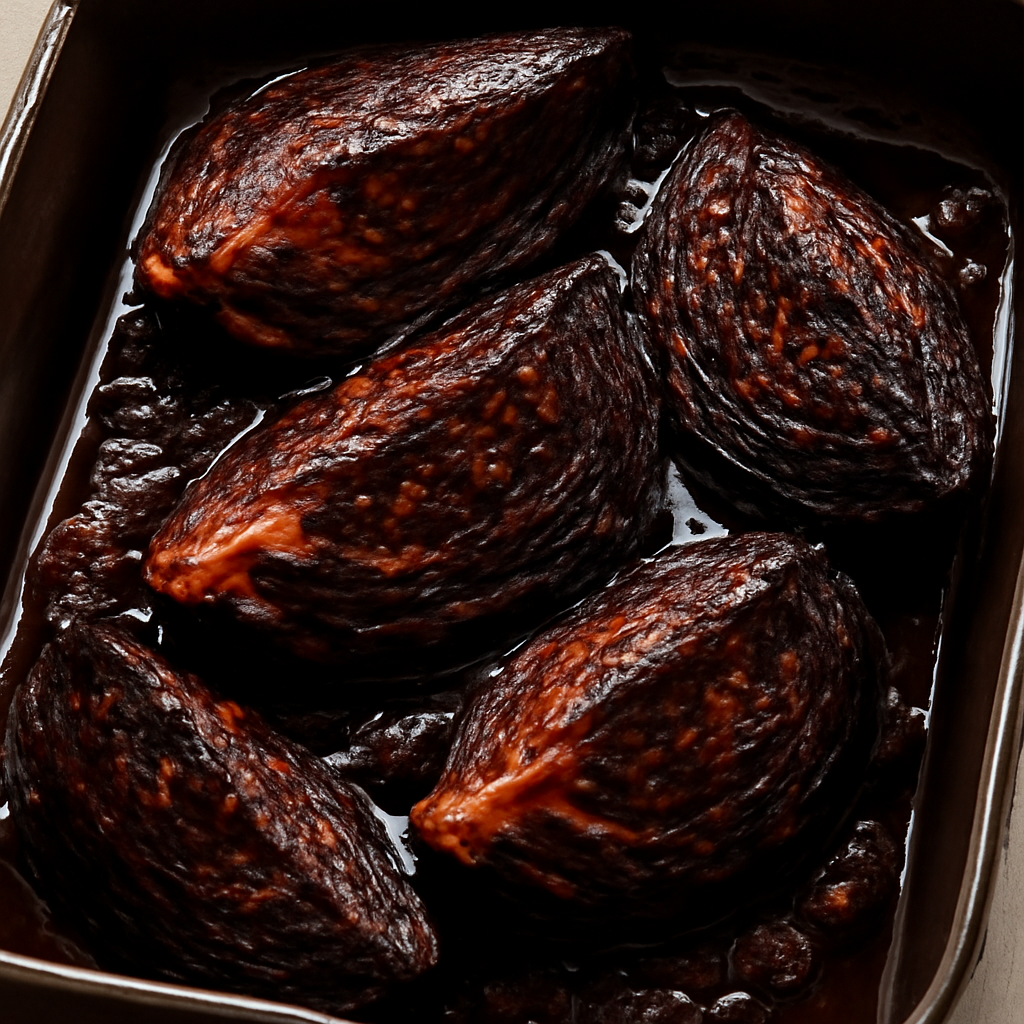
Roast uncovered for 30 minutes. The cut surfaces in contact with the tin should be browning and slightly charred at the edges by this point. If they are still pale, raise the heat by 10 degrees for the final stretch.
-
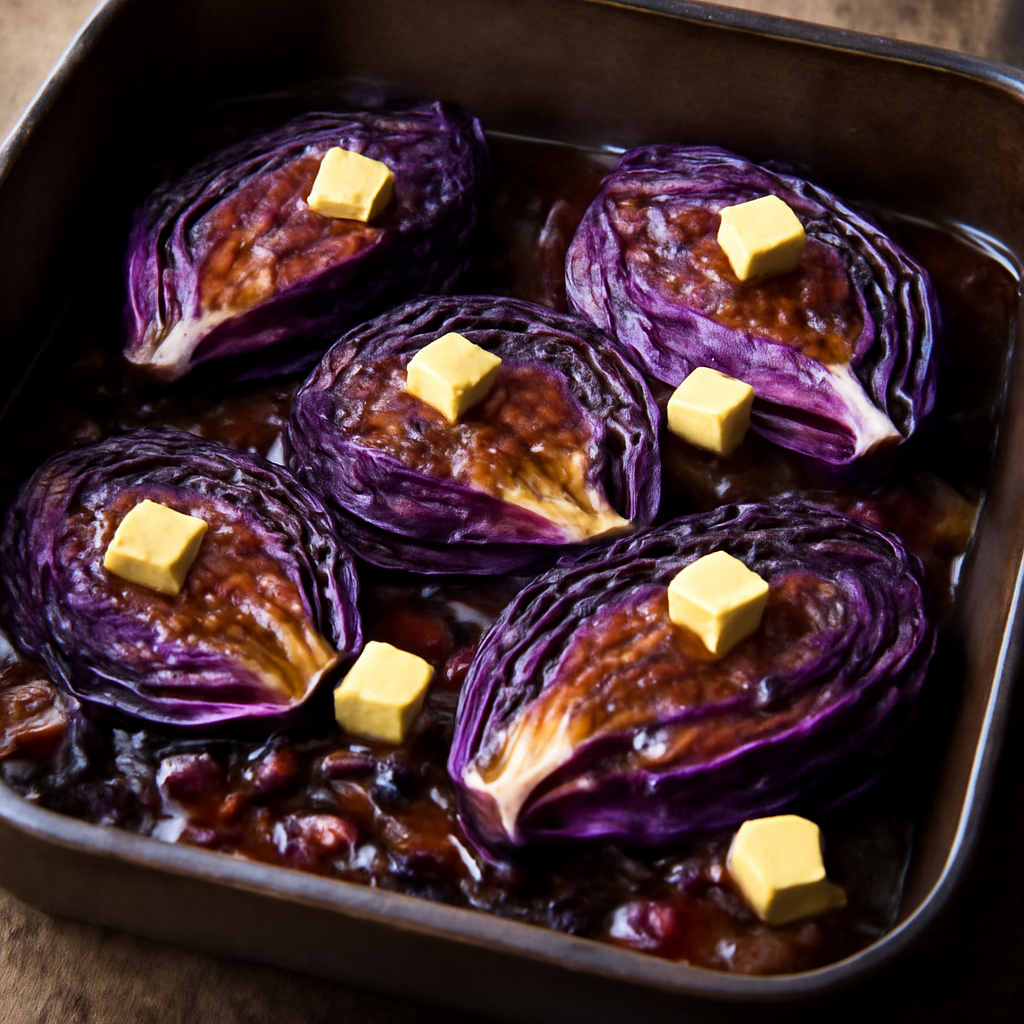
Carefully turn each wedge using tongs and a palette knife. Spoon the remaining glaze over the top. Dot the cubes of butter across the wedges. Return the tin to the oven for a further 20 to 25 minutes until the cabbage is tender when pierced at the thickest part near the root with a skewer, and the top surface has taken on colour as well.
-
Check the liquid in the base of the tin. It should have reduced to a few tablespoons of glossy, dark liquid. If it has dried out completely, add a small splash of water and scrape up any sticky sediment. If it is still very thin and pale, remove the wedges briefly, set the tin over a medium hob flame for two minutes to reduce it, then return the wedges.
-
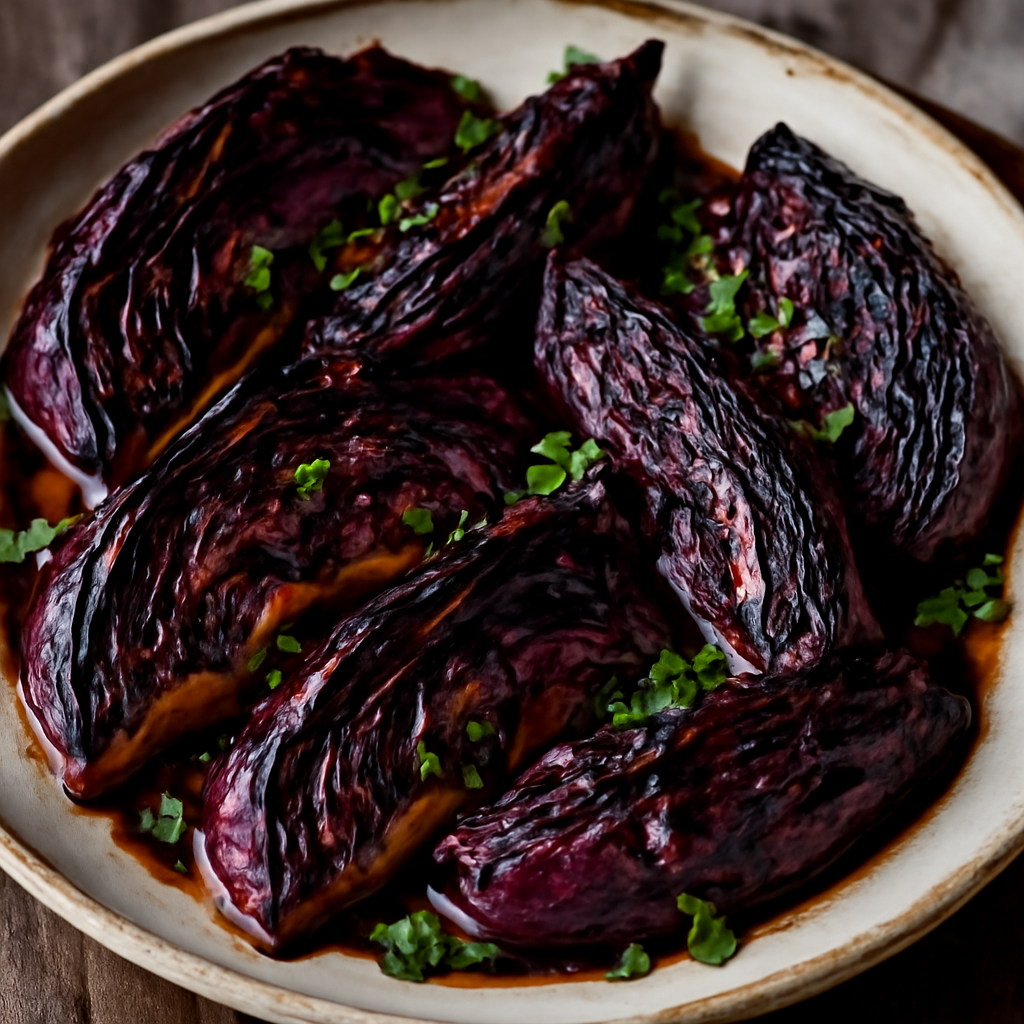
Transfer the wedges to a warm serving plate. Pour the concentrated pan juices over them and scatter with the chopped parsley. Serve immediately.
Irish Context
Red cabbage grows well in Irish conditions and is widely available from September through to late winter when most other brassicas are past their best. It holds up far longer in storage than green cabbage, which means it turns up regularly in Irish kitchens through the colder months when the weekly veg box starts to narrow down.
Irish cider, produced in counties Tipperary, Kilkenny, and Armagh among others, gives the glaze a sharper, more mineral quality than many imported varieties, which suits the earthiness of the cabbage well.
Tips
The root is structural. If even one wedge loses its root during cutting, cook that piece separately in a smaller dish to stop it disintegrating and crowding the others.
Dry still cider works best here. Anything sweet or sparkling will make the glaze cloying and the sweetness has nowhere to go in a hot oven without turning bitter at the edges.
If you do not have cider, use 100ml of chicken or vegetable stock with an extra 15ml of vinegar. The result is less fruity but still works.
Red cabbage releases a lot of liquid as it cooks. If the tin is not wide enough for the liquid to evaporate at the edges, you will end up with braised cabbage rather than a roasted one.
Both are edible, but they are not the same thing. Leftovers reheat well in a hot oven for 10 minutes.
They do not reheat well in a microwave; the texture goes slack and the colour bleeds into a grey-purple that is deeply unappealing. Caraway seeds are not interchangeable with cumin seeds in this recipe despite their visual similarity.
The caraway has an anise note that pairs with the vinegar; cumin would pull the whole dish in a different direction entirely.

Author Commentary