
 AI
AI
 AI
AI
 AI
AI
Ingredients
Method
-
Remove the lamb from the fridge at least 1 hour before cooking so it comes fully to room temperature. Cold meat going into a hot oven seizes on the outside before the centre has a chance to catch up.
-
Preheat the oven to 220°C (fan 200°C).
-
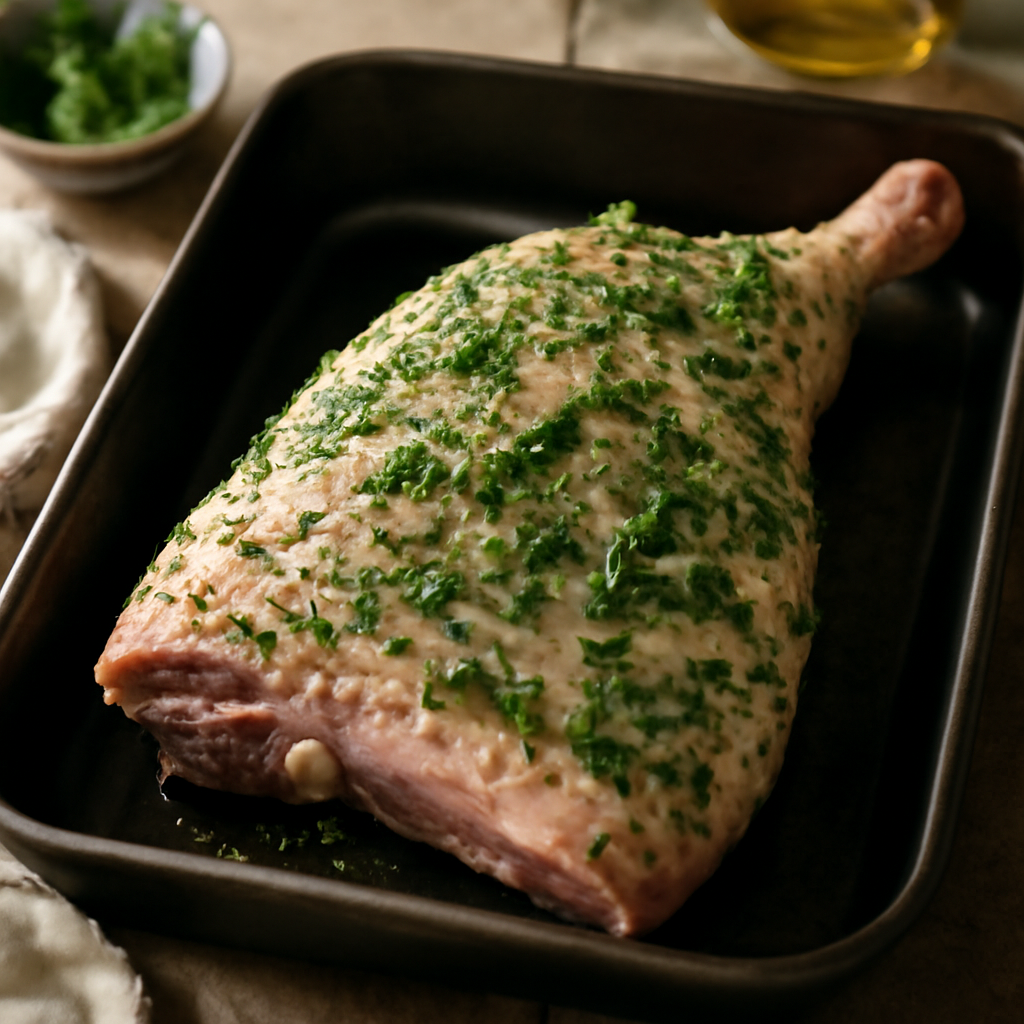
Using a small sharp knife, make approximately 20 incisions all over the leg, about 2cm deep. Push a sliver of garlic and a small pinch of chopped anchovy into each pocket. The anchovies will not make the lamb taste of fish; they dissolve completely and deepen the savoury quality of the meat.
-
In a small bowl, combine the chopped rosemary, thyme, parsley, olive oil, Dijon mustard, salt, and black pepper into a rough paste. Rub this all over the surface of the lamb, working it into any folds and around the shank end.
-
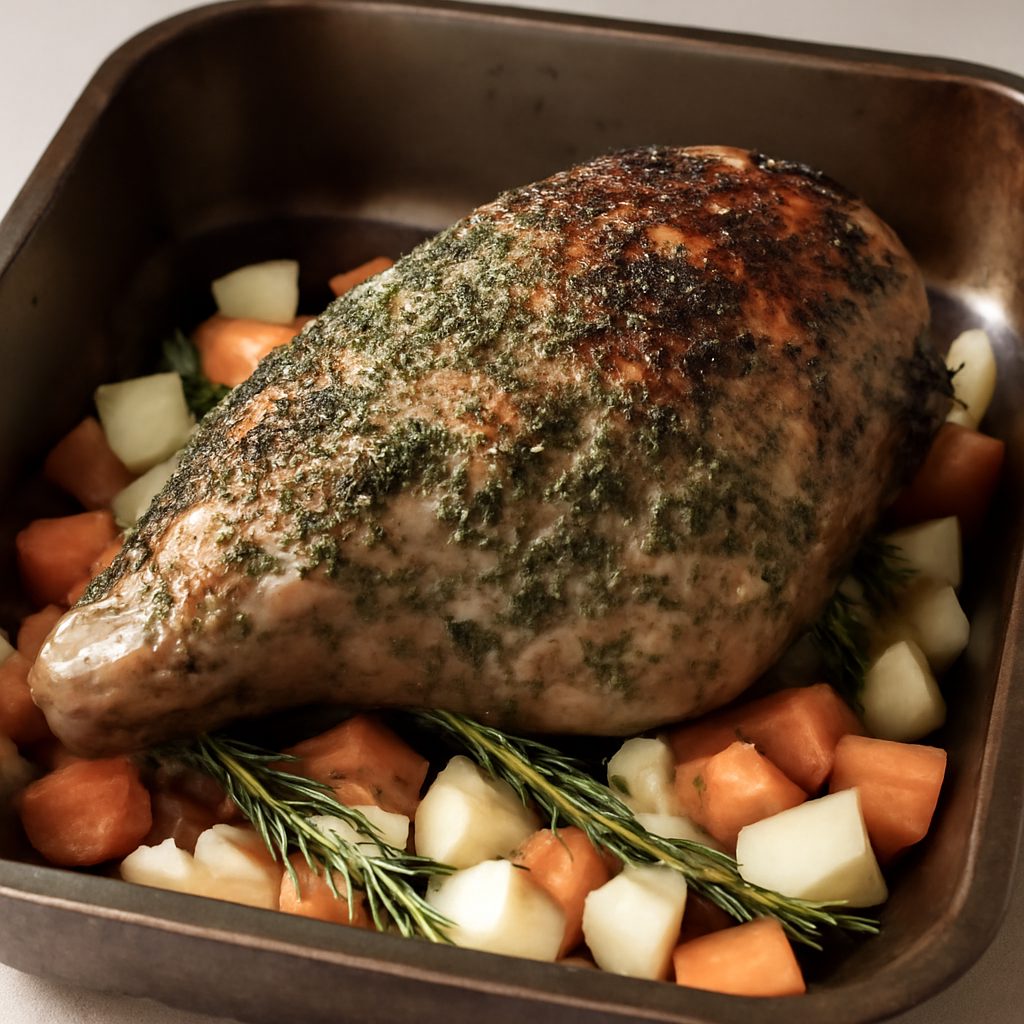
Scatter the chopped onion and carrot across the base of a large roasting tin. Lay the rosemary sprigs over the vegetables. Set the lamb on top, fat side up.
-
Roast at 220°C for 20 minutes. The fat should begin to colour and the herb crust will start to catch at the edges. This high initial heat sets the crust.
-
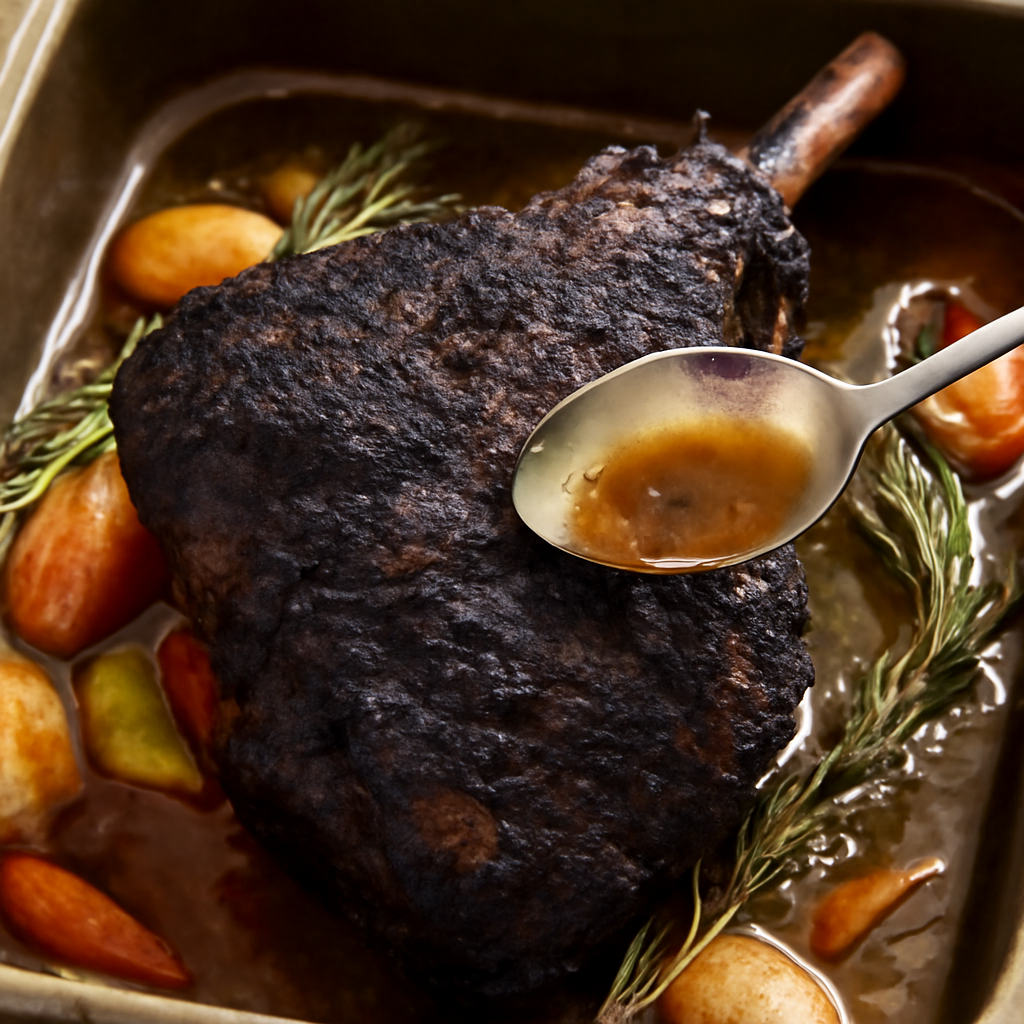
Reduce the oven to 170°C (fan 150°C). Pour the white wine and stock into the tin around, not over, the lamb. The steam from the liquid keeps the roasting environment moist without washing off the herb crust.
-
Continue roasting for a further 90 minutes for pink lamb (internal temperature of 60-62°C at the thickest point, away from the bone), or up to 110 minutes if you prefer the meat closer to well done (68-70°C). Baste the lamb every 30 minutes with the pan juices.
-
Check the liquid level halfway through. If the tin looks dry, add a splash more stock or water. Burnt vegetable debris will make the gravy bitter.
-
When the lamb is done to your liking, transfer it to a warm plate, tent loosely with foil, and rest for at least 20 minutes. Do not skip this. The juices redistribute during resting and the difference in the meat when carved is significant.
-
While the lamb rests, make the gravy. Place the roasting tin over a medium hob flame. Spoon off most of the surface fat, leaving about 2 tablespoons. Add the plain flour and stir it into the fat and vegetable solids for 2 minutes until the flour smells slightly toasty. Gradually add 300ml of hot stock or water, scraping up the sticky residue from the tin as you go. Simmer for 5 minutes, pressing the softened vegetables with the back of a spoon. Strain through a fine sieve into a small saucepan, season to taste, and keep warm.
-
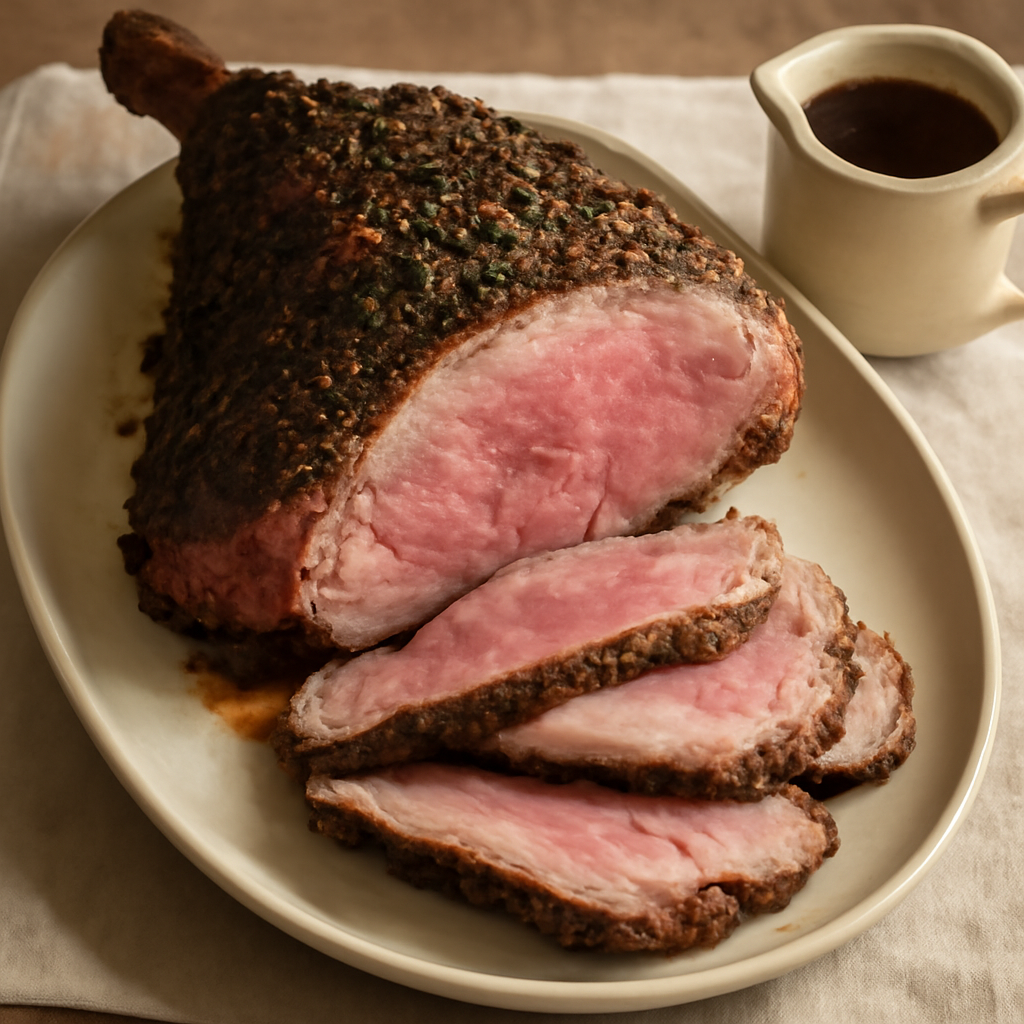
Carve the lamb by working along either side of the bone first, then slicing across the grain. Serve immediately with the strained gravy.
Irish Context
Lamb has been reared on Irish hillsides and lowland pastures for centuries, and Ireland's temperate, wet climate produces grass-fed animals that develop good fat cover and flavour without the heavy muttony notes you sometimes find in drier climates. The bone-in leg is still the most common cut for a Sunday roast in Irish households, though it has largely given way to smaller cuts and convenience roasting joints in busier households.
This recipe treats the leg without complication: garlic, herbs, a hot oven to start, then time and patience. There is nothing here that requires special equipment or imported ingredients.
Tips
The anchovy paste is the single biggest difference between a lamb roast that tastes one-dimensional and one that does not. If you are serving someone who claims to dislike anchovies, do not mention them.
Nobody has ever identified the taste. If the herb crust is colouring too quickly at the lower temperature, lay a loose sheet of foil over the top without sealing it to the tin.
Leftover lamb is best used cold, sliced thin and eaten in sandwiches with a little mint sauce, or pulled and folded through a simple pasta with olive oil and capers. Do not reheat the sliced meat in the oven or it will dry out.
If reheating is necessary, warm it gently in a covered pan with a splash of stock. The roasting tin vegetables can be blended into the gravy for a thicker, more substantial sauce if preferred, though the strained version is cleaner.
For best results, source the lamb from a butcher rather than a supermarket. Irish spring lamb, available roughly from April through to late autumn, has a noticeably milder, less lanolin-heavy flavour than older or imported animals.

Author Commentary