
 AI
AI
 AI
AI
 AI
AI
Ingredients
Method
-
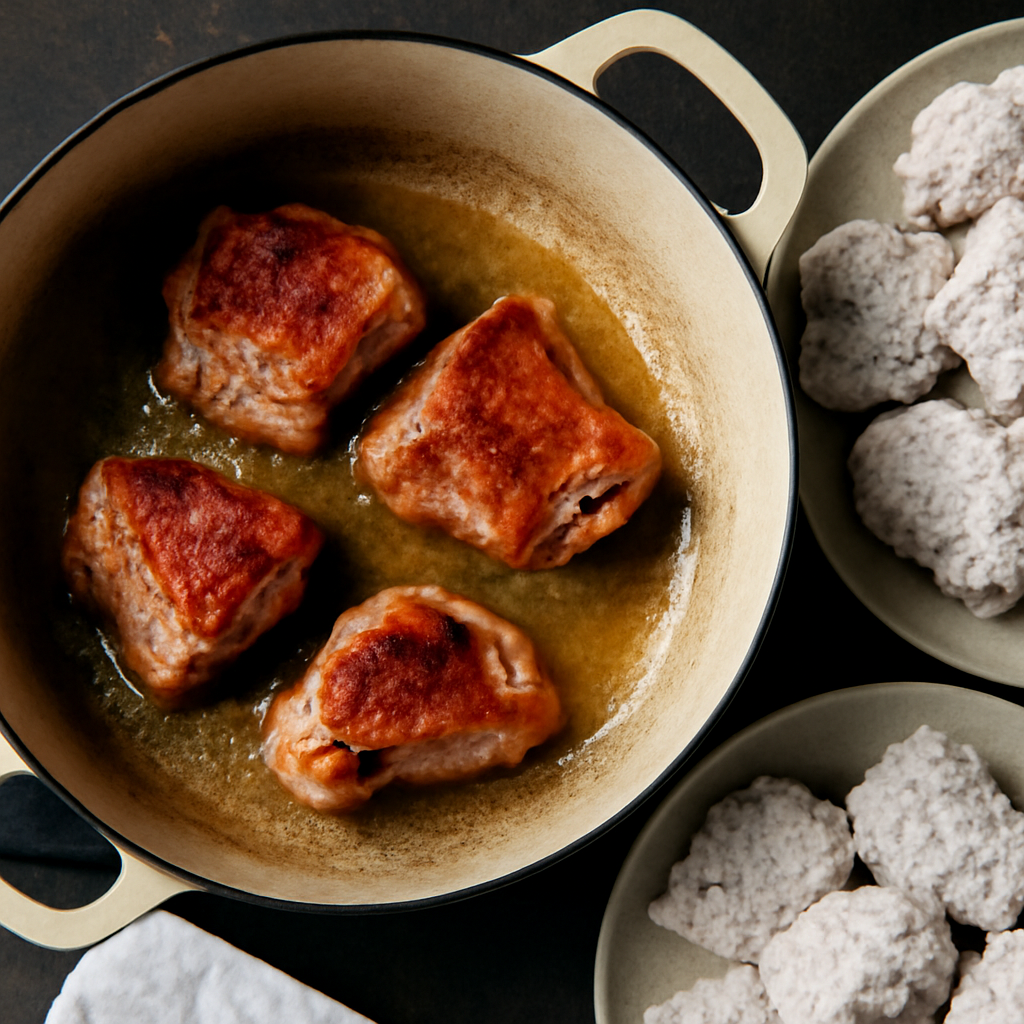
Preheat your oven to 160°C fan (180°C conventional). Pat the lamb chunks dry with kitchen paper. Wet meat will steam rather than colour in the pan, so do not skip this. Toss the pieces in the seasoned flour until lightly coated, shaking off any excess.
-
Heat 2 tablespoons of the oil in a large, heavy-based casserole or Dutch oven over a medium-high heat. Brown the lamb in batches, no more than four or five pieces at a time. You are looking for a deep mahogany crust on at least two sides, roughly 3 to 4 minutes per side. Do not crowd the pan. Transfer browned pieces to a plate and continue with the remainder.
-
Reduce the heat to medium and add the remaining tablespoon of oil. Add the onions and celery and cook for 6 to 7 minutes, scraping up the browned residue from the base of the pot as the vegetables release their moisture. The base of the pot should look clean and the onions should be softened and beginning to turn golden at the edges.
-
Add the garlic and tomato purée. Stir them through the vegetables and cook for 2 minutes until the purée deepens slightly in colour and smells less raw.
-
Pour in the stout and let it bubble hard for 2 minutes. Scrape the base again. Add the lamb stock, thyme sprigs, and bay leaves. Return the browned lamb and any resting juices to the pot. The liquid should come roughly two-thirds of the way up the meat. If it falls short, add a splash more stock or water.
-
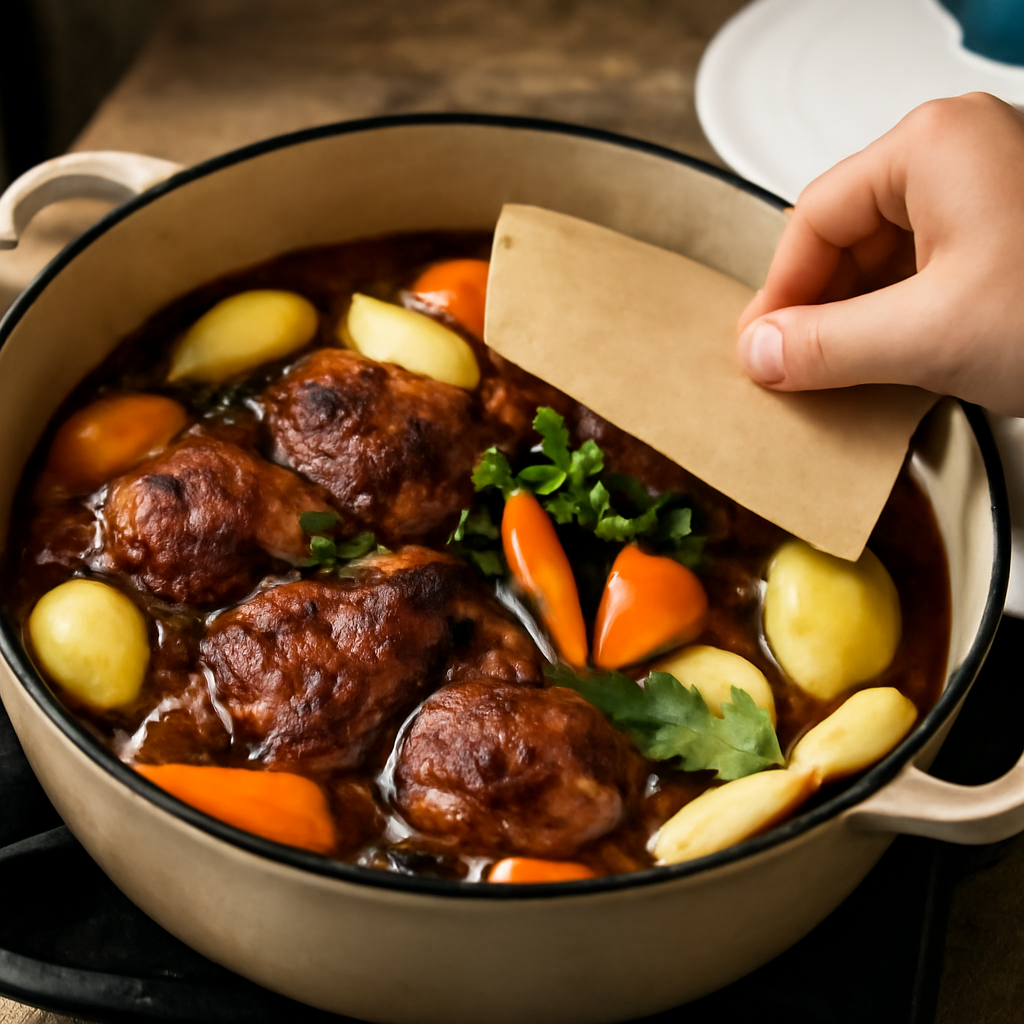
Bring to a steady simmer, skim any grey foam that rises to the surface, then add the carrots, parsnips, and potatoes. Press everything gently into the liquid. Place a sheet of baking parchment directly onto the surface of the stew before putting on the lid. This traps steam more effectively than the lid alone and stops the top layer of vegetables drying out.
-
Transfer to the preheated oven and cook for 1 hour 45 minutes. Check at the 90-minute mark: the lamb should be pulling away from the bone and the vegetables should be completely tender. The sauce will have thickened slightly and turned a darker brownish-red. If the pot is looking dry, add 100ml of water.
-
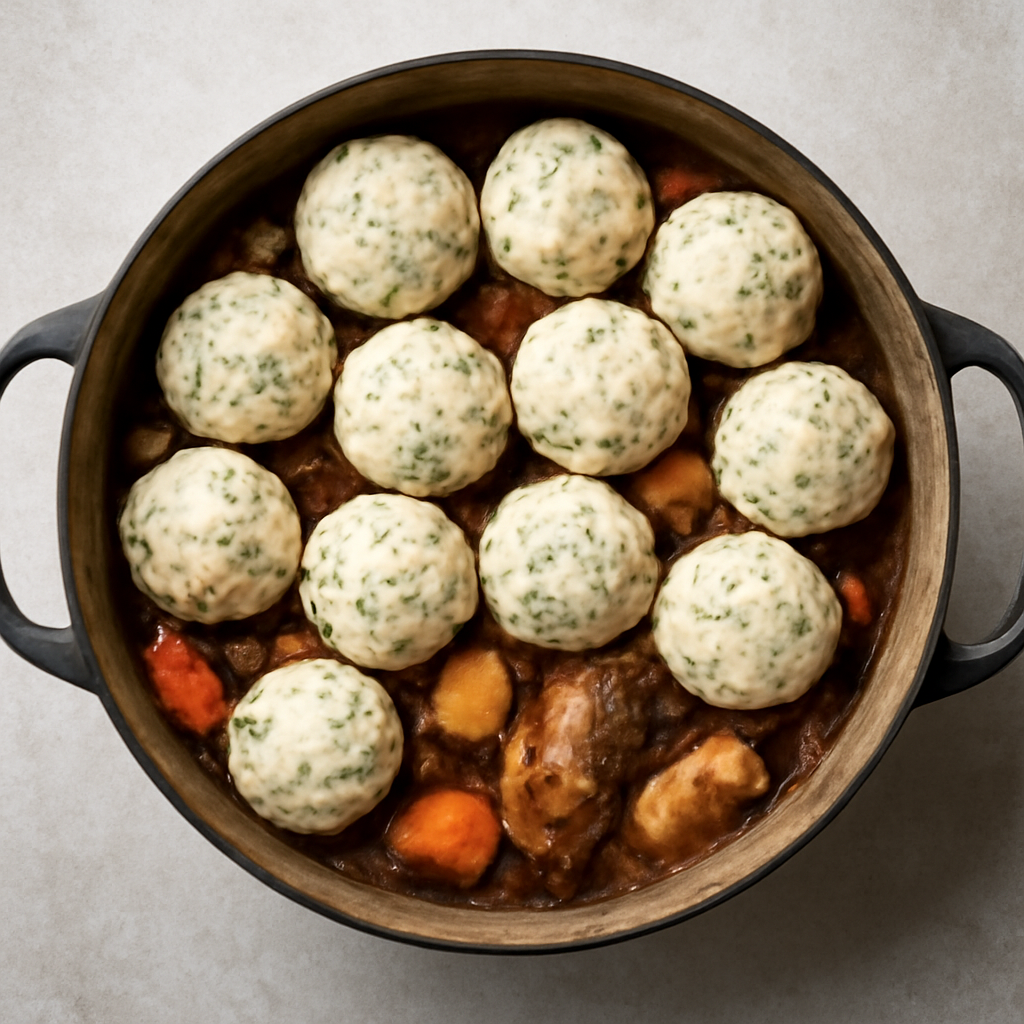
While the stew finishes its last 30 minutes, make the dumplings. Combine the self-raising flour, suet, salt, pepper, and parsley in a bowl. Stir with a fork to distribute the suet evenly. Add the cold water a little at a time, mixing with the fork until a soft, slightly sticky dough comes together. You may not need all the water. Overworking the dough makes the dumplings dense, so stop mixing the moment it holds together. Divide into 12 equal portions and roll each loosely into a ball with lightly floured hands.
-
Remove the casserole from the oven. Discard the thyme sprigs and bay leaves. Taste the broth and adjust the seasoning. Increase the oven temperature to 190°C fan (210°C conventional). Arrange the dumplings across the surface of the stew, spacing them to allow for expansion. They will roughly double in size.
-
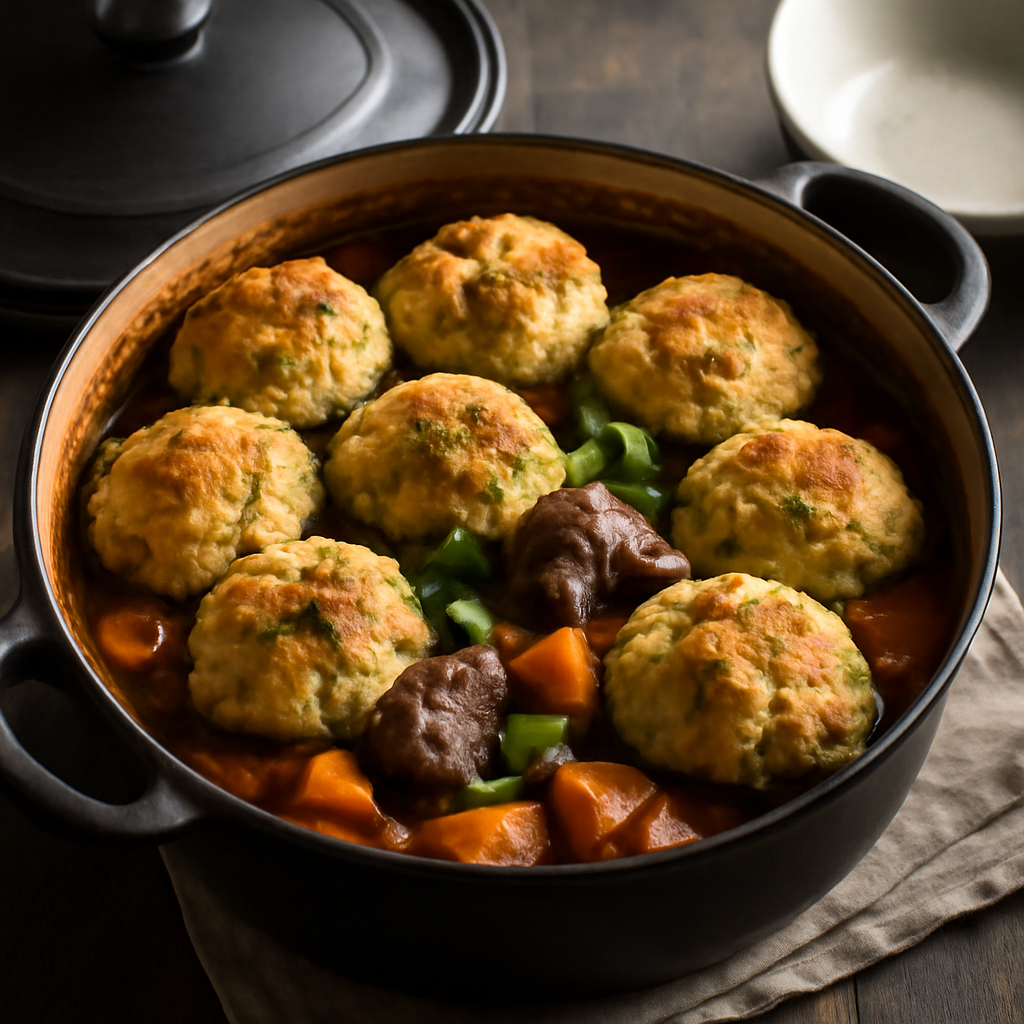
Return the casserole to the oven, uncovered, for 20 to 25 minutes. The dumplings are ready when they have puffed and the tops are golden brown with a slight crust. To check the centre, press one gently; it should spring back rather than feel doughy. If in doubt, break one open: the inside should be fluffy and cooked through with no raw flour smell.
-
Leave the pot to rest for 5 minutes before serving. The broth will tighten slightly as it sits. Serve directly from the pot into wide, shallow bowls, making sure each portion gets two dumplings and a good share of the bone-in lamb.
Irish Context
Lamb is slaughtered in Ireland from late summer through autumn, and shoulder cuts are among the more economical options available from butchers countrywide, particularly from farms in the west and midlands. This kind of long-cooked pot meal suits the shoulder precisely because low, slow oven heat does the work that a faster method cannot.
Suet dumplings are a practical addition that extend the dish and soak up the broth without requiring a separate bread course. Parsley grows readily in Irish kitchen gardens for much of the year and is one of the few herbs that costs almost nothing to keep.
Tips
Bone-in shoulder is the right cut for this dish. Boneless leg will dry out over a long braise.
The collagen around the shoulder bone breaks down into the broth, giving it a slight body that stock alone cannot replicate. If you cannot find lamb stock, a good beef stock works adequately.
Chicken stock is too light and will produce a thinner, paler result. The stout adds a mild bitterness that cuts through the fat in the lamb.
It cooks out almost entirely during the braise; what remains is depth rather than any pronounced beer flavour. If you prefer not to use it, replace with an equal volume of extra stock and a tablespoon of Worcestershire sauce.
Dumplings left to sit in a covered pot after cooking will go soggy within 20 minutes. If you are making this in advance, braise the stew fully, then add and cook the dumplings only when you are ready to eat.
The seasoned flour coating on the lamb does two things: it helps the meat brown more quickly and it dissolves into the broth during cooking, contributing to the thickening. Do not substitute with cornflour here.
Flat-leaf parsley holds better flavour and colour in the dumplings than curly parsley. Curly parsley turns a slightly drab green after 20 minutes in the oven.
Flat-leaf stays bright. This stew is better the next day.
The fat will rise and solidify on the surface overnight in the fridge. Lift it off, then reheat gently on the hob over a low heat with a splash of water.
Make fresh dumplings if reheating; the original ones will not revive well.

Author Commentary