
 AI
AI
 AI
AI
 AI
AI
Ingredients
Method
-
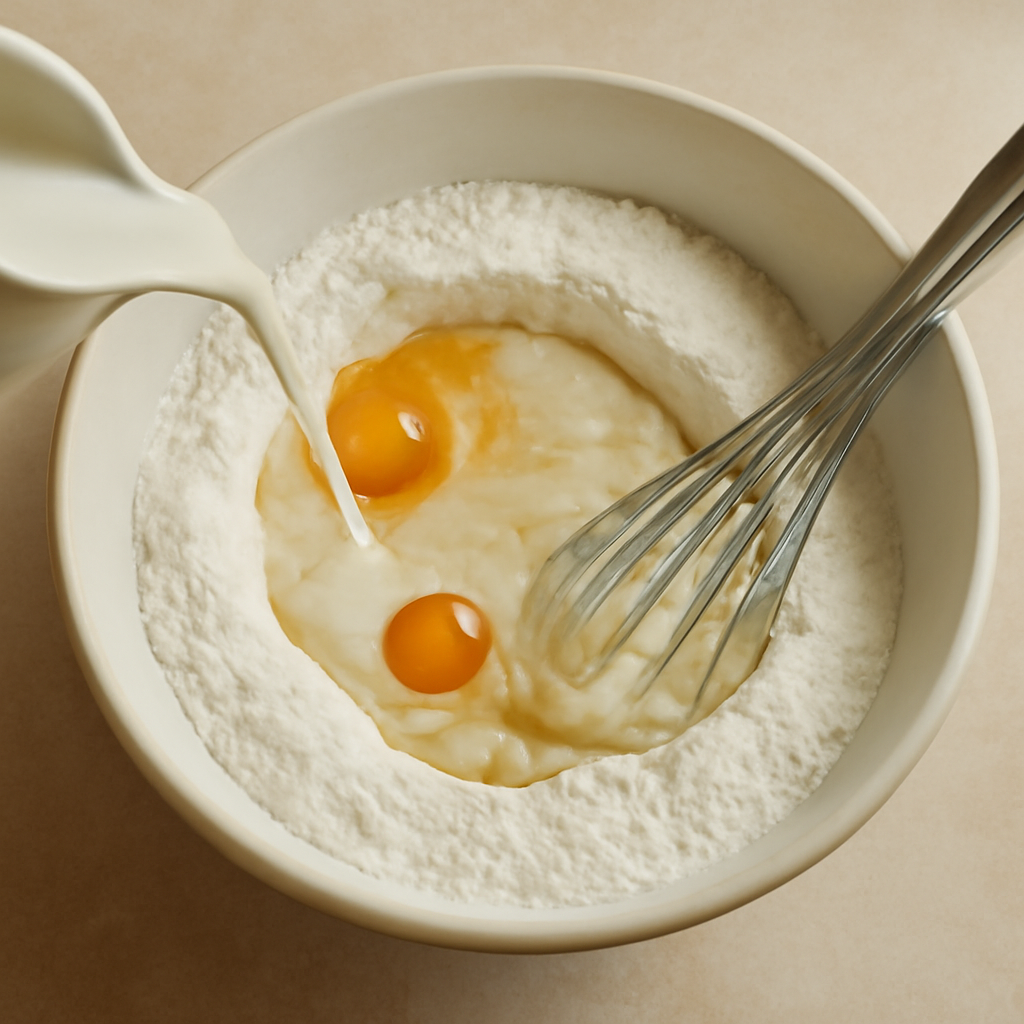
Sift the flour, bicarbonate of soda, cream of tartar, sugar and salt together into a large bowl. Make a well in the centre.
-
Crack the eggs into the well, then pour in roughly half the milk. Using a balloon whisk, start beating from the centre outward, gradually drawing in the flour from the sides. Add the remaining milk in a slow stream as you whisk, stopping when the batter is smooth and thick enough to fall from the whisk in a slow, heavy ribbon. Do not overwork it once it comes together. Stir in the melted butter.
-
Let the batter rest for five minutes. This gives the raising agents a moment to activate and allows any small lumps to soften out.
-
Heat a heavy-based frying pan or cast-iron griddle over a medium heat. Do not add fat. Hold your hand about 10cm above the surface; when it feels distinctly warm but not burning, the pan is ready. Too hot and the outside chars before the centre sets; too cool and the scones spread flat and turn pale and rubbery.
-
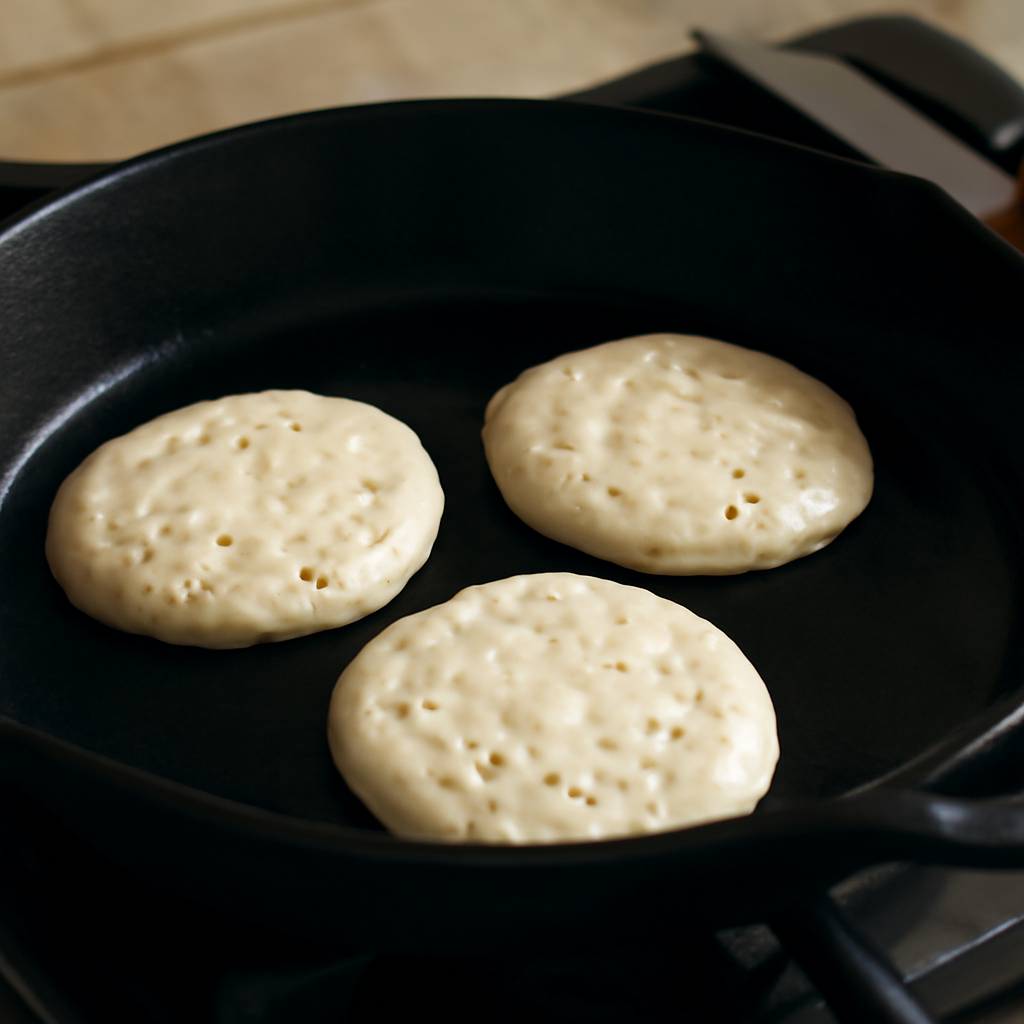
Drop heaped tablespoons of batter onto the pan, spacing them well apart. Each scone should be roughly 7cm to 8cm across once it settles. Leave them alone for 2 to 3 minutes. Bubbles will break across the surface and the edges will look set and slightly matte rather than wet and shiny.
-
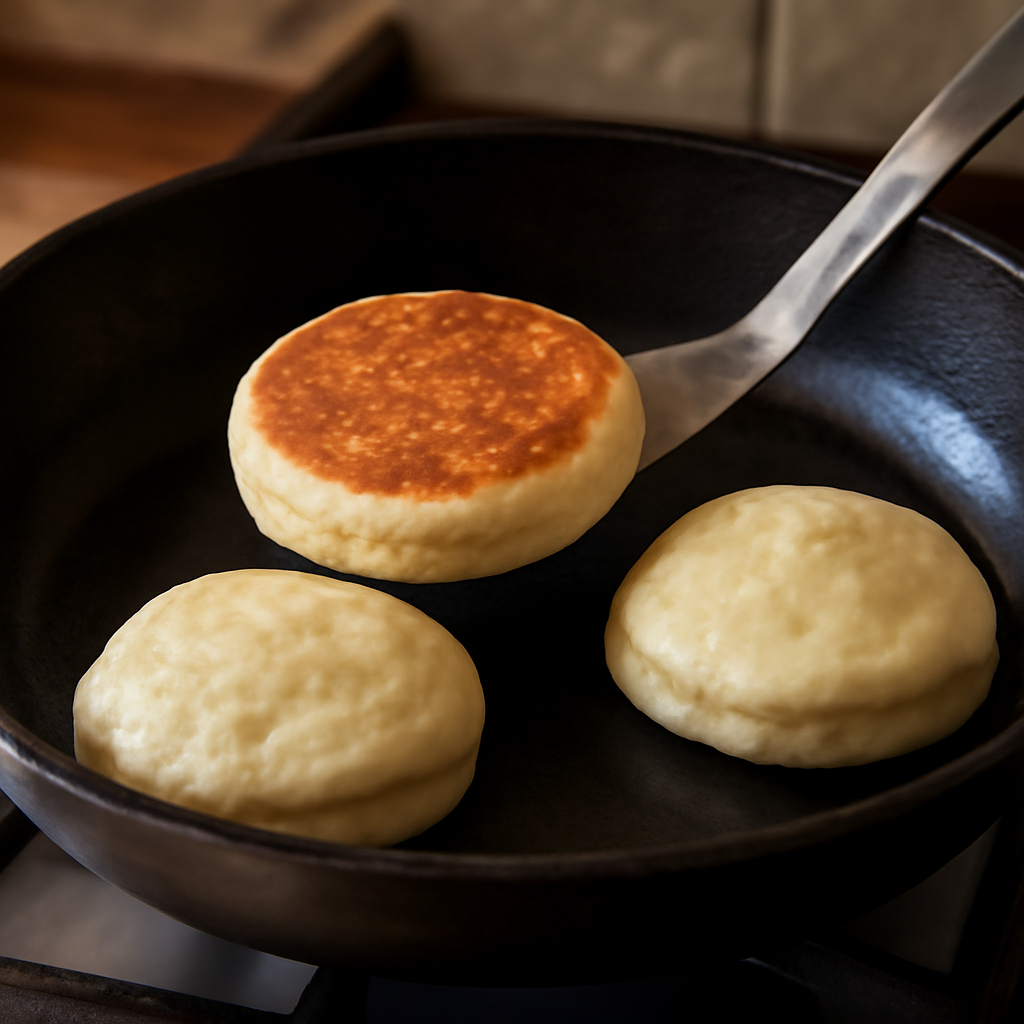
Flip each scone with a palette knife or a thin spatula. The underside should be an even mid-brown, not dark. Cook for a further 1 to 2 minutes on the second side. Press the centre lightly with your finger; it should spring back without leaving an indent.
-
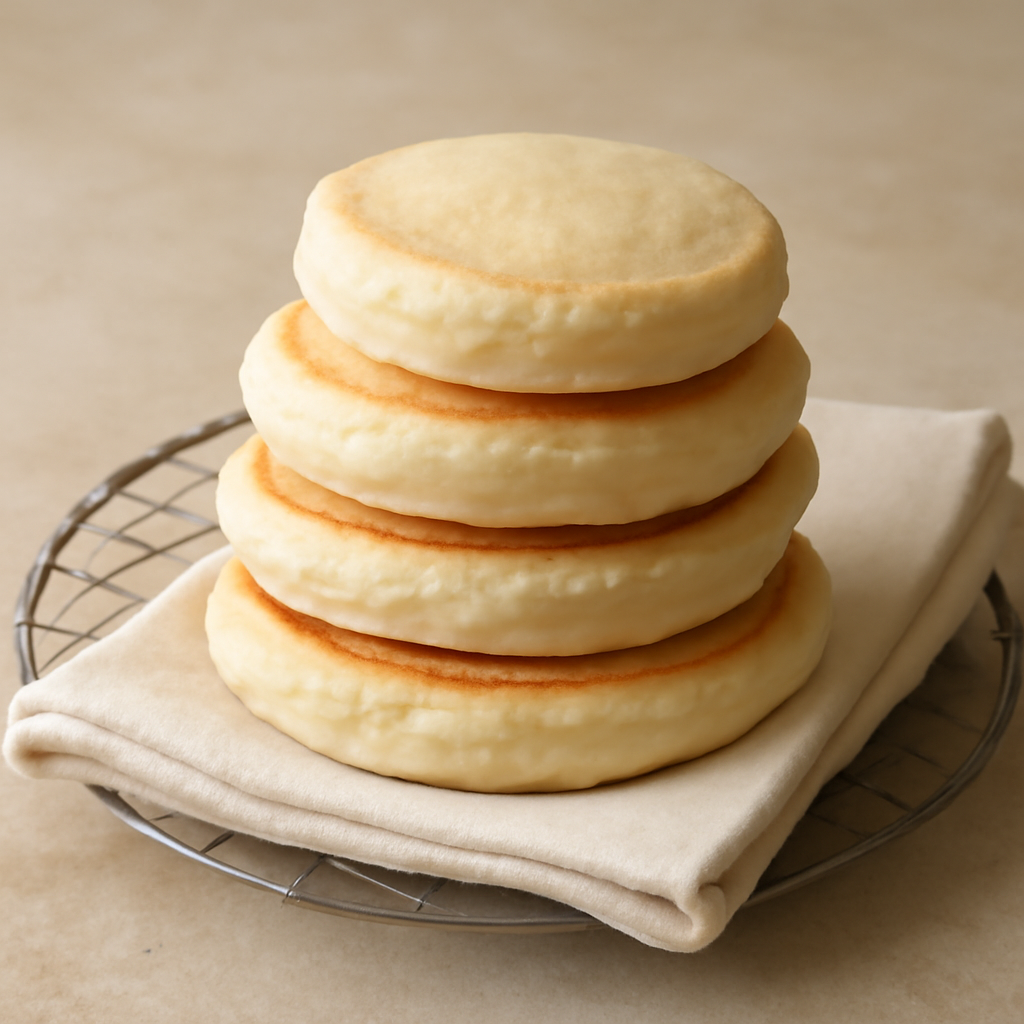
Transfer to a clean tea towel folded on a wire rack and wrap loosely to keep them soft while you cook the remaining batches. The total batter makes approximately 16 scones.
Irish Context
Dropped scones have been made on griddles and flat pans in Irish kitchens for a long time, largely because the method requires no oven. A griddle over an open fire or a solid-fuel range produced the same result as a modern hob.
The scones are sometimes called griddle pancakes or Scotch pancakes depending on where you are in Ireland, though the recipe varies little between households. They appear at breakfast tables alongside rashers and eggs, or eaten mid-morning with butter and jam, the slight tang from the bicarbonate of soda cutting through the sweetness.
Tips
The batter should be thick but pourable, closer to a heavy yoghurt than a thin crepe batter. If it pours off the spoon immediately in a thin stream, the scones will spread too much and cook unevenly.
A cast-iron pan holds heat steadily and gives the most consistent colour. A non-stick pan works, but the base of each scone may colour faster than the centre cooks, so watch the heat carefully.
If the first scone comes out too dark on the outside but still looks raw in the centre when you cut it open, reduce the heat before proceeding. The first scone off any pan is often a calibration test.
Keeping cooked scones wrapped in a tea towel rather than leaving them exposed stops the steam escaping and keeps them soft. Left uncovered, they toughen quickly.
The batter does not keep well once mixed; the raising agents lose strength within an hour. Make it and cook it the same morning.

Author Commentary