
 AI
AI
 AI
AI
 AI
AI
Ingredients
Method
-
Trim any very thick pockets of external fat from the lamb neck chops, but leave a reasonable amount , it contributes to the body of the broth. Cut any very large chops in half through the bone if needed so they sit evenly in the pot.
-
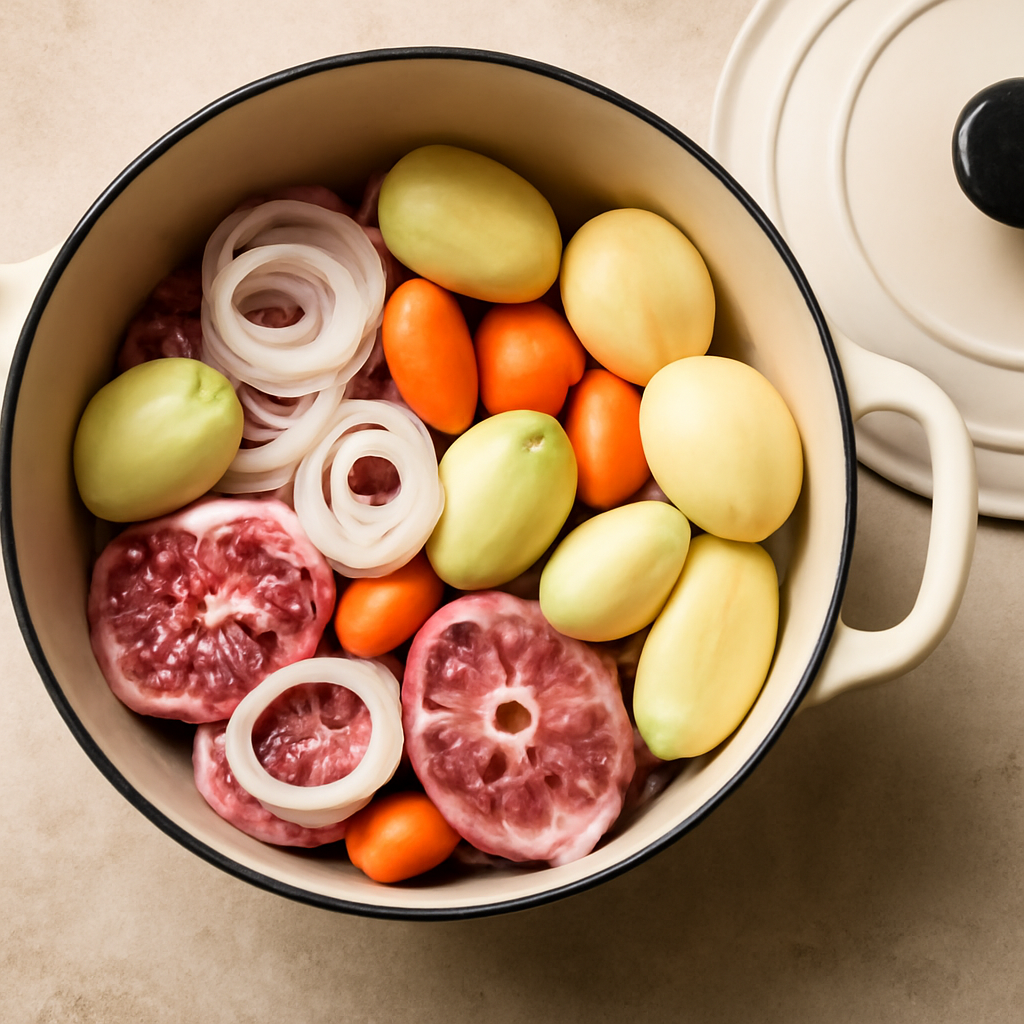
Place the lamb in a single layer across the base of a large, heavy-bottomed pot or casserole with a tight-fitting lid. Scatter the sliced onions over the top, followed by the carrots.
-
Nestle the potatoes in around and over the meat and vegetables. The floury potatoes will partially dissolve as they cook, thickening the broth naturally. The waxy potatoes will hold their shape and give you something to eat against.
-
Pour in the 900ml of cold water. The liquid should come roughly three-quarters of the way up the contents of the pot; add a splash more if needed, but resist adding stock. Water lets the flavour of the lamb and vegetables speak clearly without competing noise.
-
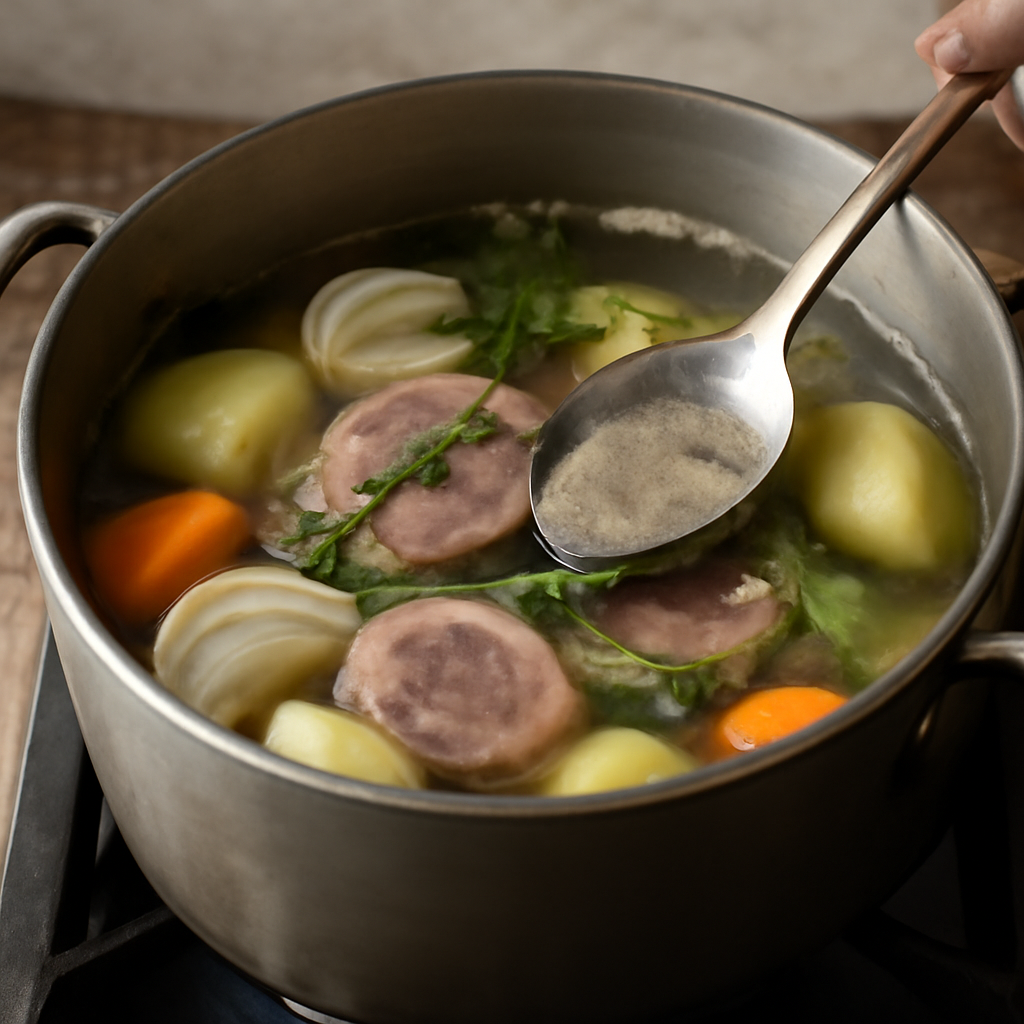
Add the sea salt, white pepper, thyme sprigs, and bay leaves. Do not stir. Set the pot over a medium-high heat and bring slowly to the boil, which will take about 12 to 15 minutes. As it heats, a grey-brown foam will rise to the surface. Skim this off with a spoon and discard it before the liquid reaches a full boil.
-
Once skimmed, reduce the heat to a very low simmer , the surface should tremble rather than bubble. Place the lid on, leaving it very slightly ajar to prevent the liquid boiling over, and cook for 1 hour 45 minutes. Do not stir during this time; the layers are doing their own work.
-
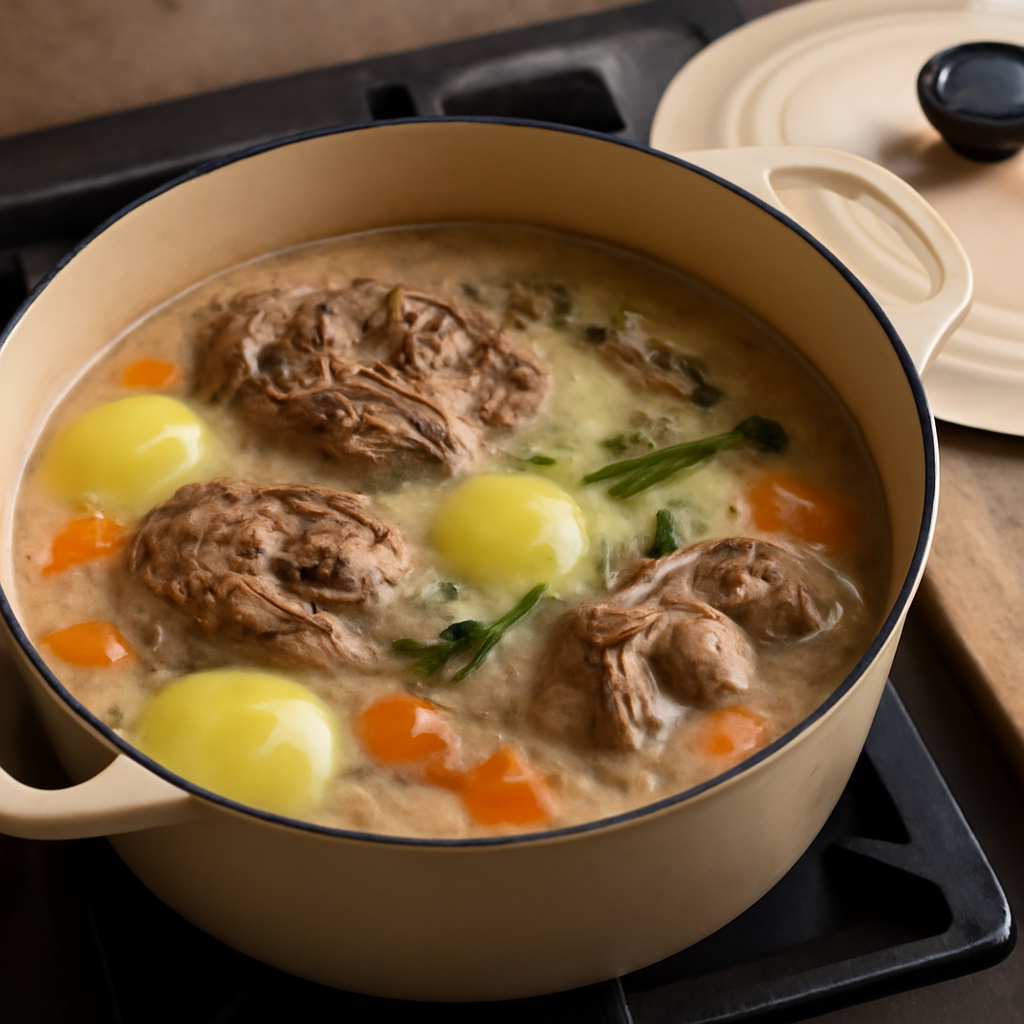
After 1 hour 45 minutes, remove the lid. The broth should be opaque and lightly thickened from the dissolved floury potato. The lamb should be pulling away from the bone. Press the largest chop with a spoon; if there is any resistance, replace the lid and cook for a further 15 minutes.
-
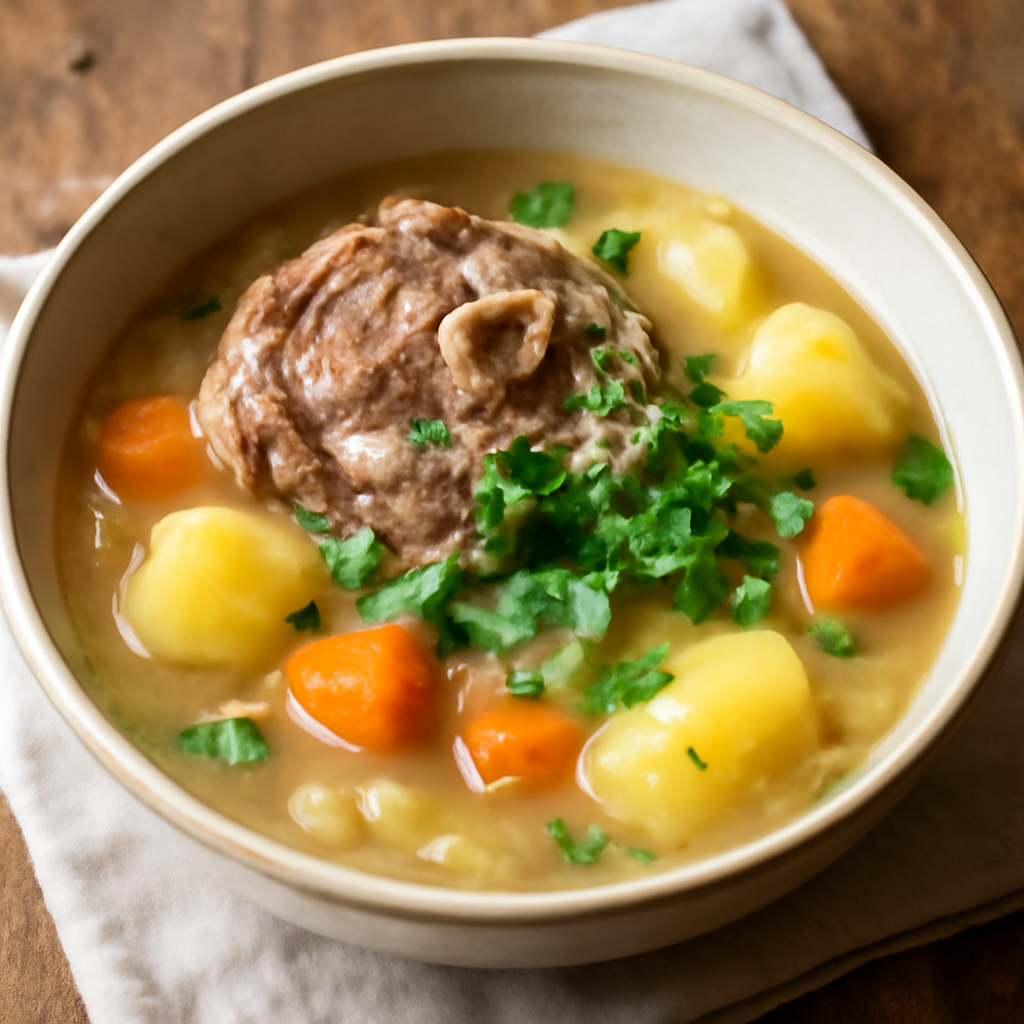
Taste the broth and adjust the salt. Remove the thyme sprigs and bay leaves. Ladle into deep bowls, making sure each serving gets a bone-in chop, a selection of potato pieces, and a good measure of broth. Scatter the chopped flat-leaf parsley over each bowl just before serving.
Irish Context
Irish stew built itself around what was available and affordable: lamb or mutton, potatoes, and onions. The dish does not carry a set of rules so much as a logic , bone-in meat, floury potatoes to thicken, enough liquid to produce a broth rather than a gravy.
Carrots became common in many households over time, though some people still consider them an addition rather than an original ingredient. The argument is a long one and not worth settling here.
What matters is that the technique is minimal by design, not by accident: fewer ingredients handled correctly produce a better result than more ingredients handled carelessly.
Tips
Neck chops are the correct cut for this dish. Shoulder or leg will cook differently and do not release the same amount of gelatin into the broth.
If your butcher has only boneless neck, use it but expect a thinner result. The floury potato varieties matter.
A waxy potato throughout will not thicken the broth and you will be left with something closer to a thin soup with floating vegetables. If you can only source one type of potato, use floury throughout.
Do not be tempted to add stock. The lamb bones, given enough time at a low temperature, produce their own gelatinous broth.
Stock cubes will push this into a different dish entirely. If the broth is too thin after the full cooking time, remove the lid and increase the heat slightly for 10 minutes uncovered.
Some of the remaining floury potato pieces can be pressed against the side of the pot to help dissolve them into the liquid. This reheats very well the next day.
The broth will have set into a loose jelly in the fridge overnight, which is a sign the collagen has done its job. Reheat gently over a low heat, stirring occasionally, and add a small splash of water if it has thickened too much.
White pepper rather than black gives a cleaner heat that does not visually interrupt the pale broth. It is a small detail but it is the right call here.

Author Commentary