
 AI
AI
 AI
AI
 AI
AI
Ingredients
Method
-
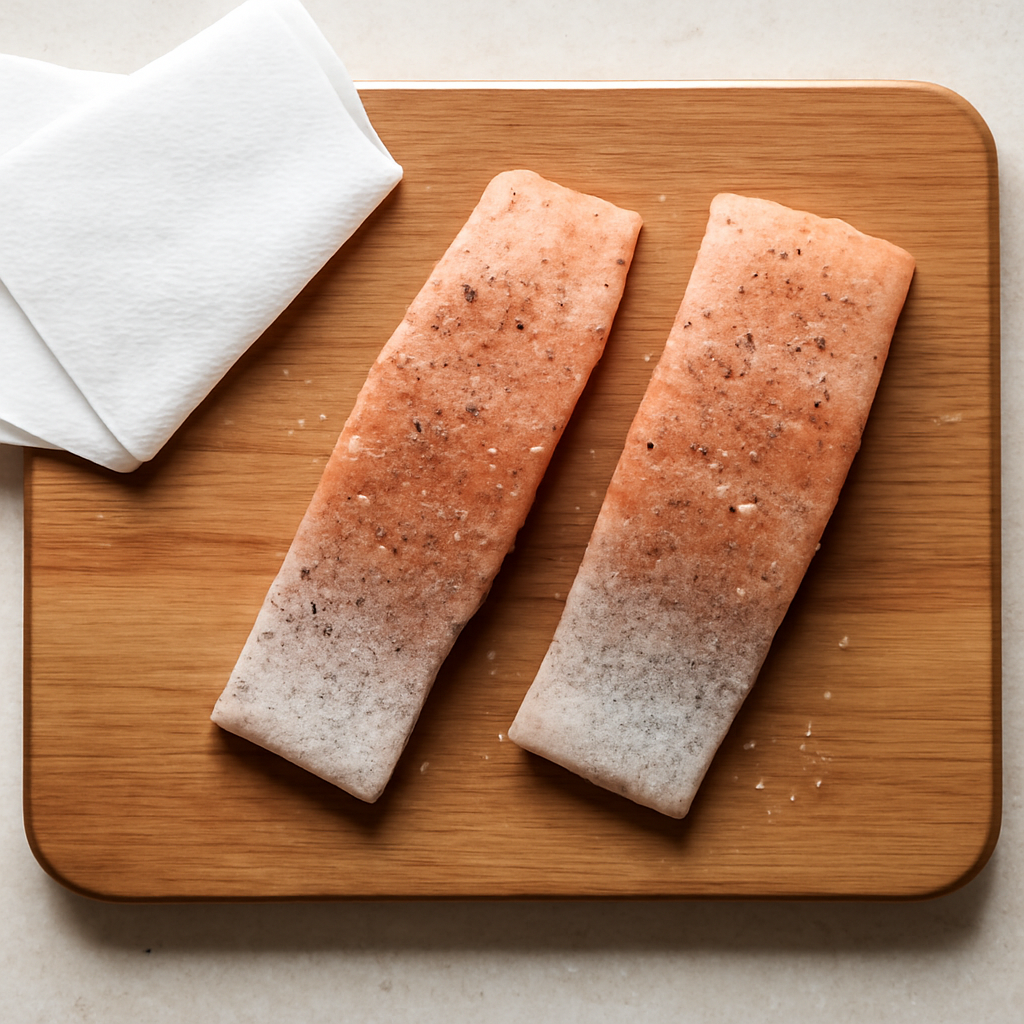
Remove the salmon fillets from the fridge 20 minutes before cooking. Pat both sides completely dry with kitchen paper. Moisture on the surface is the main reason skin sticks and turns soft; there should be no visible dampness when you put them in the pan. Season the flesh side with salt and pepper, and the skin side with salt only.
-
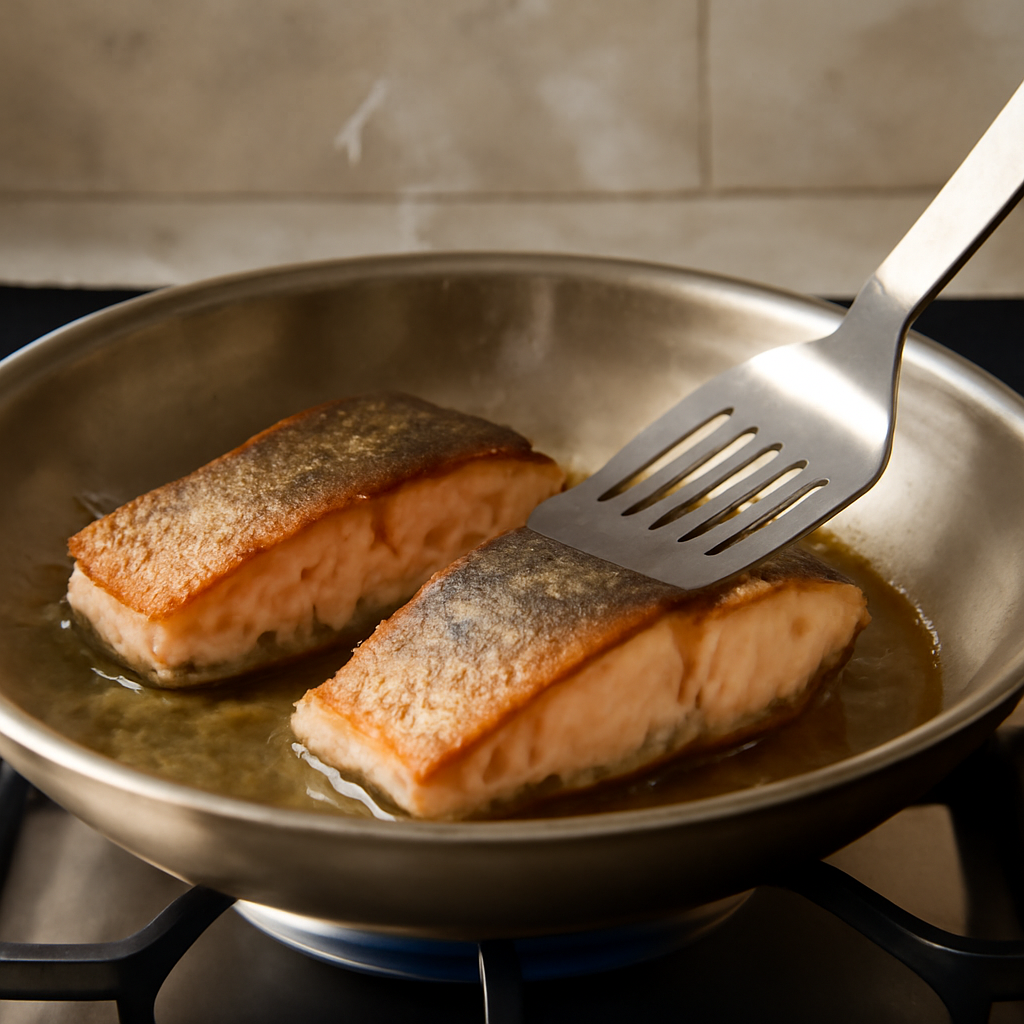
Place a heavy frying pan, ideally stainless steel or cast iron, over a high heat. Leave it for 2 full minutes. Add 1 tablespoon of the olive oil and wait until it shimmers. Lay the fillets skin-side down, pressing each one gently with a fish slice for the first 10 seconds to prevent the skin from curling. Reduce the heat to medium-high. Cook without moving for 5 to 6 minutes until the skin is deep golden and the flesh has turned opaque roughly two-thirds of the way up the fillet when viewed from the side.
-
Flip the fillets and cook flesh-side down for exactly 90 seconds. The centre should still feel slightly soft under gentle pressure from your fingertip. Transfer to a warm plate, skin-side up, and rest uncovered. Do not tent with foil or the skin will steam and soften.
-
Without wiping the pan, reduce the heat to medium and add the remaining tablespoon of olive oil and the butter. Once the butter has melted and is just beginning to foam, add the shallot and a pinch of salt. Cook for 2 minutes until translucent, then add the garlic slices. Stir for 45 seconds, keeping the garlic moving so it colours lightly without burning. Burnt garlic will make the dressing bitter and there is no recovering from it at this stage.
-
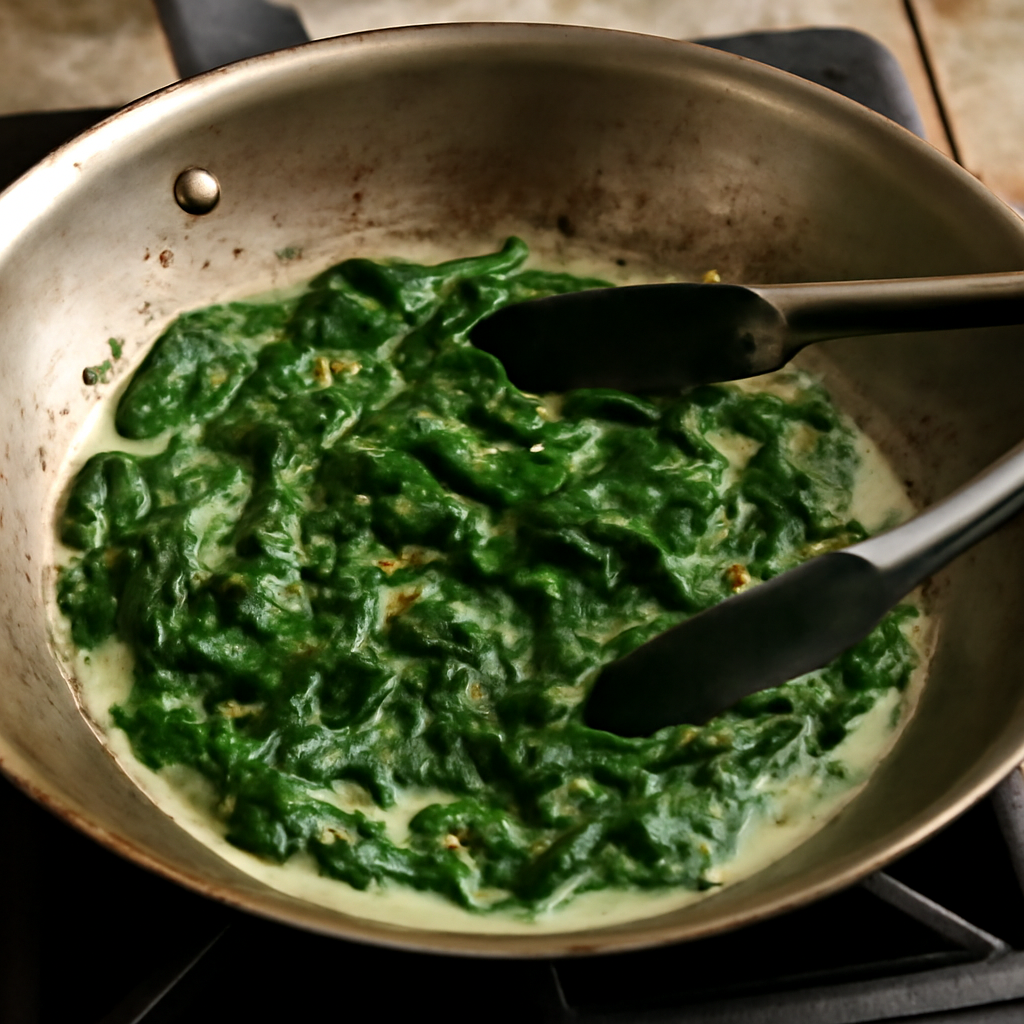
Add the spinach in two batches. The first batch will look excessive for the pan; toss it through the oil and garlic using tongs until it just starts to wilt, about 60 seconds, then add the second batch. Once all the spinach has collapsed and given up most of its water, increase the heat briefly to drive off any liquid pooling in the base of the pan. This takes around 45 seconds. The spinach should look glossy, not waterlogged.
-
Remove the pan from the heat. Stir in the crème fraîche, Dijon mustard, lemon zest, and chopped capers until the crème fraîche has loosened into a sauce that coats the spinach without being thick. Add lemon juice a small squeeze at a time, tasting as you go. The acidity should cut through the fat of both the crème fraîche and the salmon; you will likely need about half the lemon. Season with black pepper and more salt if required.
-
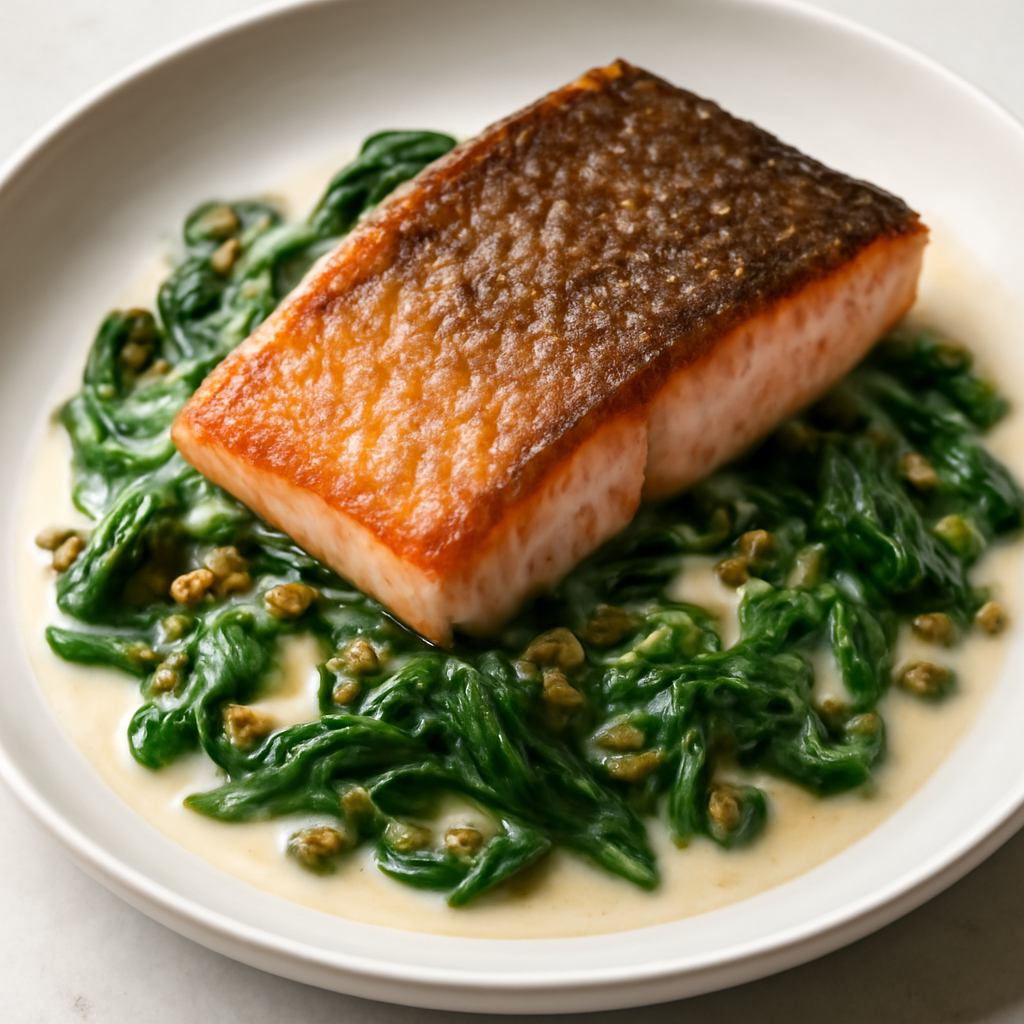
Place each rested salmon fillet, skin-side up, on a warmed plate. Spoon the spinach dressing generously over and around the flesh side, leaving the skin exposed on top. Serve immediately.
Irish Context
Atlantic salmon from Irish waters, whether farmed along the west coast or caught wild in rivers like the Moy or the Erriff, has been a serious part of Irish food since long before it appeared in restaurants. The farmed product from the likes of Clare Island or organic west-coast producers is available in most larger supermarkets and many fishmongers, and it is worth seeking out over the standard cheaper options if you can.
Baby spinach grown in Irish polytunnels is available year-round from a number of domestic growers, and it performs better in a quick wilt than the harder, thicker-stemmed bunched spinach, which needs more time to soften.
Tips
The Dijon mustard in the dressing is not prominent in taste but it acts as an emulsifier, helping the crème fraîche stay smooth rather than splitting when it hits the heat of the spinach and pan juices. If your spinach is very wet after washing, spin it thoroughly or spread it on a clean tea towel for a few minutes.
Water-heavy spinach will flood the pan and you will end up braising rather than wilting it. Wild or organic Irish Atlantic salmon is noticeably firmer and less fatty than farmed.
If using wild salmon, reduce the skin-side cooking time to 4 to 5 minutes and check earlier for doneness, as leaner fish overcooks faster. Capers and salmon have a natural affinity because the brine cuts through the fat of the fish.
If you are using capers packed in salt rather than brine, rinse them well and soak in cold water for 10 minutes before using. Leftover spinach dressing can be stirred through cold cooked pasta the next day with a little extra lemon juice to freshen it.

Author Commentary