
 AI
AI
 AI
AI
 AI
AI
Ingredients
Method
-
Remove the fish from the fridge 20 minutes before cooking so it comes up to room temperature. Pat both sides dry with kitchen paper and check the cavity is clean, rinsing briefly under cold water if needed. Dry again thoroughly.
-
Preheat the oven to 200°C (fan 180°C). Line a baking tray with a sheet of baking parchment and brush it lightly with rapeseed oil.
-
Melt 15g of the butter in a small frying pan over a medium-low heat. Add the shallot and cook gently for 4 to 5 minutes until softened and just beginning to turn translucent, with no colour. Add the garlic and cook for a further minute, stirring constantly so it does not catch.
-
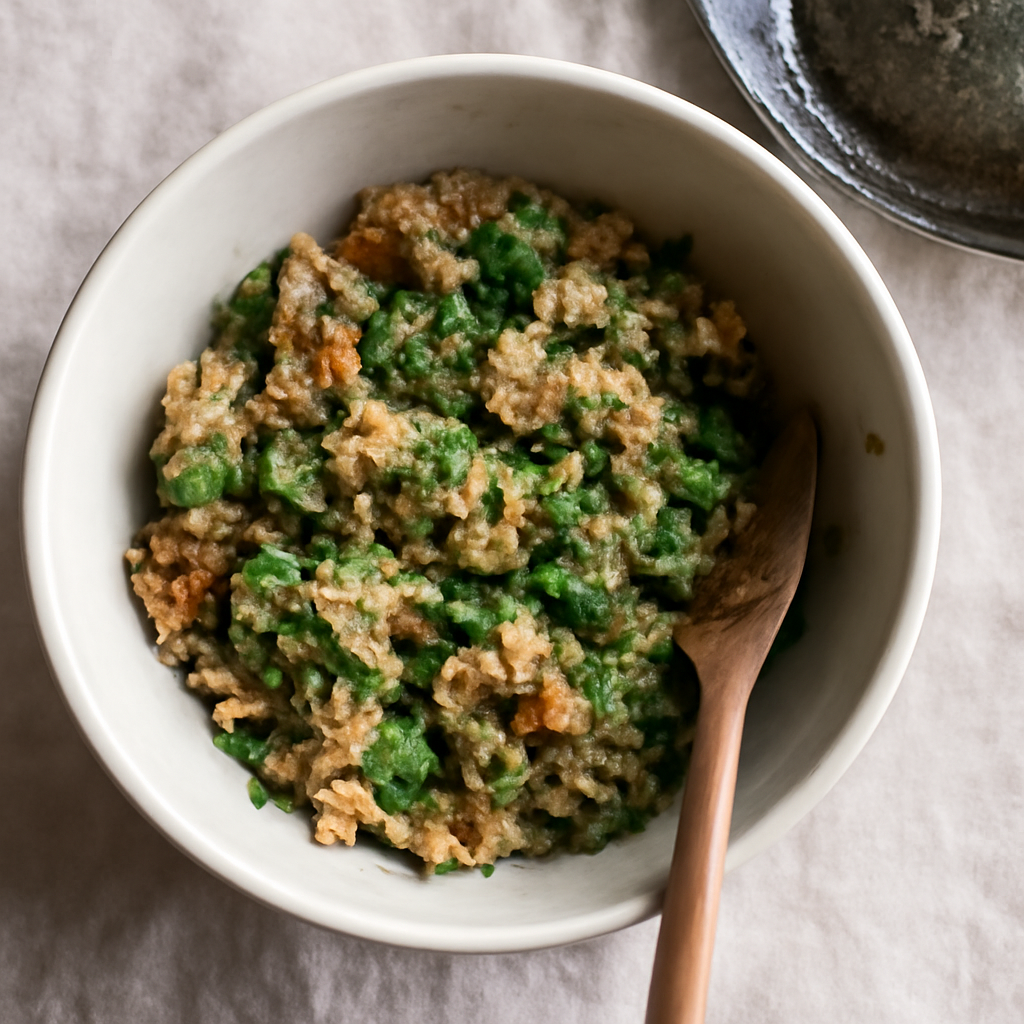
Tip the shallot and garlic mixture into a bowl. Add the torn brown bread, parsley, dill, lemon zest, capers, and white wine. Season with a pinch of sea salt and several grinds of black pepper. Mix until the bread has absorbed the wine and the mixture holds together loosely when pressed. If it feels dry, add a few drops of water. It should be moist but not wet.
-
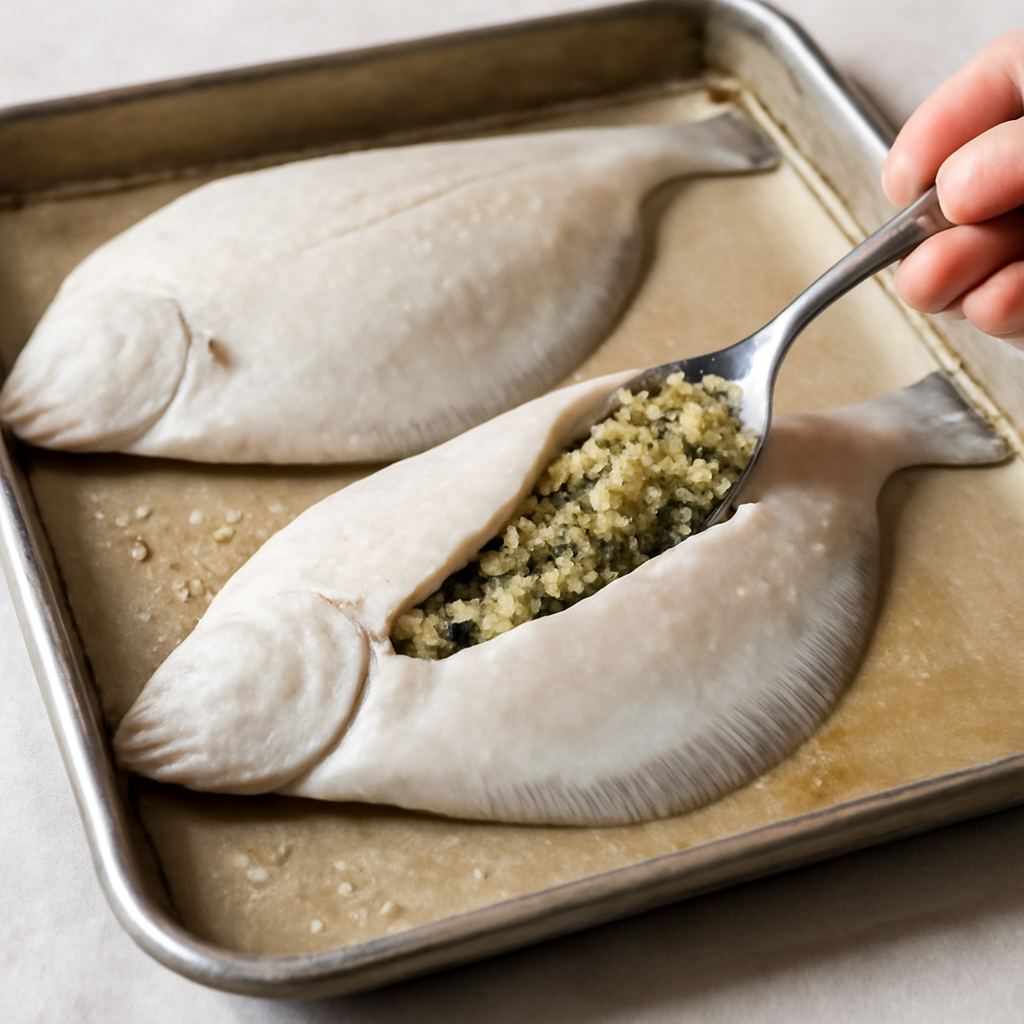
Using a small spoon or your fingers, carefully open the cavity of each fish. Fill each cavity with half the stuffing, pressing it in gently. Do not overfill or force the fish open; just enough stuffing to line the inside without splitting the belly.
-
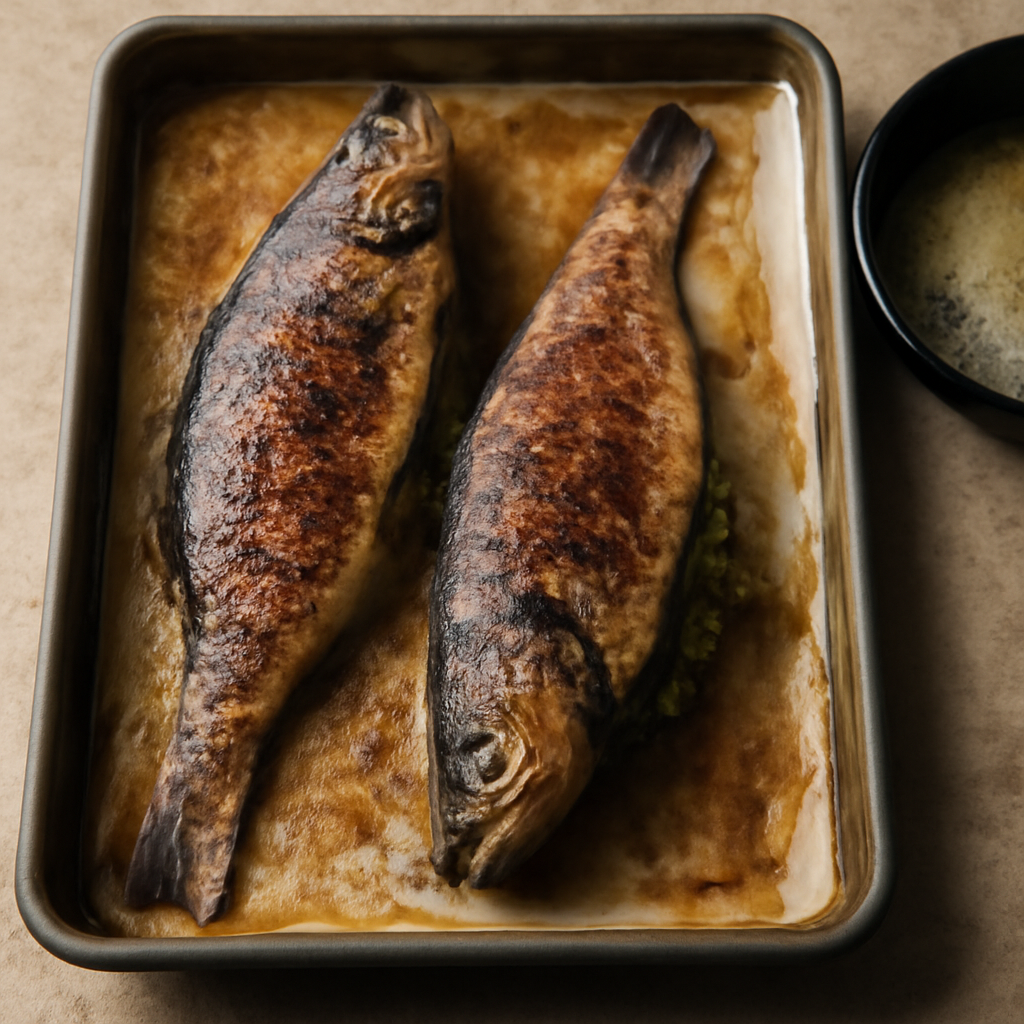
Lay the stuffed fish on the prepared baking tray, white side down. Brush the top skin with the remaining rapeseed oil. Season the skin with sea salt.
-
Bake at 200°C for 22 to 26 minutes. The skin should blister slightly and pull back from the edges. To check doneness, press the thickest part of the fish behind the head with your finger; it should give cleanly without any springiness. Alternatively, slide a skewer into the thickest point and hold it there for three seconds; it should feel hot, not warm, when touched to the inside of your wrist.
-
While the fish bakes, melt the remaining 15g of butter in the small frying pan over a low heat until it foams and just begins to smell nutty. Remove immediately from the heat and add the lemon juice, swirling to combine. Keep warm.
-
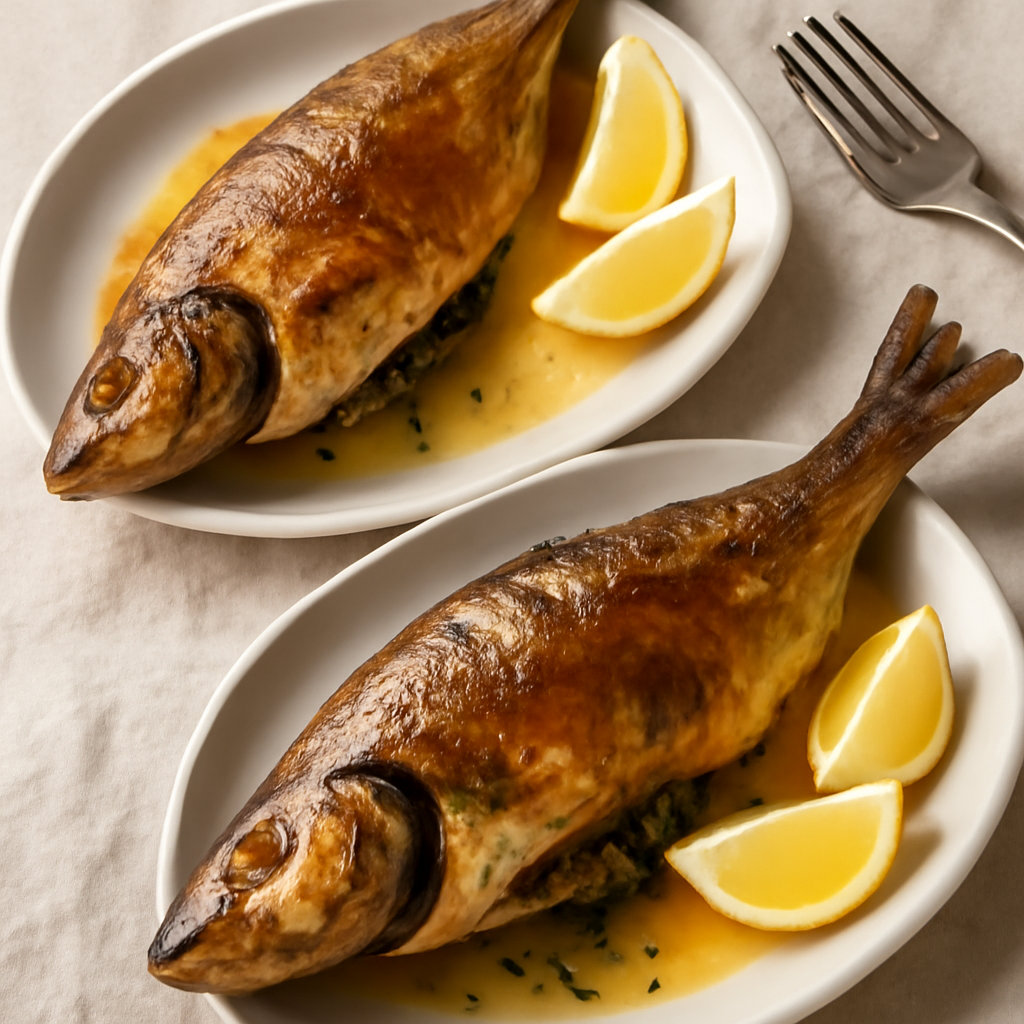
Transfer the fish carefully to warmed plates using a wide spatula. Spoon the lemon butter over each fish and serve immediately with lemon wedges alongside.
Irish Context
Leathog is a small flatfish caught in Irish coastal and estuarine waters. It is less common on fishmongers' slabs than it once was, largely because it is overshadowed by more commercially prominent species, but it still appears at good wet fish counters near the coast, particularly in Cork, Galway, and Donegal.
The flesh is mild and sweet with a clean sea smell when fresh. Because the fish is modest in size, stuffing the cavity is one of the most practical ways to extend a single fish to a satisfying main course.
Brown soda bread in a stuffing is a straightforward choice in an Irish kitchen because the bread is almost always to hand and its slight tang works well with the delicate fish without masking it.
Tips
Leathog is the Irish word for flatfish in the flounder family, including dab. If your fishmonger has only one variety, dab works well; the flesh is fine-grained and sweet with a slightly grassy quality that stands up to the herb stuffing without being overwhelmed by it.
Ask the fishmonger to gut the fish but leave the head on. The head helps the fish hold its shape during baking and prevents the stuffing from sliding out of the front of the cavity.
Brown soda bread gives the stuffing a slightly nutty, faintly sour note that white breadcrumbs do not. Day-old bread is preferable; very fresh bread turns the stuffing gluey.
The fish cooks faster than you expect because it is thin. Check at 22 minutes.
Overcooked flatfish dries out quickly and becomes chalky, so err on the side of pulling it a minute early. Do not attempt to flip the fish mid-bake.
Leathog has delicate flesh and will break apart. The underside steams against the parchment and cooks through from the residual heat of the tray.
If you cannot find leathog or dab, plaice is a reasonable substitute, though the flesh is slightly sweeter and less firm. Adjust the bake time down by 2 to 3 minutes as plaice tends to be thinner.

Author Commentary