
 AI
AI
 AI
AI
 AI
AI
Ingredients
Method
-
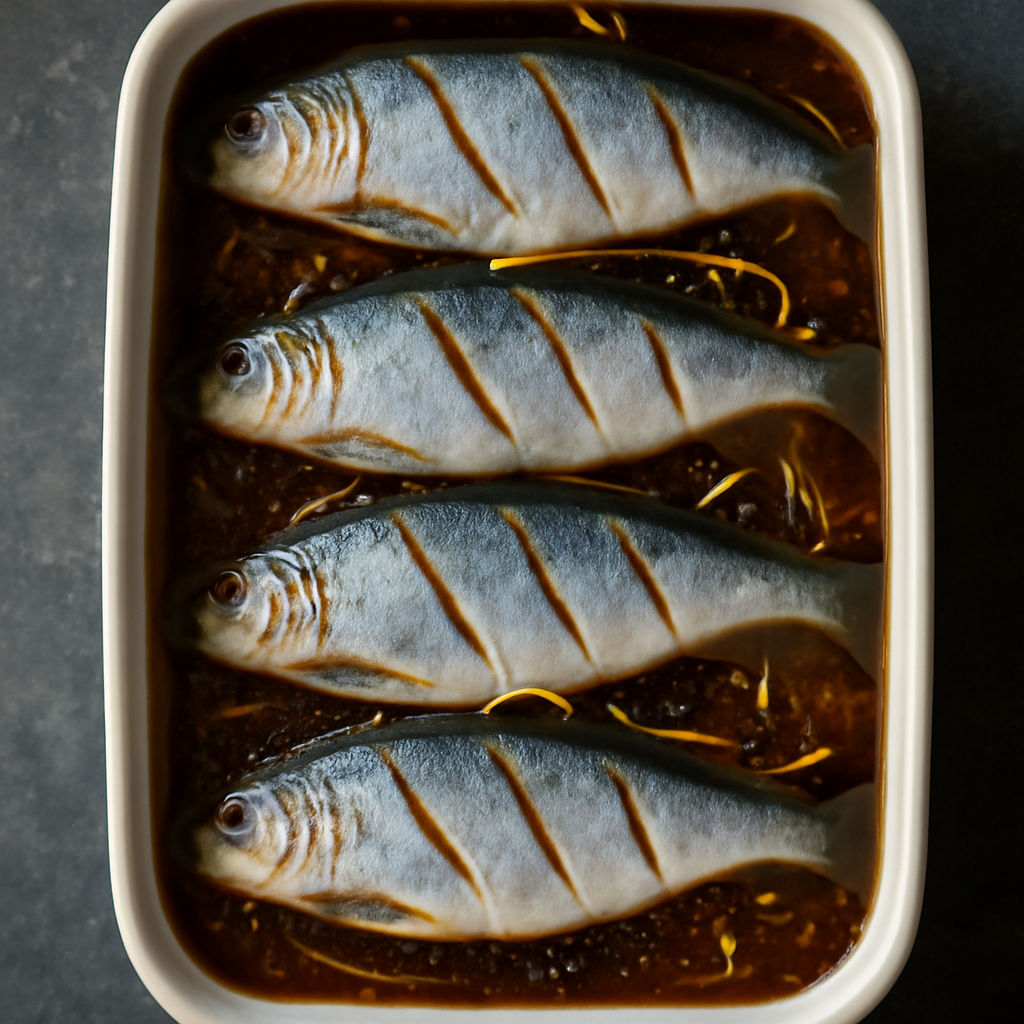
Score each herring three times on both sides with a sharp knife, cutting down to the bone at a 45-degree angle. The cuts should be about 3cm apart and go deep enough that you can see the flesh open slightly when you press the fish. This is not decorative; it lets the cure penetrate and stops the skin from buckling under direct heat.
-
Mix the whiskey, brown sugar, fine sea salt, crushed juniper, cracked peppercorns, and lemon zest in a shallow dish large enough to hold all four fish flat. Stir until the sugar dissolves. Lay the herrings in the cure and turn them once to coat. Leave uncovered at room temperature for 15 minutes exactly. Beyond 20 minutes, the salt starts drawing out moisture faster than the whiskey can replace it, and the flesh turns slightly grainy.
-
While the fish cures, make the dressing. Whisk together the wholegrain mustard, cider vinegar, and crème fraîche in a small bowl. Fold in the diced shallot, dill, and parsley. Taste it now; it should be sharp enough to cut through the oiliness of the herring. Adjust with a few more drops of vinegar if needed. Set aside at room temperature.
-
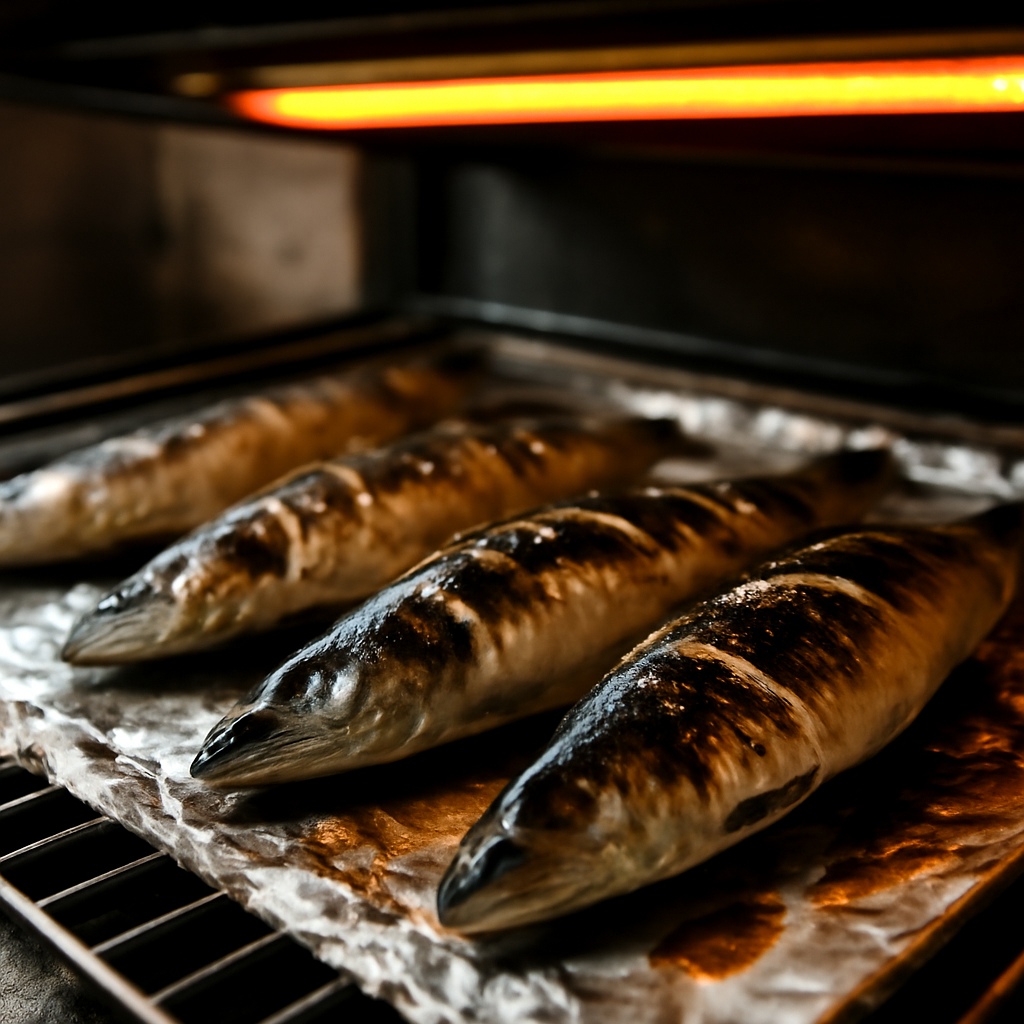
Preheat your grill to its highest setting and place the rack as close to the element as your oven allows, roughly 8 to 10cm away. Line the grill pan with foil and brush the foil generously with the rapeseed oil. A cold, unoiled surface will tear the skin when you try to lift the fish.
-
Lift the herrings from the cure and let any excess drip off, but do not pat them dry. You want a thin, wet coating on the skin. Lay them on the oiled foil and slide the pan under the grill.
-
Grill for 5 to 6 minutes on the first side without touching them. You are looking for the skin to blister and char at the score marks, and the flesh visible in the cuts to turn opaque and pull back slightly from the bone. The sugar in the cure will caramelise fast; some blackening at the edges is expected and desirable, but if the centre of the skin is not yet blistering after 4 minutes, your grill is not hot enough. Adjust the rack upward if possible.
-
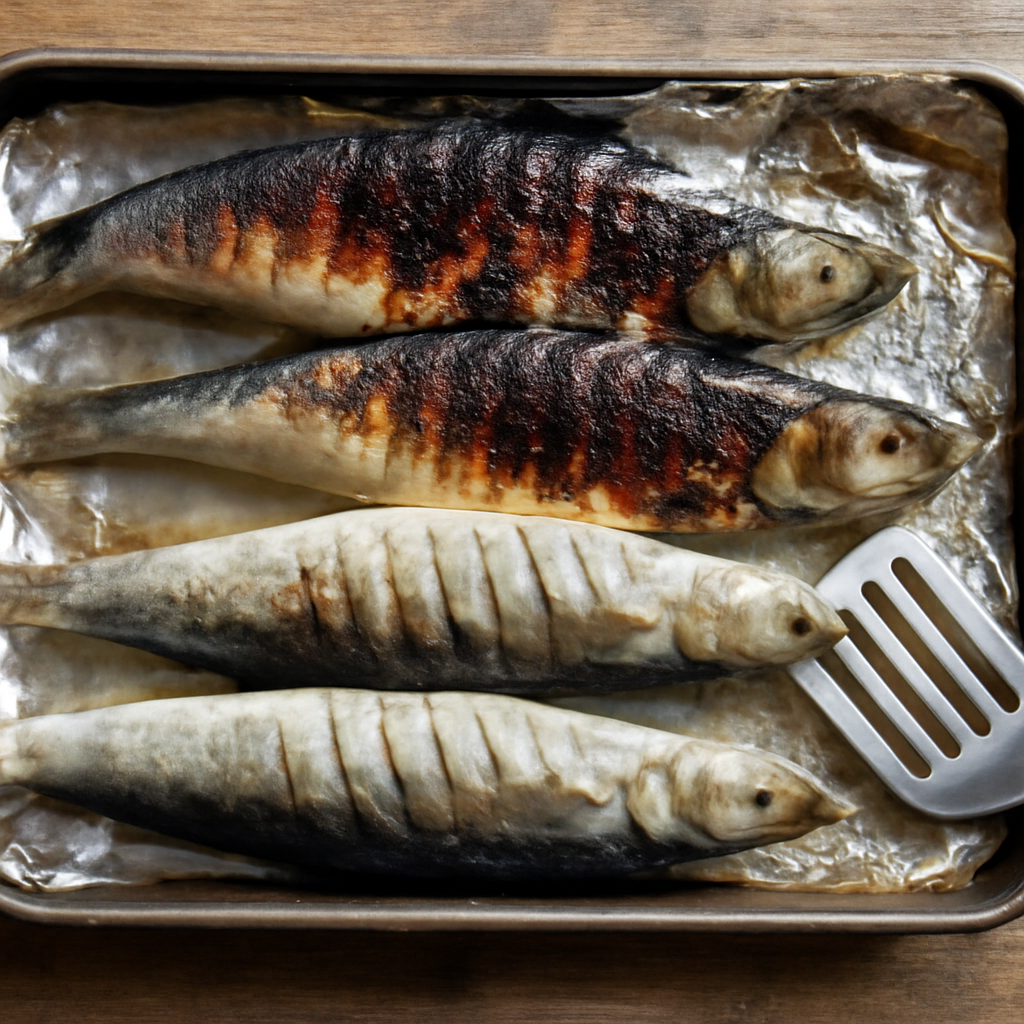
Carefully slide a fish slice under each herring and turn them in one confident movement. Grill for a further 4 to 5 minutes. Herring is done when the thickest part of the flesh near the head resists light pressure rather than yielding to it. The skin on this second side will not blister as dramatically, but it should be set and dry rather than soft.
-
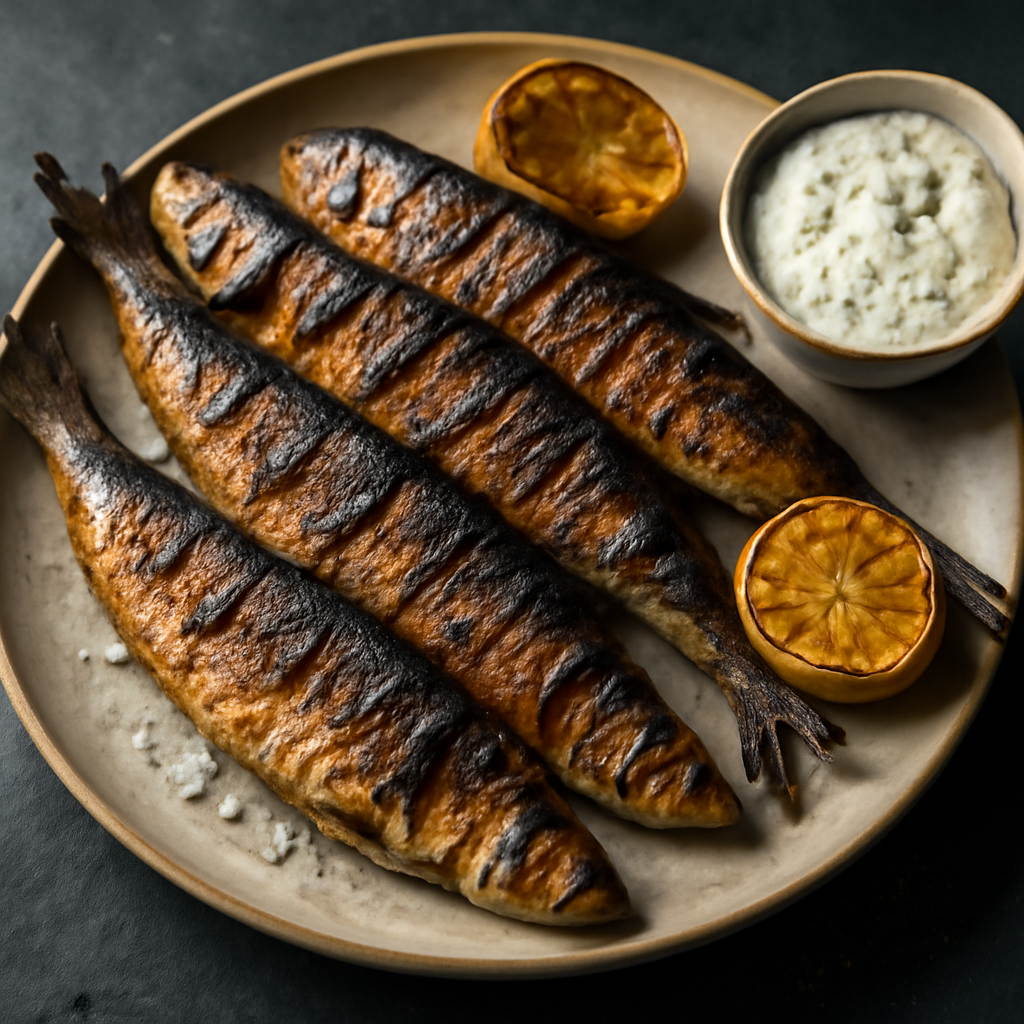
Transfer the herrings to a warm plate and rest for 2 minutes. Season with sea salt flakes and cracked pepper. Serve with the crème fraîche dressing spooned alongside rather than over the fish, and the lemon halves for squeezing at the table.
Irish Context
Cadan is the Irish word for herring. The fish was a staple along Ireland's coastlines for centuries, fished heavily off the east and west coasts, and eaten in large quantities by communities who had reliable access to the sea.
It fell sharply out of favour in the latter half of the twentieth century as cheaper farmed fish became available inland, and as the association with poverty made it unfashionable. It has been returning to Irish menus slowly, partly because it is inexpensive, partly because it is among the most sustainable fish in Irish waters, and partly because people have started cooking it properly again.
Irish whiskey in a savoury cure is not a traditional pairing; this recipe makes no claim that it is. The two ingredients happen to work together because the grain notes in the whiskey complement the oiliness of the fish without sweetening it the way a wine or beer might.
Tips
Herring deteriorates faster than almost any other fish. Buy it the day you plan to cook it and keep it on ice until you are ready to start the cure.
If the gills are grey rather than red, and the eyes are sunken rather than clear, put it back. The cure time is short for a reason.
This is not a full cure like gravlax; it is a surface treatment. Leaving the fish in the whiskey mixture for an hour will not make it taste more of whiskey; it will make the texture wrong.
If whole herrings are not available, large herring fillets with the skin on will work. Reduce the grill time to 3 to 4 minutes per side and watch the second side closely, as fillets have no bone to act as a heat buffer.
The crème fraîche dressing can be made several hours ahead and kept covered in the fridge. Take it out 20 minutes before serving so it does not hit the hot fish straight from cold.
Juniper berries vary considerably in potency depending on how long they have been sitting in the jar. If yours smell faintly of nothing in particular, use eight rather than six.

Author Commentary