
 AI
AI
 AI
AI
 AI
AI
Ingredients
Method
-
Take the lamb out of the fridge 30 minutes before you start. Pat each chop completely dry with kitchen paper. Wet meat will not colour properly and the finished broth will be greyer and thinner for it.
-
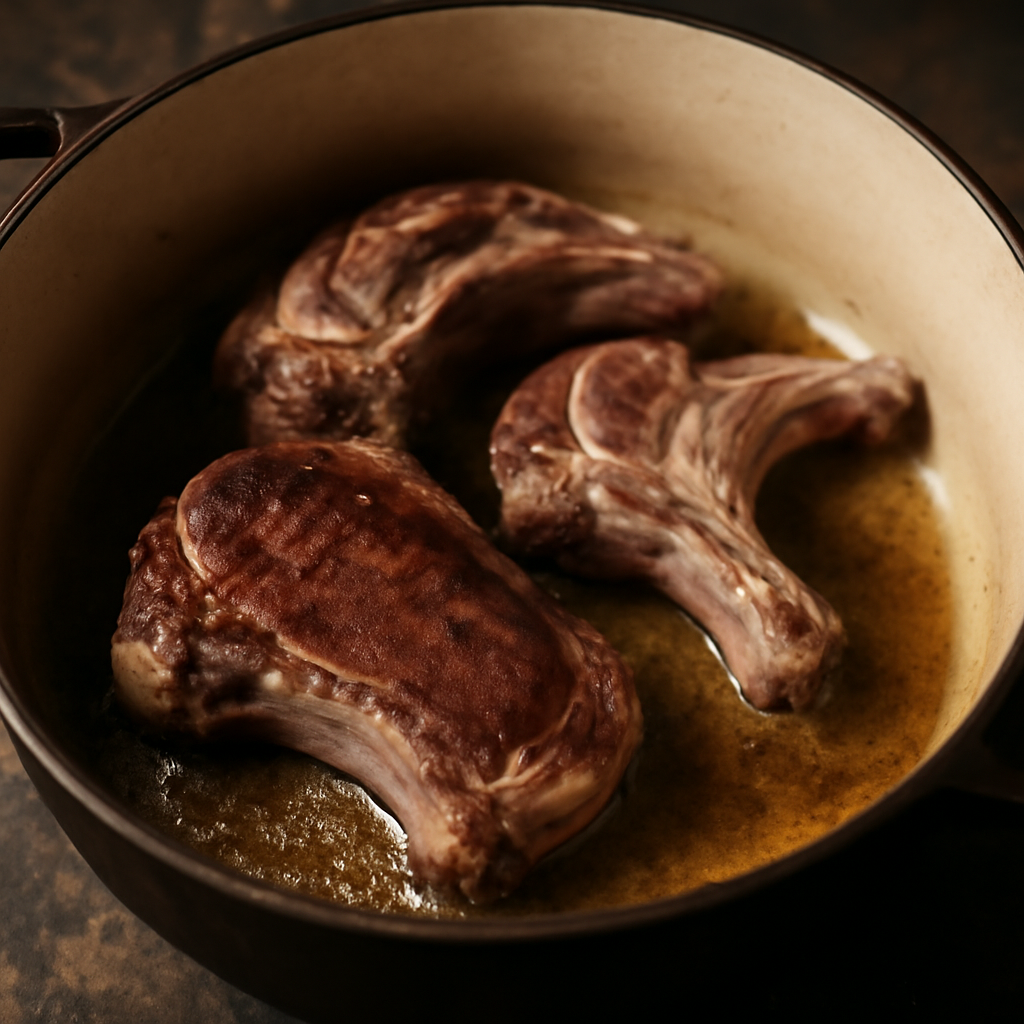
Heat the vegetable oil in a wide, heavy-based pot or casserole over a medium-high heat. When the oil shimmers, lay in the lamb chops without crowding. Leave them undisturbed for 3 to 4 minutes until a deep brown crust forms on the underside. Turn and repeat on the other side. Work in batches if your pot is not large enough. Set the browned chops aside on a plate.
-
Pour away all but a thin film of fat from the pot, keeping the heat at medium. Add the sliced onions with a pinch of salt. Stir and scrape the bottom of the pot to lift the browned residue. Cook the onions for 6 to 8 minutes until they have softened and gone slightly translucent at the edges but have not coloured.
-
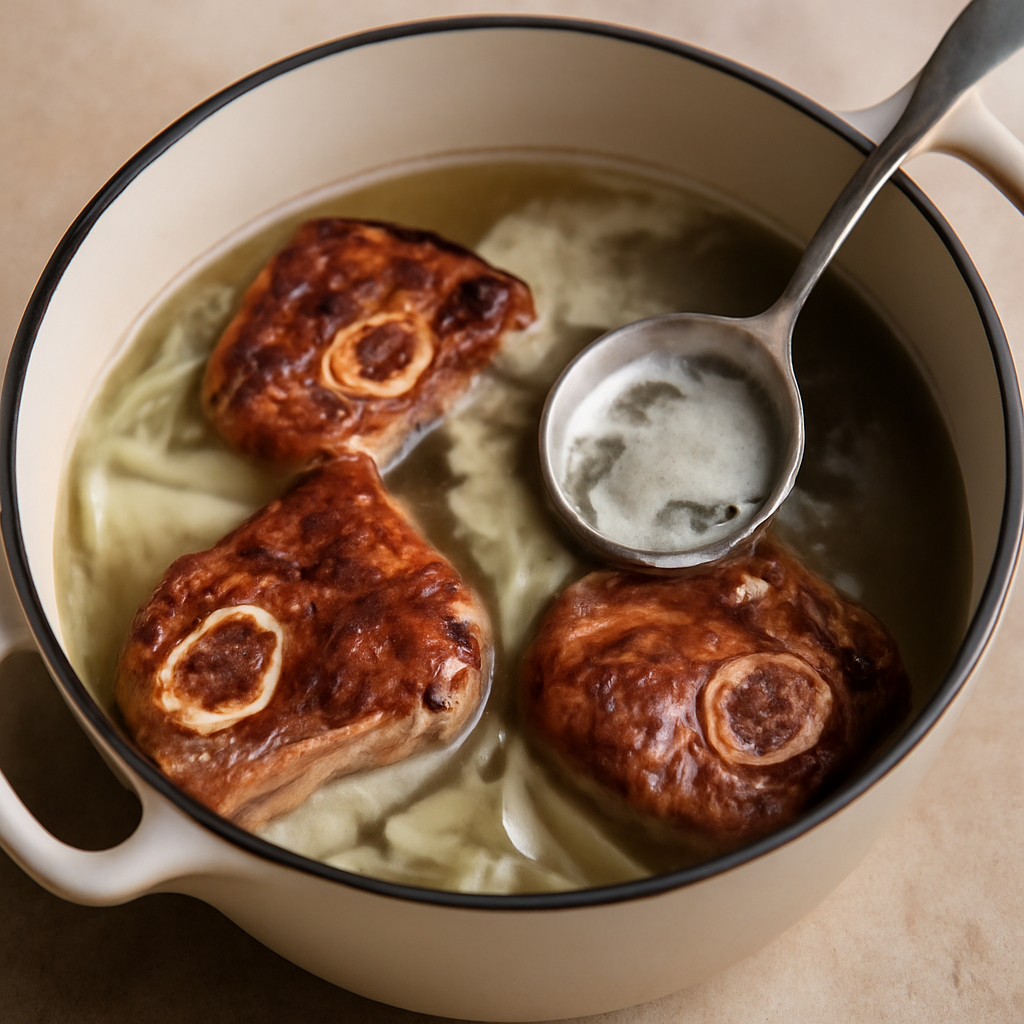
Return the lamb chops to the pot, nestling them among the onions. Add the cold water. It should come just to the level of the meat but not submerge it entirely. Bring to a gentle boil over medium-high heat. As it heats, grey foam will rise to the surface. Skim this off carefully with a large spoon or small ladle, repeating until the surface is relatively clear. This takes 5 to 8 minutes and is worth doing properly; the broth will be noticeably cleaner for it.
-
Add the thyme sprigs, parsley stalks, bay leaves, 8g salt, and white pepper. Reduce the heat to low. The liquid should barely simmer, with only the occasional lazy bubble breaking the surface. Cover the pot with a tight-fitting lid and cook for 45 minutes.
-
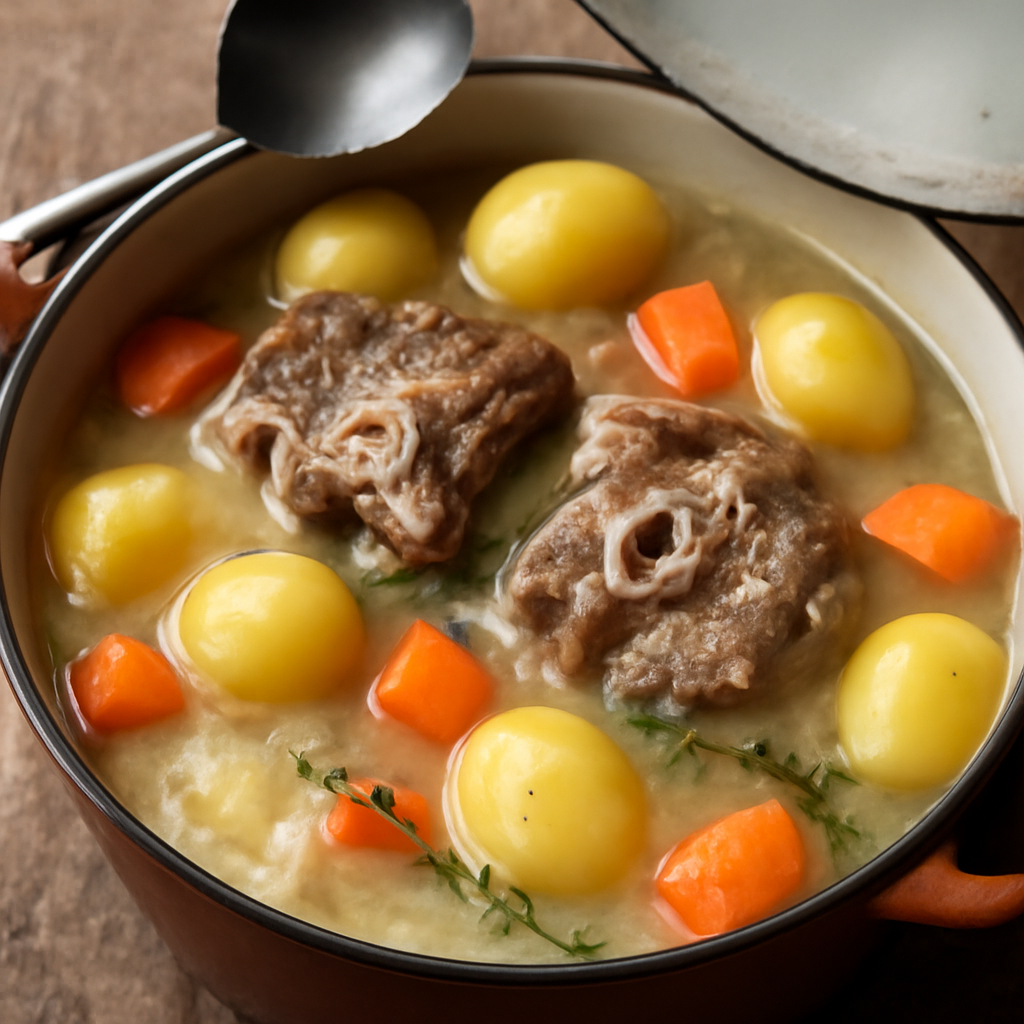
After 45 minutes, add the carrots and the waxy potatoes. These hold their shape and give the stew body without dissolving. Re-cover and continue to cook on low for a further 30 minutes.
-
Add the floury potatoes. These will break down partially over the remaining cooking time, thickening the broth naturally. Re-cover and cook for a final 30 to 40 minutes. The stew is ready when the lamb pulls easily from the bone with light pressure from a spoon and the floury potatoes have softened at the edges, with some beginning to collapse into the liquid.
-
Taste the broth and adjust the seasoning with salt. Remove and discard the thyme sprigs, parsley stalks, and bay leaves. If there is a visible layer of fat sitting on the surface and you want to reduce it, tilt the pot and spoon it off, or allow the stew to cool and lift the solidified fat later before reheating.
-
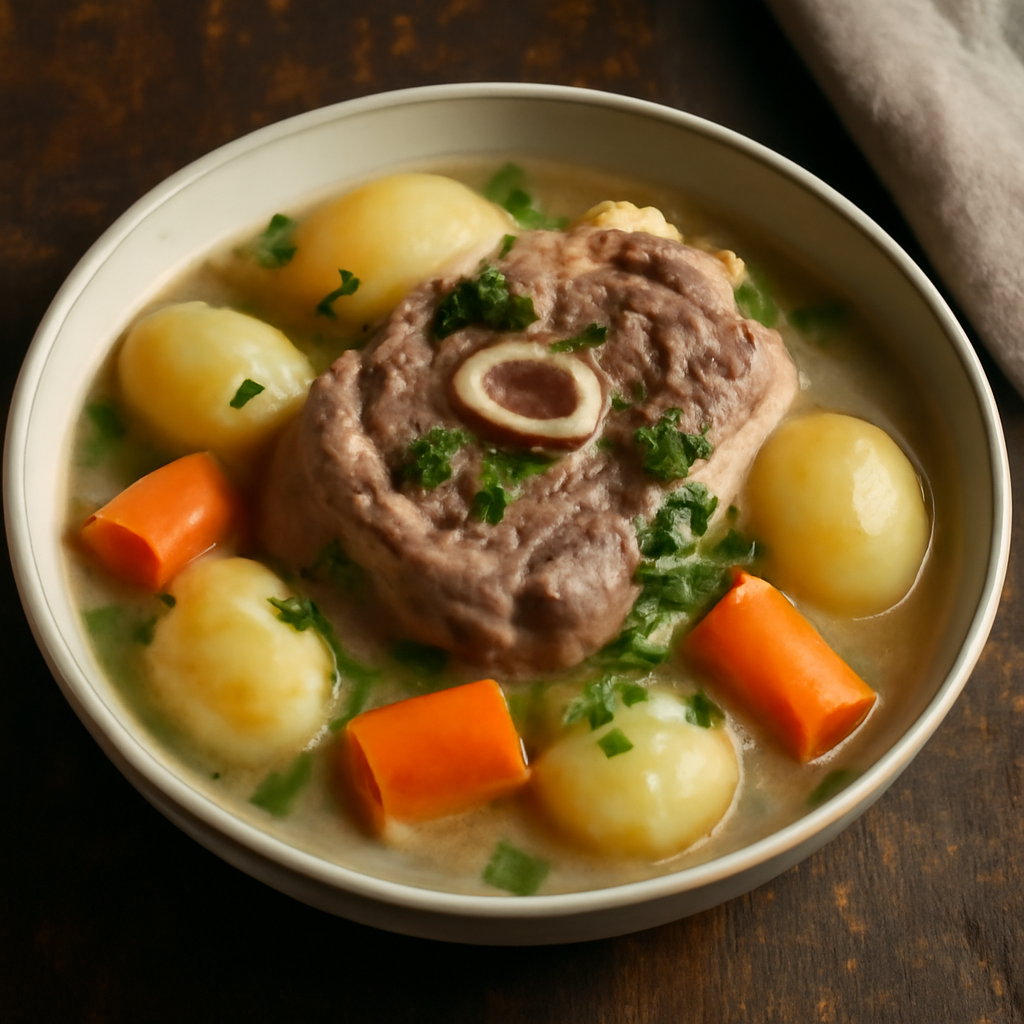
Ladle into deep bowls, making sure each serving gets both types of potato, a piece of lamb on the bone, and plenty of broth. Scatter the chopped parsley over the top and serve immediately with soda bread or white yeast bread on the side.
Irish Context
Irish stew in its plainest form is onions, potatoes, water, and mutton or lamb. Those four things are the recipe.
Everything else, the carrots, the herbs, the browning of the meat, is a matter of preference and habit, not prescription. The dish exists because these were the ingredients most likely to be available and affordable.
The potatoes do the work of thickening. The bone does the work of flavouring.
There is no stock to make in advance, no cream to finish the sauce. What makes it worth cooking now is the same thing that made it worth cooking then: the broth it produces from almost nothing is genuinely good.
Tips
Neck of lamb on the bone is the correct cut for this stew. It has enough fat and connective tissue to keep the meat moist over two hours of cooking and its collagen dissolves into the broth, giving it a slightly gelatinous body that no lean cut will produce.
Shoulder on the bone also works. Avoid leg; it goes stringy.
Using two types of potato is deliberate. The floury potatoes thicken the broth; the waxy ones hold their shape so there is something with texture to eat.
If you only have floury potatoes, use them for both roles but add the second batch 20 minutes later than the first. White pepper rather than black is worth noting.
It gives background heat without the visible specks, and the flavour sits more quietly behind the lamb. If the broth tastes flat at the end, the fix is almost always more salt, not more herbs or more cooking time.
Season gradually and taste between additions. This stew reheats extremely well.
The broth thickens overnight in the fridge and the lamb flavour deepens. Reheat slowly over low heat and add a small splash of water if the potatoes have absorbed too much liquid.
Do not rush the simmer by turning the heat up. A rolling boil will make the lamb tough and the broth cloudy with emulsified fat rather than the clear, slightly starchy liquid you are after.

Author Commentary