
 AI
AI
 AI
AI
 AI
AI
Ingredients
Method
-
Heat your oven to 220°C (200°C fan). Lightly dust a baking tray with flour.
-
Sift the bicarbonate of soda and salt into the flour in a large mixing bowl. Run your fingers through the mixture once or twice to distribute evenly. Do not over-mix at this stage.
-
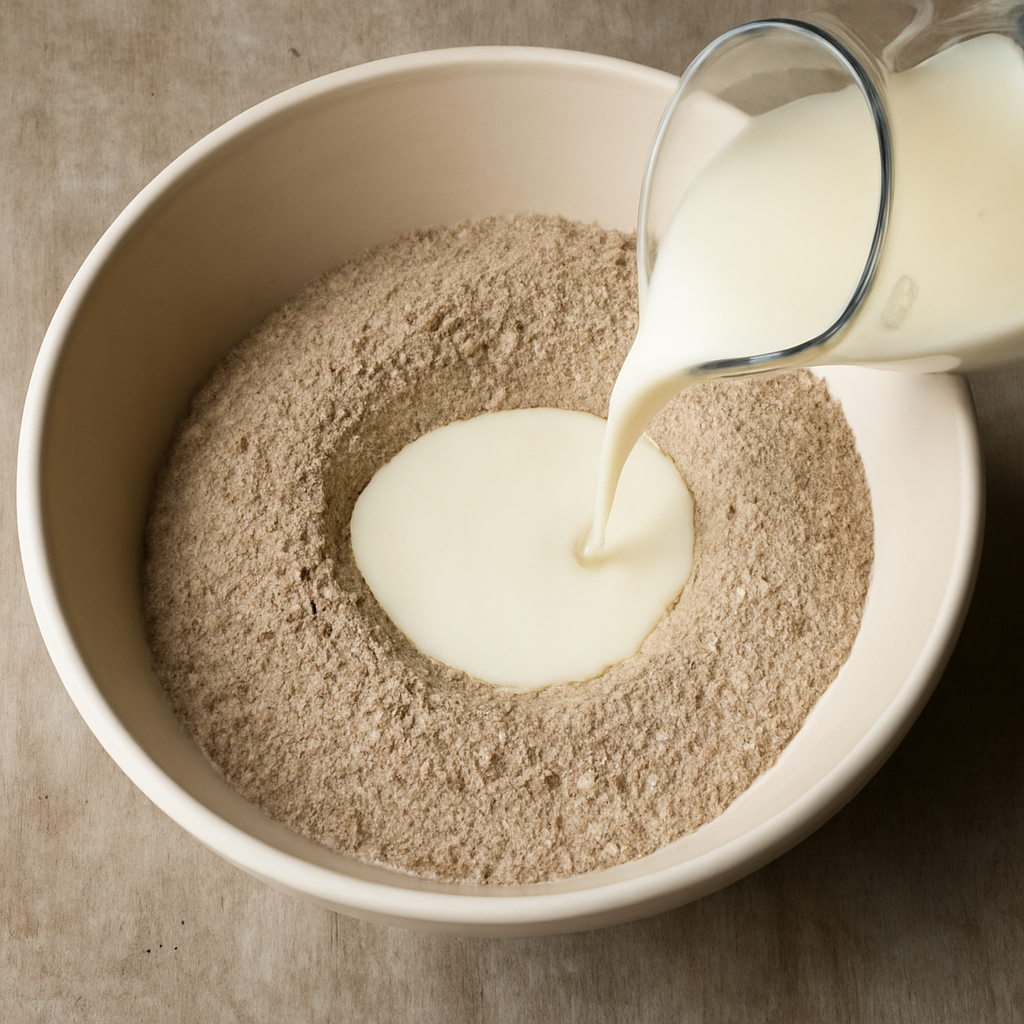
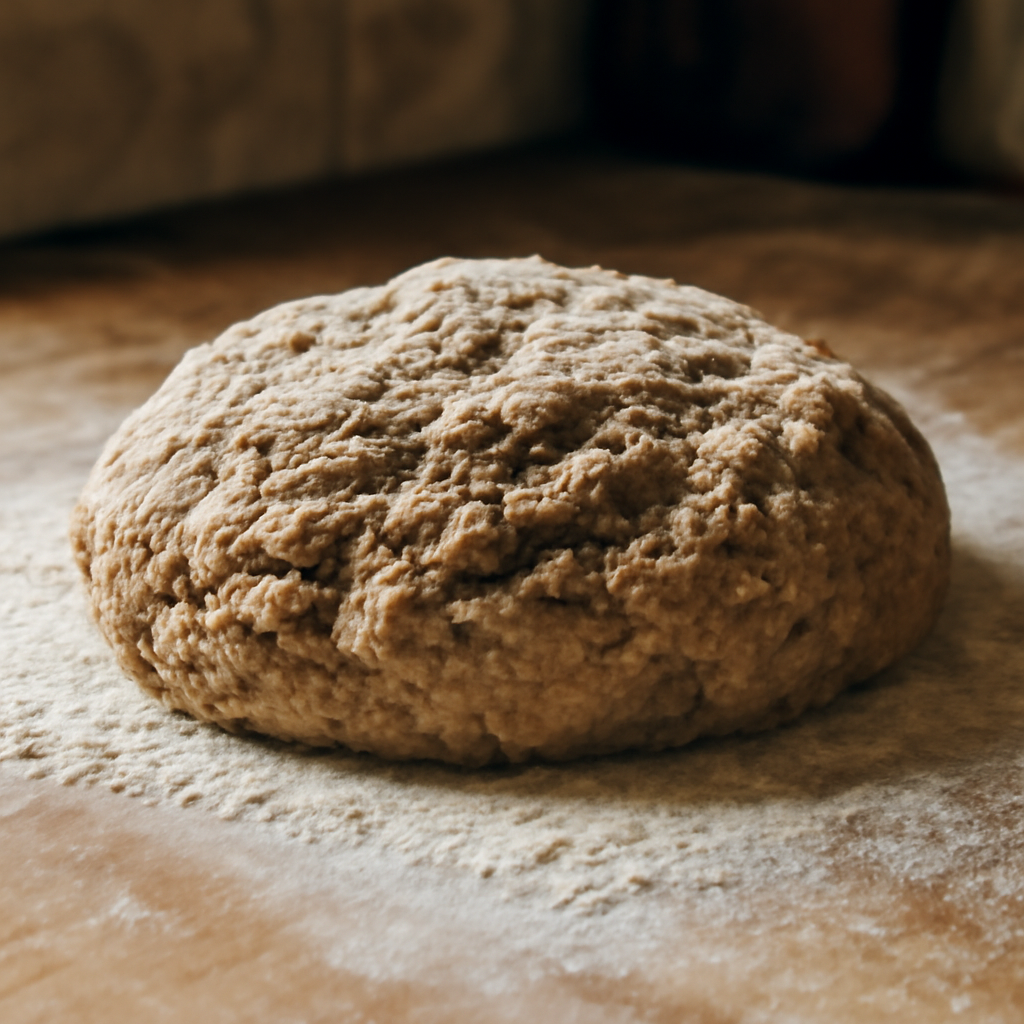
Make a well in the centre of the flour. Pour in the buttermilk all at once. Using one hand held flat, move in wide circles from the outside inward, bringing the flour into the liquid. The dough comes together in roughly 30 seconds. Stop as soon as there are no dry patches. It will look shaggy and slightly sticky. That is correct.
-
Turn the dough out onto a lightly floured surface. Pat it gently into a round about 4cm thick. Do not knead. Every squeeze tightens the crumb and toughens the crust. Handle it as little as possible.
-
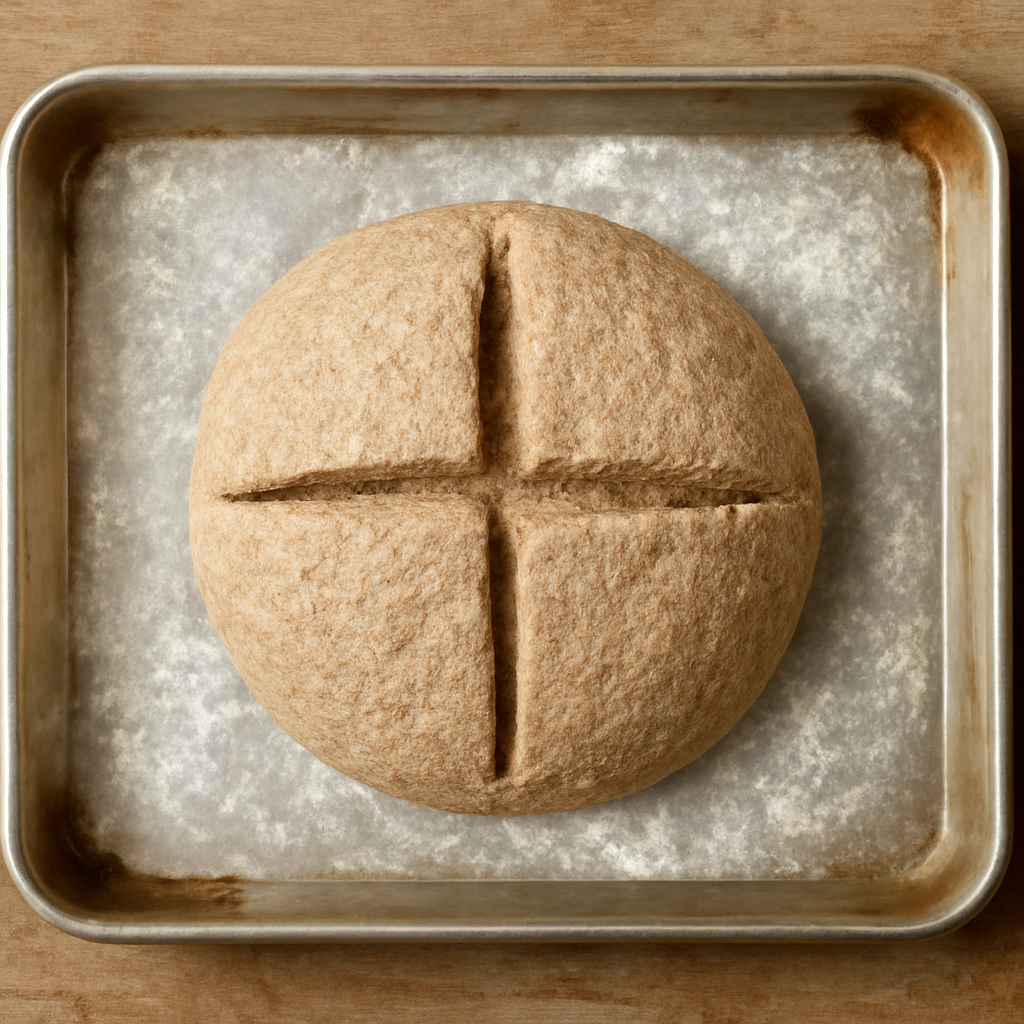
Lift the round onto the prepared baking tray. Using a sharp knife or a dough scraper, score a deep cross across the top, cutting about 2cm down into the dough. The cross must reach close to the edges. This allows the heat into the centre and lets the bread open as it bakes.
-
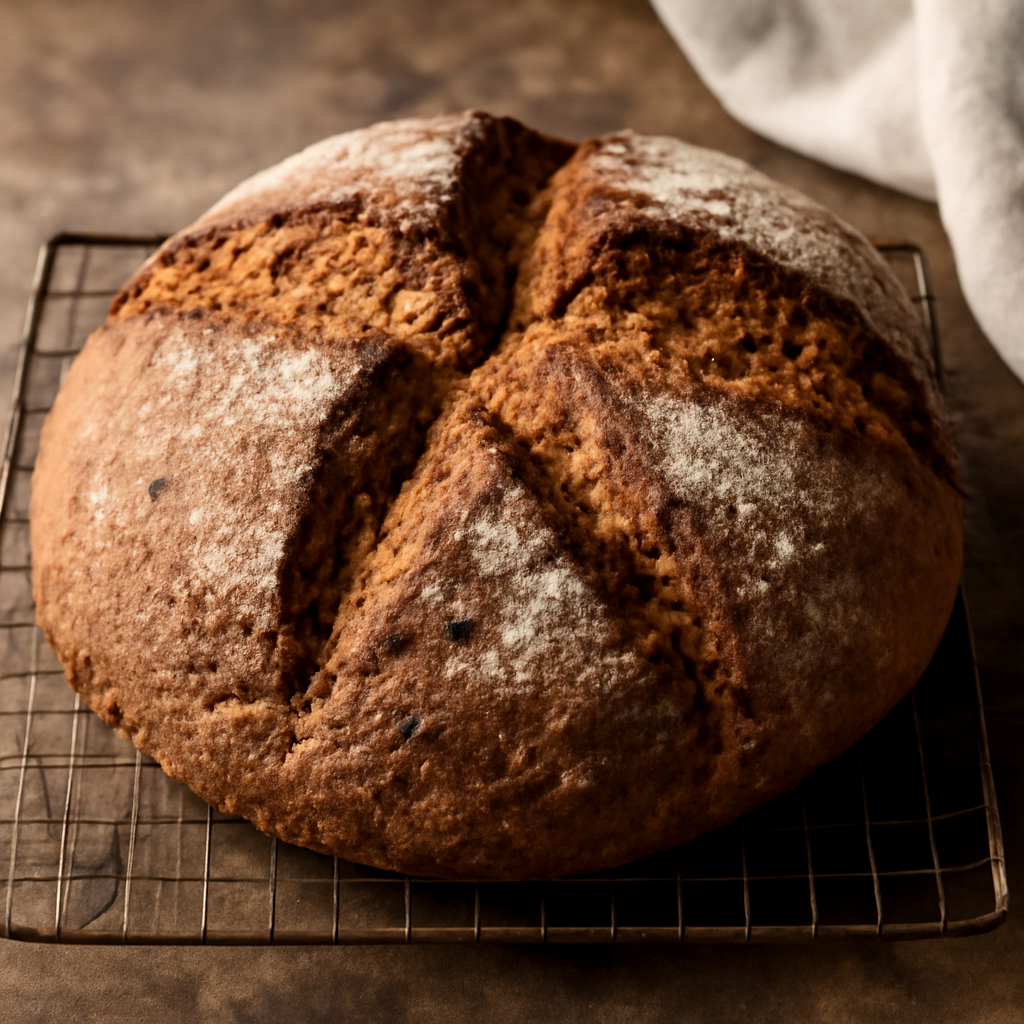
Bake at 220°C for 15 minutes, then reduce the heat to 200°C (180°C fan) and bake for a further 20 to 25 minutes. The loaf should sound hollow when tapped on the base. The crust will be dark brown in places, not golden. That colour means it is done.
-
Transfer to a wire rack immediately. Leave to cool for at least 20 minutes before cutting. Cutting too soon compresses the crumb and the bread will seem gummy, even if it is fully cooked.
Irish Context
Soda bread came about because bicarbonate of soda arrived in Ireland in the mid-nineteenth century at a point when domestic ovens were rare and yeast was not always available. The soft wheat grown in Ireland at the time had a low gluten content and did not suit yeasted breads well, but it worked for soda bread.
Buttermilk was a byproduct of butter-making, widely available, and its acidity activates the bicarbonate of soda to produce the rise. The ingredients were cheap, the method was fast, and you could bake it on a griddle or in a pot over an open fire if needed.
This recipe uses an oven because that is what most people have, but the logic of the bread has not changed.
Tips
Cold buttermilk straight from the fridge reacts more slowly with the bicarbonate of soda, giving you a little more time to work the dough without it becoming dense. If you do not have buttermilk, stir 1 tablespoon of white wine vinegar or lemon juice into 400ml of whole milk and leave it for 5 minutes.
The milk will curdle slightly. This works, though the flavour is slightly flatter than real buttermilk.
Wholemeal flour produces a denser, earthier loaf. If you prefer a lighter crumb, substitute up to half the wholemeal flour with plain white flour.
The dough should feel tacky but not wet enough to stick to your palm when you lift your hand. If it is too sticky to shape, dust your hands rather than adding more flour to the bowl.
Do not leave the shaped dough sitting before it goes in the oven. The reaction between the buttermilk and bicarbonate of soda begins immediately.
Every minute on the worktop is lift you will not get in the oven. Soda bread goes stale faster than yeasted bread.
It is best on the day it is baked. Wrap any leftovers tightly in a clean tea towel, not a plastic bag, which makes the crust sweat and soften.

Author Commentary