
 AI
AI
 AI
AI
 AI
AI
Ingredients
Method
-
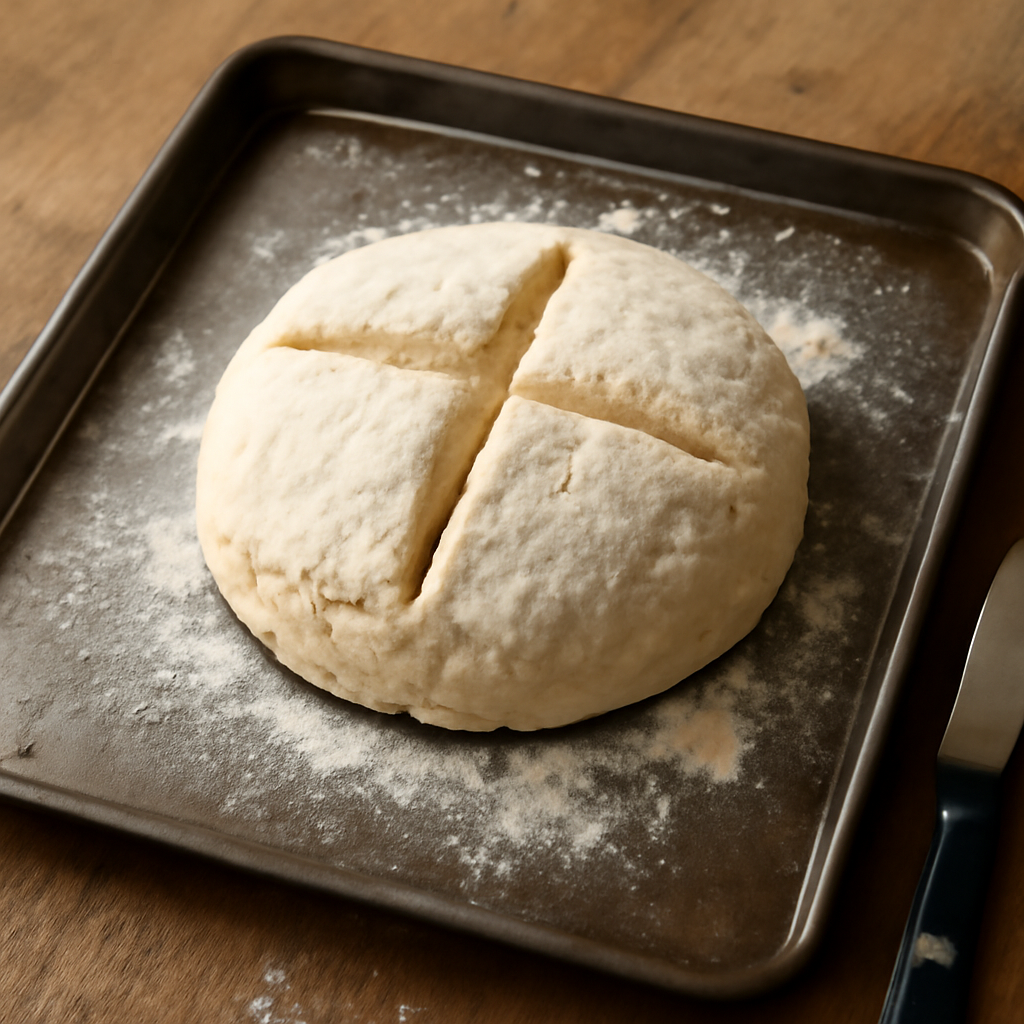
Preheat your oven to 220°C (200°C fan). Lightly dust a baking tray with flour and set it aside.
-
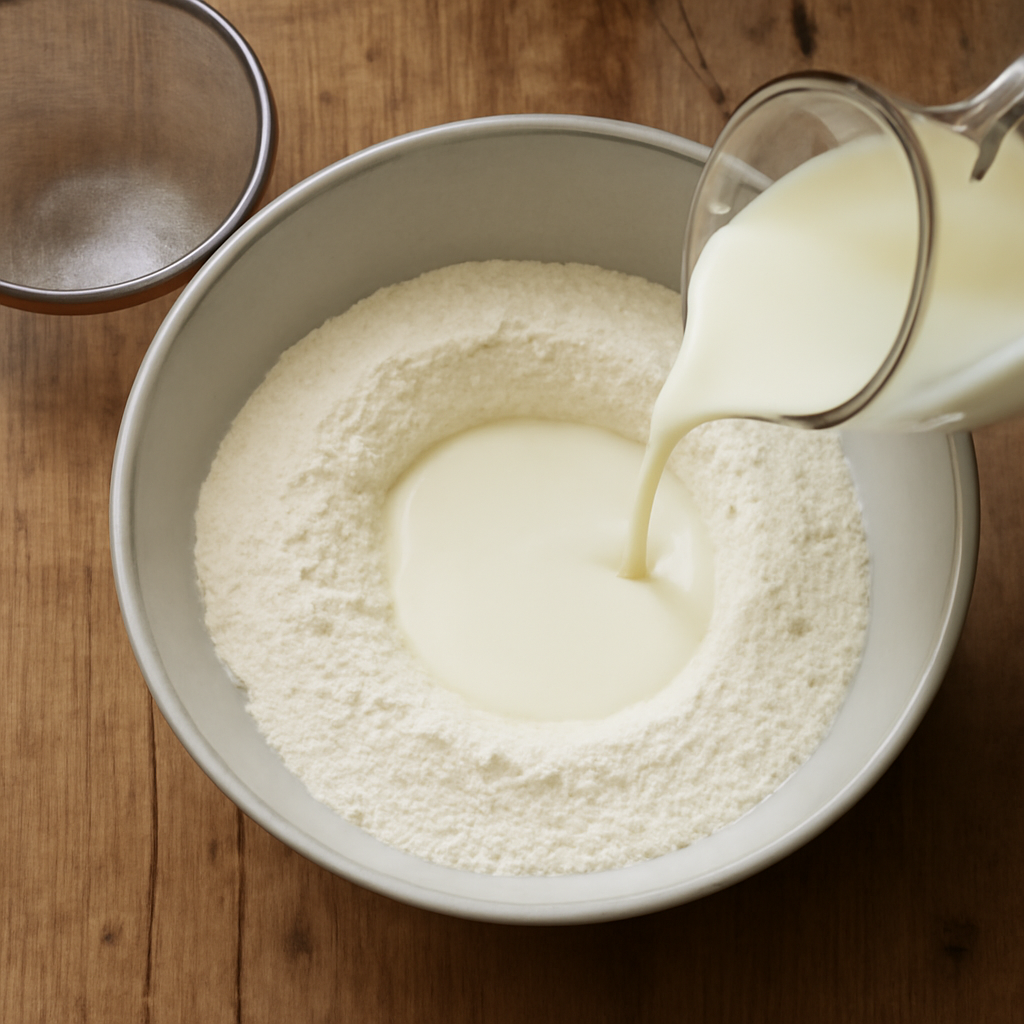
Sift the flour, salt, and bicarbonate of soda together into a large, wide mixing bowl. Sifting is worth doing here: it disperses the bicarb evenly, which matters because any pocket of undissolved bicarb will leave a bitter, soapy taste in the finished loaf.
-
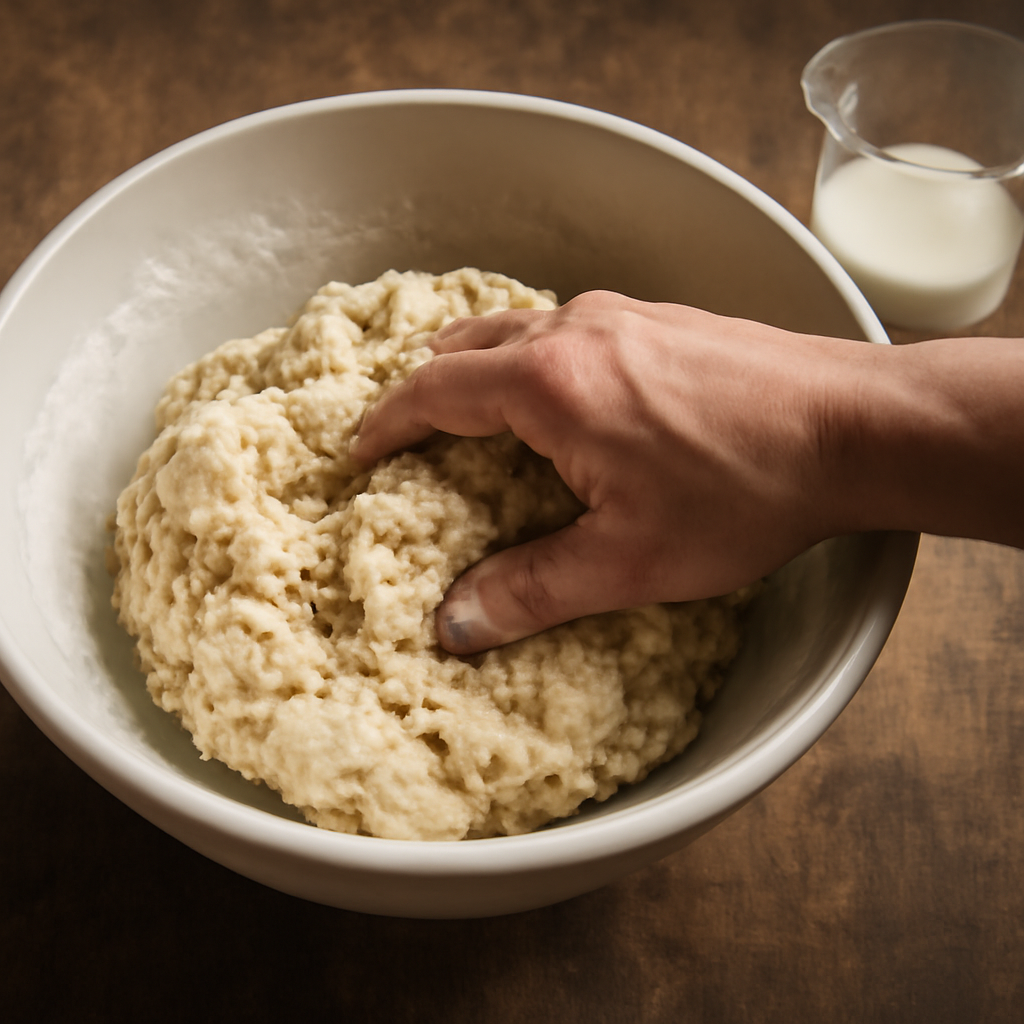
Make a well in the centre of the flour and pour in almost all of the buttermilk, holding back about 50ml. Use one hand, fingers spread wide, in a loose claw shape, to mix the dough. Work in a circular motion, pulling the flour in from the edges. The dough should come together quickly into a rough, slightly sticky mass. If it seems dry and there are floury patches that will not incorporate, add the remaining buttermilk a little at a time. You are looking for a dough that is just barely manageable, not smooth, not stiff.
-
Turn the dough out onto a lightly floured surface. Work quickly from this point: the reaction between the buttermilk and bicarbonate of soda begins immediately, and overworking the dough after that point tightens the gluten and gives you a dense, rubbery loaf. Pat and fold the dough gently, no more than six or eight times, just until it holds together as a rough round. Shape it into a circle about 6cm high and place it on the prepared baking tray.
-
Using a sharp knife or a dough scraper, cut a cross deep into the top of the loaf, going about two-thirds of the way through the dough. This is not decorative; it allows the heat to reach the centre of the loaf. Some bakers also pierce each quadrant once with the tip of the knife, which is said to let the fairies out and prevent a heavy centre.
-
Dust the top lightly with flour. Place in the preheated oven and bake at 220°C for 15 minutes, then reduce the heat to 200°C (180°C fan) and bake for a further 20 to 25 minutes.
-
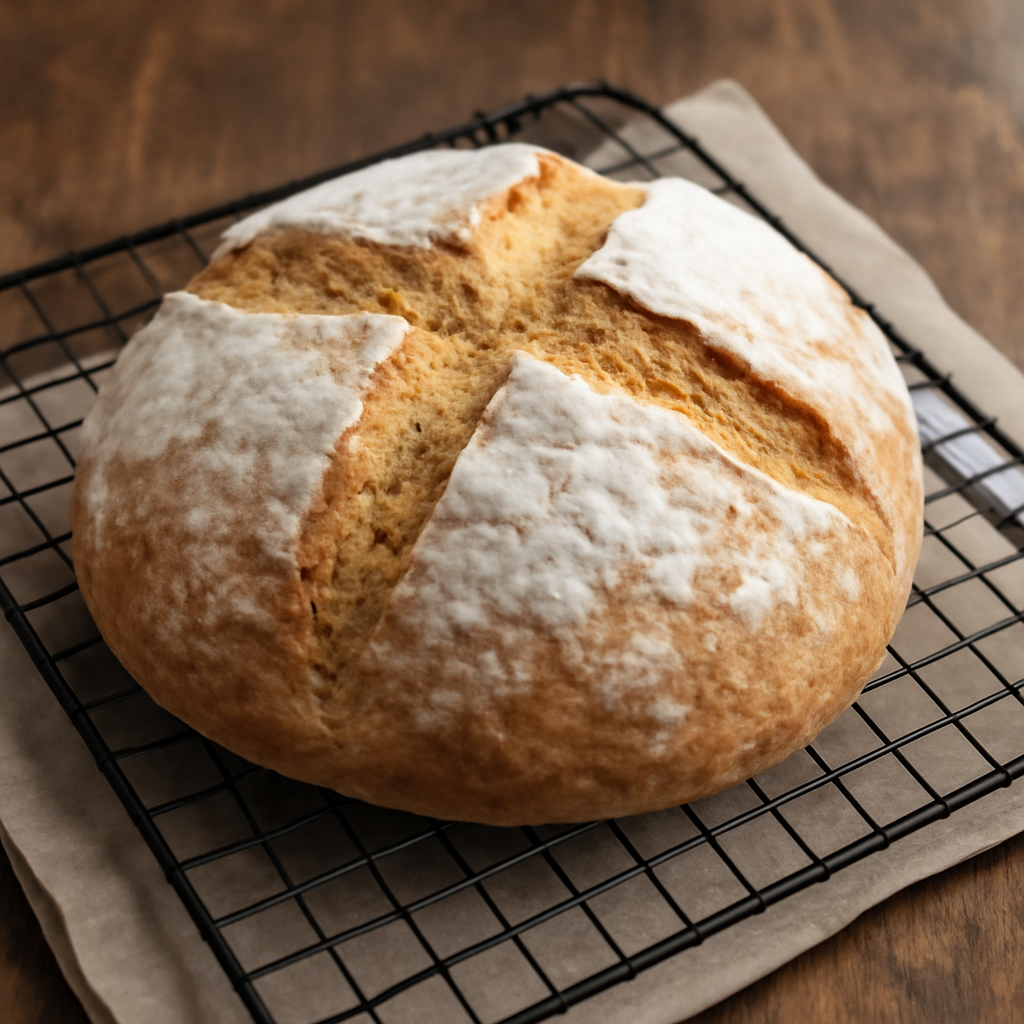
To check if the loaf is done, lift it off the tray and tap the base firmly with your knuckle. It should sound hollow, like knocking on a wooden door. If it sounds dense and flat, return it to the oven directly on the oven rack, without the tray, for another 5 minutes.
-
Transfer to a wire rack and leave to cool for at least 20 minutes before cutting. Cutting too soon compresses the crumb and gives you gummy slices.
Irish Context
Soda bread became a staple in Irish households during the nineteenth century when bicarbonate of soda became widely available and affordable. Soft Irish wheat, low in gluten, does not develop the structure needed for yeast-leavened breads; it suits soda bread well.
The acid in buttermilk, a byproduct of churning butter, activates the bicarb and creates the lift. The combination suited the practicalities of the Irish rural kitchen: no proving time, no special equipment, baked in a bastible pot over an open hearth or on a griddle.
The round, cross-scored shape is still standard, and you will find slight variations in every county, some adding a small amount of sugar or a handful of oats.
Tips
Cold buttermilk straight from the fridge gives you a little more time before the leavening reaction accelerates. Room-temperature buttermilk is not a disaster, but you need to move faster once it hits the flour.
If you have no buttermilk, stir 1 tablespoon of white wine vinegar or lemon juice into 400ml of whole milk and leave it for 10 minutes. The milk will curdle slightly and thicken.
It works, though the flavour is marginally less pronounced than real buttermilk. The dough should look rough and slightly shaggy when it goes into the oven.
If it looks neat and smooth, you have worked it too much. A cast iron casserole dish with a lid, preheated in the oven, produces a loaf with a particularly good crust.
Place the shaped dough inside, score it, replace the lid, and bake covered for 25 minutes, then uncovered for 15 minutes. Day-old soda bread, sliced thickly and toasted under the grill, is arguably better than the fresh loaf.
The tang comes forward and the texture holds up without crumbling.

Author Commentary