
 AI
AI
 AI
AI
 AI
AI
Ingredients
Method
-
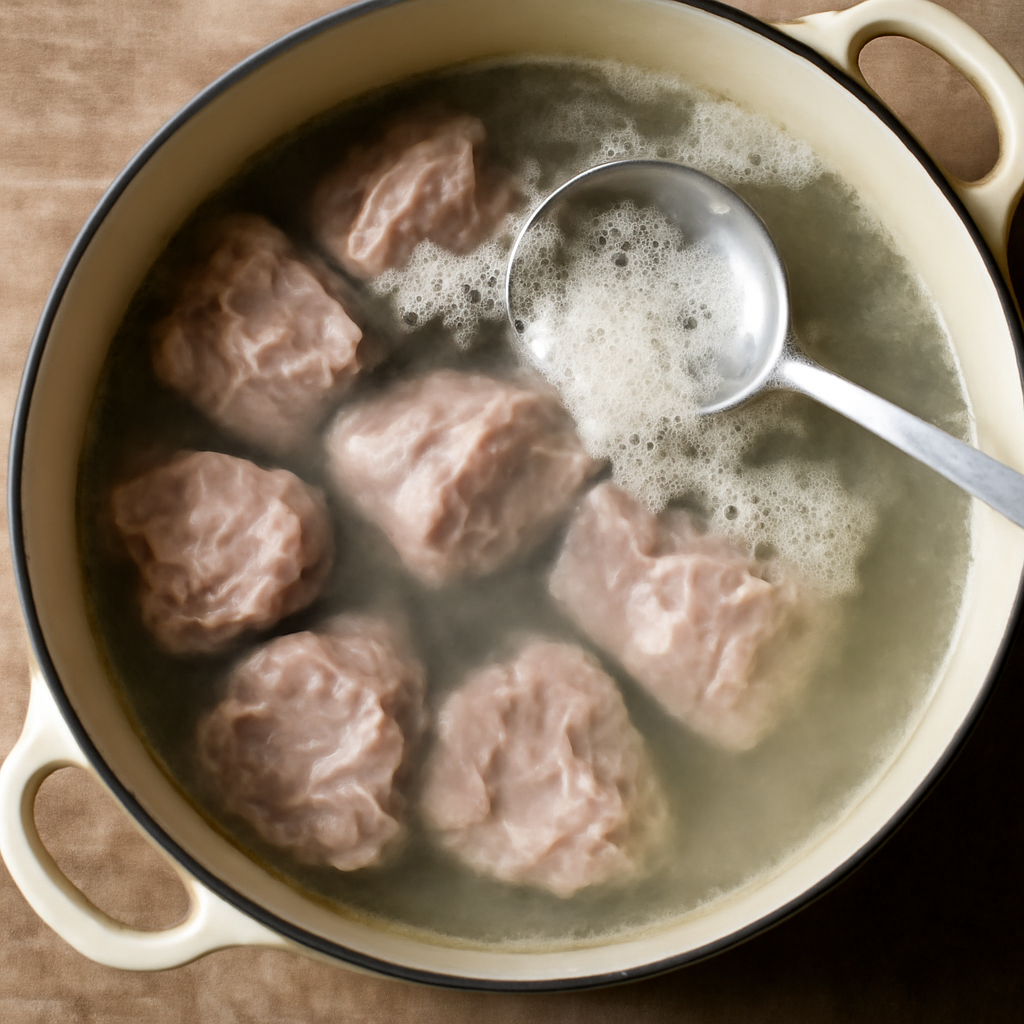
Place the lamb pieces in a large, wide pot in a single layer. Cover with the cold water. Bring slowly to the boil over a medium heat. As the water heats, a grey foam will rise to the surface. Use a ladle or large spoon to skim this off carefully and discard it. This step takes patience; do not rush it by raising the heat. The foam is coagulated protein and blood. If you leave it in, the broth will be murky and taste flat. Keep skimming until the surface is clear, which should take around 8 to 10 minutes after the water first trembles.
-
Once the broth is clear, add the parsley stalks, thyme sprigs, bay leaf, 1 teaspoon of fine sea salt, and the white pepper. Reduce the heat to a gentle simmer, cover with a lid left slightly ajar, and cook for 45 minutes. The liquid should barely move; small bubbles breaking the surface occasionally is enough.
-
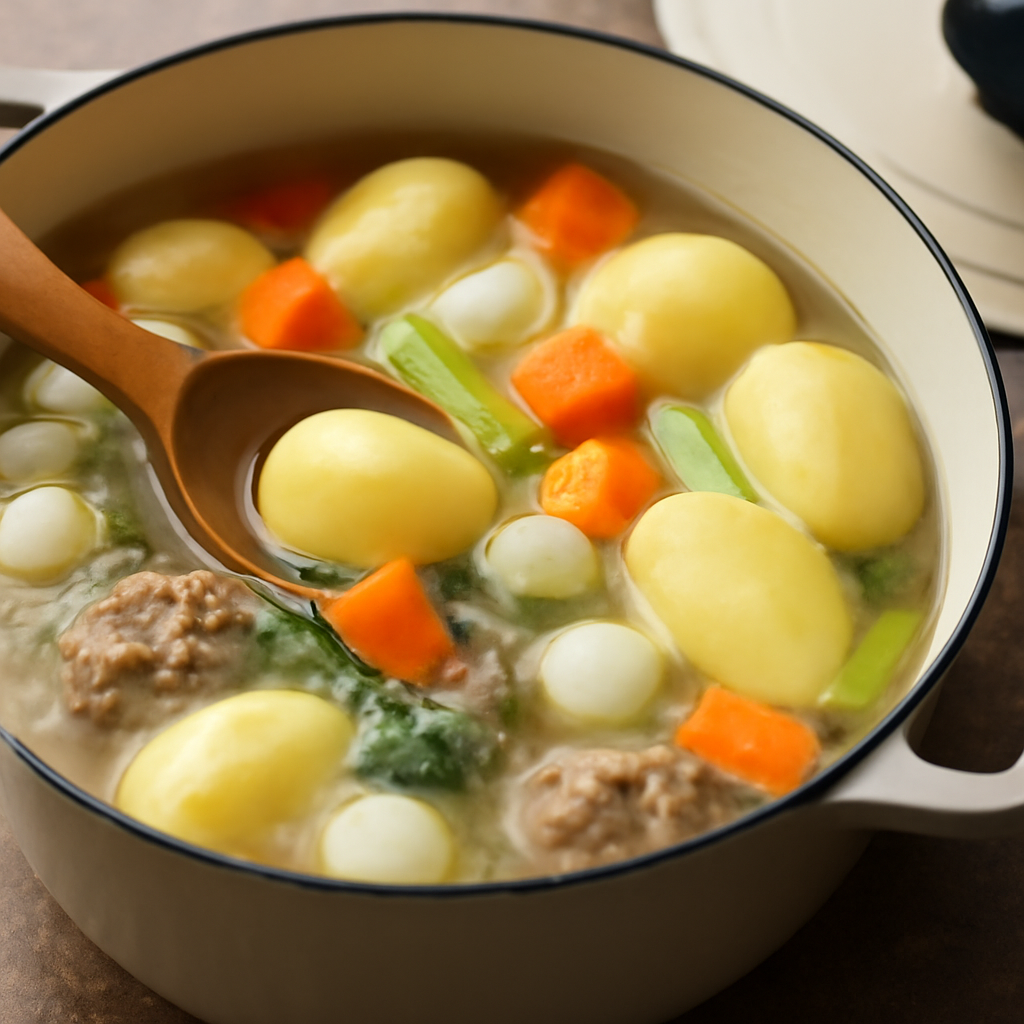
After 45 minutes, add the pearl onions, carrots, and celery. The potatoes go in now too. Press everything down gently so it sits below the surface of the broth. If needed, add a splash more water. Replace the lid, still ajar, and continue to simmer for a further 45 to 50 minutes, or until the lamb is completely tender and the potatoes are just holding their shape.
-
Lift out the lamb, potatoes, and vegetables with a slotted spoon and set them aside in a bowl, covered loosely with foil. Remove and discard the bay leaf, thyme sprigs, and parsley stalks. You should have roughly 800ml to 900ml of broth remaining in the pot.
-
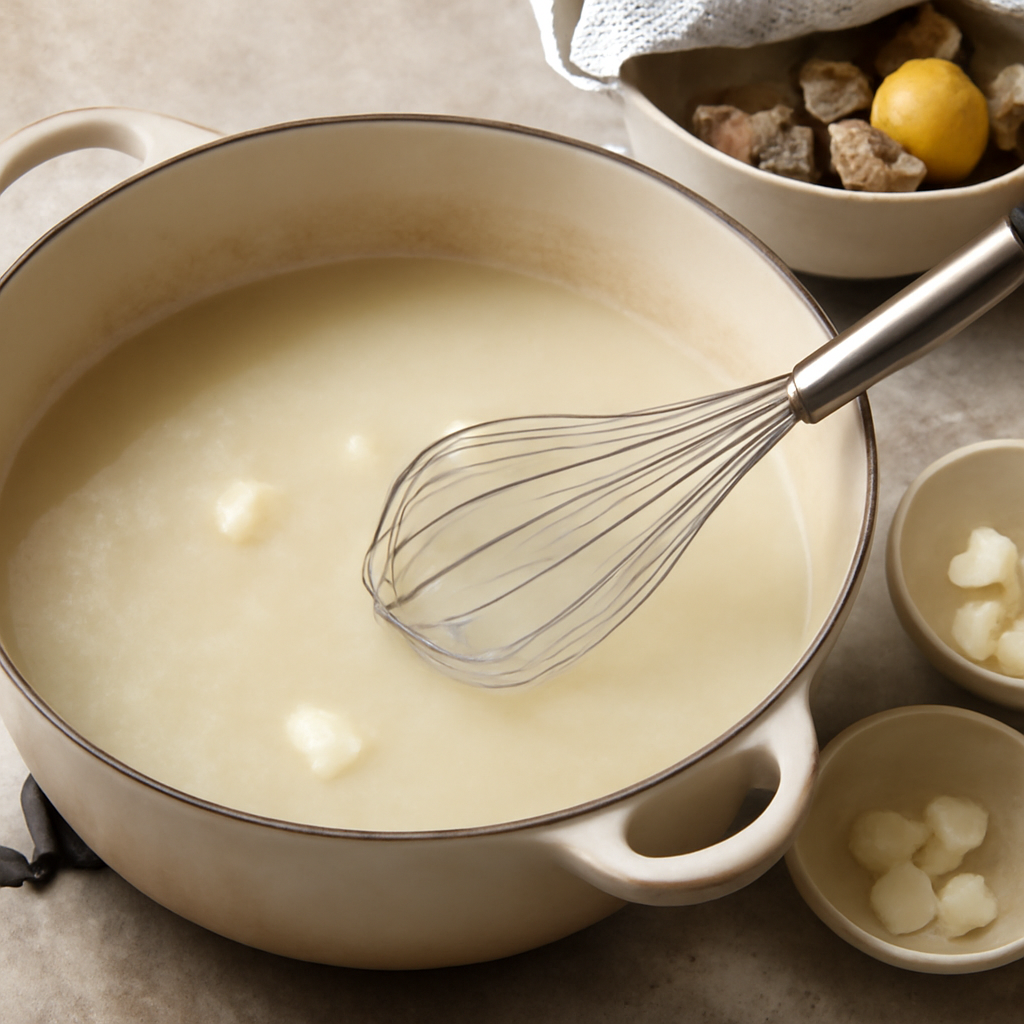
To finish the broth, make a beurre manié: work the cold butter and the plain flour together with your fingertips until you have a smooth, uniform paste. Bring the broth back to a steady simmer over a medium heat. Drop small pieces of the beurre manié into the broth one at a time, whisking constantly after each addition. Continue until the broth has thickened to a consistency that lightly coats the back of a spoon. This is not a thick gravy; it should still look like a broth with body, not a sauce. Taste and adjust salt now.
-
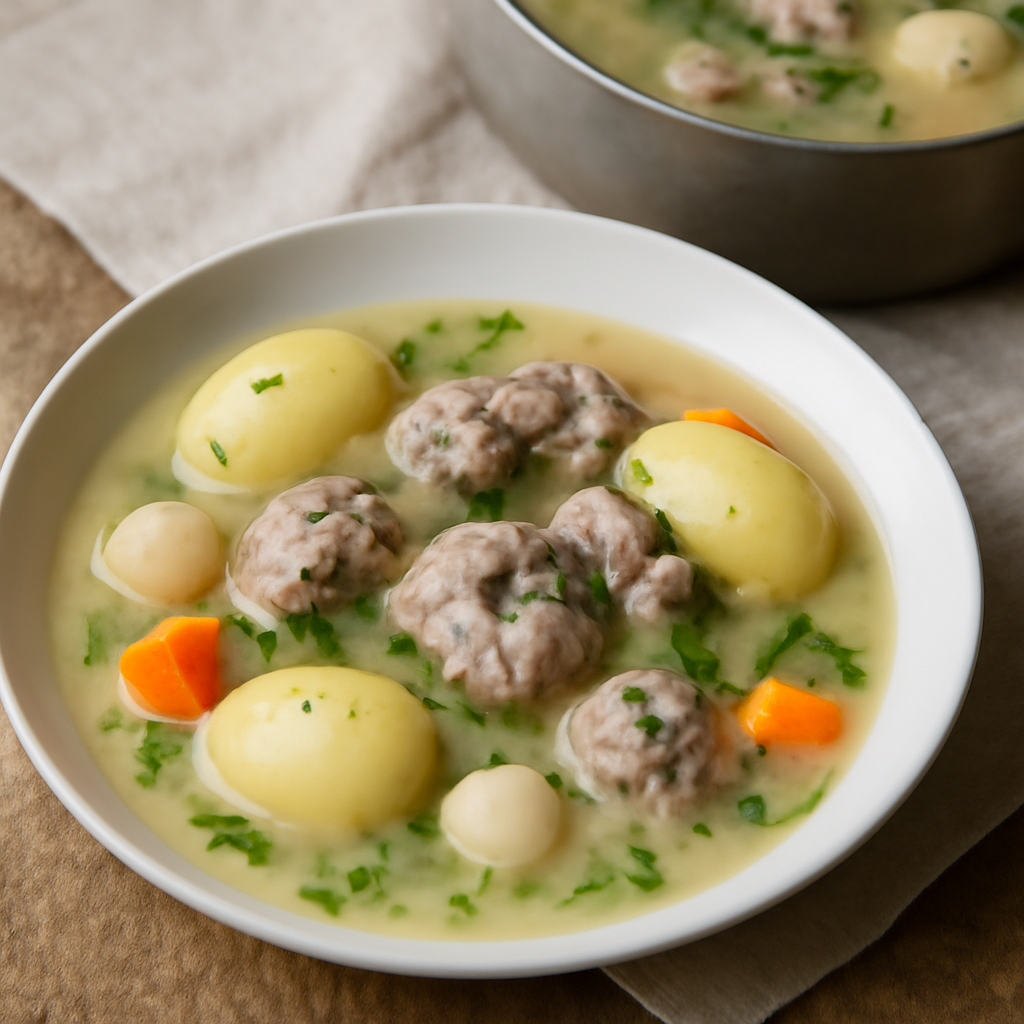
Return the lamb, potatoes, and vegetables to the pot. Warm everything through over a low heat for 5 minutes without boiling. Scatter the chopped parsley over the surface and serve directly from the pot into wide, shallow bowls.
Irish Context
White stew, sometimes called bán stew in older households, relies on the principle of poaching rather than browning the meat first. This was practical in kitchens where a heavy pot over a range or open hearth was the primary cooking tool and where the quality of the lamb spoke for itself without any searing to mask it.
The pale broth is not a sign of a stew that lacks depth; it is a specific result that requires more care at the early stages, particularly the skimming, than a browned stew demands.
Tips
Lamb neck is the right cut here. Shoulder is acceptable but releases more fat, which can make the broth greasy.
Leg is too lean and will dry out. Neck has enough collagen to give the broth its slight slip without turning it heavy.
Waxy potatoes matter. A floury variety will disintegrate into the broth and make it starchy.
Queen potatoes or a waxy Rooster hold their structure and still absorb the broth flavour. If the broth looks too pale or thin before you thicken it, do not be tempted to add any colouring or stock cubes.
The flavour is in the broth already. Trust the skimming and the slow cook.
The beurre manié can be made ahead and kept in the fridge for up to two days. Use only as much as you need; the stew should not be thick like a casserole.
This stew is better the next day. Refrigerate it overnight and the fat will solidify on the surface.
Lift it off before reheating. The broth will have set to a light jelly, which tells you the gelatin from the neck bones has done its work.

Author Commentary