
 AI
AI
 AI
AI
 AI
AI
Ingredients
Method
-
Sift the plain flour, bicarbonate of soda, salt, and sugar into a large bowl. Add the wholemeal flour and stir to combine. The coarse bran that stays behind in the sieve can go straight back in; you want it there.
-
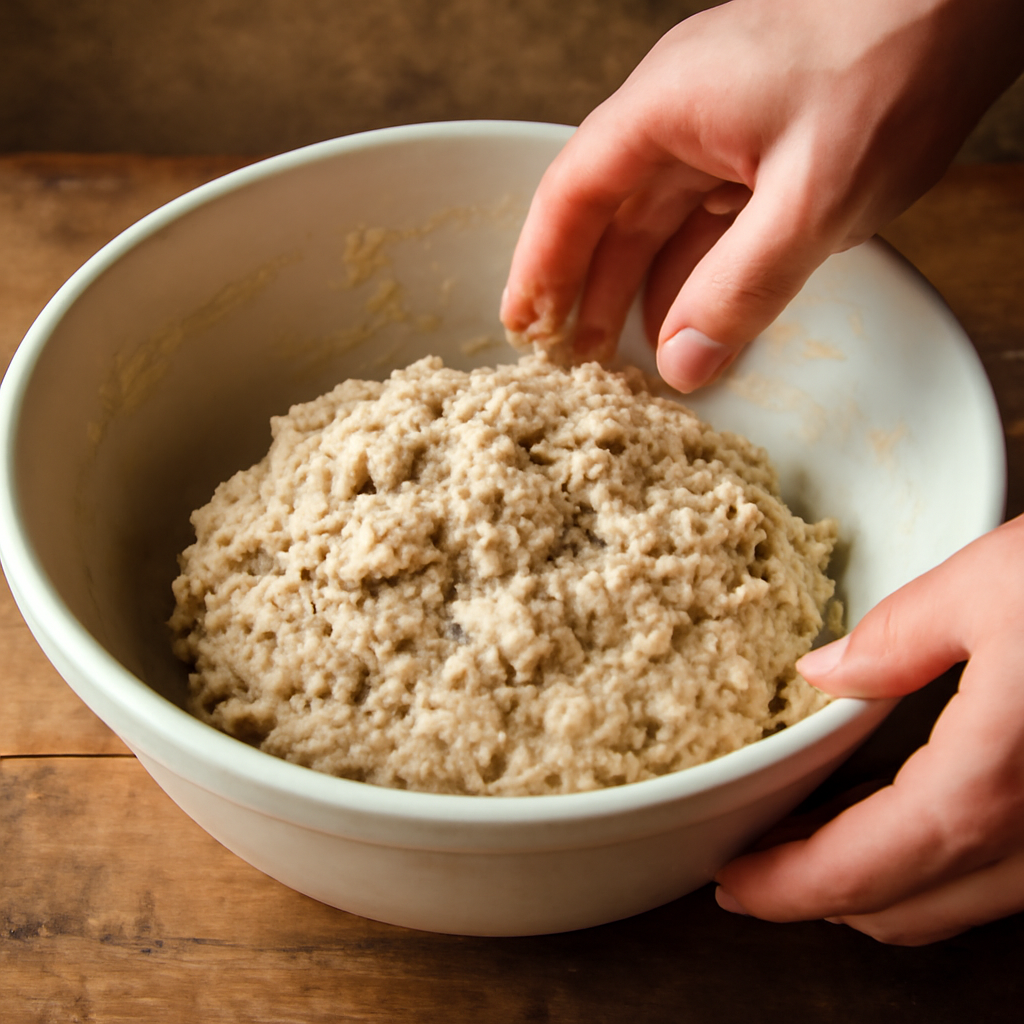
Make a well in the centre of the dry ingredients. Pour in the buttermilk and the melted butter. Using one hand held loosely like a claw, draw the dry ingredients into the liquid with a circular motion. Work quickly and stop as soon as the dough comes together into a rough, slightly sticky mass. Overworking it at this stage will make the crumb dense and gummy rather than open and tender.
-
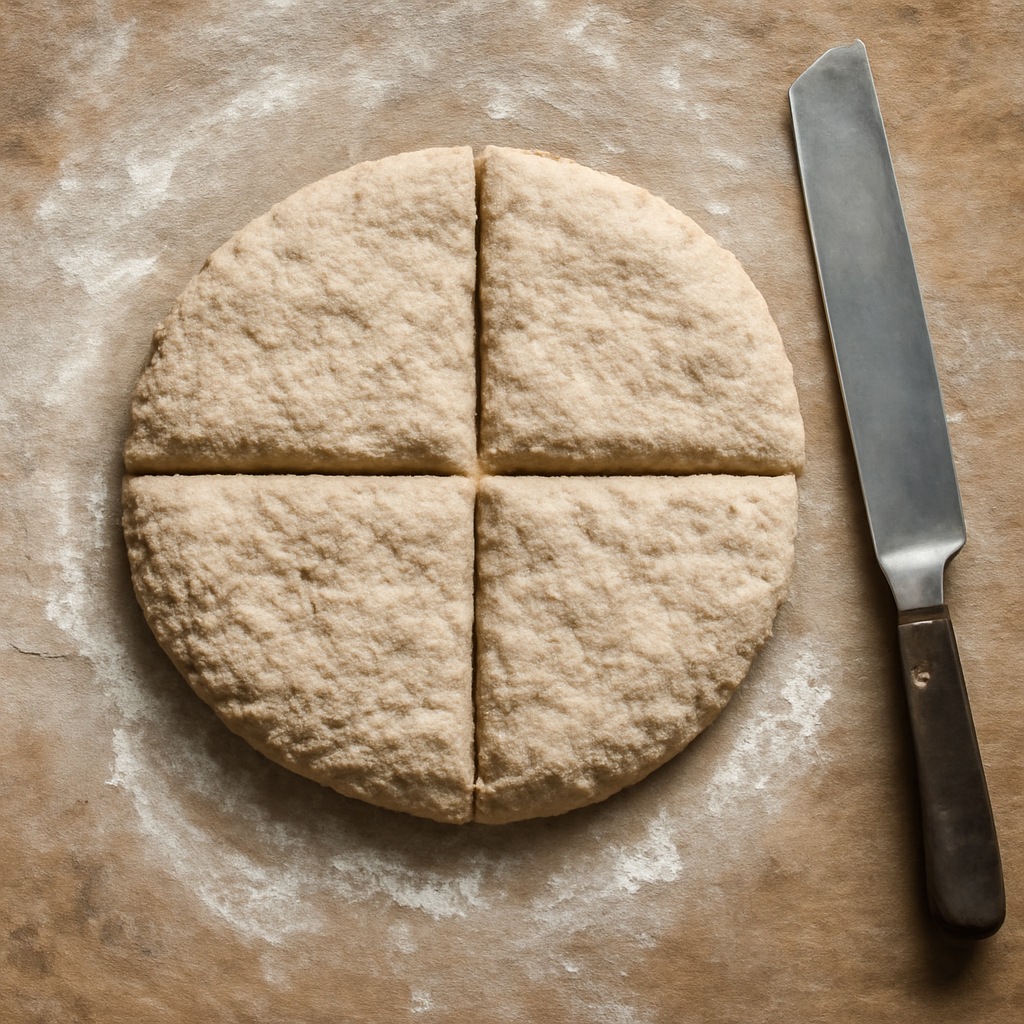
Flour your work surface lightly. Turn the dough out and pat it gently into a round about 20cm across and 2cm thick. Do not roll it. Cut a deep cross through the centre to divide it into four farls, pressing the knife or cutter all the way through. The cuts help the heat reach the centre.
-
Heat a heavy-based frying pan or cast-iron griddle over a medium-low heat. Do not grease it. The pan is ready when a pinch of flour dropped onto the surface turns pale gold within about 30 seconds without immediately blackening.
-
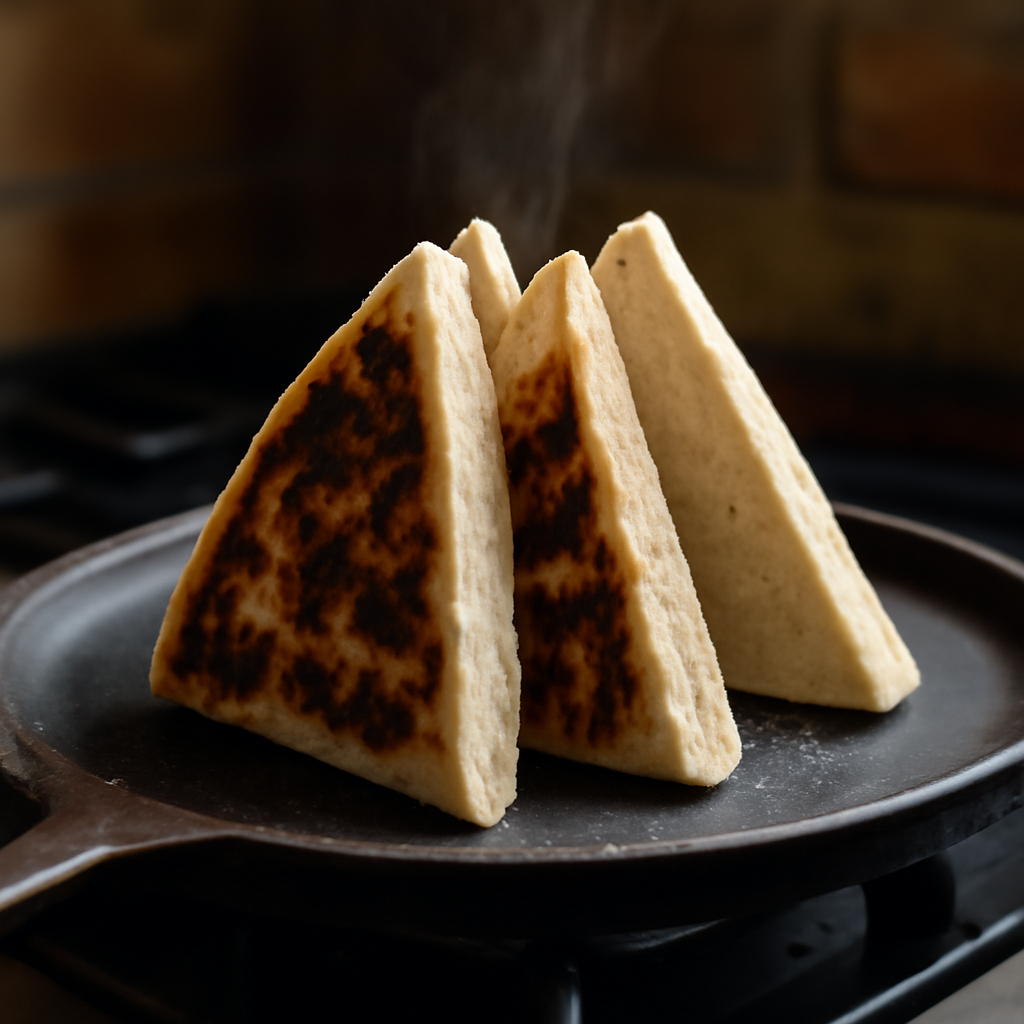
Lay the four farls onto the dry pan, cut-side down first. Cook for 8 to 10 minutes on the first side. The undersides should develop a mottled, dark-patched crust; lift one corner with a palette knife to check. Flip all four farls and cook for a further 8 to 10 minutes on the second side.
-
Stand the farls on their edges, leaning them against each other in a loose tepee shape, and cook the sides for 5 to 7 minutes, rotating every couple of minutes so all the exposed edges get some heat. This step dries out the interior and prevents a raw, doughy seam through the middle.
-
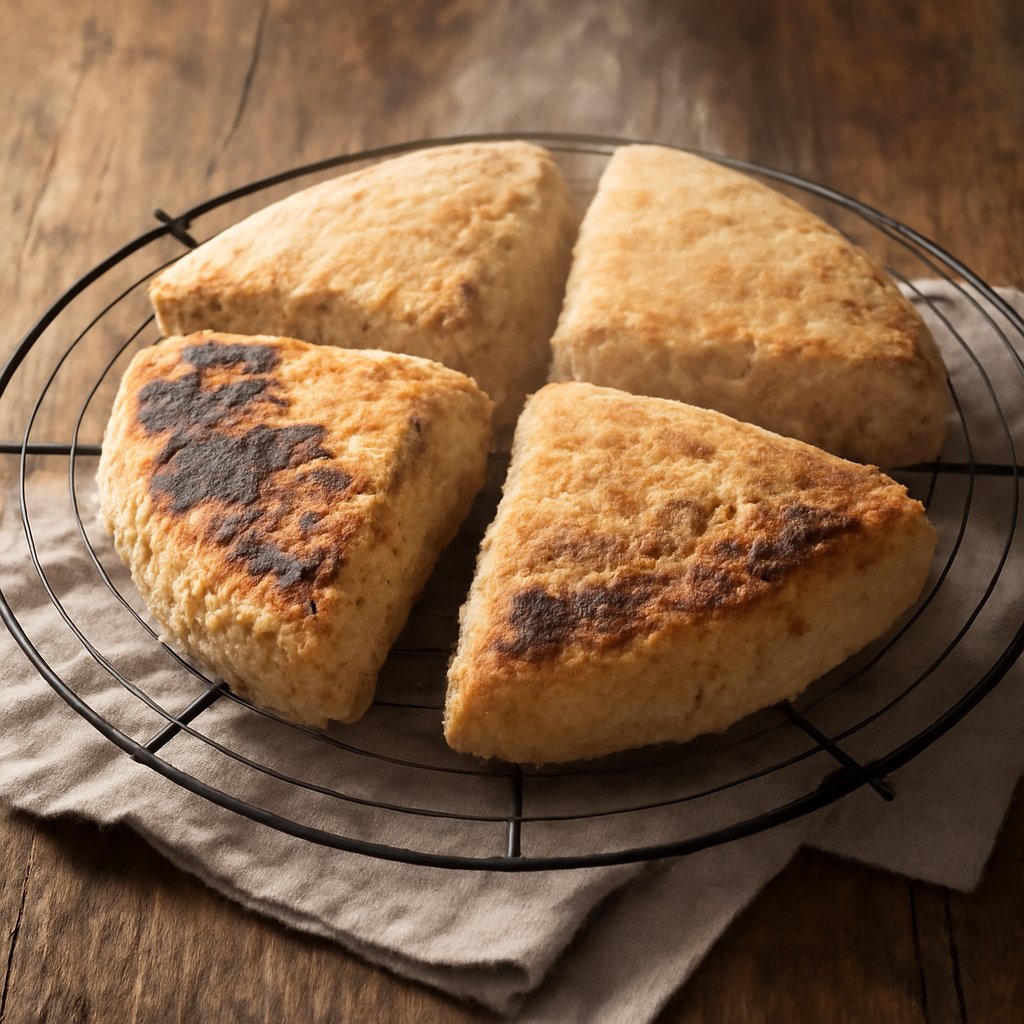
The farls are done when they sound hollow if you tap the base firmly with your knuckle, and when a skewer inserted into the thickest part comes out with no wet dough clinging to it. Total griddle time is 30 to 35 minutes. Transfer to a wire rack and leave for at least 10 minutes before cutting; the crumb continues to set as it cools.
Irish Context
Griddle bread in Ireland predates domestic ovens in most rural households. Bannock is the older word, used across Ireland and Scotland, for any bread baked on a flat iron over an open fire or range.
The wheaten version, made with coarse stone-ground wholemeal flour from water-powered mills, would have been an everyday item alongside the plainer white soda farl. Coarse wholemeal flour from Irish mills still has a rougher, more variable texture than the finely processed wholemeal found in supermarkets, and it is worth seeking out for this recipe.
Tips
Buttermilk temperature matters more than most recipes admit. Cold buttermilk straight from the fridge slows the reaction between the acid and the bicarbonate of soda.
Let it sit at room temperature for 20 minutes if you can. If your pan runs hot and the outside is colouring before the inside has had time to cook through, slide a heat diffuser under it or reduce the heat and add 3 to 5 minutes to each side.
A griddle that is too hot gives you a bannock with a burnt crust and a raw centre. The dough should be just barely manageable.
If it is so wet it spreads on the work surface, add a tablespoon of plain flour at a time, but resist the urge to dry it out completely. A slack dough bakes more open than a stiff one.
Leftover farls from the next day are best split and toasted under the grill until the cut face is dark gold and a little crunchy. They are not the same bread as they were fresh, but they are not a lesser one either.

Author Commentary