
 AI
AI
 AI
AI
 AI
AI
Ingredients
Method
-
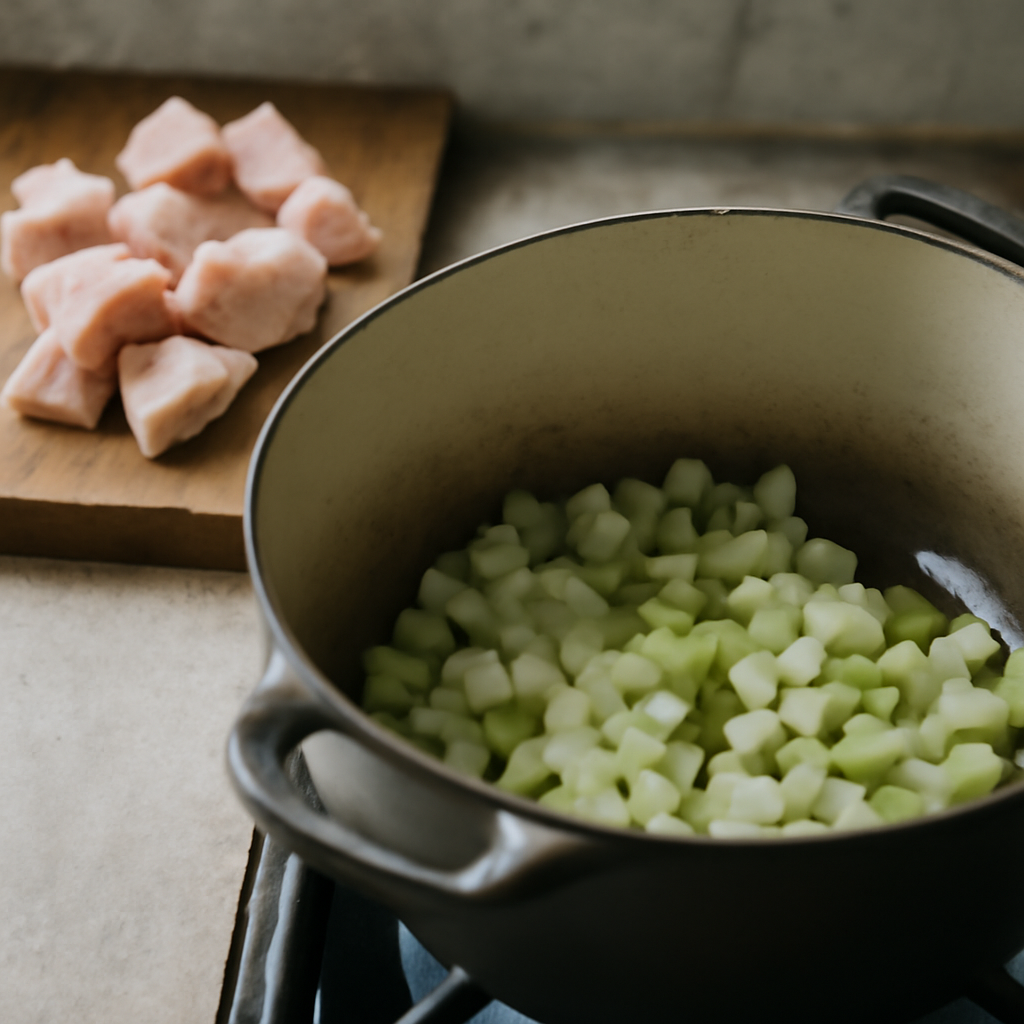
Place the bacon collar chunks into a large pot and cover with cold water. Bring to the boil over high heat, then drain immediately and rinse the meat under cold running water. This removes excess salt and the grey scum that would otherwise cloud the finished broth with an unpleasant bitterness. Dry the pot.
-
Return the pot to a medium heat and add the sunflower oil. Once shimmering, add the onions and celery. Cook for 7 to 8 minutes, stirring occasionally, until the onion has softened and turned translucent at the edges. Do not rush this; softened onion gives the broth a mild sweetness that raw onion never will.
-
Add the garlic and stir through for 1 minute until fragrant but not coloured.
-
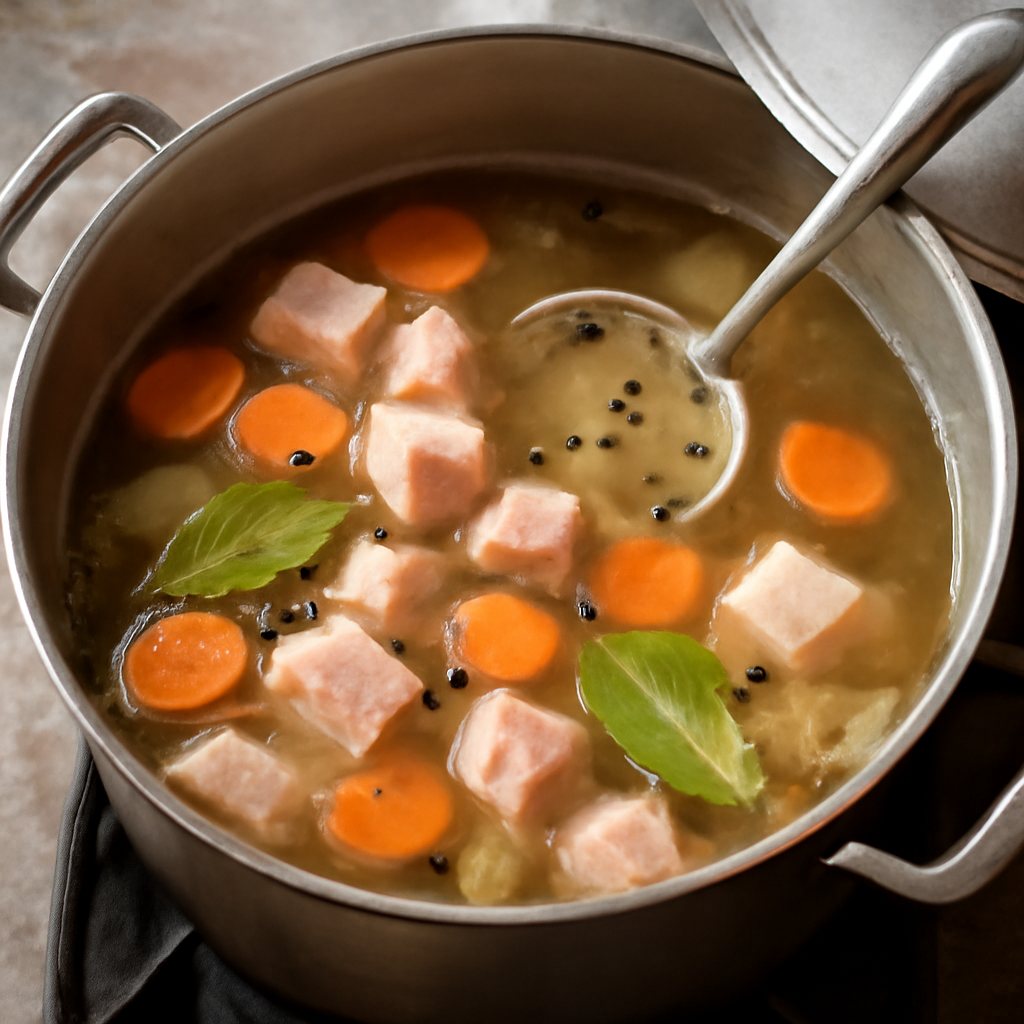
Return the blanched bacon to the pot. Add the carrots, peppercorns, and bay leaves. Pour in the 1.4 litres of cold water. Bring to a gentle boil over high heat, then reduce to a low simmer. Skim any foam that rises in the first few minutes. Cover with a lid left slightly ajar and cook for 30 minutes.
-
Add the potato chunks and stir through. Replace the lid, still slightly ajar, and continue to simmer for 20 minutes. The potatoes will begin to break down at the edges, which is exactly what you want. This thickens the broth naturally and gives it that slightly starchy, opaque quality.
-
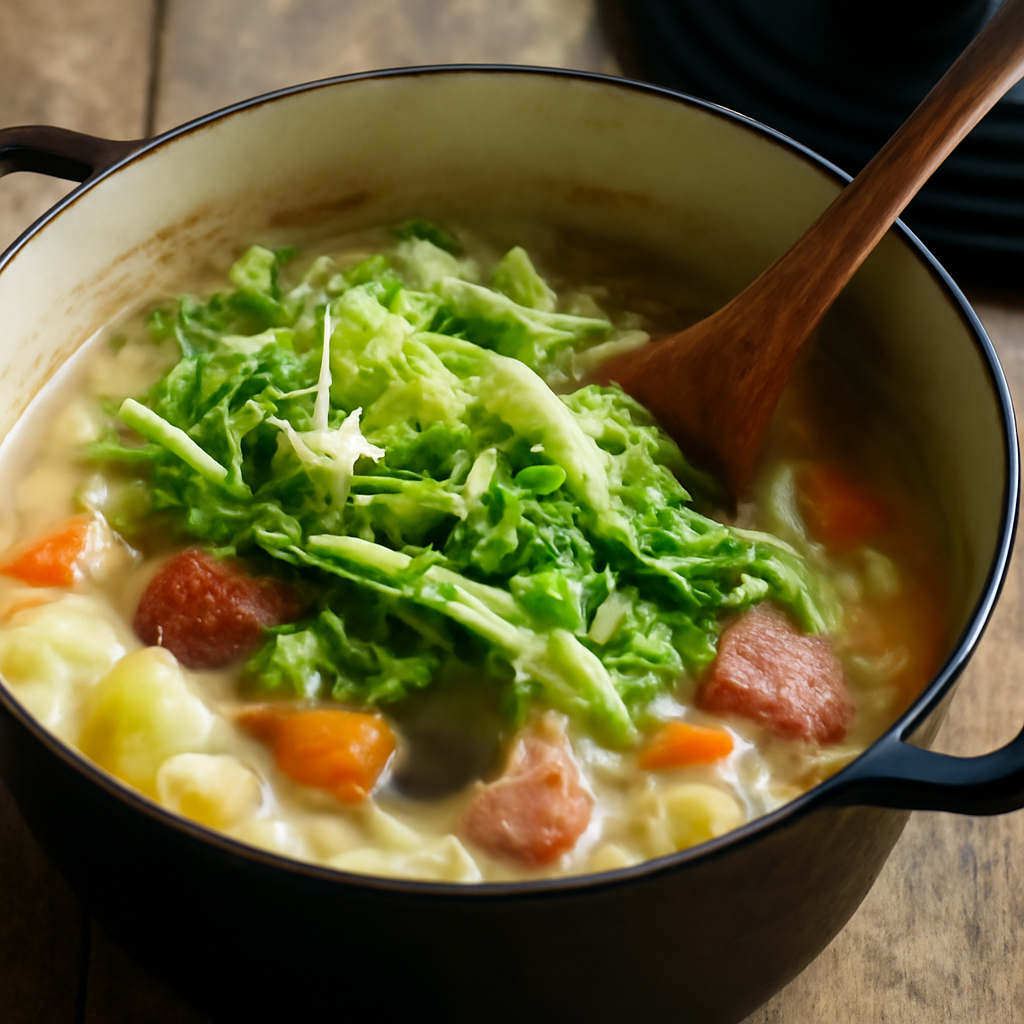
Add the sliced Savoy cabbage and press it down into the liquid. It will look like too much at first. Cover fully for 3 minutes to allow it to wilt, then stir it through. Continue to simmer, lid ajar, for a further 10 minutes. The cabbage should be tender but not collapsing; it needs to retain some texture or it turns grey and sulphurous.
-
Remove the bay leaves. Add the cider vinegar and stir through. Taste the broth now before adding any salt; smoked collar is often salty enough that no additional seasoning is needed. Adjust if necessary.
-
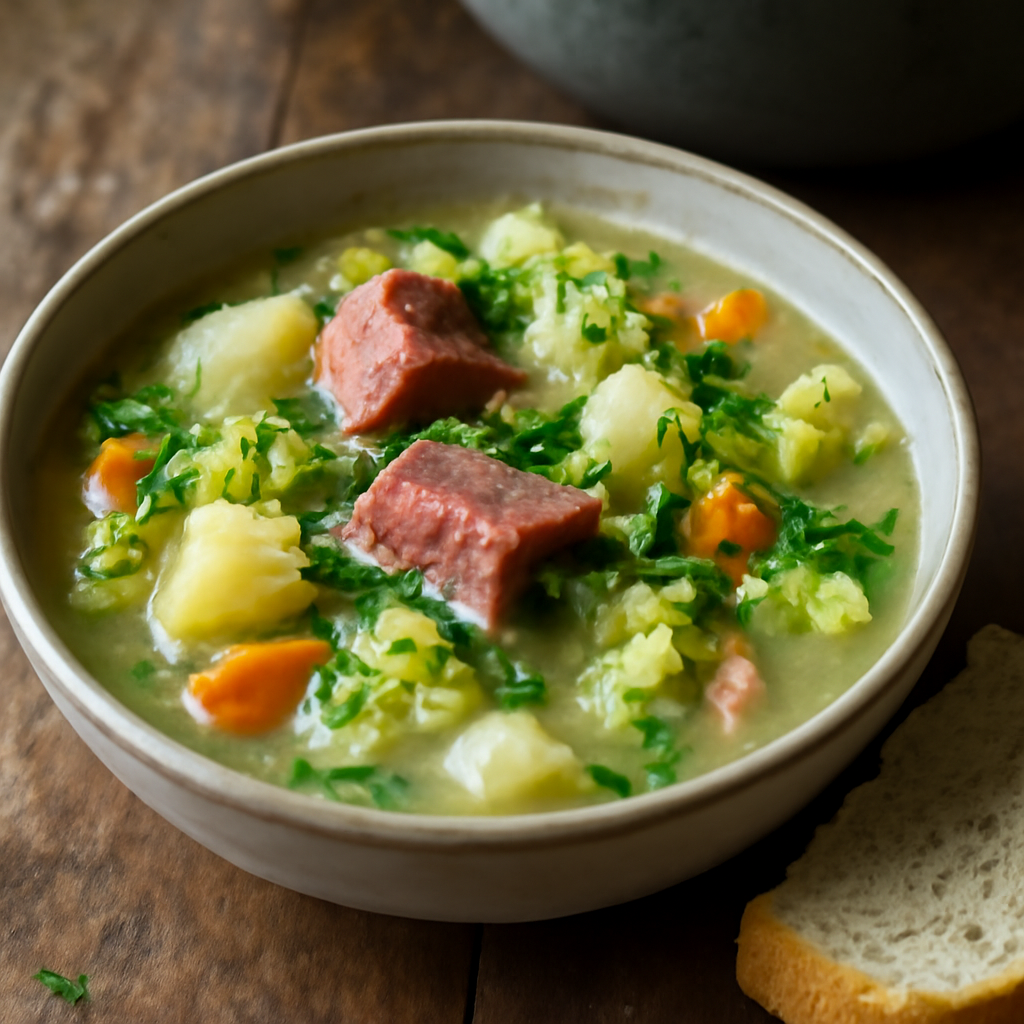
Ladle into deep bowls, ensuring each serving gets a good cross-section of meat, potato, and cabbage. Scatter the chopped parsley over the top and serve immediately with soda bread or a thick slice of white batch bread to soak up the broth.
Irish Context
Bacon and cabbage as a combination appears throughout Irish domestic cooking, typically as a boiled joint served alongside buttered cabbage and floury potatoes. This stew format collapses those three components into a single pot, which changes the result entirely.
The broth absorbs smokiness from the bacon, starch from the potatoes, and that faint grassy note from the cabbage, becoming something more than the sum of its parts in a way that plating them separately never achieves. Smoked collar joints are still widely available in Irish butchers and supermarkets, often labelled as boiling bacon, making this an accessible and low-cost dish to put together on any given day of the week.
Tips
Smoked bacon collar is the cut to use here. Back rashers or streaky will dry out over this cooking time.
Collar has enough connective tissue and fat to stay moist and give the broth some body. If your potatoes are very floury, they may begin to fall apart towards the end.
This is fine and actually helps the broth. If you want cleaner chunks, add the potatoes 5 minutes later than instructed.
The cider vinegar added at the end is not optional. A small amount of acid lifts the whole pot and stops the broth from tasting flat.
White wine vinegar works if you have no cider vinegar. Do not skip the initial blanch of the bacon.
One test with unsalted water after blanching will tell you how salty the joint is. If the blanching water is very salty, rinse the meat twice.
Savoy cabbage is noticeably better here than white or green drumhead. The crinkled leaves hold their structure longer and have a slightly more mineral, grassy flavour that suits the smoky meat.
Leftovers improve overnight. The broth thickens considerably in the fridge as the potato starch sets.
Reheat gently over a low heat with a splash of water, and the cabbage will soften a little further but remain edible.

Author Commentary