
 AI
AI
 AI
AI
 AI
AI
Ingredients
Method
-
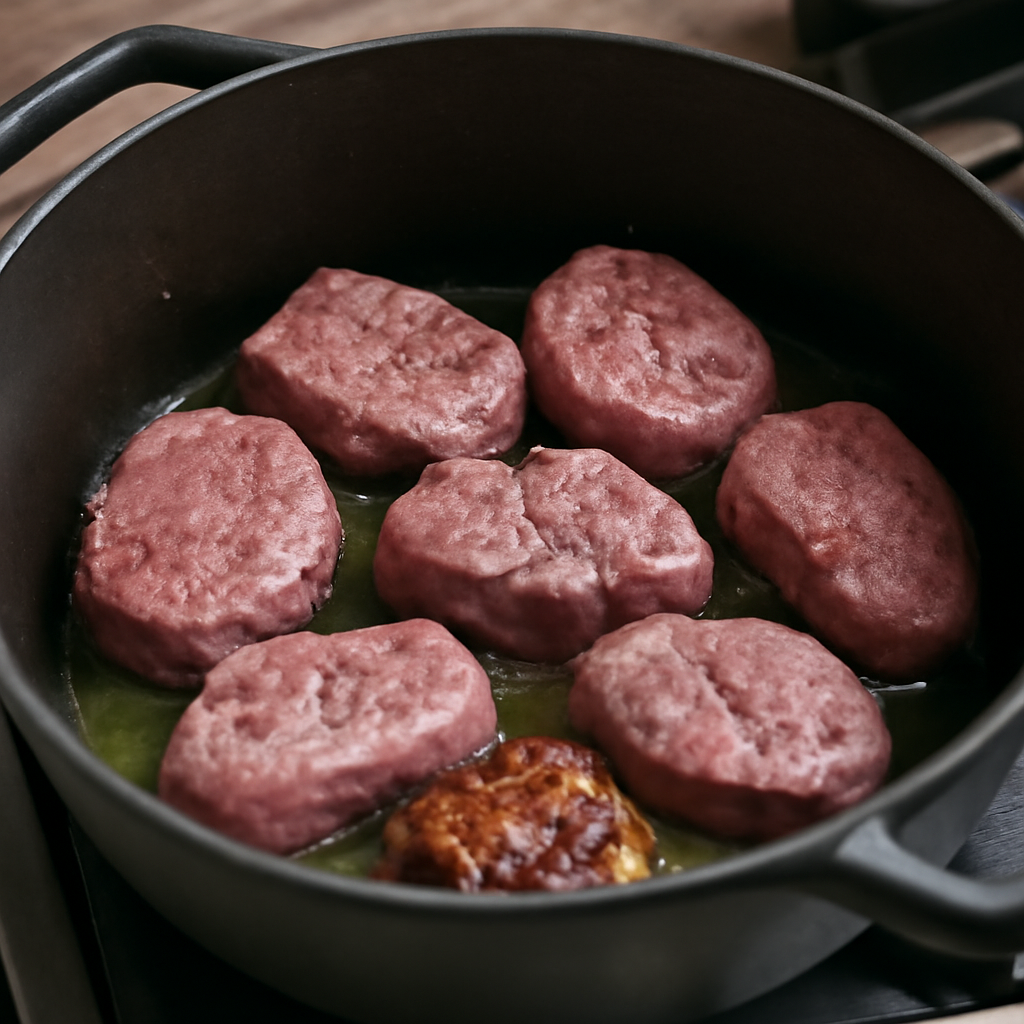
Pat the beef shin pieces dry with kitchen paper. Season them with half a teaspoon of salt and the black pepper. Heat the rapeseed oil in a large, heavy-based pot or casserole dish over a high heat until it just begins to shimmer. Brown the beef in two batches, leaving space between the pieces, for about 3 to 4 minutes per side until a deep brown crust forms. Do not move the meat until it releases cleanly from the base. Transfer to a plate and set aside.
-
Reduce the heat to medium. Add the bacon lardons to the same pot and fry for 4 to 5 minutes, stirring occasionally, until the fat renders and the edges colour. Do not drain the fat; it carries a smokiness that will run through the entire pot.
-
Add the sliced onions to the bacon and cook for 6 to 8 minutes, stirring every couple of minutes, until they soften and begin to turn translucent at the edges. Add the garlic and cook for a further 90 seconds until fragrant but not coloured.
-
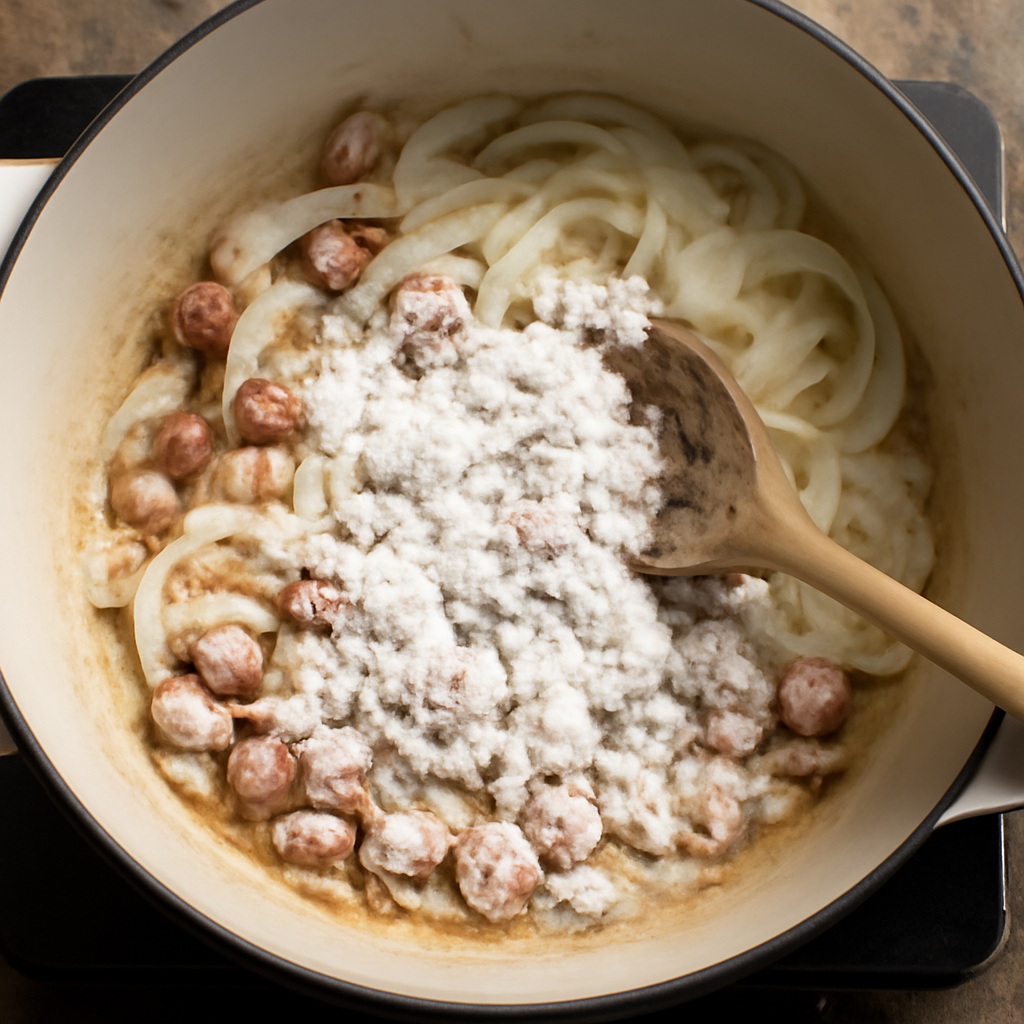
Scatter the plain flour over the onion and bacon mixture. Stir constantly for 2 minutes to cook out the raw flour taste. The mixture will look clumped and dry; this is correct.
-
Stir in the tomato purée and cook for 1 minute. Gradually pour in the beef stock and 200ml water, stirring continuously to prevent lumps forming. Scrape up any browned bits from the base of the pot using a wooden spoon; those deposits add depth to the broth.
-
Return the browned beef shin to the pot along with any resting juices from the plate. Add the dried thyme and the remaining half teaspoon of salt. Bring to a gentle boil, then reduce the heat to its lowest setting, place the lid slightly ajar, and simmer for 60 minutes.
-
After 60 minutes, add the carrot chunks and celery. Stir gently, replace the lid ajar, and continue simmering for a further 30 minutes.
-
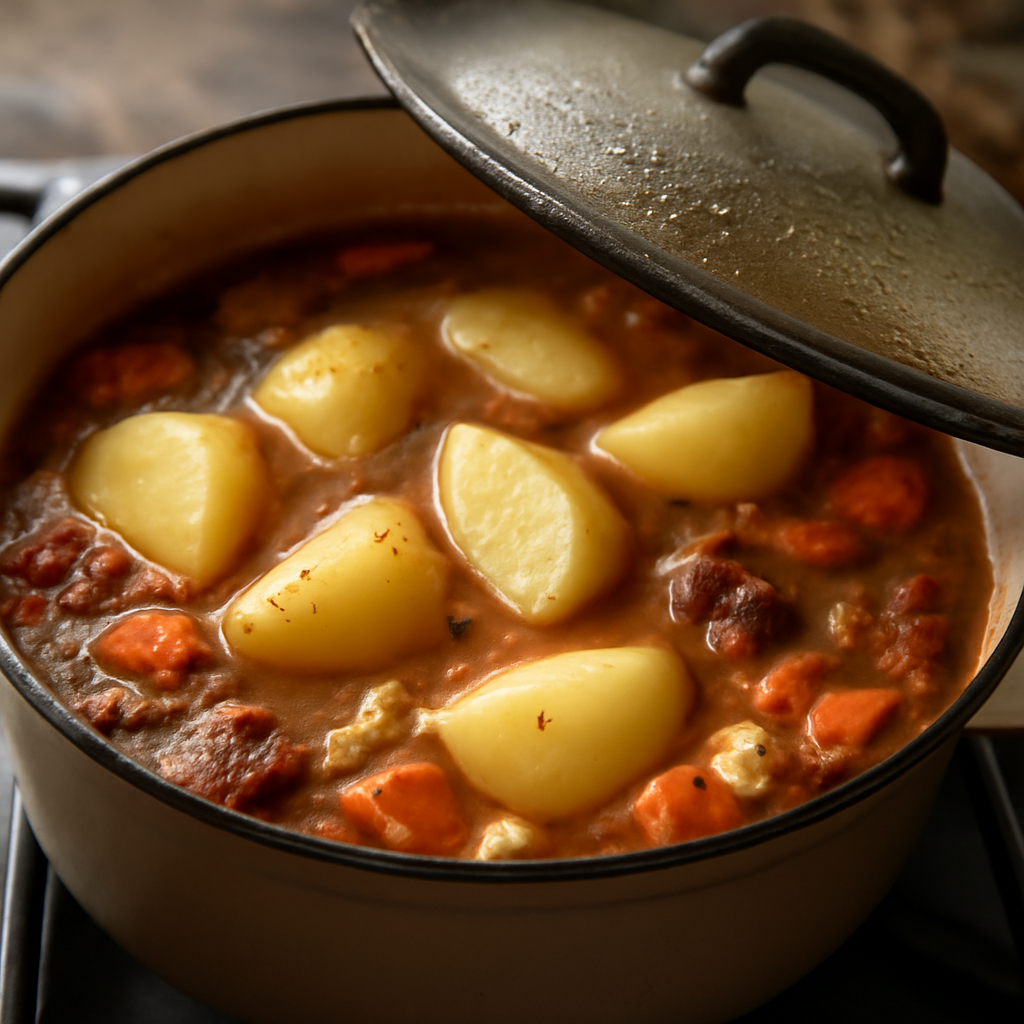
Add the quartered potatoes. Press them gently beneath the surface of the broth. Replace the lid ajar and cook for another 30 minutes until the potatoes are completely tender and beginning to break at the corners. The corners softening into the broth will naturally thicken it further.
-
Tip in the drained cannellini beans. Stir carefully to avoid breaking them up entirely. Simmer uncovered for the final 20 minutes. The broth should be lightly thickened, opaque, and reduced slightly. If it looks thin, increase the heat to medium-low and cook uncovered for an additional 10 minutes.
-
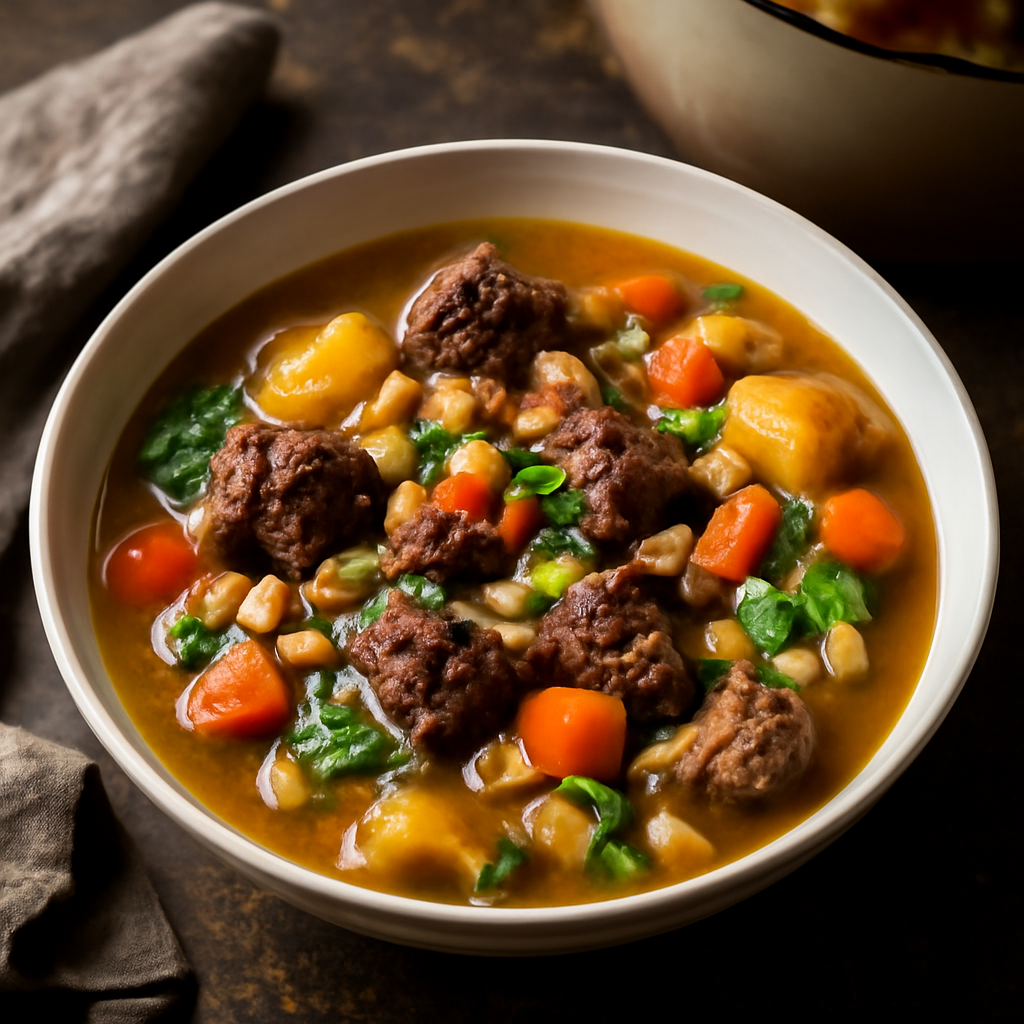
Taste and adjust seasoning. The bacon and stock will have contributed salt throughout cooking, so add cautiously. Stir through the chopped parsley just before serving. Ladle into deep bowls, ensuring each portion gets a mix of beef, bacon, beans, potato, and vegetables.
Irish Context
Dublin coddle is traditionally made with sausages and back bacon simmered in water with potatoes and onions. This version moves away from that stripped-back approach by introducing beef shin and beans, making it a fuller, more substantial pot.
It keeps the back bacon and the slow, wet-heat method that defines coddle as a style of cooking rather than a fixed recipe. Back bacon is central to this; its flavour profile is quite different from streaky, and substituting would change the character of the dish noticeably.
Tips
Beef shin is non-negotiable here. It has enough connective tissue to break down over the long cook and give the broth its body.
Chuck will do in a pinch, but the result will be noticeably thinner. If your broth tastes flat at the end, it is almost certainly underseasoned.
Add salt in small increments, stir, and wait 30 seconds between each addition before tasting again. The beans go in last for a reason.
Add them earlier and they turn to mush and disappear into the background. At 20 minutes, they hold their shape but absorb the broth and lose that tinny aftertaste.
This keeps well. The flavour deepens overnight as the fat emulsifies into the broth.
Reheat gently over a low heat with a splash of water to loosen it, as the potatoes will absorb liquid as it sits. If the beef is not browning but steaming, your pot is overcrowded or your oil was not hot enough before adding the meat.
Work in smaller batches next time. Grey boiled beef at this stage means a dull pot at the end.
Crusty soda bread alongside this is not optional, in practical terms. You will want it for the broth.

Author Commentary